One of my clients does license plate reading and tracking. They have hundreds of tiny customers, and a handful of VERY LARGER customers, so I can say with 100% certainty, there are hundreds of agencies across the USA already doing this.
For fun, I tracked my rental car from Georgia to Texas after a vacation a few months back to see how often I hit one of my client's customer's cameras. It was a lot. I saw myself hit toll booths, go under over passes, and parked at a service station. About 25 hits that my account had access to (probably hundreds or thousands that I didn't have rights to see).
IIRC there's an episode of Jay Leno's Garage that features a cop with a license plate reader. He can sit on the side of the road and every car that passes is scanned and checked for warrants. The answer comes back about as quickly as the speed reading on a radar gun.
What they don't tell you is that all those plate numbers are going into a database, time- and location-stamped.
In Saskatchewan, Canada, they no longer require yearly insurance stickers on plates because the information is automatically checked by plate scanners on cop cars (to the best of my knowledge).
The officer will still require proof of registration when pulled over.
We've had this since 1997 for car tax stickers in Finland when they decided it was easier to just install a computer in every cop car that has the db. Same db also has info on insurance and inspections and also the check has been recently made automatic on the camera when previously the officer had to manually enter the plate.
I wouldn't be surprised if the data about the scans goes the other way too.
Proof of registration was made electronic in 2016 and again checked on the computer.
Driving a car isn't a right but a privilege so I'm on with this.
>Driving a car isn't a right but a privilege so I'm ok with this
That's an interesting perspective. I get it in the sense of safe driving - if you are swerving all about the road, you shouldn't be on the road - but it doesn't work so well for registration and tracking. Bare minimum, people should have a right to get around. So much of what people want to do in their life is beyond walking distance, that some method of transport is necessary to get there. This isn't a political right, but rather a pratical right - something that people need to be able to do to live a full life. At the extreme, house arrest involes banning a person from going anywhere, and is clearly a (perhaps necessary) breach of their rights. In particularly rural areas, banning someone from owning a car would amount to banning them from going anywhere. So I think it makes sense to say someone has a right to own a car.
We ban poor drivers from the road merely because other rights are more important than driving is. For example, my right to safety is more important than your right to drive. If your dangerous driving puts my safety in question, than you should be taken off the road. However, if you manage to drive without infringing other's rights, than the government shouldn't be able to stop you from driving.
The difference is that the roads are built by the government and are government property. The government can quite reasonably control what happens in its property without implicating peoples’ rights in the same way as when its regulating what happens on private property.
As to rural areas—people who live there make a choice to live somewhere that requires them to travel on government property to get anywhere.
Yep, and there are agencies all over the US that share data between themselves to get access to much larger sets of data. So when a cop pulls you over in Dallas because you have a warrant in Atlanta, you now know how he figured that out.
Depends on the vendor and the product, but that is pretty accurate.
Some vendors send the plate over the network to check, some download the latest data to the cop-puter daily. Some hourly, and some get pushed updates as they happen.
This is the most terrifying thing I've seen that moves us toward the potential for real authoritarian societal control. The reason is we have a terrible history of being able to legally correct incorrect information in these separate local and national databases. So you can use this as another way to suppress disagreements and suppress protests against those in power. I'm an american citizen and it's my right to protect. Imagine there's a big protest and the next day the local police or fbi comes to your house to ask why you were in the neighborhood where the protest was. It can happen now. I can turn off my phone or choose not to take it, but transportation is required to get there. My bus pass is also a history of my travels.
I just contacted my us rep and senators about this. I would be surprised if we can stop this, but we should try.
Read David Brin's "Kiln People" for an interesting take, he foresaw this issue, also read "Transparency"
There are a few vendors out there who sell the data they collect, and then sell search capabilities to law enforcement agencies, repo firms, bounty hunters, etc.
These camera systems are usually installed on civilian cars and those people just drive around all day on 10 hours shifts around their territory. They aren't looking for people, only collecting the data. Some of them get rights to add cameras to signs in front of shopping centers on busy streets. Some have even illegally placed them next to red light cameras that use an open wi-fi to upload the data back to their database. Its the wild west for some of these guys, but they make almost no money once you account for the cost of the cameras, cost of staff to drive around, etc.
You are getting down voted, but you are accurate. The agencies have to pay for them some how, and money busts (not drugs, though related to drugs) are the best way.
It doesn't mean they prioritize those crimes over kidnappings, but it means the department that gets access to the system first until it's are paid off is the narcotics division.
Call your representative and voice your opinion. Donate to eff and aclu or any other civil and digital liberties organizations, to help them protect our privacy and rights through legal means.
Privacy evasion is slippery slope and it only gets worse.
Take this as your daily or weekly reminder to do something, even if that something is donating just the price of a coffee.
I am feeling pessimistic man. We had a few decades of privacy and human rights progress post World Wars. But with Terrorism on the rise there is no way for privacy or human rights to make a comeback. We will see increasingly clever ways to water down laws we already have in place.
Terrorism in the US isn't on the rise (unless we're counting white supremacists marches, which the media doesn't) but the powers that be and their cohorts are still milking the teat and our fears from 9/11 on this stuff. People who have no reason to be scared of any of this also won't stand up to it ('I'm not a criminal so it doesn't matter...'). Also funny that when/if another attack does happen, it will be those of us in blue cities (NYC, LA, SF, etc.) sacrificing our lives even if we're against this stuff and the system as it is.
Fear is a business and some people are making bank. Osama would be proud.
This seems like the kind of ranting that we've already asked you not to post, so could you please stop? Generic tangents just don't bring about the kind of discussion we're after here.
The incentives are huge, and digital life makes it all the more easy. The more information someone has, the more lucrative it is collect even more.
You can find someones property address online - it used to take wuite a bit of effort in the past. Now the effort is on the property owner to protect his privacy - using land trusts or other estate structures.
What is worse is now people volunteer information on social networks. If you dont, your friends do - nullifying your effort.
I am not optimistic either, but i will do whatever i can ti protect my own privacy whenever i can. I stopped using fb, and making an effort to learn estate planning and so on.
I feel very skeptical of calling your representatives. Firstly, it matters if they are in a contentious district. Secondly, even if they do see you as a potentially credible concern, they will still corroborate that concern with a political consultancy when election time comes.
> I feel very skeptical of calling your representatives
Based on what? For contentious issues on which most voters are decided, e.g. guns or abortion, you are correct--calling in is unlikely to do anything. If you care about a big-ticket issue, join an organization and do the whole camping out at town houses and protesting local and D.C. offices and filing lawsuits schtick. It's hard, but it works.
For niche issues, however, there is a good chance nobody has bothered to think about it. Congressional offices rely on inbound information to put new issues on their radar. An SLA penning out a letter to the ICE requesting information can start meaningful debate, inside the ICE as well as in the Congress.
Senior Legislative Analyst. They're junior enough to have their hands in the weeds but senior enough to have clout. The most tangible discussions I've had when calling my representatives came in debates and negotiations with and the giving of advice to SLAs.
That is the part that is most disturbing. The more people think that way the more marginal each caller becomes. We need crowds to call, raise issues.
Part of why things got bad wrt housing, for example, only the people that had houses raised their opinion in city halls, which led to these people trying to protect their investments, which eventually lead to nimbysm.
I am not a citizen, yet, so i am going through the route of donating an amount i am comfortable with, but in 2.5 years, i will be one, and raise my voice through other channels too.
Yet another piece of evidence that the US is turning into an authoritarian state - as, to be fair, others do too (especially China!), but the US have the unique advantage of being the technologically most advanced civilization.
In earlier times, when situations got too authoritarian, there were rebellions and revolution. With the level of militarization in police and military and the abilities made possible by today's technology (the Gestapo or the Stasi would have done anything for this kind of power), it is very well possible that a revolution might simply be made impossible or crushed before it even begins, as you can simply single out and eliminate potential "leaders" based on AI analysis of what people do... and what people think, as they post it on Twitter, Facebook or their own "private" cloud space.
In addition, the future of AI is already showing its first signs - and governments around the world have not shown any interest in planning for the inevitable millions that will lose their jobs or for the social unrest caused by this. Quite to the contrary: governments and right-wing parties are "looking back in time" and promising their citizens that they will bring back the "good old times" and snatching up the votes of the Frustrated Old White Men - and are very successful at this.
one lesson can be drawn from Solzhenitsyn'a Gulag Archipelago. he talks about how the number of people to be dealt with vastly outnumbers the police state's employees.
Therefore if everyone fights back when "they" come for you, the outcome for society is positive, even if hopeless for individuals. The insane gun ownership in this country could be a benefit. Sure, you're not going to beat the army, but if every 10 people to be liquidated take out one secret police guy, then the civilian population as a whole will be safe. This assumes the army is distracted with a war somewhere, which seems likely to me.
> Therefore if everyone fights back when "they" come for you, the outcome for society is positive, even if hopeless for individuals. The insane gun ownership in this country could be a benefit. Sure, you're not going to beat the army, but if every 10 people to be liquidated take out one secret police guy, then the civilian population as a whole will be safe.
That argument only works if it were an all-out battle between the population as a whole on one side and the secret police on the other. That is not how authoritarianism works. They start by isolating minorities, and target individuals one by one. In every single 'battle' the secret police outnumbers their opponents. Any resistance is used to justify the use of more force.
Imagine what would happen if 'illegal' immigrants (which number in the millions) that are being deported by ICE (about 20,000 employees [1]) start fighting back with guns. How do you think Fox News would react? Or public opinion?
Or just look at police brutality against minorities in the US. Do you think that the use of more guns by minorities is likely to lessen police brutality, or exacerbate it?
I'm not sure which point you are trying to address, but where did you get your data?
According to the data collected by the Washington Post [1], in each of the years since 2015, less than half of the victims (excluding 2018 the percentage varied between 49.9% and 46.3%) of fatal police shootings have been white.
There is some uncertainty because for some cases the race is unknown. That data also only deals with shootings, so it is possible that if you count all killings the data is different. Can you share your data source?
I got my data from The Guardian [1]. Their data only covers 2015 and 2016 but appears to be more comprehensive for those years, listing 1146 killings in 2015 and 1093 killings in 2016, vs 995 and 963 in the Post data, perhaps simply because they list all killings rather than only shootings.
They list enough "white" victims that more than half were white even including victims of unknown race. But this is a minor point. It's very close to 50% in either source so perhaps we should simply say "half of all people killed by police are white".
There's a lot of intersection between class and race when it comes to police violence, and I don't think the phrase "minorities" is sufficient in discussing the issue.
> The insane gun ownership in this country could be a benefit.
I'm sorry, it's hard not to be a little snarky here. Yes, the guys who wrote the original rules for the country considered gun ownership so essential that they placed it second only to the freedom of expression. I don't like guns, but they represent a failsafe that we hopefully never have to use.
> Yes, the guys who wrote the original rules for the country considered gun ownership so essential that they placed it second only to the freedom of expression.
The Articles of Confederation were the original rules of the country.
The base Constitution which replaced them as the rules for the country also didn't include anything about that.
The package of 12 amendments to the Constitution formally proposed after the Constitution was ratified did mention it, but only the third through twelfth of those were ratified fairly quickly by the states. So, it wasn't part of the original rules or the original replacement, and the drafters of the package known as the Bill of Rights put it fourth behind the right to minimal levels of representation in Congress, the right to a Congress without the power to raise its own salary between elections, and freedom of expression, not second behind freedom of expression.
So, aside from being a fallacious appeal to authority, your argument is grounded in falsehoods.
In George Mason's original onjections to the Constitution, from which the Bill of Rights was drawn, the right to bear arms was seventeenth!
17. That the People have a Right to keep and to bear Arms; that a well regulated Militia, composed of the Body of the People, trained to arms, is the proper, natural, and safe Defence of a free State; that Standing Armies in Time of Peace are dangerous to Liberty, and therefore ought to be avoided as far as the Circumstances and Protection of the Community will admit; and that in all Cases, the military should be under strict Subordination to, and governed by the Civil Power.
That is a fascinating quote which I don't think I've seen before. Although I appreciate the desire, on the part of the authors of the Bill of Rights, to boil each amendment down to its essence, in this case I wish they had kept more of the original context. The vision presented in this statement -- of "a well regulated Militia, composed of the Body of the People, trained to arms" -- is very different from what we've wound up with. There's nothing resembling a trained militia organized by the states, nor do most gun owners seem to feel any duty to engage in such organized training if it existed (of course, many do engage in individual training, but not all). The exceptions are private right-wing militias whose presence probably doesn't contribute to the overall security of the community, and, of course, organized crime, which is destructive to that security. And then on the other hand, we do have a standing army, indeed an entire military-industrial complex, which is evidently necessary, at least to some extent, in this modern world with its machines of war that were unimaginable to the Framers. The one part of this article that has worked out more-or-less as Mason envisioned is the last clause: the military has indeed remained under civilian control.
To me, all this adds to the difficulty faced by those who want to disregard the opening clause of the Second Amendment ("A well-regulated Militia being necessary to the security of a free State, ..."). It's all about collective self-defense; there's nothing here about individual self-defense. While I agree that individuals have a right to defend themselves when necessary, I believe that defending citizens from one another is primarily the responsibility of the State; only when the State is clearly failing in this duty do citizens have the right to take that defense upon themselves. Allowing individuals to arm themselves in the absence of such necessity — for sporting purposes, for example — is a choice a community might make, but is not a right.
And what you are entirely missing in the philosphical basis for the constitution is the principle that we have natural rights that are independent of any government and that government is established in order to protect those rights, and that government cannot and does not grant those rights, which was the original argument about what we call the bill of rights. That by listing what rights the government was specifically not able to revoke (negative rights) the government would then think anything not listed would be ok for them to control. Which is not the case!
In this case, the right to self defense is a natural right, what Locke called the first natural right, and the right to bear arms is simply an extension of that right.
So you are the one ignoring the context of the argument and cherry picking. You are the one basing your argument on falsehoods and fallacies.
Also, I consider the Declaration of Independence the real "original rules" (considery myself a declarationist), from which the constitution had authority to be made, so while the constitution did take heavily from the articles, it's not correct to say they are the original rules.
The right to bear arms should never go away, and the people who call for it to haven't experienced enough of the world to know why it's timeless as an extension of the natural right to self defense. So you people arguing about what place the right to bear arms came in at is just a foolish exercise in self-masturbation that has no bearing on the issue at hand. Parent poster was basically just saying "it's damn important" and instead of addressing the meat of the argument it's turned into "no it was $placenumber"...
The real problem is most Americans these days aren't taught these basic principles because of a lack or corruption of civics in education.
For example, if you don't know what the difference is between negative rights and positive rights, then you didn't have a good civics education.
I'm so tired of hearing people shit on the constitution and it's principles just because they think the current implimentation is imperfect, usually coupled with logically fallacious retorts about how it was written by slaveholding white property owners as if that negates all the real hard work that went into it. Madison studied just about every government known to man in preperation, including the native american systems of government.
The scary thing is people don't realize how slippery the slopes are they clamor for.
> And what you are entirely missing in the philosphical basis for the constitution is the principle that we have natural rights that are independent of any government and that government is established in order to protect those rights,
That is among the purposes of government in the view of the “philosophical basis of the Constitution”, but not it's sole purpose that stands alone. Now, on the one hand, I really deeply understand that and the balancing of multiple interests that went into the Constitution because I have a degree in Political Science that was focussed predominantly on the theory and practice of government in the United States, but on the other hand I would probably know it without that because the first sentence of the Constitution, while not going into detail about the whole conflicting set of concerns that led to the drafting of the Constitution, lists six purposes, including a different phrasing of the purpose you identify (as the last of the six.)
> I'm so tired of hearing people shit on the constitution and it's principles
And I'm sick of people lying about its content, it's principles, and its role in American history to advance political agendas, and I'm sick of people treating it like holy writ, too.
Where were they “shitting” on the constitution? The original post was trying to make the point that the right to bear arms was important to many of the founders because it was the second ammendment to the constitution. They are the ones that made the case that the ordinal number of the ammendment was important. The commenters responding are just taking issue with their reasoning. Really, your issue should be with the person that agrees with you but uses the fact that it’s the second ammendment (as opposed to the third or the forth) as evidence for the point you agree with.
> the guys who wrote the original rules for the country considered gun ownership so essential that they placed it second only to the freedom of expression.
That is an appeal to authority. Those guys were not handed down the word of god from heaven. They wrote down what they thought was best at the time. They were not infallible (see the amendments), what they wrote down was not unambiguous (or the supreme court wouldn't be necessary), and society and technology has changed in the intervening 200+ years. Do you think they would come up with exactly the same text if they were alive today, with the benefit of hindsight?
> Those guys were not handed down the word of god from heaven.
No, they wrote down rules to prevent the forms of oppression and protect the means of opposition that they knew from experience.
Has society changed so much in 200 years that armed opposition to the government has become impossible? The US govs failure to control Afghanistan would argue: no.
> Has society changed so much in 200 years that armed opposition to the government has become impossible? The US govs failure to control Afghanistan would argue: no.
As your Afghanistan example illustrates, you don't need a right to bear arms enshrined in the constitution, nor 101 guns per 100 inhabitants as in the US. Afghanistan has an estimated 4.6 guns per 100 inhabitants. [1]
Isn't that kind of required if we are to live under rule of law? There must be an end-all authority, and in this land it tends to be the constitution and it's assorted related documents.
I have no problem with that appeal to authority. It may be the sole legitimate time to use it.
The rules were written down and hard to change precisely because of threads like this. If parts need to be updated, there is a mechanism to do so. Therefore, appealing to the Constitution as the ultimate authority of the land sounds like a pretty good idea to me.
Perfect? Of course not. But the founding fathers certainly were prescient about the whole "slippery slope" slow erosion of rights - the entire last 100 years (at least) has been a story of the slow erosion of personal liberty. I imagine that would have gone much faster without such hard to change "final rules" of the land.
To quote madam secretary, "at this point, what difference does it make".
People have been more then willing to give up their data to FB, Google, Apple, etc. The only difference is this is captured by governments --who at least in theory represent the voting public.
It'll be interesting to see what the outcome is. Will the public demand the government regulate industry as well as ask it to rein in its own capabilities, or will they just get used to it and accept it?
We'll have to see. Some technologists, libertarians and interestingly an intersection of right wing and left wing ideologies will oppose this for different reasons, but in the end, I think they will be a minority in total.
The license plate cameras are actually a special case.
If you don't like most types of surveillance there are a lot of countermeasures a concerned party can use. Run your own servers, use encryption, etc.
The problem with license plates is that the equivalent thing is to obscure your license plate, which is prohibited by law. So it's not just that the government is collecting publicly available information, it's that you're prohibited by law from not making the information public. Which is a different kind of thing that deserves to be treated differently.
> You are welcome not to drive on public roads. Driving is a privilege that you have to take on a wealth of regulations to enjoy.
That is just a canned argument applied generically in favor of any citizen-hostile rule that touches cars.
And it's completely inane. The government has created places without access to meaningful mass transit and outside of walking distance to necessities like grocery stores or, for that matter, government buildings, or any piece of land zoned for anything but other private homes. Saying "driving is a privilege" is like saying to those people "leaving your house whatsoever is a privilege". No it isn't.
Obscuring license plate might be prohibited by law, but so far I been pulled over twice for not having license plate AT ALL. Twice got ticket to show up at court, twice case was dismissed because cop did not show up.
I don't think there is law for not having a license plate. License plate are only required in case you commit a crime or break the law using your vehicle so identifying you is required. I was ready to argue in the court that I should be presumed innocent when it comes to driving my car, just like walking on the street I m presumed innocent and do not have to have my state ID plastered to my forehead, in case. I'm currently awaiting to be pulled over for the third time.
It's well within the rights of a state to regulate the vehicles that operate on its roads. Those regulations may (and do) include having a visible license plate with up to date registration stickers.
You are free to drive unregistered vehicles on private land.
> I been pulled over twice for not having license plate AT ALL
Where did this happen? I see tons of cars without plates in California and Oregon. When I was living in New York I saw zero cars without license plates. I can't imagine one is going to get too far without plates in the tri-state.
Out here they make you come in twice if you're going to fight a ticket. The second time is so they can schedule the cop, and they come in on every fought ticket.
> The only difference is this is captured by governments --who at least in theory represent the voting public.
Actually I trust a megacorp like Google, Amazon, Twitter or Facebook more with my data than I trust the state.
The state can arrest me based on that data. The tech giants not, and they are fighting like hell that the government does not get access to that data (as that would compromise trust, and by that their business model). Given the massive amounts of money involved, I have no doubt who will win that fight.
Anything Google, Amazon, Twitter or Facebook store on you is available to the government. If they want to get hold of it to get something to arrest you with, all they have to do is ask. While they may push back on some requests, there's actually very little they can do with FISA/NSA requests, they're almost always complied with.
I've heard them grumble about mass surveillance laws, but I haven't heard about them openly defying them, or using any of their substantial lobbying muscle in Washington against them. If they really cared, they could encrypt a lot of communications data, and simply not store things like real names, GPS co-ordinates and IP addresses as soon as they're not necessary to provide a service. The data wouldn't be as profitable, though.
If it makes you feel any safer, your license plate data is already being sold to private companies who want to build a file on you for profit.
From the EFF[1]:
> Vigilant Solutions' subsidiary Digital Recognition Network, along with MVTrac, are the two main companies hiring contractors to collect ALPR data across the country. The companies then share the data not just with law enforcement but also with auto recovery (aka "repo") companies, banks, credit reporting agencies, and insurance companies. Data collected by private entities does not have retention limits and is not subject to sunshine laws, or any of the other safeguards that are sometimes found in the government sector.
As far as we know (which is as little as possible), they can get all the data on you as an individual, if you’re on a data retention list. This is outside of data you generate happening to hit certain search terms
I qualify for such a list; I was/am a subscriber to The Linux Journal, an ‘extremeist publication’ according to the NSA, at least at the time of the Snowden leaks.
Am I still? It’s illegal for me to know. But it’s reasonable to assume that the maximalist approach to data collection is shared by the government and Google et al quite happily.
I'm playing around with a thought experiment in my head and would like your opinions. Considering this topic in comparison to getting a warrant for a criminal's cell phone location. Here's some considerations:
1. What is the status of an illegal immigrant who might get queried? There's two categories of illegal aliens. The first is unlawful entry (people hopping the border), this is a crime. Then there's unlawful presence, or outstaying your visa, this is a civil infraction. If ICE knows enough about this person to specifically query this database for them, surely there must be a bench warrant or something? I genuinely don't know this.
2. Unlike the cell phone location warrant, it appears this will not require a warrant. This to me is THE problem. If they were required to get a separate warrant for every query, then I would likely not have much concern.
3. ICE is not creating a database itself, but purchasing the ability to query commercially available data. This distinction possibly matters legally. Does it matter ethically?
> but the US have the unique advantage of being the technologically most advanced civilization.
Yes? I would say this is a very strong statement which would be hard to put into actual numbers.
However i highly doubt that a huge country riddled with historic issues like the U.S. could beat a fast growing country like South Korea in technical advantage.
I don’t understand, Europe has national ID laws I can fill up a form and get the details including owner details for any license plate in the EU (you need cause but it’s not verified in most cases it would land you in trouble if it’s abused tho), and automated license plate tracking is pretty darn common across all EU countries yet no one here yells Stasi about this.
> and automated license plate tracking is pretty darn common across all EU countries
No it's not. It may be legal in some countries, yes, for example the Italians are doing it for speed-tracking in certain highways, but the data is not shared between the countries, aggregated to form movement profiles or stored longer than required.
With ICE one can be sure that: a) nothing ever gets deleted b) it WILL get data-mined c) it WILL be abused.
> I can fill up a form and get the details including owner details for any license plate in the EU
That's a new to me - in Germany if you want the data e.g. for a lawsuit you have to file a complaint at police and before you get the data the validity of your request will be checked. In addition, this does not allow everyone to build a movement tracking system.
I’m sorry APNR has been deployed in virtually every EU country that matters for a few years now including Germany.
The DB is maintained and I know of at least a few countries within the EU that share it for border control reasons.
You also do not need to fill a police report to get the license plate details you may have too if you list the reason as a hit and run but you don’t need have too for every occasion.
Speaking of Germany how is that going with requiring a passport or a national ID to buy a prepaid sim? ;)
I'd love to see you break out the stats on that, country by country, and support it.
There are 300 million cars in Europe. France as one example, has about one passenger car per adult between the ages of 18-65. The high prevalence of diesel autos in Paris, is why the city started to look like Beijing not so long ago due to pollution.
Mostly you just answered the question. The primary factor is that the US just simply doesn't have the same public transportation infrastructure the EU has, not even close. I could travel just about anywhere in the EU without ever getting in a car... that's impossible in the US.
In London and Amsterdam you have the equivalent to the Bay Area's Clipper card with can be tracked. In Paris and surrounding areas you use paper tickets with a magnetic strip that has a given amount of trips (1/10/etc.). There the only tracking you can do is on aggregate, without ways to deanonymize people other than facial recognition on CCTV feeds and your phone's wireless signals.
In Amsterdam you can buy anonymous tickets as well (for 1h or 1-7 days). Just go to a corner shop like Primera and pay in cash. The same as been true in every city I've been to in Europe.
In general, it would be very hard to do away with anonymous tickets. There are always many citizens who only use it occasionally (but when they need it, they often can't wait for a personalized card to arrive), plus tourists.
There are many facets to this debate that aren't discussed in the news. One is that without immigration, the population of the US would decrease based on birth / death rates. If the population of the US decreases, social security and other social programs become insolvent. In other words, our social programs are based off the current working generation paying for the current retired generation, and has since their inception.
It's a complex issue, and benefits vary from region to region. The powers (with big microphones) that are trying to sway you one way or the other only focus on a few simple things.
> One is that without immigration, the population of the US would decrease based on birth / death rates. If the population of the US decreases, social security and other social programs become insolvent. In other words, our social programs are based off the current working generation paying for the current retired generation, and has since their inception.
Which is a fine argument for granting citizenship to skilled workers in industries with low unemployment, but a counterargument to taking large numbers of unskilled workers during a glut of unskilled workers.
To make the system solvent, you need to increase the number of gainfully employed middle class people, not increase the number of unemployed and underpaid people who need net social assistance because there are more unskilled workers but only the same number of unskilled jobs.
> Won't those unskilled workers return if there is no work, just like we've had seasonal migration of farm workers in the past?
It isn't that there are zero jobs, it's that there are more workers than jobs. Add even more workers and some of the new workers will get some of the jobs.
And they could get a disproportionate share of the jobs by being willing to work for less money. Which compounds the problem, by both reducing wages for the entire class (increasing the consumption of need-based services) and reducing the government's tax receipts from each lower-paid worker's social security and other taxes.
Flooding the US with vast quantities of low skilled labor for four decades, is also why wages for the bottom 50% do not climb like they should. It's simple, and obvious, supply & demand.
It's bizarre that so many tech workers easily spot this concept in effect when big companies try to undercut their salaries in exactly the same manner by importing cheaper tech talent from other nations, yet they're oblivious to the exact same being done to lower income Americans.
It's also why the Koch brothers are aggressive supporters of unlimited low skill labor immigration. It's good for certain types of businesses involving traditional labor. The Kochs use it to suppress wages for their blue collar workers.
There's a reason why Canada - and most prosperous, developed nations - have strict immigration policies against flooding their nations with large amounts of low skill labor. Scandinavia flirted with it briefly, and now they've almost entirely shut down the immigration spigot. Most of Europe has turned back against the same thing, because it's harmful to the weakest working classes.
The primary argument is whether the US should match eg Canada and switch to a merit system. At a time when low skill labor is going to be automated away, it's extremely obvious which way the US will have to move. And if the US does not move that way, the cost will drown the fiscal budget and continue to hammer the poorest workers.
>It's also why the Koch brothers are aggressive supporters of unlimited low skill labor immigration. It's good for certain types of businesses involving traditional labor. The Kochs use it to suppress wages for their blue collar workers.
This is something that benefits both sides of party lines. I've definitely overheard conversations in cafes of people talking about how their "gardeners have families" and in the back of my head I wonder if they're paying that gardener enough to take care of those families.
Yes, the laws need reforming (I think the last time was in the sixties and everything has been piecemeal since then?) but I think both parties have ulterior motives unskilled labor, Dems just are dicks about it and recognize they are humans as well. But useful humans.
Exactly. In a capitalist country like the US supply and demand is king.
Ignoring this and slowly trying to turn the US into a socialist democracy (against the will of a large fraction of our citizens) has caused immense suffering and hardship for the poor already.
Taking a quick look at Vigilant Solutions has been interesting. Yet another Israeli mass surveillance company started by ex 8200 IDF 'graduates'.
The founder Adi Pinhas may ring a bell --- he also founded SuperFish!
Worth noting that the EFF have been on ALPR tech for years. Signing up for their emails has given me opportunities to contact representatives regarding ALPR legislation and decisions I would have never heard about otherwise.
Is it possible to fight back by poisoning the data? Is it legal to set up a display by the roadside that shows randomly generated license plates, filling their automated cameras with garbage data? Or is their data collection smart enough to recognize a non-car, either technologically or by filtering everything through a Turk-like equivalent?
It would be ideal if you chose the fake plate numbers from the population of actual plate numbers used by corporate plate-tracking vehicles, just in case one encounters its "namesake" -- you might trigger some highly entertaining edge condition. ("Um, wait, that's... me! WTF?")
Wasn't there a Supreme Court case a while ago that ruled it illegal for the government to put a tracking device on your car? Given this recognition technology, could someone challenge the visible license plate requirement as an illegal tracking device?
Plate scanning is against the spirit of the law; it's a workaround for not being able to place a tracking device on your car. Unfortunately, since your car is in a public place, and your plates are in the open, I don't think place scanning will be ruled unconstitutional.
Of course congress could always pass a law making it illegal, but both our major parties have authoritarian with regards to privacy.
> Unfortunately, since your car is in a public place, and your plates are in the open, I don't think place scanning will be ruled unconstitutional.
The question GP asked was a bit different:
> could someone challenge the visible license plate requirement as an illegal tracking device?
In other words, in a world where plate scanning is ubiqitous, have license plates become a tracking device? And if they are a tracking device, is requiring them unconstitutional?
Oh, that makes it more interesting. A workaround to that (thought not as effective) would be face scanning. It wouldn't be as effective because I would imagine it would be more difficult to get a consistent scan of an object inside a car.
The Supreme Court actually has in the past ruled that a technology that is cheap and can be applied without public knowledge is constitutionally different from direct observation. See e.g. United States v. Jones, which ruled that a GPS device placed under a valid warrant could not be used to continue tracking a person outside of the scope of the warrant.
"Deputy Solicitor General Michael Dreeben[15] began his argument for the United States by noting that information revealed to the world (i.e. movement on a public road) is not protected by the Fourth Amendment.[16] Dreeben cited United States v. Knotts as an example where police were allowed to use a device known as a "beeper" that allows the tracking of a car from a short distance away.[16] Chief Justice Roberts distinguished the current case from Knotts, saying that using a beeper still took "a lot of work" whereas a GPS device allows the police to "sit back in the station ... and push a button whenever they want to find out where the car is."[17]"
It would be nice to see voters react to these sorts of technologies (whether they're provided by private companies or not) the way people reacted to the idea of being filmed via Google Glass when they went to a bar on a Friday night.
Yeah, also love cops and firemen voting Republican - you know, tough on crime, small business - while also pulling down taxpayer OT pay and pensions. Is there any metric showing they Republican party is actually good at enacting crime-fighting policies or are they just good at funding crime fighters? Seems more like the latter.
I decided to get my garage queen back on the road after 10 years. The tabs being expired, I went down to the DOL to get new tabs. They claimed that the auto records were purged after 7 years, and that there was no record of my car in their system. I needed to present the original title to prove the car existed and was mine.
Title issues can be... interesting. I've had major headaches trying to title a boat purchased in a state that doesn't have boat titles in a state that requires them for registration. Eventually, you can lay everything out before a judge/magistrate, and they can rule that your vehicle indeed exists and belongs to you.
Don't want to be that guy, but I have read where blockchain might make this easier in the future. I'm sure given the money hose that someone is trying to work on this.
I remember reading a paper on confusing road sign recognizers by adding certain bits of noise to the sign that completely baffled the recognizer. I wonder if one could do this to the license plate which would still look normal to a human but be unreadable to an AI.
This sort of technology only works for a particular training of a particular neural net. Text recognition of a fixed font is easy enough that I'm sure there are several different competing readers. Defeating even one of them requires having access to its inference results. Defeating all of them simultaneously is almost certainly infeasible, even if you did have its inference results available.
Most plate cameras rely in part on the reflectiveness of the plate. You can definitely modify a plate to be mostly illegible to these cameras but easily human readable.
Given that most cameras are sensitive to IR (but human eyes are not), it seems like you could also wire up some super bright IR LEDs to obscure the plate too. Hmm... idea for a new license place 'holder'...
Yes, 'saturate' is the word I wanted to use. Basically, the light source(s) are pointed at the camera, and it is unable to make out anything near the light source(s) as a result.
Concealing your license plate or it not being easily visible. The same reason the darkened plate covers are often illegal and why putting it on the inside of your window is generally frowned upon.
It doesn't really matter if it is legal or not for them to do, I'm pretty sure they'll do it nevertheless. I had a cop pull me over for the light over my plate being out. The cop said he couldn't see my plates when he was right behind me... at night with his headlights turned off (He turned them off while driving behind me, turning them back on right before the lights started).
One solution is to purchase your car from and register it to a front company. This way they can still track license plates, but not easily associate them with owner names.
What would that do besides cost you $59? It's not like cross-referencing your historical, government-issued license plates would add to the difficulty...
Or one of those polarized licence plate covers I see every so often on cars -- think the general idea is for speed/red light cameras but would probably do for this too.
California allowed a grace period to obtain a license plate for a newly-purchased car, and taking into account the allowed time to file for a plate, and time to issue and mail it to the car's owner, this could stretch out to a few months.
However, California's laws are changing due to a case in which someone was hit and killed by a car that couldn't be identified for lack of plates. Beginning January 1, 2019, all cars sold in California will be required to have a license plate attached at time of sale (for new cars which don't yet have a permanent plate, dealers will be able to produce a temporary plate).
While I agree this is horrible, mandatory ethics would have zero effect because:
1. Some people will need jobs.
2. Ethics are subjective.
3. Some people won't care.
The correct solution would be in trying to vote in less authoritarian politicians. Americans haven't done a very good job of that over the last century.
> The correct solution would be in trying to vote in less authoritarian politicians.
That requires a system where people actually have a meaningful vote... e.g. it's impossible in China, and for what its worth Chinese ethics are way, way different than typical Western-sourced ethics.
In the US, the ability of people to have a meaningful vote has been largely dismantled by a number of bad factors:
1) gerrymandering leading to situations where a Democrat won't run in a Republican stronghold (or, less often, the other way around)
2) the Electoral College leading to a situation where despite losing the popular vote, the respective candidate does win the presidency (as happened with Trump and I believe also with George W)
3) states with "fixed" political leanings get largely ignored and campaigning largely takes place in contested/swing states.
4) voter disenfranchisement: in Germany, voting is generally on Sundays as most people do not have to work on weekends, thus improving turnout compared to the US where voting is on a Tuesday for whatever reason; also in the US there are all sorts of measures to make it harder for poor or minority people to vote, including weird arbitrary ID requirements.
Numbers 1, 2, and 3 can all be fixed, and fixing those fix number 4.
For gerrymandering, there are plenty of proposals around requiring districts conform to some set of geometric rules.
The electoral college issue gets a lot of attention, but the more fundamental problem is first-past-the-post voting. What we really need is approval-based voting (i.e. I approve of candidates A and B; whoever has the most approvals wins). Such would eliminate the incentive to solely vote for the lesser of two evils. The electoral college has a bigger influence than when the Constitution was written due to the even higher concentrations of people in urban centers -- the idea makes sense though, perhaps with some math we can find a compromise. Regardless, FPTP is much more serious.
Easy to pass any legislation that changes voting and threatens all the incumbents? Not without a HUGE push, which I don't see happening anytime soon but why not try?
> Easy to pass any legislation that changes voting and threatens all the incumbents? Not without a HUGE push, which I don't see happening anytime soon but why not try?
That was actually a part of my mechanical engineering degree. We had almost a half semester spent in one class on engineering ethics. Definitely no such thing covered during my master's degree in computer science.
In general, the individual engineers do. The point of ethics training is to recognize that you have ethical obligations that extend past your job responsibilities, and that when your ethics conflict with your work tasks, it's not your ethics that should compromise.
For some of us, that might mean not working on a project that we could reasonably foresee would result in the deportation of children who don't speak Spanish and have only ever known this country to some foreign country. For others, it might mean not working on projects that assist women in obtaining an abortion.
Obviously, there's no "class" that settles the differing ethical boundaries we all have (though better ethics education would allow us to recognize the huge subset of ethics that we tend to share). The point is to tune in to our own ethics and not let the noise of professional life occlude them.
As a field, I think we've allowed ourselves to simultaneously believe that we're doing the most important work that's being done this century, while at the same time believing that we're powerless to shape the outcomes of our labor. But that's not true at all: if you believe the former, then it's likely that we have immense power over the latter! So, I think the point of the root comment on this thread is well taken.
For some of us, that might mean not working on a project that we could reasonably foresee would result in the deportation of children who don't speak Spanish and have only ever known this country to some foreign country. For others, it might mean not working on projects that assist women in obtaining an abortion.
Unfortunately it seems a lot of engineers either don't have much in the way of ethics, or truly believe what they're doing is good. See all those willing to implement things like invasive telemetry, DRM, and walled gardens, for example. The "security" argument is pervasive and very convincing to those who don't realise that it's also a way for companies to enforce more control over its users.
This also brings up another point: if you had to choose between not working on a project that goes against your ethics (leaving others to drive it toward its undesirable-to-you goal), or work on it but silently subvert it (as in subtly break it or otherwise impede its progress), which one would be the more ethical thing to do? In other words, "do everything you're told, just some things better than others"? Maybe I'm just optimistic, but the existence of jailbreaks, rooting, and flaws discovered in DRM schemes really make me want to believe that the latter exist.
People have different morals and ethics. I don't have a problem with DRM, for instance, and even if we debated to the point where I had to concede some theoretical problem with it, it'd be pretty far down my list of ethical priorities.
I'm not commenting to advocate for the notion that people should get an ethics education so they'll all turn out to be good Democratic Socialists. I'm saying, our field would be better off if people recognized that their ethics intersect with the field heavily, and they should do this work mindfully.
Ok, so if I'm an engineer and I think the ethical thing to do is help build a better license plate scanning technology to protect everyone from terrorism, then what?
As a first approximation, it would be beneficial to convince people of the concept‘s existence, and to get them to start questioning the implications of the work they do.
As it is, too many in the tech community are willing to defend anything with arguments such as „if I don’t, someone else will“ or „technology is ethically neutral, it is the use...“.
There's a process for coming to group concensus on contended questions, in which individual volition and choice isn't possible. It's called "politics".
It's messy, but I'm unaware of any better options.
For the record, I did have to take two ethics classes to get my BS in software engineering. One was an introductory ethics class mostly focusing on philosophy and ethical theories, the other was a class focusing on ethics as pertaining specifically to technology.


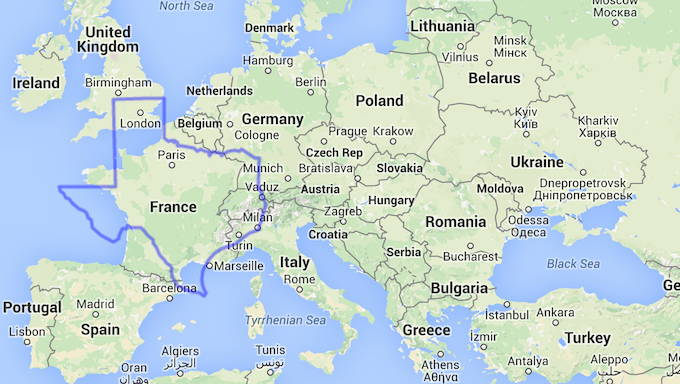
For fun, I tracked my rental car from Georgia to Texas after a vacation a few months back to see how often I hit one of my client's customer's cameras. It was a lot. I saw myself hit toll booths, go under over passes, and parked at a service station. About 25 hits that my account had access to (probably hundreds or thousands that I didn't have rights to see).