The survey in the article that assessed vitamin D deficiency was a bit odd:
>Because physical exams are performed in mobile vans in NHANES, data could not be collected in northern latitudes during the winter; instead data were collected in northern latitudes during summer and in southern latitudes in winter. To address this season-latitude aspect of the NHANES design, we stratified the sample into two seasonal subpopulations (winter/lower latitude and summer/higher latitude) before examining vitamin D status.
Yeah, I'm not surprised that the rates for vitamin D deficiency were low.
>Less than 1% of the winter/lower latitude subpopulation had vitamin D deficiency (25-OHD <17.5 nmol/L). However, the prevalence of vitamin D insufficiency in this group ranged from 1%–5% with 25-OHD <25 nmol/L /.../, even though the median latitude for this subsample (32°N) was considerably lower than the latitude at which vitamin D is not synthesized during winter months (∽42°N).
and the more northern latitude in summer:
>With the exception of elderly women, prevalence rates of vitamin D insufficiency were lower in the summer/higher latitude subpopulation (<1%–3% with 25-OHD <25 nmol/L)
Now imagine if you lived in northern Europe around the 60th parallel, where the sun doesn't get high enough in winter to produce vitamin D.
Not to mention, northern latitudes get more sun that average in summer, and most northern countries have more reasonable working hours so people actually do go outside.
Is it really less intense? When I go out on a sunny day in Denmark it is murder. When I go out on a sunny day in Italy it's generally just overall warm.
At any rate another factor is that in the Northern regions it's my experience people do their best to soak up as much sun as possible.
I grew up in central Michigan and thought the same about the sun until I spent a few years in southern Arizona. The sun there feels like a heat lamp in summer. The low humidity makes the atmosphere absorb less energy. Although it feels like it's about 5 C cooler than it actually is because sweat evaporates so quickly, but once it gets to 43 C you actually just feel vaguely ill just going outside. Standing in the sun is just not something you do. It's a very unique experience to lick your lips and have your tongue feel cold.
Of course, neither of those were as bad as Houston in August. It was 38 C and 98 % relative humidity. And, I will point out, it had not rained. That's just what it's like. You walk outside and your glasses instantly fog up and you feel like you desperately need to shower.
The sun is at a lower angle from the horizon at higher latitudes. It passes through more atmosphere, losing some UV, and also the surface irradiance on the ground (energy per unit land area) is lower.
Not really, it requires direct sunlight above 45 degree, so northern sweden for example gets plenty of sun in summer, but only for a very short time intense enough sun.
I moved from Indiana to Norway - Trondheim, which is about in the middle of the length of Norway. During the summer, I can read outside at night even though the sun technically goes down for about 4 hours in June. It never gets darker than twilight. A few clouds means you might just have sunset all night. The sun does get surprisingly hot and very warming if we happen to have a sunny day. Jacket in the shade, short sleeves in the sun even though it is 18C/65F.
The reason for this is that the sun is at a low angle, so it hits more of your body than it does when the sun is overhead - like you'd get in Australia. This also means that while you need some sunscreen during the day - from about 10 to 5 - it doesn't burn as much. It is less intense in that way - but it just feels different.
During December, days are 4 hours of very weak light.
> The reason for this is that the sun is at a low angle, so it hits more of your body than it does when the sun is overhead - like you'd get in Australia. This also means that while you need some sunscreen during the day - from about 10 to 5 - it doesn't burn as much.
Not sure if I parse this correctly - I'd imagine you need more sunscreen at "low angles" due to more severe and longer exposure? Low angle -> more body surface area exposed directly at near-right angle to Sun -> more direct absorption -> more sunscreen needed?
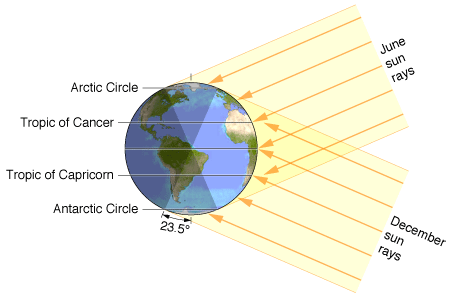
I’ve found the UV index forecasts to generally be a good metric, so try looking at those for various locations. The main factor here is that the lower the sun is from the horizon, the more its light will be absorbed by the atmosphere due to the longer path. The maximum altitude that the sun will ever reach is (90° – (latitude – 23.4°)), so at the 60°-ish of Scandinavia it’s rarely more than 50° in the sky. It’s a very noticeable difference even in the summer.
In my experience (born in southern Italy, pale-average, currently living in Sweden) it’s almost impossible for me to get sunburn in daily life in Sweden even without sunscreen. Definitely not so further south.
This low angle situation must have been experienced by every adult I imagine, its just about being outside before dawn and feeling how sun's warming effect on the body is much stronger than few hours ago even though air temperature itself might have been higher before.
Since it hits body more perpendicular its not rocket science, I realized this around age 10 myself and I am not the brightest in the pack.
At the equator, the sun is highest at the equinoxes (March and September) and lowest at the solstices. Outside the tropics, the sun is highest at the summer solstice (June or December) and lowest at the winter solstice.
Yes, it's crazy to consider how far north Earth's entire land mass is skewed. Australia is basically the southernmost landmass (apart from Tierra del fuego), yet it is located squarely under the Tropic of Capricorn; at the same distance north of the equator (Tropic of Cancer), you've merely reached Mexico, the Sahara desert, and the Himalayas.
For non-Australians, that's burn as in "burst into flames", not "your skin goes red". Go to somewhere like Cairns and you can hear people crackling as they walk down the street.
Yes, because it's lower in the sky so more of the UV in it gets absorbed by the atmosphere before reaching the ground.
For example, in Florida in the summer, the sun is close to directly overhead at noon. In Scandinavia in the summer, the sun is only about halfway up the sky from the horizon at noon.
Pale skin in general helps synthesize Vitamin D. The less melanin you have the more you absorb, this is why lighter skin happens at northern latitudes. Darker skinned people are more likely to need to supplement it.
This is why you're supposed to fatten up in the summer. In nature, mammals fatten up all summer long, and fat soluable vitamins such as D, are stored in your fat.
As animals basically slowly starve over the winter, they consume their fat and also get some vitamin D back. It helps shore up the lack of sun in the winter.
I have made this comment on HN many times [0] now but: it's the goddamn sunlight.
Sunlight has many pathways in the body, and increased vitamin D levels are just one of those pathways. Swallowing one element of a many-element pathway cannot simulate the human synthesis of vitamin D! This should be obvious! Your car might not run because of bad needle bearings, but the solution is not to add them to the gas tank! First, you must always understand.
Sunlight / vitamin D is an especially aggravating issue because we have increasing amounts of research on how sun exposure improves general health. Sleep quality and regularity, mood, cancer incidence (as the article notes), eyesight, skin conditions, overall mortality, virtually every part of human health is improved by going outside. And when I say "improved" I mean improved to such a degree that it would blow 95% of prescribed drugs out of the water. See, for example, the Melanoma in Southern Sweden study where the highest sun exposure cohort had _half_ the all-cause mortality of the lowest group. Unfortunately the Western medical establishment is thoroughly captured by industry and you can't sell a pill that makes you go outside.
I looked up data from a calorie tracking app I used a while ago and I got just enough vitamin D. Main sources were fish, eggs and dairy products. However, I ate a lot and I'm quite sure in winter there will have been periods where I didn't get the recommend intake.
So if you live in a northern country and you don't like fish, I suppose it's quite a good idea to take a supplement.
Though as OP said, even if the sun isn't strong enough, there are plenty of benefits to going outside beside vitamin D.
This is a refreshingly balanced and honest analysis of Vitamin D studies.
The strongest evidence for Vitamin D is in people who are severely deficient. Bumping up to a normal range can provide some improvements.
The health influencers started noticing that the Vitamin D studies coming out weren't matching their original hype for Vitamin D, so many pivoted to trying to make claims that most people are severely deficient and just don't know it, which provides a convenient out to dismiss the studies that didn't pre-filter for people who were severely deficient. You can find waves of people on social media repeating the idea that almost everyone is Vitamin D deficient and encouraging high dose supplementation still.
Speaking to a doctor who runs Vitamin D labs as part of her annual physical screening process, she's now actually seeing more people who have excess Vitamin D than too little Vitamin D. Upon followup she discovers that patients have listened to a podcast about Vitamin D and started taking it regularly, unaware that they're pushing their levels into the range where it can start doing more harm than good.
Vitamin D is tricky because it lasts for a very long time in the body, which means steady-state supplementation can take a very long time to stabilize. I suggest anyone supplementing for a long time get a blood test, which can be ordered without your doctor if you can't get your doctor on board.
On another topic: Fish oil has also gone through a similar cycle of being hyped up based on early results, with higher powered follow on studies showing much less interesting results.
My family runs a blood analysis lab in Belgium for which I wrote some of the statistics gathering software.
The thresholds for 25-OH vitamin D: <20 ng/mL → deficient, 20–30 ng/mL → insufficient.
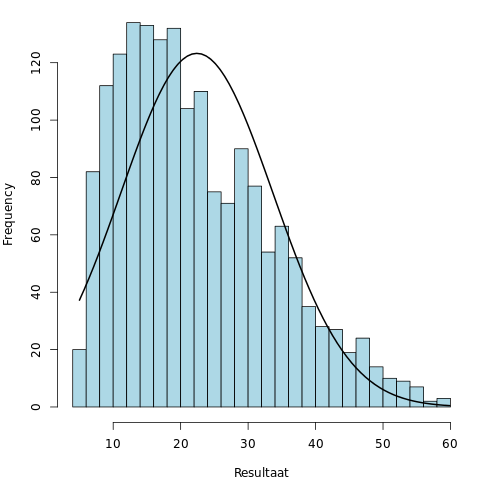
When I looked at all 1738 blood samples that had their Vitamin D tested between Feb 1, 2020 and Mar 13, 2020 (We were looking into the link between Vitamin D and COVID-19): The median (P50) was 20.1 ng/mL and the average was 22.4 ng/mL. Standard deviation: 11.24 ng/mL Half the samples were deficient, and the next 20% was insufficient.
Coming out of winter in Europe in a country with limited sunshine: most of the population is deficient in Vitamin D.
Seemingly any decent way to tune in a steady-state supplementation involves multiple iterations of the "get blood test, adjust dosage, repeat" loop
On the other hand, when our body synthesizes Vitamin D itself it seems to regulate that process to prevent overdose. So I've just settled on supplementing in the winter based on my best estimate of the correct dosage, then let my body do its thing in the summer. No issues so far, and supplements have had major impact on my fatigue/energy/depression in the winter
The Mediterranean diet itself has a lot of health benefits interrelated with the ones claimed about fish oil.
But just as a human experience, the first time I ate cod livers, it was hard to accept. Then I started spreading them on toast for breakfast, and realized that they were quite delicious, but very very much an acquired taste (and I eat almost everything).
As far as Vitamin D, there does seem to be a correlation between deficiency and severe coronavirus disease
[edit] to say, I love chicken and cow liver, but it took awhile to get a taste for fish liver. Pork liver, however, is putrid. I don't think I could eat that again.
Yes, and to be concrete, you can do so at economical prices at https://requestatest.com (it's a lifesaver in many occasions, I've used it 4 times with great success).
Other Quest resellers like https://goodlabs.com/ are way cheaper. Eg "Testosterone, Free (Direct) With Total Testosterone, LC/MS-MS" is $159 on that website vs $15 on goodlabs.
This is how I found my 10k IU of vitamin D a day, based on modern recommendations for indoor workers, that I modulate based on how much I'm outdoors, was perfectly on the mark!
Also an indoor worker. 10K IU daily would have put me far into hypervitaminosis D range.
Make sure you test after a very long time, such as a year of steady supplementation. A lot of the excess Vitamin D cases were taking less than 10K IU daily.
This is the entire issue. You get vitamin D from the sun. The concept of "steady supplementation" of vitamin D is not logical, unless your sun exposure is also steady, which is where the not-so-useful guidelines come from: some mean of some distribution of some skin tone of sun exposure, leaning on the "less" side of things, with current recommended values based on means from over 50 years ago.
I would never take 10k steady, because I don't live in a cave!
This is the amount I shoot for in the winter - I live in New England - it's made a huge difference in my life. I'm totally open to it being placebo though and I don't care. I don't supplement with it during the summer.
You can get most tests (although often not genetic) in many countries, with Canada being an outlier in forcing you to get a doctor’s note for just about everything.
Really terrible in Canada. If you don’t have a family physician (like everyone I know), good luck making it through triage at the walk-in clinic because you want a test to see your baseline values or proactively check for deficiency. The “hack” is you can pay a naturopath to order tests but the tests are not covered by public insurance in this case (actually pretty expensive IIRC).
Baby aspirin was overdone too. Interestingly, the fish oil hype cycle has a much longer timeline if you consider the popularity of cod liver oil once upon a time.
They used it for both and as a source of vitamin A and whatever other nutrients are in it. They used it for everything. There is an episode of I Love Lucy where a recipe for homemade baby formula is described which includes cod liver oil.
In a lot of things it was pretty good at what they used it for though, that does continue to be true.
The moral of the story here is just to do bloodwork on a regular basis (absolute bare minimum once a year) and respond accordingly. I take some supplements like vitamin D, but I only take what is empirically measurable. If I can't quantitatively measure the outcome, then there is no value and it's a woo woo solution. This isn't always going to be the best advice, but a vast majority of times it will be.
> The health influencers started noticing that the Vitamin D studies coming out weren't matching their original hype for Vitamin D, so many pivoted to trying to make claims that most people are severely deficient and just don't know it, which provides a convenient out
Not really. It isn't possible to be severely deficient in vitamin D without knowing it. By definition, if you are severely deficient in vitamin D, you have rickets.
It's pretty safe to assume all hyped supplements are pointless. Being generally active and eating fruits/vegetables is like 80% of the work for being healthy.
> almost everyone is Vitamin D deficient
This was the red flag that made me realize it was BS early on. If everyone is deficient, then it must not be that important.
I don't think your statement applies to the elderly (e.g. my mum needing D and Calcium for osteoporosis).
And I've seen many active healthy female friends under 60 actually need suppliments (I'm ignoring the stereotypical yoga worried well): plus pregnancy or health issues have an impact too.
But maybe I'm a victim of sampling bias since the men I know seem much less likely to see a doctor.
I don’t want to get into an argument about health on the internet, it’s really a no win situation.
Although feeling bad, going to a doctor, getting labs, taking a calcium supplement is completely legitimate and a very different story from watching a YouTuber say ‘everyone is vitamin D deficient’ then going out a buying a bottle of supplements.
> Being generally active and eating fruits/vegetables is like 80% of the work for being healthy.
Except for the things that you get from sunlight, not diet.
> If everyone is deficient, then it must not be that important.
But nobody who lives in e.g. East Africa and spends a lot of time outdoors is deficient.
So it's actually pretty reasonable to say that a modern indoor lifestyle combined with long winters would truly lead most people in those regions to being deficient.
If everyone is deficient, how would you even establish a baseline of what counts as deficient and excessive? The way they do that is they sample the population and look at the ranges of the values and maybe look at when comorbitity issues arise within those ranges. But “everyone is deficient in X” is easily dismissed hokum.
I think you missed my point. vitamin D levels in and of themselves aren’t an affliction. The “correct” level is established by looking at what everyone else has and also by trying to look for comorbidities. But the comorbidities are often hard to tease out; about the only disease we know is rickets. Everything else is weakly correlational for vitamin D.
How do you think they define healthy levels of other hormones like testosterone and estrogen? They look at the range of levels for them, they look to see when they think diseases start, and they say those are correlated and you should adjust.
>Everything else is weakly correlational for vitamin D.
All cause mortality is correlational for vitamin D.
Various disease outbreaks (common cold, etc) and severity are correlational for vitamin D.
etc
We even know by which mechanisms so it's not like this is far fetched stuff where we're overlooking things.
This kind of stuff slaps you in the face if you live in the northern half of europe.
To then think us now spending the majority of our waking hours indoors and the prevalence of those things and seasonal depression in winter when one leaves in the dark and comes home in the dark all has no effect....I think that's just hubris.
All I know is I used to have full on colds during winter in my 20s to early 30s, like every winter I would get two weeks of runny nose till the skin became red and irritated, sore and painful throat, coughing, etc. Since I take 25000 IU (D-Cure in Belgium) like 2-3 times a month during winter for the past 15+ years my cold last 2-3 days and symptoms are much more mild. For me the data is there.
The problem is that you don't know what your situation would be like if you'd not taken Vitamin D. There are too many variables, generally -- e.g. in your early 20s and 30s you're likely socialising with many more people (so, more exposure chances), and you may also have young children (even worse disease vectors).
I'm similar to you in experience, btw, except that I don't believe correlation is causation. But as it won't do any harm, most of us don't regularly monitor our Vitamin D levels, and Vitamin D supplements are cheap -- it becomes a harmless form of Pascal's wager that I'm happy to keep making. Nothing to lose except a very, very tiny amount of money.
Not in the field, but every time vitamin D studies come up I am reminded of the one that called out how current recommendations are based on faulty math (confusion on how to combine different sized studies confidence ranges ) and miss the mark significantly (and a lot of studies are based on those recommendations...)
This has come up several times before. It's not well cited. I read through it myself and even if the math is right, the application of the math seems incorrect.
The original data was a small number of studies with a small amount of old (1980s?) data that found a slope with so-so correlation.
The revised math finds a much smaller slope with what appears to be much worse fit to the same old data. The data was nearly horizontal before, but after the math changes it's much further away from 0.
The original study was making predictions near the data. The revision is doing massive extrapolation, far away from the range of what any of the studies tested.
I'm not a statistician, but it's not surprising to me that it's being ignored.
Honestly you don't even need to know the recommended number. In many countries you can get tested for free, and if that's not the case for you, getting tested usually costs in the ballpark of a box vitamin D supplements. Measure and only then supplement, then measure again later. You don't need to fly blind.
This approach doesn't make much sense to me. Why supplement something when you don't even know that you need it? You could make the same argument about any and every supplement and eat the whole alphabet soup every day, but that's just putting extra strain on your body.
Strangely the protective effects of vitamin d for heart disease appear NOT to be achieved through supplements. (Though the protective effects for cancer ARE)
I’m going to go out on a limb and guess that people who get outside a lot protect their health through both natural vitamin D from UV light exposure and cardiovascular exercise.
I think Vitamin D deficiency hype is driven by supplement sellers.
As someone who grew up in a European country where we don't get long summers, I suffered no demonstrable issues from the lack of sun nor did the many around me.
My family wasn't rich so food was reasonably nutritious but not perfectly balanced either.
Vitamin D supplements are sold widely, including in smaller supermarkets like Lidl and Aldi. And one imagines it all comes out of the same few factories.
There will be some who do need it, but not as many as are led to believe they do.
As many other things, it depends on diet and lifestyle. I also live in the cold north, and generally, if you're fair-skinned, spend enough time in the sun and consume at least some products with natural or added vitamin D, you're usually good.
Having a balanced diet and enough time to spend in the sun isn't a given, though, and many struggle getting enough vitamin D without suppments.
Has anyone done a RCT of D3+K2? K2 seems to be important in the absorption of D3. Another aspect that bothers me with these studies is that we’re simply supplementing the vitamin D, seemingly without measuring the change in blood levels. I took 2000IU (+K2) a day for many years in between testing my blood levels and still had <30ng/ml and had to go up to 5000IU/day. I’d like to see some further study.
K2 is also known to prevent problems with calcium build up which can happen if Vitamin D is dosed too high. I personally would never take Viramin D without K2 alongside it.
If you are on blood thinners you probably shouldn't be taking common advice on anything tbf. Or diabetic. Or heavily allergic. Cause you will straight up die.
for me, i was so deficient that i would notice it the next morning. also probably not a placebo as the D supplement i am taking is not something my mind goes to 7 am pre coffee lol
Not the same person here, but a data point nonetheless. Before supplementing D3 I had a cold basically every year, sometimes twice a year. Since I brushed up my levels I average 1 cold in 6 years.
Oddly, since the Covid time, I haven't caught a cold or flu once. I'm not sure it's the vaccines, the flu shots, or the less physical contacts on things overall. I still go to crowded places from time to time, like plane or train rides. May be the population in general have less cold or flu virus overall to go around.
Unfortunately too many other changes happened at the same time. I am enormously healthier now (in numerous measurable as well as subjective ways) but it may be that the D levels played no role.
It's pretty well-established science now that vitamin D is a hormone, not a true vitamin. Vitamin D binds a nuclear receptor that regulates roughly 1,000 to 2,000 genes (5-10% of the human genome).
The "Vitamin D" moniker has just stuck around since it was named in 1922.
Even so, it still seems to be a small effect. The author mentions some studies looking at sunlight vs all cause mortality. These, and more recent studies [1] found much higher reductions in all cause mortality from sunlight exposure, of about 30%. It's thought that other factors may be behind this, such as NO production in the skin in response to UV [2].
I suspect that blood vitamin D is mainly a marker for how much outdoor exercise people are getting, and that it is the exercise rather than the D which is causal.
My life changed after I got tested for vit D and started talking supplements. I was severely deficient. I am now sufficient and everything changed for me.
In December by chance I put a pack of Vitamin D into my shopping basket. I did not think much, thought to take 1000IE but then decided that for the first week I take 3000 to catch up. Muscle pain went and control over eating improved. I did not expect any changes based on past experience with 1000 but this time I could not ignore it (age can play a role) and I stayed on 3000. Tests a month later showed I was just not deficient any-more. I continued on the regime and started having improvements in long running skin issues to the extent my dentist noticed. It may not be a miracle drug but one should not underestimate cumulative impact individual factors, age and lifestyle changes (less sun) that may change levels and demand.
Because I was suicidal, had extreme mood swings and all of the muscle pain and instability.
I didn't even know about vit D, didn't research it. I just got a panel done to get an idea of what's going on with me and discovered I was severely deficient on vit D
Bingo. Obviously being deficient is bad, but the reason supplementation seems unimpressive is this is one of those proxies for healthy lifestyle. Kinda like how grip strength is correlated with longevity but banging out tons of hand gripper sets isn’t going to do much for you health.
I also suspect that the frequency of outdoor exercise matters even if the total duration of outdoor exercise remains the same. Subjectively, I feel much healthier when doing thirty minutes of outdoor exercise six times a week, than when doing one hour of outdoor exercise three times a week. But then of course, all the causal effects could have been caused by a different factor (say dopamine release) than vitamin D.
Maybe this is true if you’re only considering white people. Brown people can spend a lot of time outdoors and still be deficient, especially if their ancestry is from much a much sunnier region or lifestyle than the one they’re currently living in.
It has never been established that darker people require the same amount of D as lighter. The supplement industry plays on these fearmongering to boost sales.
I don’t think there’s anything definitive. 400IU/day from one study is nothing if you’re deficient. 2000IU from another study is better, but even then we don’t seem to know much about absorption from these studies. For example, did it actually raise serum levels by 10ng/ml after a year, and how did THAT correlate to positive or negative health outcomes? K2 also seems to play an important symbiotic relationship with D, and seems notably absent from these studies.
You missed the K2 part of his comment though. Both my mother and I have chronically tested incredibly low for vitmain D, both always taken supplements, both never had improvement. A couple years ago, my mom texted me saying she tried a D3+K2 supplement and for the first time in her life tested in range for vitamin D on her panel. I was skeptical but tried it, and have tested in normal range since.
People who are drawing blood and trying to find some correlation between vitamin presence and health at this point are just practicing divination. The fact that it can be published in a scientific journal without any sort of RCT to back it up is palpably unscientific.
The customers of these studies are the supplement companies looking for another product to sell.
> For a while there, many people thought vitamin D was magical
I never heard that in Germany. I only heard that if you use certain medications like cortisone that vitamin d could be problematic. Most doctors will give vitamin d supplements when prescribing cortisone, at least in Germany.
I have HIV and am under treatment using medication, I have found D3 and K2 helps alleviate some of the side effects of the medication; largely my mood. Which makes a lot of sense because my immunity system is in constant daily activity.
However, I need to get more sunlight; I just don't think supplementation is the same as being in the sun. When I was homeless I never had these mood issues, but that's complicated, living day-to-day & meal-by-meal puts you survival mode so nothing is really past the hour.
I don't understand why literally everyone I know are diagnosed with Vitamin D Deficiency. Even living in sunny California. Wasn't human biology adapted for it in the last 40k years? I understand we spend more time indoors, but literally everyone?
We evolved to be in the sun for much of the day. We no longer do that. Many of us barely go outside at all anymore. Light skin is an evolutionary adaptation to mitigate the issues related to this in higher latitudes, but it's not match for modern indoor lifestyles.
I started to take VitD on a whim and my mood and energy sure improved. Also I feel like I get sick less often. 3 friends whom I recommended VitD told me the same. Living in northern germany. YMMV.
I ultimately stopped it because it seemed to cause lower back aches. (Pretty sure, bone/muscle not kidney!) Every time I went on the D3, my back would start to hurt. That repeated several times, enough to suspect a pattern.
The cause may be similar to the itchy, tingling teeth.
According to this fascinating paper, Vitamin D can actually trigger the leaching of calcium out of bones, into circulation:
That trial used a dynamically-adjusted dosage of a vitamin D3 supplement, where dosing was set as to keep blood levels within a target range of 40–80 ng/mL. IMO part of the reason this trial is showing better results than the previous clinical trials of vitamin D supplementation quoted in the above article is that vitamin D has bad effects if too low and too high. Adjusting the dose dynamically to achieve an optimal range gets you the benefits without some of the negative effects.
That blood level matches what the parent article cites as typical for Africans who were still eating their traditional food, and which is higher than typical for the industrialized countries.
Your body needs vitamins in order to form complex aminos to operate. But your body only needs to make so many of them - especially if you are an adult, not pregnant, or not suffering from a disease of some sort.
The very premise that loading up your body with "excess" vitamins beyond what you need is already pretty fraught. Building a house without enough lumber can lead to long term deficiency - but loading up a construction site with more materials than are needed shouldn't automatically be assumed to be good.
The reality is that the modern diet has already solved so many common nutrient deficiency diseases (pellagra and goiters were a shockingly common diseases 100 years ago) that maxing out on vitamin intake has become more of something like a speculative hobby than anything else.
> loading up a construction site with more materials than are needed shouldn't automatically be assumed to be good
It is almost universally recognized as good to do exactly that. It's better to have oneplanned extra trip to return excess materials (if they can't be used on the next job) than to have multipleunplanned trips when you unexpectedly run out of this or that.
Definitely. I ordered material to replace the balusters on our shared family cabin with horizontal stainless steel cable deck rails and ordered 5-10% extra for all of the various fittings, cable, as well as a backup swage tool.
One of my uncles asked why I’m budgeting for an extra $150 of material we won’t need. I asked him how much it would cost to get us all up here for another weekend to finish if we needed extra parts. The answer was “more than $150” and he understood.
It’s even more crucial to keep enough material on the jobsite when you’re running a project and paying $140 an hour for an electrician.
While there is no doubt that excess vitamin intakes are useless or even harmful, the problem is that for most vitamins there is a great uncertainty about which are the optimum daily doses, because the controlled experiments that would be needed to determine those doses would be rightly deemed as unethical.
Therefore, since we only have some weak circumstantial evidence, debates about how much vitamin D is good, and the same about other vitamins, will continue. As long as the uncertainty persists, it is safer to ingest somewhat higher doses of vitamins than those recommended, but not many times higher.
The conclusions of the article were that high amounts of vitamin D have been shown to be correlated with good health outcomes, but the supplementation studies could not reproduce the same outcomes, so it remains mysterious what factor was associated with vitamin D in the studies with positive effects and whether vitamin D itself had any role or its presence was just a coincidence.
There would still be a ton of goiters if not for iodized salt, basically an obligatory vitamin intake. People had no good iodine source living inland where most anything they catch or grow is not going to have sufficient iodine no matter what it is they were eating.
I'm not sure what the ancestral iodine source might have been. Fishing villages perhaps along the coast? Hard to say how much coast was relatively populated given challenges of shifting shorelines and archaeological efforts. You can still reproduce laden with a goiter however, and that is enough to keep chucking malnourished humans somewhere on earth.
It takes a pretty extreme iodine deficiency to end up with goiters. In most environments, there's enough in the soil that eating local plants / animals that eat those plants supplies enough.
The iodine deficiency issues that haunted the Swiss (and Appalachia) arose from people settling down from nomadic lifestyles, in mountainous regions that easily were leeched of iodine by rainfall, and then farming that already leeched soil until there wasn't any iodine left at all.
That's fair, but it also exactly explains why there are weak positive effects of extra Vitamin D.
There's a lot of unknowingly deficient people out there who get benefits from supplements. But the benefits are limited by the upper bound of the deficiency.
Two things to consider: The recommended levels are established based on "good enough for 95% of people". That means that quite a lot of people can get by with less than the recommendation. Furthermore, being deficient is not a binary. If you are just a little bit deficient you may have very mild symptoms.
I think the difference is that increasing protein intake does offset other worse eating habits. So it's not that you need the protein, but there's a small probability that it replaces calories from refined carbohydrates.
Yeah, you do need daily protein but for most people nowhere near as much as they are taking in.
You see these protein bars and some of them basically have a full days worth of the stuff and that is before your other meals come in.
There is the YouTube channel 'Subway takes' where people have about a minute to argue a point of view, usually very funny takes as well. There was one that was 'The Protein fad is basically an eating disorder for men', they aren't far off the mark with that.
>'The Protein fad is basically an eating disorder for men'
This is such a bad take.
The current protein fad isn't being driven by men. Bros have been hyping protein and keto for over a decade.
The current "put protein in everything" fad was driven by women's social media, especially mom influencers. You're seeing the explosion in products women are more likely to shop for.
My wife started buying protein products after getting a flood of Reels talking up its benefits for children and women's health.
Too much protein can definitely kill you, or at least make you ill, as discovered by the Europeans who explored the northern parts of America and who had initially tried to live from the meat of hunted animals, until they learned from the natives that they must eat enough fat besides the lean meat, in order to survive (most wild animals have little fat, except the bone marrow, which must be extracted).
However, too much protein is a lot, much more than most people will try to eat in normal conditions, because an important advantage of protein is that it is satiating, i.e. when you eat enough protein it is easy to eat less food and more seldom, without feeling hunger.
For example, I eat 2 meals per day, in the morning and in the evening, of about 800 to 1000 kcal each. If I ate more, I would gain weight rapidly.
When I was eating any kind of industrially-processed food, I could not eat so little, because I became hungry quickly. Now I eat only food that I prepare myself, from raw ingredients. In order to avoid hunger, the content of protein and fat is very important. Typically, each of my 2 meals includes 40 to 60 g of protein and 20 to 30 g of vegetable oil. This ensures that I will not be hungry all day.
Thousands of words and no mention of the obvious thing - testing whether sun exposure is beneficial or harmful.
The article opens with the observation that southern states had lower cancer rates due to solar irradiance. But then we intervene by taking pills. Why not try to absorb through the skin, even if it means something like a tanning bed?
There are many nuances and people seem bad at understanding those. Too many are getting their information from "health influencers" and 30 second videos, which is why we seem to bounce between the two extremes of "everyone should take Vitamin D!" and "Vitamin D is overrated!".
Australia has tried to explain sun safety here, taking into account that Vitamin D is best obtained from sunlight:
Nobody will run that trial though because we've spent decades telling people the sun is dangerous and gives you cancer (both things can be true of course). Putting people in the sun every day would not pass ethics tests.
I was told that there are lots of latitudes in North America where the sun is at too low an angle for your skin to make vitamin D for large parts of the year so you should take it during those times and then you should be fine during the summer if you get outside enough.
The charts showing vitamin D not helping, but also slightly hurting make the topic more relevant. The title is almost too flippant of the conclusions which is don't just take more than necessary,because it's likely to actively cause harm not just slightly increase your vitamin D.
Leaving out skin colour from the conversations while mentioning 'randomized trials' and 'seasonal subpopulations' is problematic. Vitamin D production is highly tied to skin colour (melanin levels).
Just because vitamin D supplements helps with rickets doesn't mean supplementation helps all the other things we seem to attribute to vitamin D.
I think a good hypothesis for the discrepancy regarding why people with "naturally" high levels of vitamin D fare better than those who do not has to do with how vitamin D is produced naturally.
If you take the vitamin orally it might help for rickets and a few other issues but if you take it naturally via sunlight you might actually be having other benefits that aren't properly measured today.
With the current state of fear surrounding sunlight I doubt people are getting enough to see benefits and all studies use oral supplements instead of time in sunshine.
A different personal experience. I had Vit D deficiency. Started on 2000IU per day and was still deficient after months. Then started on 5000IU per day, initially daily but now every other day or so. My last test was in the middle of the "normal" range. I have been taking VitD for 4 years or so. A lot of my symptoms like tiredness, sleepiness etc have improved since then.
I asked my immediate family members to do a test as well. Male/female, young old, across states and even countries. All of them except my mother had low Vit D levels. My mother regularly supplements as its recommended for bone loss prevention in that age.
I expect the author is aware of that: where do you think he got the graph from if there's only 'gated copies'? But Sci-Hub links are unstable even if you don't mind linking them.
Linking to sci-hub for a known blogger may lead to undesired legal consequences in case the journal copyright mafia decides to make an legal example of you.
Probably due to road conditions during the winter season. Imagine asking someone who isn't used to driving on icy roads to drive a large van full of equipment up through the Rockies
They do, however the roads are, potentially icy, certainly after a storm, which means that you can't measure consistently, even if you're trying because some days the roads will be impassable.
If someone's not used to driving in snow, it'll be even worse. You should not let them drive if there's snow/ice expected in the next day; or the roads haven't been cleared yet. As someone who grew up in Minnesota, I can tell you that yes, we are better at driving in snow than people down south. However, we go in the ditch a lot anyway.
I was taking 4000IU of Vitamin D daily along with 100 mcg Vitamin K-2 MK-7. My Vitamin D level was 60ng/ml. I've since dropped down to 3000IU per day. I go outside a lot but am either covered or using sunscreen since I sunburn easily.
Pretty sure if you’re burning easily then you are making vitamin D easily so just go in the sun but not so much that you burn. (which is i think common sense)
Probably heavily depends on the country/region, but here in Germany it is basically the norm to be Vitamin D deficient. Like, half of the population have a deficiency when there is some sun and basically everyone has a deficiency for months during fall/winter/spring. So I have to laugh when I read "taking vitamin D does nothing unless you’re severely deficient". Yeah like, but that's most people in many countries lmao
This is great. I wonder if there's something like a patreon model where we could sponsor similar deep dives on other supplements?
For example, I've been supplementing with nicotinamide riboside for a few years now. I stop occasionally and when I do stiff and sore hands and knees return and I get more headaches.
I'd love to know if I'm deluding myself (placebo effect?) or there's good science that backs up my experience.
As somebody who spends an insane amount of time inside, the lack for exposure to the Sun mot just affected vitamin D levels but eyes sight too, they were terrible, and also mood.
Taking vitamin D pill instead of Sun is not the same.
I didn't see any mention of K2 (or missed it) - but a lot of D supplements combine with K2 as a "traffic cop" to keep calcium in bones and not arteries. I've not found a ton of evidence on this either, but seems to be a popular combination.
Just mildy exaggerated? Is this a joke article? If you don't achieve a suitable level, health will suffer immensely, even permanently. There are no ifs and buts. People who say otherwise work for the medical industrial complex and will get you killed.
Note that adequate magnesium is critical for proper vitamin D function, but the article doesn't document it.
That's an absurd analogy. Vitamin D is a vitamin that is in large part derived from significant sunlight exposure. Vitamins are essential by definition. Sunlight exposure is highly insufficient by historical standards. This is why supplementation is absolutely necessary in almost everyone who is not a full time outdoor worker.
In contrast, the air contains oxygen which is sufficient for most people with normal lung function.
Probably heavily depends on the country/region, but here in Germany it is basically the norm to be Vitamin D deficient. Like, half of the population have a deficiency when there is some sun and basically everyone has a deficiency for months during fall/winter/spring. So I have to laugh when I read "taking vitamin D does nothing unless you’re severely deficient". Yeah like, but that's most people in many countries lmao
Without supplementation, yes, most people do have a substantial deficiency. There also exists the sufficiency range which is higher, and the optimality range which is slightly higher still.
tl;dr: The combination of vitamin D/MG cured heart arrythmia and mild depression I suffered from for almost 20 years, so I do not think it is worthless.
I had ventricular extrasystoles for a very long time of my life (18-37). This is a mostly harmless arrytmia that feels like one beat out of the normal rhythm. Around 18, I noticed it for the first time. It came and went, usually I had this for ~3 weeks and then it was gone. Over the years however, I got more and more of those and at the age of 30, I had them ~70% of the year at a rate of 5-6/min. In parallel, I felt stressed and depressed. Not from the fact that I had those, I got used to that over the years, which was not easy.
The doctors I went to said: Harmless, learn to live with it, you will still get very old. Especially the five cardiologists but also the "normal" doctor I saw never took that serious at all. I kept a diary over the years and knew that those could fully go away and I had the feeling that it was somehow correlated with what I eat. Whenever I said that, the response was: "Unlikely, you just don't pay enough attention and do not notice them anymore". Treatment advice was: Live with it or get a catheter ablation done.
Then I then went to a different doctor who actually listened to me when I said they could fully go away. She tested me for vitamin D, B12, magnesium, potassium, iron and a few other things. It turned out that I had a strong vitamin D deficiency (12 ng/ml) and a mild MG/K/B12 deficiency.
Then I took some supplements (a bit of D/MG/K/B each). That helped a bit, but not always and not consistently, but I could definitely tell that there was a relation to taking something or not. I prefer a healthy diet over supplements, so I was not very consistent taking those and when everything was good I simply stopped. The fact that this did help, but not always, kept bugging me though and I wanted to figure out what exactly helped. Long story (~5 years of experimenting) short: It most likely was the combination of D and MG, taking one in isolation did not always improve things. There seems to be a mutual dependency between them, which also seems to be studied to some extend (I started to read med publications at some point, e.g. [0]), but I am a computer scientist and not a doctor so take this with a grain of salt and definitely do not just take stuff without measuring the actual levels first.
Today, I occassionally take supplements (still do not like the idea of taking them on a regular basis) and get my D level tested every once in a while. It is now usually ~30 ng/ml which is still a bit low, but the extrasystoles are fully gone (I am 44 now).
Yes magnesium seems to be quit a common deficiency because the heavy use of fertilizer depletes the density of minerals in the food chain. Also magnesium is a very important co-factor in the use of Vit D, so supplementing with a magnesium deficiency might not be of much use. Sadly this seems overlooked in most studies
Medical doctor here. Please don't get health advice from hn comments. As a matter of fact, I advice against reading anything about health on hn, as the risks of dangerous misinformation far outweigh any useful information you might learn here.
Principal Armchair Commander here. I second this. That said I also avoid health advice from professionals. I have too often found their incentives to be in conflict with my well being. I just do my own research and ignore everyone, especially AI.
There was a thread that touched on lyme disease recently, and there were a ridiculous number of comments going down pseudoscientific rabbit holes about people who'd somehow gotten chronic lyme in places with no endemic lyme disease and that the only ways to fix this were chronic antibiotics and hyperthermia chambers.
HN often suffers from the trait of people who are really bright in one area assuming that that means they are really knowledgeable in areas they don't know much about.
That is relatively benign compared to what I've seen before. I normally refrain from repeating misinformation, even for debunking it but I will make an exception (or two). I've seen comments ranging from "salt intake doesn't increase blood pressure because you pee what you don't need" to "blood glucose levels aren't good for diagnosing diabetes".
Edit: OK, that's not really a "range". I have no idea why I phrased it like that. Both are very dangerous statements that can be life threatening if the wrong person believes it. I just hope that comment didn't cause any diabetic ketoacidosis cases.
It’s always great when years of medical and scientific studies are instantly debunked by HN’s top JavaScript developers. One wonders why we even bother having research universities.
Do you think people seeking medical advice from HN comments might be related to their disatisfaction from the suppor they receive from medical clinicians?
Yes and no. Some are just way overconfident in their knowledge of medicine and human body, while it is miniscule compared to the average physician's. Medicine is a field much larger than people realize. It is easy to think you know a lot when you don't even know how much you are missing.
Having a reason doesn't make it any less dangerous though.


>Because physical exams are performed in mobile vans in NHANES, data could not be collected in northern latitudes during the winter; instead data were collected in northern latitudes during summer and in southern latitudes in winter. To address this season-latitude aspect of the NHANES design, we stratified the sample into two seasonal subpopulations (winter/lower latitude and summer/higher latitude) before examining vitamin D status.
Yeah, I'm not surprised that the rates for vitamin D deficiency were low.
>Less than 1% of the winter/lower latitude subpopulation had vitamin D deficiency (25-OHD <17.5 nmol/L). However, the prevalence of vitamin D insufficiency in this group ranged from 1%–5% with 25-OHD <25 nmol/L /.../, even though the median latitude for this subsample (32°N) was considerably lower than the latitude at which vitamin D is not synthesized during winter months (∽42°N).
and the more northern latitude in summer:
>With the exception of elderly women, prevalence rates of vitamin D insufficiency were lower in the summer/higher latitude subpopulation (<1%–3% with 25-OHD <25 nmol/L)
Now imagine if you lived in northern Europe around the 60th parallel, where the sun doesn't get high enough in winter to produce vitamin D.
reply