The biggest counterpoint here is what about families? A mom with three young kids in tow pretty much needs a car to get around. Or elderly people? I can't really take my 90-year old grandma out to dinner if it requires her to bike her way to the restaurant.
Thinking about non-car based transportation methods is great. But the reality is that large segments of society are always going to need some sort of car-based option. You can't just ban cars from a city center without totally excluding a lot of young people.
Ask the Dutch. How do they do it? Or do you assume they do not have young kids or grandmas?
Why is it that whenever people talk about designing cities for pedestrians and bikes, someone on hackernews thinks it means eliminating all cars entirely forever. For a forum ostensibly designed for entrepreneurs, it shows a tremendous lack of imagination.
Answer:
* Public transportation inside cities such as buses and trams
* Trains to rural areas
* Park-and-ride garages for people to drive in, and park next to transportation hubs
* Underground parking garages at the edges of pedestrian zones, or even underneath them, coming up directly above them
* Ubiquitous bike storage and bike attachments such that yes, in fact, a mom with 3 young kids can tow them from a single bike - moms in Amsterdam and Berlin do it all the time.
The difference is that Holland is entirely flat, has an average high of 71 in the summer, and rarely if ever gets icy.
The Dutch experience simply doesn't translate to most of America because of the terrain and climate. Elderly people people will die if you make them walk in the Florida summer. 7 year old children lack the leg-strength to bike up California hills. Both groups are likely to slip and crack their heads open in the icy Boston winter.
And Tokyo and Oulu, Finland have the same weather as Holland, surely?
Lots of places bike. People who don't like bike infra make all kinds of excuses, but the truth is that bikes work almost everywhere short of the Himalayas. It's just our lack of investment that holds them back.
High winds can be a bigger problem than hills, and the Netherlands, as you'd expect from a place famous for windmills, has high average wind speeds. People still manage to cycle. Studded tires are available for icy conditions, although in most of the world occasional de-icing salt on the paths will be enough. Electric motor assisted bicycles are available for people with health problems. Complaints about terrain and climate are just excuses.
I actually appreciate you pointing this out. I get rather tired of smug assertions that America can just do everything like it's done in Europe or something when the landscape and population density are so very different.
But I don't think that means we can't borrow any lessons at all from them. The biggest lesson we can borrow from the Dutch seems to be that they set out to intentionally make their cities more pedestrian friendly and bicycle friendly starting in the 1970s when people became extremely fed up with children dying due to being hit by cars.
> I actually appreciate you pointing this out. I get rather tired of smug assertions that America can just do everything like it's done in Europe or something when the landscape and population density are so very different.
Ahem. The Alps, the fjords, the Netherlands, the Mediterranean coast of Spain, are all very different landscapes.
The population density of the combined regions is probably a red herring, too: nobody sane will cycle from California across Nevada to Salt Lake City, except as a fitness holiday. Even my 1080-km cycle along the Rhine (flat from Hoek van Holland to Switzerland) isn’t something anyone sensible would do to get from A-to-B, and I flew home instead of cycling back to the UK.
Instead, what will matter is the average journey time from where people live to where they want to go, and how much effort it is to get there. Electric bikes will help on both counts.
From the reverse argument: it's really very tiring that the ultimate defense from any American on any topic ultimately boils down to American Exceptionalism.
Yes you have a wide variety of population densities and climates. So does Europe. So does everywhere else in the world.
It's the most boring and lazy argument to make, and it never actually answers anything. Exactly what is so different about LA compared to Paris that it can't have good cheap internet and cyclists must die at 5 times the rate?
What's far more tiresome to me is someone picking a completely pointless fight with some detail of some comment as if the rest of the comment did not exist.
I've lived without a car in the US for over a decade. I no longer have a driver's license. I would like to see America become more pedestrian friendly and bicycle friendly.
I don't think you accomplish that by arguing that "Well, you just do everything exactly like the Dutch!" I think that's a lazy, unhelpful and disrespectful answer that actively ignores real and meaningful differences between the literal and figurative landscapes of the two countries.
It's not good communication to say "Just do everything exactly like the Dutch." If you want real solutions in the US, you need to think in a more nuanced way about what pieces of the Dutch experience you can reasonably use in the US, taking into account real differences between the two places.
Ignoring the differences between Europe and America very often comes across as open contempt for Americans and their presumed stupidity and laziness. It's not an effective means to promote actionable ideas.
No one is likely to take advice that they are just wrong and stupid and lazy and should wholesale copy a system that works well elsewhere without bothering to examine differences between the two places and trying to make some alterations that will hopefully result in a better fit.
Based on the comment I replied to, I feel like San Diego, California could try to borrow ideas from the Netherlands without a lot of critique beforehand. But LA has vastly different weather from Paris and a very different landscape and history of development. So, no, you aren't realistically going to replicate Paris in LA.
I will also note that they have been rioting in Paris. Paris is not some perfect paradise that has figured everything out and never has any problems.
Claims of European superiority are frequently overblown.
Above all, the problems you cite are due to kids and elders needing to move long distances. This is not needed in cities not built for cars. Kids can walk to schools, and the elderly don't need to live away from the lively zone.
Lausanne is a very 3D city with a lot of elevation gains (with elevators to travel between different parts of the city!), and biking worked there just fine, even in its Boston-like Swiss winters. I saw kids biking up hills all the time.
You are right that it would suck in the humid south. There are good reasons the obesity rate spikes in those areas.
I agree with this and I have done this for years. However, having to take a shower is an extra source of friction that makes biking a bit more challenging in hot climates.
tl;dr are you sure those showers are necessary? If you stink when you sweat it could be because your skin is reacting to periodic exposure to soap and/or hot water.
---
It only breaks 100 occasionally here in Colorado, but it's plenty hilly and I ditched my car for a bike 8 years back. I arrive at the office sweaty pretty frequently, and I neither shower nor bring a change of clothes. Luckily the air is so dry that the sweat evaporates quickly.
At first I did a lot of showering, but then my skin suffered. The doctor recommended using less soap without going into how much less, so I asked a few close friends to be brutally honest about whether I was stinky while I reduced my soap exposure and started to look for correlations.
I pretty quickly ended up reducing by soap exposure to practically none (I still use hand soap though).
About two weeks after I quit using soap while bathing my skin has started behaving differently. I can no longer correlate sweating a few hours ago with being stinky now. (Admittedly, is hard to get real data on stuff like this).
Somebody always tells me I'm gross when I confess that now I only shower once every four days or so, but 90% of the time somebody mentions a case where I was stinky, they're taking about day two after the shower, not day five.
My theory is that even exposure to just hot running water depletes the skin of some resource, and about 24 hours after the shower I'm at my stinkiest because whatever process replenishes that resource is at a peak. By 48 hours this has subsided and my scent is steady-state. (i.e. body odor correlates with the derivative--not the absolute value, of this resource. It might be bacteria, or oils, or pheramones, I'm not sure).
I've also found that by avoiding cotton or synthetics in my shirts, I can get get a week's worth of wears out of them (I just cycle them so that the color changes and nobody asks).
I think that people in general are frequently wrong about the causes and effects around bathing, but the social conventions are too strong to help them, so occasionally I go on a rant like this, just in case I can help save somebody else from soap. Thanks for listening.
> Ask the Dutch. How do they do it? Or do you assume they do not have young kids or grandmas?
They do it the dutch way.
Things you wouldn't do anywhere else, like leaving babies in their strollers in the streets outside shops when they go shopping.
Denmark is really a big village.
Source: my girlfriend family is Danish and I had saw them last time 4 days ago.
> * Trains to rural areas
It's more easily said than done.
Rural areas are also resistant to things that would make the area less rural, like high speed train.
Look at the fights happening in northern Italy against the TAV (the Italian version of the TGV)
> * Park-and-ride garages for people to drive in, and park next to transportation hubs
Many cities in old Europe cannot do that. Think about the central areas of Paris, Rome, Milan, Madrid.
And those that could are reluctant to do it, because it would immediately lower the value of the buildings around.
Imagine you bought a house for 100 and its value drops to 70 because they made a giant parking lot just below your window.
> * Underground parking garages at the edges of pedestrian zones, or even underneath them, coming up directly above them
In most cities in old Europe digging is very costly and sometimes impossible (most Italian cities for example)
> * Ubiquitous bike storage and bike attachments such that yes,
That would steal space to pedestrian transit
> a mom with 3 young kids can tow them from a single bike - moms in Amsterdam and Berlin do it all the time.
Compare the average street in Berlin[1] or Amsterdam[2] with those of Milan[3]
You will immediately notice a few things: in Milan trams railways are in the middle of the street, they are very slippery and dangerous for bikers; Berlin sidewalks are much larger on average; much of the transport in Amsterdam happens along canals, where cars are usually not allowed.
Things are in a certain way not because people are simply stupid or ignorant, but because the surrounding environment poses a lot of limits.
Families is not a counterpoint. I have had three kids in my bike. Now my kids ride their own bikes but we meet parents with all their kids in their bikes every day. There are homes for the elderly around here that put two elders in a bike to get them out for a ride. You didn't mention shopping, but I did put all my shopping in that same bike I had my kids in.
Guess what the biggest obstacle to my kids getting around on their own is? Cars! You don't have to exclude cars from cities, just make them be there in a way that also allows children to safely get around.
Most families in the developed world are having one to two kids.
I rode a bike with a toddler in a toddler seat on the back until I was 8 months pregnant. You can also get little "cars" to tow behind your bike to hold two kids.
I always hated cars. My kids never felt like a barrier to going far free. My marriage did. After the divorce, my kids and I eventually went car free.
They are adults. They still live with me. We remain car free. We're happier this way.
> I rode a bike with a toddler in a toddler seat on the back until I was 8 months pregnant. You can also get little "cars" to tow behind your bike to hold two kids.
As adults, I can understand the appeal of being car free, but I can't help but be struck by how dangerous it seems to commute on a bike pregnant with a toddler onboard.
I'm imagining biking down Market St, 8 months pregnant, with a toddler seat and two kids in tow. That's a lot of faith that nobody's going to open a car door at the wrong time or pull out into traffic without looking. I know fit dudes in their 20s that have had accidents and been seriously injured. I've never thought of myself as particularly risk adverse, but wow that seems risky.
I was in Germany. This means the landscape was pedestrian friendly, bicycle friendly and I wasn't going terribly far.
When I was six months pregnant, I took my two year old to the ER via bike because his dad had our only vehicle. The kid needed stitches, having done a bit of climbing of the furniture and busted his chin open on the wood floor -- a rather all too common injury for children that age. I was told that the stitches he needed were really rather mild for such an injury. They had absolutely seen far worse.
The most dangerous place my toddler spent time was our home, where he persistently climbed the door frames and yelled for me to come catch him before he fell. He never did learn to climb down. He just counted on his young, energetic and very attentive mother to always safely catch him. (And I always did, so he was never cured of this expectation.)
I desperately wished I could find some way to remove our door frames. It would have brought my stress levels down about a thousand percent.
> I'm imagining biking down Market St, 8 months pregnant, with a toddler seat and two kids in tow. That's a lot of faith that nobody's going to open a car door at the wrong time or pull out into traffic without looking
That's why it's important to ride where one can be easily seen. That means riding in the middle of the general purpose lane and not off to the side in a narrow bike lane within the "door zone".
I ride with my three kids (one in the rear child seat and two in the trailer) in the middle of the lane and never had problems with car doors or vehicles suddenly pulling out without seeing me.
Ha! Go see how they do it in Europe. Bike trailers, extra seats in the front & back, built in cargo decks, longer bikes; there are lots of fancy ways to load a lot of kids & cargo onto your bike. And don't forget that kids can ride their own bikes too! My kid was riding a bike with me to daycare at 3-4 years old. Your thinking is too car-centric!
Europe does not have some magical equation for drastically reducing car use. The number of cars per capita in the EU is only about one third lower than the United States. That's nothing to sneeze at, but it certainly means that the sizable majority of Europeans are still car-centric.
And even then that's mostly a function of lower incomes (vis-a-vis the US). The high-income European states of Luxembourg, Switzerland, Iceland, Monaco and Liechtenstein all have almost identical car ownership as the US.
The difference of car usage between USA and Europe should be much larger than the difference in car ownership. A car is useful for many things other than the daily commute, someone who mostly bikes to work is still rather likely to own a car but contribute much less to the traffic and pollution.
[edit] looking at random stats such as http://internationalcomparisons.org/environment/transportati... seems to confirm that - the vehicle ownership rates are just a bit lower, but annual distance driven per capita in European countries is twice less than USA.
This is probably a function of distances between living space and work. Beyond 10 km the car catches up and starts to get ahead in total travel time.
Public transport is meant to close this gap but there's not enough for people, much less bicycles, especially long distance. So it gets crowded. The car is universal until you run out of parking space.
They do, but not enough to ensure longer distances are inefficient.
And especially the "ingress" roads do not block - from suburbs and further districts.
Now that is Poland, Warsaw, the city is designed to be more car friendly than most capitals in EU, more spread out, while still keeping strong public transport and bike as options.
The parts that block up are near choke points, City center, bridges, some big intersections.
I live and travel around Europe. Seeing parents riding with their very young kids is not too common a sight and every major city I've been to has traffic problems, because a whole lot of people do want to use cars and do value their convenience.
Whether that's a bad thing or not is another discussion but don't try to present Europeans as some sort of superhumans.
I only have experience with Berlin, Hamburg, Munich, and Amsterdam; but if you sit outside of a daycare in those cities in the morning you can see the multitude of people who ride their bikes to drop off their 1, 2, and sometimes 3 kids at daycare. Those cities do cycling right and it shows.
So I would disagree with you. The traffic problems are caused by having cities that are only setup to make cars convenient and everything else inconvenient. Cities that prioritize the lowest bandwidth people mover are going to have major traffic problems, of course.
Like you say, people want convenience. But I don't know why you think they particularly care about driving (or cycling or walking or taking the train). They just want the most convenient & cost effective thing. If that's a car, they will drive a car. If that's cycling, they will cycle. If it's the train, they will take that instead.
On practically every measure, owning a car is far less convenient (unless you live in a city built around driving cars) and more expensive than not owning a car. We owned a car in Germany but only used it for weekend trips. So the point here is to change cities to not be built around cars. Make cars less convenient.
Your last line is the issue that annoys people. It often lands like “rather than focusing on making other means more convenient, we’re going to focus on destroying the existing convenience to make alternatives more competitive.”
A certain amount of that, as an unavoidable byproduct, is okay with most people. What’s not ok is the perceived (or real) gratuitous destruction of convenience.
You can't have it both ways. You can't have a car-friendly city that is also great for cycling and public transit.
Besides, gratuitous destruction of that "convenience" is good for society and the planet. The obesity rate in America should be proof enough that cars are bad for you.
While we love our bycicles in Europe, if you go down to the southern countries you won't see much of them taking kids around either with trailers or kid seats.
Most of the Germany had the "benefit" of being able to rebuilt post WW2 bombing, so they are a bit more spread out and can easily accommodate new road features (if there was a country that is car friendly but not US, it's Germany :)).
And Netherlands is just... Flat, and biking has been a tradition there long before the current ecological push.
However, most European old towns are frequently narrow one-way streets on hills and it gets really hard to get a buy in to reconfigure them altogether.
But I agree with the premise that streets should be given back to people, but pedestrians should first and foremost, with bikes and other micromobility tools "demoted" compared to them as to not cause mayhem (eg. pedestrians do abruptly stop :). Basically, pedestrian streets with traffic rules stating that pedestrians are always in right of way. That should provide plenty of space for both social activity and transit with bikes and such, even in small streets I mention.
Living in a climate that gets significant snow and is hilly means I would also like to streets to be efficiently "heated" to reduce risks for pedestrians and cyclists during winter months.
But why? It takes a long time to get kids helmeted up and they don’t ride very fast. Not everyone has the leisure to ride bikes everywhere. My kids schools are 10 miles from home and 5 miles from each other. Even with a dedicated bike lane, it would still take dramatically more work to drive. Then, if it rains.. I have to worry about it rain gear for everyone. Then if one kid gets sick at school, I’m supposed to ride my bike from Cupertino to Palo Alto, pick him or her up and then ride to the doctor in Mountain View or wherever?
Or little league practice in one part of town while another kid has gymnastics in another part of town?
It’s silly that a country as huge as the United States is being compared with the tiny, flat, Netherlands. Some American neighborhoods are larger than entire Dutch towns. The Netherlands doesn’t have Texas hot and humid summers, or California terrain, or Michigan winters. And a 3-4 year old riding to day care? Just how long does it take a kid to ride a bike 5 miles vs. me driving 5 miles? It’s absurd.
I get it “let’s hate cars,” but cars are freedom. If I have to run to a CVS at 2am, a bike is the last thing I want to ride. In the event of a natural disaster or an evacuation, are people supposed to ride their bikes to escape a wildfire or a hurricane?Or wait on the city bus? People literally die if they can’t evacuate quickly — and anyone expecting public transportation to be working or effective at evacuations is delusional or living in a perfect dream world where nothing bad ever happens.
Regarding quick evacuation - both in urban environments and rural, cars may not be the great option that you'd initially assume they might be.
In rural areas with few roads and sudden population movement, those roads can quickly become congested. This was a big issue for the city of Paradise during evacuation from the Camp Fire last year[0].
In urban environments, large vehicle movements can also become a public safety issue. Try commuting out of a major city at 5pm on a Friday and you'll frequently find delays and congestion at freeway entrances - exactly as you would during a mass exodus.
That's not to mention the rush on gas stations[1] which can occur as a subset of car owners realize they have to fill up before leaving town. This in itself will lead to delays and congestion - and even if you yourself have set aside plenty of fuel, you still suffer as a result of those who are less prepared.
Neither of these urban problems affect cyclists who can continue even in the presence of road traffic. I'd imagine they'd in fact be more at-risk from frantic and desperate vehicle owners who suddenly realize that using a car is failing and that they want a plan B.
Regarding CVS at 2am -- cycling at night can be surprisingly enjoyable since the roads and surroundings are quiet. In some places with cold/wet weather - or with larger distances to travel - it might be less pleasant though.
It looks like infrastructure and population density is your issue. Dutch kids ride to school, sports and social activities on their own from around the age of seven. You are the one wasting time driving dozens of miles to drop the kids off everywhere when they could bike on their own while you drive straight to and from work and not worry about the kids.
But again, the United States is lacking the infrastructure and population density for this. Yes it's a big country but they could've gone for small dense settlements with everything you need in reach and then big distances between those towns. But having everything spread apart was a cheaper solution.
> In the event of a natural disaster or an evacuation, are people supposed to ride their bikes to escape a wildfire or a hurricane?
This article is arguing for cycling/public transport infrastructure in city cores. Of course cars (or high speed trains in developed countries) are more suited for travelling large distances.
Building more bike lanes in the inner city doesn't stop people from evacuating by car.
As another commenter said, density and urban layout problems are one of the major problems relating to your other points.
Also - kids love riding bikes by themselves when it's safe, at least myself and my friends did!
You don't ask a 3-year old to ride their bike 5 miles. You put them in a trailer or child carrier. On an electric bike that ride will take about 25 minutes. Considering rush-hour traffic, that's often faster than driving.
My car gets parked across the street from my apartment building.
Doesn't get stolen and doesn't care about rain.
My bike spent a single winter out on my balcony after we needed the space inside the apartment for baby stuff.
It's now rusty in multiple spots.
My previous bike, I left on the small back yard of my last apartment, locked up. It got stolen a few months after I started doing that.
So again, this is not feasible for a lot of people, myself included, and it's very privileged to think that everyone has access to a garage next to their home.
> My car gets parked across the street from my apartment building.
Offtopic, but this has to end. I do not understand how it is socially acceptable to put huge pieces of your private property on the public streets. You cannot just put your washing machine on the street because you have nowhere else to put it! Why can you do that with a car?
I am complaining about the assignment for that intended usage. Why do we allow this usage? It takes most of the usable surface of the city for the storage of ugly, static objects. I would rather assign those spaces for other uses, like wider walkways, kids playgrounds, flowers, whatever.
I like this argument. The government is effectively subsidizing a huge amount of real estate (to a huge cost, with the taxes collected from everyone), for the usage of free parking. I would prefer if all that money went instead to free housing, or free healthcare.
> You cannot just put your washing machine on the street because you have nowhere else to put it!
You actually can in the US, that's legal in many places as long as it isn't kept there permanently. (I.e, you leave it on a trailer). We even put our trash bins onto the street almost every week. But that's beside the point.
> how it is socially acceptable to put huge pieces of your private property on the public streets.
Because that's what public transporation is, and the value it imparts.
We dedicated public streets to the public, because the value of public transportation is much higher than the small temporary cost of having any one person occupy it. Cars and roads are the most efficient form of public transportation ever invented so far (in terms of travel time, distance traveled, safety, and equability). That's not to imply they are perfect on any/all of these things, just better than the alternatives available today.
Yes, in a perfect world, everyone would have a beautiful light rail train at their front door, that takes them everywhere and anywhere they ever need to go. But that level of infrastructure is insanely expensive, and the cost of that expense is pushed into the housing nearby that infrastructure. Paradoxically, the act of building alternative public transportation like this prices out most of the public you tried to transport, because the value of that infrastructure gets captured in rent, which gets passed onto residents.
If you look at light rail, and say, "how can we get most of the benefits of light rail, but in a package cheap enough that most people could afford" or "what would a light rail train look like, if it could arrive at everyone's door, take them directly where they need to go, have the lowest construction cost to every possible location so as to have the lowest impact on land value and have the lowest possible detriment to housing prices" -- if you follow that line of thinking, you reinvent zero-emission EV cars and public freeways, which is why they are everywhere in the first place.
It's a good point. Parking should be allowed only on privately-owned land. Look at how it's done in Japan: you're actually not allowed to buy a car if you can't prove you have a place to park it.
Because I pay taxes for those spaces — often I even pay for the parking space itself. I pay gasoline taxes to pay for those roads. What gasoline taxes are bikes paying to use the roads? Are bikes paying registration fees? Tolls? Are they getting mandatory inspections each year?
> What gasoline taxes are bikes paying to use the roads?
Bikes can't pay taxes, neither can cars. People that own them can, and most cyclists I know also own a car. So if you're attempting to stipulate that people that ride bikes don't pay taxes on the infrastructure that they use, you're wrong- at least in my experience.
In any case, bicycles cause far, far less damage - maybe even 0 damage - to the roads used by motorists. So, if a side effect of motorists paying taxes to build and maintain roads is that cyclists also get to use them for free, a sensible person would be okay with that.
> Tolls?
I can't think of a single toll road that I have ever been on in the US that was not a highway. Cyclists don't ride on highways unless absolutely necessary. In most cases this probably isn't even legal for the cyclist to ride on the toll road.
> Are they getting mandatory inspections each year?
Can you find even one example of a poorly maintained bicycle causing someone other than the rider's death/injury?
Anyway, I don't even suspect that you read the article. Instead you just came in here to rant about how anti-cycling you are, which is not a great look, but suit yourself.
> bicycles cause far less damage... to the roads used by motorists
This only holds true as long as bicycles are a small amount of traffic added on. It's like the SMS bands with telcos: a small bit of auxiliary slack being used for something else. If bicycles become a large part of the traffic, there will still be an impact. Even if the bikes don't tear the roads up much, elements and natural wear make up a fair part of that. If bikes take half the road rather than the break-down lane, they will need to start paying for it (even if not necessarily the same amount, dollar-for-dollar.)
This argument is also relevant to electric cars. They tear up the roads, but are not taxed like normal cars are. Registration fees are also still relevant; at least some of that goes to administering a road network, which has to be done for cars or bikes.
> Can you find even one example of a poorly-maintained bicycle causing someone other than the rider's death/injury?
This is a silly standard to set, given present conditions. The people who use bicycles today are enthusiasts, fairly well-trained, and very likely to take care of equipment. If, however, it becomes commoditized, this will doubtless change. Cars didn't need much regulation at first, either; that changed at scale.
> Anyway, I don't even suspect that you read the article. Instead you just came in here to rant about how anti-cycling you are, which is not a great look, but suit yourself.
This is a poor attempt to dismiss someone's arguments out-of-hand. The point that he pays for certain amenities (even if they are subsidized more than they ought to be) is still valid.
I did read the article, and it still leaves the biggest issue un-answered. Namely, _"micro-mobility", as it is therein-termed, only works on a micro scale_. Many cities aren't built this way, and it is only practical if you live in a tiny urban bubble. I've lived places where I drove forty-five miles each way for a commute. Why did I put up with this? Because I didn't want to live in the expensive, yuppie parts of town. For all that money, I'd have gotten a small apartment, built no land equity, and had very little space. I don't like it much in cities for this reason: everything is small, little green space, trash, crime, etc. The other option is the hippie neighborhood with seven-dollar-a-cup coffee shops on every corner; when those pop up, people instead complain gentrification is pricing out the poor.
The reason I don't like the whole bike thing is because it's emblematic of a culture and a vision I don't like: everyone living densely-packed into the stereotypical SF or Seattle city. This isn't often argued, but it's part of the larger "culture war." I know on which side most people on HN fall, but most people on the other side like their culture the way it is. Telling them to just import the dutch bike culture isn't a good solution, and will work just about as well as any other time people have told another group to just import their culture.
Road damage is proportional to the 4th power of the weight of the vehicle.[1] The average bike's weight is about 1/100 that of the average car (unscientific method of searching "weight of average bike" and "weight of average car"). So you'd need approximately 100 bikes to cause the same impact as 1 car! And 100 bikes can transport 25x more people than 1 car.
> everyone living densely-packed into the stereotypical SF or Seattle city.
I don't think you need that much density to encourage biking. Even a city with a lot of townhouses, 3-4 story apartment buildings (for the yuppies), and no parking minimums for businesses ought to be dense enough.
> Road damage is proportional to the 4th power of the weight of the vehicle
Right, which is why I also wrote this:
>> Even if the bikes don't tear the roads up much, elements and natural wear make up a fair part of that.
Roads degrade on their own, and the people who use them should still pay for them. I also specified that this need not be dollar-for-dollar, but it is not costless.
> I don't think you need that much density to encourage biking. Even a city with a lot of townhouses, 3-4 story apartment buildings (for the yuppies), and no parking minimums for businesses ought to be dense enough.
Would you please provide a citation for this? I'm guessing your source is only accounting for being able to pack required amenities into a hypothetical biking range. This wouldn't take into account that many people work across town , have to go there to see people and do things, etc. Without a source, however, I can't accurately respond to this.
I saw another commenter raise the point that if you want comparable convenience, you often end up with EVs. What is the objection to those? Assuming carbon-neutral electricity, that is. I'd hazard a guess that producing the energy required to move people via nuclear electricity is more efficient than producing it via consuming food.
I'm also curious if you'd be open to biking in, say, Texas where summer temps are easily above 100 degrees and above 110 in some places. I have trouble seeing how you could convince people to do this; most hesitate to step outside unless necessary in such weather. How would you mitigate this?
> Roads degrade on their own, and the people who use them should still pay for them
How much do roads degrade on their own vs due to usage? In dry places like California or the southwest, I can't imagine it's a lot. In places with harsh winters or heavy rain it's probably more.
But if roads are designed to maximize bike throughput rather than car throughput, they'd probably be built differently too. They wouldn't need to be as wide or support speeds as high. This would reduce maintenance costs by a bit.
> many people work across town
If towns are denser "across town" isn't as far anymore. Not to mention if driving across town is no longer as fast, people will live closer to work. In any case, on an electric bike a distance of 10 miles is trivially bikeable in under an hour, which is also the length of an average car trip.[1] Implying half of all car trips could be done on an electric bike.
> comparable convenience
Cars are convenient when there aren't many other cars around. As the number of car drivers goes up, I don't really see convenience. Traffic, pollution, fatal accidents, needing to find parking.
> What is the objection to [EVs]?
They take up just as much space on the road and cause accidents at similar rates. Particles from tires and braking are still a health hazard. EVs are awesome and we should all move to them because they're lightyears beyond ICE vehicles but I don't think they should play the exact same role.
> I'd hazard a guess that producing the energy required to move people via nuclear electricity is more efficient than producing it via consuming food.
Maybe. But I'd hazard you have to produce less energy overall because a cyclist is moving 100 times less weight than a driver. Also there are second- and third-order effects of less energy spent on road maintenance (less wear and tear) or healthcare (everyone's getting more exercise). And the cyclist has to eat anyway - biking may add maybe 500 kcal/day to their diet at the high end.
> if you'd be open to biking in, say, Texas where summer temps are easily above 100 degrees and above 110 in some places
It depends. If I'm going to work and can change and/or shower at the office sure. If I'm riding an electric bike and have to go less than 10 miles, sure.
> I have trouble seeing how you could convince people to do this; most hesitate to step outside unless necessary in such weather. How would you mitigate this?
These are all fair points. Most people value convenience. Ultimately everyone needs to decide what they want. Endless traffic, noise, pollution, sprawl, risking death (car accidents are the number one killer of children in the US) seem like a pretty high price to pay for convenience to me.
> The reason I don't like the whole bike thing is because it's emblematic of a culture and a vision I don't like: everyone living densely-packed into the stereotypical SF or Seattle city. This isn't often argued, but it's part of the larger "culture war." I know on which side most people on HN fall, but most people on the other side like their culture the way it is. Telling them to just import the dutch bike culture isn't a good solution, and will work just about as well as any other time people have told another group to just import their culture.
Ah, well, there it is. It's hard to argue in good faith with one who assumes that all things related to cycling are a part of a culture war being waged. I'm out.
There was a time before cars. People didn't just entrap their kids and mother at home. We've just made it unworkable due to redesigning things for cars.
Cars only work with kids due to most people having smaller families these days. I actually think the car limitations is a reason family sizes have shrunk. Start imagining moving ten kids around.
Mini vans and Chevy suburbans are a thing, Utahns aren’t very dissuaded by that problem. I think it’s the other way around: Being carless with one kid can be ok, but you might need to start rethinking that at the second or third.
For your grandma you might consider a three-wheeled version of a bicycle.
My cousin's granddad stopped cycling in the city at the age of 94 since he had problems getting off the bike. He got himself a home trainer and is doing 10k/day at home now. He's turning 96 in a few days.
A mom-of-three friend of mine loves her electric Xtracycle. She mostly leaves the minivan at home, and neatly bypasses the morning school-and-office traffic. It zips along at 20mph surprisingly quickly, too.
While not everyone can be that active, a steadily increasing number of people are using these micro-mobility devices. It really does improve the suburban and urban environment over cars. It's not like handicapped-accessibility considerations are going away when we start to cater to these smaller vehicles!
We had a wonderful irony in local elections recently: the newly elected mayor doesn't have a driver's license, he hitchhiked to work previously as a city counselor and plans to continue that as mayor. Many of his opponents had car parking high on their platforms :).
But they need a bike park instead. Granted you can park 5-10 bikes in the space of a car (depending on the size of the bikes and car), but we still need to have this space.
It is a valid point, but I think "most" traffic I see have one single occupant. Perhaps we could find a way to enforce HOV like rules to certain roads and parking spaces. And also include those with handicap stickers. If we eliminated single occupant cars and were left with mothers driving with young kids we would have a huge safety and congestion improvement.
You provide adequate public transport. I’m totally with you though that in many cases this isn’t feasible. I hope in the future we share our cars more often, but I can’t see this happening until they’re mostly autonomous.
IMO autonomous cars are going to massively increase car usage so car issues are going to get worse not better. Maybe we won't need parking lots but if autonomous cars happen people will use them for anything and everything. No more need for couriers just pop the package/document in a car. Want to run a business out of your house? No need to delivery people just pop your product in a car. Cook for sick relative, pop the meal in a car. Need grandma to watch the kids tonight, pop them in car.
Maybe some of that will go to drones but the point is that a device that shows up at your door and goes to any other door in the city for opens a huge number of new opportunities.
We could redesign the cars to be smaller and to drive more densely if they were fully autonomous and electric. Their footprint would then more closely resemble bikes.
Or maybe someone will invent self driving bicycles/scooters for delivery tasks.
We could, but I don't think we will. There are a lot of fixed costs in a car, so if you need a big car for just a few % of the uses it is very hard to justify having both a small car and a big car when the big car can do both.
A lot of car overhead goes into safety: they have to be big and heavy to counteract other cars that are big and heavy. But if the they are given their own routes and are controlled by the same software, a lot of that girth could easily go away.
You need a big car to haul plywood, or all of your equipment for a weekend of camping. (backpackers get by on much less, but if the car is next to the tent you tend to pack a lot of luxuries)
Safety is a factors, but that is more weight than size, 4 full grown adults take up a lot of space.
Exactly. The answer isn't public transport, but adequate public transport.
Of course if we ban cars we can't expect everyone to use a bike instead, or to rely on current public transport network. Train, tramway, metro, bus (, something new?) all need to be vastly reinforced (something between 10x and 100x maybe?) but there's room for that once cars are out of the picture (both from roads and parking space).
Cars are convenient, but not efficient at scale (and too dangerous, for now at least). We need another solution, and I think it has to be radical to really work. But then, banning or greatly reducing car use in cities will be a tough one..


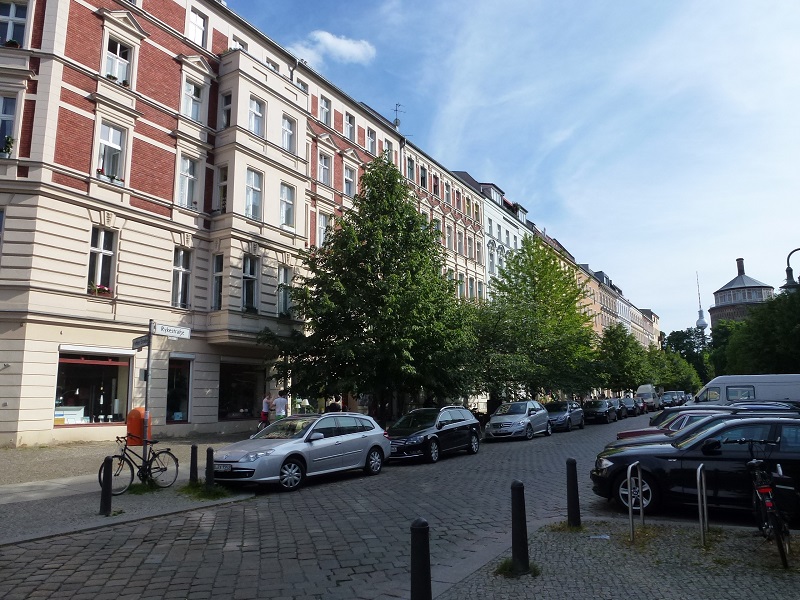


Thinking about non-car based transportation methods is great. But the reality is that large segments of society are always going to need some sort of car-based option. You can't just ban cars from a city center without totally excluding a lot of young people.