I dont think the comment is saying AI was able to replace the work people were doing but people are getting fired and their salary is being redirected into funding AI development.
Discounting the evidence of it being explicitly cited as a reason for layoffs and that its purpose to business is to replace human labor, there's no evidence that its replacing human labor. Got it.
In the case of Microsoft layoffs, that is how it is sold to the public, but the reality according to my former colleagues is that fewer people tasked with the same amount of overall work just end up grinding more. But the charade must be sustained, and so now "how much do you use AI" is one of the performance metrics pushed from the top. Nobody wants to be in the next layoff wave so everybody finds ways to meet those metrics, which then Satya goes and parades to the investors.
(I am an AI optimist, by the by. But that is not one of its success stories.)
There's strong sentiment bubbling that supports AI driven layoffs are going to happen or are happening[0].
I'll say its okay to be reserved on this, since we won't know until after the fact, but give it 6-12 months, then we'll know for sure. Until then, I see no reason not to believe there is a culture in the boardrooms forming around AI that is driving closed door conversations about reducing headcount specifically to be replaced by AI.
Some of the variables that made the Great Depression what it was included very high tariff rates and lack of quality federal oversight.
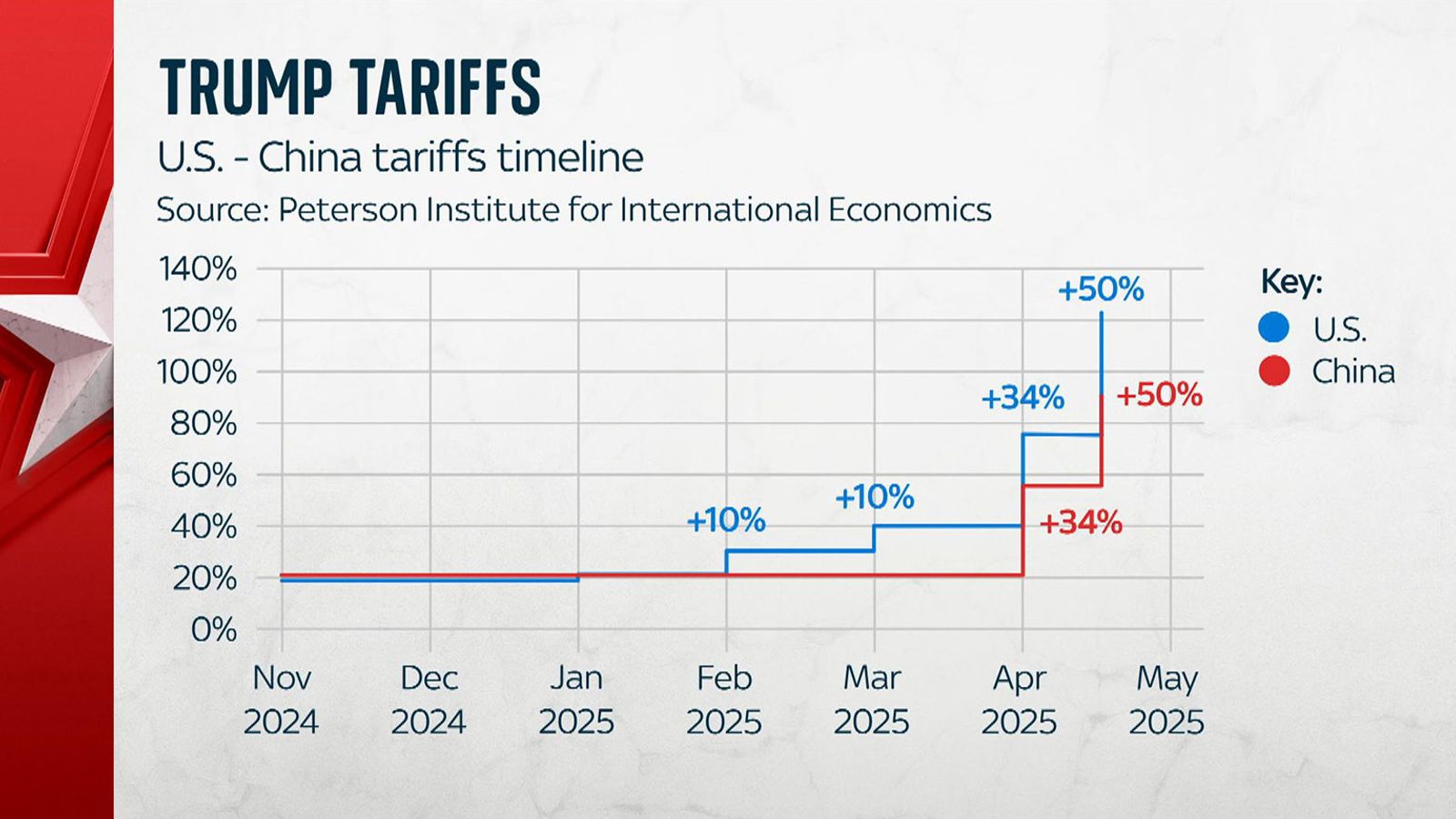
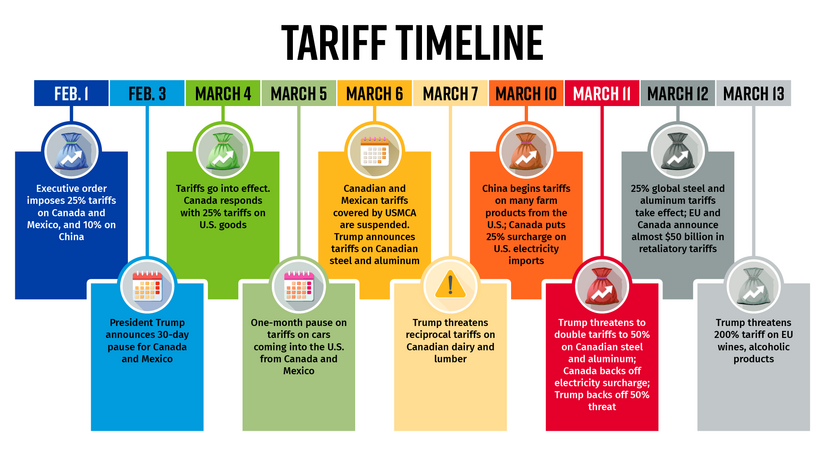
Today, we have the highest tariffs since right before the Great Depression, with the added bonus of economic uncertainty because our current tariff rates change on a near daily basis.
Add in meme stocks, AI bubble, crypto, attacks on the Federal Reserve’s independence, and a decreasing trust in federal economic data, and you can make the case that things could get pretty ugly.
Sure, you can make the case that things could get pretty ugly. You could even make the case that things could get about as bad as the Great Depression.
But for things to be much worse than the Great Depression, I think is an extraordinary claim. I see the ingredients for a Great Depression-scale event, but not for a much-worse-than-Great-Depression event.
How much worse could it be if the President was likely to fire the individual holding the position responsible for announcing "it's official, this is a recession"? And so on in that head-in-the-sand direction for as long as their loyalists are willing and able to defend the Presidents proclamations of fake news?
How long will the foot stay on the accelerator after (almost literally) everyone else knows we might be in a bit of strife here?
If the US can put off the depression for the next three years then it has a much better chance of working it's way out gracefully.
Certainly the current administration is taking actions that will worsen whatever happens.
The Great Depression lasted a decade and caused a 30% reduction in US GDP. That's really really bad.
I think people are just using "worse than the Great Depression" as a rhetorical device to mean "it would be bad", without out actually understanding what it would mean to be "worse than the Great Depression".
Federal debt before the great depression hovered around ~16%-17% of GDP and even in the throws of it got up to ~40% of GDP. Now it's at 120%.
If my claim of this all leading to a greater depression is extraordinary (to the point of being easily dismissed), then someone will have to walk me through the math.
I think that, just like in the 1920's, we've gorged ourselves on debt, speculation, and hubristic thinking and the humbling is coming at us like a freight train. Instead of producing value, we produced inordinate amounts of bullshit and now the bill is coming due.
> Federal debt before the great depression hovered around ~16%-17% of GDP and even in the throws of it got up to ~40% of GDP. Now it's at 120%.
> If my claim of this all leading to a greater depression is extraordinary (to the point of being easily dismissed), then someone will have to walk me through the math.
What I observe right now is that we are not, at this moment, in a depression despite federal debt being such a high percentage of GDP.
It is not at all clear to me that debt percent of GDP and badness of depression have a linear relationship.
The Great Depression lasted a decade and caused a 30% contraction of US GDP. You claim that this will be worse. Can you please walk me through the math?
> What I observe right now is that we are not, at this moment, in a depression despite federal debt being such a high percentage of GDP.
Because the "experts" keep redefining what it means to be in a recession, depression, etc. Not to mention the fake job numbers/revisions and the delusion that the value of the stock market is anything near representative of the actual book value of the companies it trades.
So, to that end, you're right. If we continue to delude ourselves indefinitely while the wealth gap continues to expand (and nobody does anything about it), then we won't have a book-defined depression (i.e., no sudden GDP collapse or soaring unemployment per se).
Instead, we'll have a slow but sure move to a full blown oligarchy—implemented by hoovering up hard assets (like real estate) with cheap money—thanks to low interest rates—while the middle-to-lower class are struggling to survive (and media narratives often reinforce the idea that everything is fine, even when data on wages, asset ownership, and real inflation tell a different story). Frankly, I expect this to be far more likely than anything based on the people involved and recent evidence of this very thing taking place [1].
> It is not at all clear to me that debt percent of GDP and badness of depression have a linear relationship.
I didn't say it had a linear relationship, but it is a bellweather of a country that doesn't have its finances under control (and is rapidly approaching an inability to service its debt). Eventually, you run out of the capital (in this case, either monetary or geopolitical) to simultaneously service the debt—which we're on track to do by about ~2030—and stimulate growth.
Considering how embedded the USD is in global economics, if the above oligarchy scenario doesn't take place, the only thing that could happen is a global depression (because the thing propping up the whole system globally—dollar hegemony—has just collapsed/hyperinflated—imagine Venezuela, but globally).
Put simply: if debt outpaces revenue, interest spirals, and trust in the dollar fades, then whether we call it a "depression" (on paper) or not, the outcome is the same: widespread economic pain, asset consolidation, and long-term instability.
Sure, I'm willing to agree that high and expanding levels of national debt can lead to economic crisis.
I still don't see why it would be worse than the Great Depression.
The national debt being low during the Depression and high now doesn't seem relevant. The national debt was not a primary causative agent of the Great Depression, we're saying that it will be a primary causative agent of this one, so why would a Depression kicked off by national debt be worse than the one kicked off earlier by not-national-debt?
That said:
> > What I observe right now is that we are not, at this moment, in a depression despite federal debt being such a high percentage of GDP.
> Because the "experts" keep redefining what it means to be in a recession, depression, etc.
If you are claiming "actually we're totally in a depression right now but actually no because we're redefined our way out of it", now that is an extraordinary claim. "Depression" means something more than "bad economy vibes".
Have you heard of the disagreement hierarchy? You're somewhere between 1 and 3 right now, so I'm not even going to bother to engage with you further until you bring up more substantive points and cool it with the personal attacks.
One of the major reasons there’s such a shortage of homes in the US is the extensive permit process required. Pivoting from data centers to home construction is not a straightforward process.
Regarding the economics, the reason it’s a big deal that AI is powering growth numbers is because if the bubble pops, jobs go poof and stock prices with it as everyone tries to salvage their positions. While we still create jobs, on net we’ll be losing them. This has many secondary and tertiary effects, such as less money in the economy, less consumer confidence, less investment, fewer businesses causing fewer jobs, and so on. A resilient economy has multiple growth areas; an unstable one has one or two.
While you could certainly argue that we may already be in rough shape even without the bubble popping, it would undoubtedly get worse for the reasons I listed above,
>One of the major reasons there’s such a shortage of homes in the US is the extensive permit process required. Pivoting from data centers to home construction is not a straightforward process.
Right, I'm not suggesting that all of the datacenter construction will seamlessly switch over to building homes, just that some of the labor/materials freed would be allocated to other sorts construction. That could be homes, amazon distribution centers, or grid connections for renewable power projects.
>A resilient economy has multiple growth areas; an unstable one has one or two.
>[...] it would undoubtedly get worse for the reasons I listed above,
No disagreement there. My point is that if AI somehow evaporated, the hit to GDP would be less than $10 (total size of the sector in the toy example above), because the resources would be allocated to do something else, rather than sitting idle entirely.
>Regarding the economics, the reason it’s a big deal that AI is powering growth numbers is because if the bubble pops, jobs go poof and stock prices with it as everyone tries to salvage their positions. While we still create jobs, on net we’ll be losing them. This has many secondary and tertiary effects, such as less money in the economy, less consumer confidence, less investment, fewer businesses causing fewer jobs, and so on.
That's a fair point, although to be fair the federal government is pretty good at stimulus after the GFC and covid that any credit crunch would be short lived.
There was a study recently that showed how not only did devs overestimate the time saved using AI, but that they were net negative compared to the control group.
Anyway, that about sums up my experience with AI. It may save some time here and there, but on net, you’re better off without it.
>This implies that each hour spent using genAI increases the worker’s productivity for that hour by 33%. This is similar in magnitude to the average productivity gain of 27% from several randomized experiments of genAI usage (Cui et al., 2024; Dell’Acqua et al., 2023; Noy and Zhang, 2023; Peng et al., 2023)
Our estimated aggregate productivity gain from genAI (1.1%) exceeds the 0.7% estimate by Acemoglu (2024) based on a similar framework.
To be clear, they are surmising that GenAI is already having a productivity gain.
The article you gave is derived from a poll, not a study.
As for the quote, I can’t find it in the article. Can you point me to it? I did click on one of the studies and it indicated productivity gains specifically on writing tasks. Which reminded me of this recent BBC article about a copywriter making bank fixing expensive mistakes caused by AI: https://www.bbc.com/news/articles/cyvm1dyp9v2o
It's actually based on the results of three surveys conducted by two different parties. While surveys are subject to all kinds of biases and the gains are self-reported, their findings of 25% - 33% producitivity do match the gains shown by at least 3 other randomized studies, one of which was specifically about programming. Those studies are worth looking at as well.
Yes, self-reporting has biases and estimating tasks is still a fool's errand, which is why I noted that the estimates from these surveys matched the findings from other RTC studies.
However, what doesn't get discussed enough about the METR study is that there was a spike in overall idle time as they waited for the AI to finish. I haven't run the numbers so I don't know how much of the increased completion time it accounts for, but if your cognitive load drops almost to 0, it will of course feel like your work is sped up, even though calendar time has increased. I wonder if that is the more important finding of that paper.
I'm not talking about time saving. AI seems to speed up my searching a bit since I can get results quicker without having to find the right query then find a site that actually answers my question, but that's minor, as nice as it is.
I use AI in my personal life to learn about things I never would have without it because it makes the cost of finding any basic knowledge basically 0. Diet improvement ideas based on several quick questions about gut functioning, etc, recently learning how to gauge tsunami severity, and tons of other things. Once you have several fundamental terms and phrases for new topics it's easy to then validate the information with some quick googling too.
How much have you actually tried using LLMs and did you just use normal chat or some big grand complex tool? I mostly just use chat and prefer to enter my code in artisanally.
How much of that is junk knowledge, though? I mean, sure, I love looking up obscure information, particularly about cosmology and astronomy, but in reality, it's not making me better or smarter, it's just kind of "science junk food." It feels good, though. I feel smarter. I don't think I am, though, because the things I really need to work on about myself are getting pushed aside.
For me it's pretty much all knowledge that I'm immediately operationalizing. I occasionally use it to look up actors and stuff too, but most of the time it's information that provides direct value to me
1. To work through a question I'm not sure how to ask yet
2. To give me a starting point/framework when I have zero experience with an issue
3. To automate incredibly stupid monkey-level tasks that I have to do but are not particularly valuable
It's a remarkable accomplishment that has the potential to change a lot of things very quickly but, right now, it's (by which I mean publicly available models) only revolutionary for people who (a) have a vested interest in its success, (b) are easily swayed by salespeople, (c) have quite simple needs (which, incidentally, can relate to incredible work!), or (d) never really bothered to check their work anyway.
Why not just look up the information directly instead of asking a machine that you can never truly validate?
If I need information, I can just keyword search wikipedia, then follow the chain there and then validate the sources along with outside information. An LLM would actually cost me time because I would still need to do all of the above anyways, making it a meaningless step.
If you don't do the above then it's 'cheaper' but you're implicitly trusting the lying machine to not lie to you.
> Once you have several fundamental terms and phrases for new topics it's easy to then validate the information with some quick googling too.
You're practically saying that looking at an index in the back of a book is a meaningless step.
It is significantly faster, so much so that I am able to ask it things that would have taken an indeterminate amount of time to research before, for just simple information, not deep understanding.
Edit:
Also I can truly validate literally any piece of information it gives me. Like I said previously, it makes it very easy to validate via Wikipedia or other places with the right terms, which I may not have known ahead of time.
Again, why would you just not use Wikipedia as your index? I'm saying why would you use the index that lies and hallucinates to you instead of another perfectly good index elsewhere.
You're using the machine that ingests and regurgitates stuff like Wikipedia to you. Why not skip the middleman entirely?
Because the middleman is faster and practically never lies/hallucinates for simple queries, the middleman can handle vague queries that Google and Wikipedia cannot.
The same reasons you use Wikipedia instead of reading all the citations on Wikipedia.
> Because the middleman is faster and practically never lies/hallucinates for simple queries
How do you KNOW it doesn't lie/hallucinate? In order to know that, you have to verify what it says. And in order to verify what it says, you need to check other outside sources, like Wikipedia. So what I'm saying is: Why bother wasting time with the middle man? 'Vague queries' can be distilled into simple keyword searches: If I want to know what a 'Tsunami' is I can simply just plug that keyword into a Wikipedia search and skim through the page or ctrl-f for the information I want instantly.
If you assume that it doesn't lie/hallucinate because it was right on previous requests then you fall into the exact trap that blows your foot off eventually, because sometimes it can and will hallucinate over even benign things.
I feel like you're coming from a very strange place of both using advanced technology that saves you time and expands your personal knowledge base and at the same time saying that the more advanced technology that saves you even more time and expands your knowledge base further is useless and a time sink.
For most questions it is so much faster to validate a correct answer than to figure out the answer to begin with. Vague queries CANNOT be distilled to simple keyword searches when you don't know where to start without significant time investment. Ctrl-f relies on you and the article having the exact same preferred vocabulary for the exact same concepts.
I do not assume that LLMs don't lie or hallucinate, I start with the assumption that they will be wrong. Which for the record is the same assumption I take with both websites and human beings.
I don't know how you use search but I often find incredible information that I didn't explicitly search for.
How do you quantify such things? How can you say with a straight face that this magic box gives you more relevant information (which may be wrong!) and that will revolutionize the workforce?
I am searching for the incredible information and I can't find it without the LLM because I don't know the proper terminology ahead of time and search isn't that good unless you know exactly what you want.
Is the "here and there" tasks that were previously so little value that they are always stuck in the backlog? i.e. the parts where it helps have very little value in the first place.
I'll throw some anecdotal data down. I'm a military brat who grew up on bases around the country and in Germany. My dad was a gambling addict. It was not uncommon for us to spend all day at the bowling alley on base, which was where the slot machines were.
At the time, I didn't know better and just played arcade games all day. Eventually, I started to put together just how much money my dad must have put into those slot machines. Thousands, maybe most of his salary. It certainly explained why we generally had no furniture in our house compared to my friends.
So am I against slot machines on base? No. I have no doubt that if they weren't readily available in a safe/controlled environment, my dad would have still found a way to gamble. If anything, it was a forcing mechanism for him not to go overboard given the limitations of what was offered on site.
I do however wish there were programs that existed to provide offramps for people with addiction, similar to supervised injection sites for drug users. Seems to me that this could be easily funded with the proceeds.
I don’t know what it was like before I came over two decades ago, but I think you’re likely right - there are tons of little casinos and sports betting parlors in even small towns in Germany, and unless they were explicitly declared off-limits to soldiers by the post/base commander, he’d have been at one of them gambling away his paychecks, and exposed to people who would not have been likely to get on base who could have caused him even more trouble.
> provide offramps for people with addiction, similar to supervised injection sites for drug users.
Supervised injection sites in the US don't provide offramps, not unless they require as a condition of use regular counseling. Europe had both kinds, but American harm minimization advocates imported the no-strings-attached variety while using the data for the counseling-required sites to sell them to policy makers.
To carry that over to the slot machines, maybe the slot machines should have required some sort of access ID so users could be tracked and addicts identified for intervention (easier today than 20+ years ago) as a condition for continued use. That might be kind of tough in a military environment, though, given the emphasis on morality and potential repercussions if you're not diligent enough to hide your dirty laundry from your CO; sort of like why commercial pilots don't see mental health professionals.
I feel like a portion of the slot machine income needs to go extensive therapeutic support for compulsive gamblers. Of course that would probably be gamed. Or make the machines completely unprofitable.
That gives me an idea, maybe the slot machines operated by the government should operate at even odds so the long run expected loss, and winnings, is zero. No house cut. This might make the machines more addictive, but on the other hand once gamblers get accustomed to government machines having even odds maybe the predatory commercial machines would lose their appeal?
they could, but if making less money is in the equation its not going to happen. the only way to get a casino to cut you off is to get too drunk or count cards
You view this as zero sum. How many new business owners would be created if people had enough to save? How many new businesses would exist if more money was flowing in the economy? Should businesses exist if they can't pay livable wages?
These aren't hypothetical questions. We have an answer for them all over the country where state minimum wages are rising in Democratic states.
yeah, actually. If the worst thing you can find when paying living wages for workers is a small drop of 2.7% employment among fast food chains, that sounds like a great trade off.
> Decades of worsening conditions for the commoner is Ron Wyden's idea of a booming economy. Democrats are useful idiots.
I can't anymore, folks. Republicans passed the largest tax cuts for billionaires, increased the deficit by trillions, and kicked millions of people of medicaid. Meanwhile, Trump is out there creating the most regressive tax system via tariffs we've ever seen which affect the poorest the most.
> Trump is out there creating the most regressive tax system via tariffs
Tariffs incentivize domestic production. See the case of chicken tax and pickup trucks. While we do pay for tariffs now, later down the road we should not as more things would be made domestically. If you don’t do tariffs, there is no way to force producers to onshore.
The chicken tax encourages creative workarounds more than domestic production. Importing all the parts and putting them together in the US is production work, so fine. Importing chassis cab and putting a bed on in the US is silly, importing with seats discarded in the US is wasteful (Ford got dinged, but I don't think others did?)
Who's making small cargo vans domestically? Nobody. So they're all 25% more expensive, so you might as well buy a big cargo van when a small one would do.
Honestly, governments buy enough light trucks, that 'buy american' requirements would likely keep at least one company making them here.
Chicken tax was introduced earlier than all the “relaxation” of what is considered “American”. The definition of “made in USA” became more flexible for products to be considered domestic while de facto being made somewhere else, hurting domestic manufacturing.
So, it’s not that the tax doesn’t work, the issue is all the things around it that made it less effective.
Chicken tax was enacted in 1964; Ford and Chevy were tariff engineering in 1972, importing trucks without beds and putting beds on in the US.
Finding loopholes and driving trucks through them is what's considered American. It's not a relaxation.
At the end of the day, the chicken tax reduces our options in the vehicle market as it was designed to do, and it's one thing if we want to exclude WV vans and trucks when we have plenty of nice options at home, but now that we don't have nice options at home, it would be nice to be able to import them without a punative tariff.
There has been no start. You don’t build a factory because the President announced a tariff that he is also negotiating a trade deal around.
> what is this reason?
I’m remodelling my deck. I had orders into a steel mill in Utah. Tariffs mean their steel inputs are pricer than competitors in Vietnam. So I switched the order. And I paid with a cheque—if I paid cash I could skip taxes altogether. That wasn’t a thing six months ago.
Meanwhile, software and services aren’t tariffed. Just goods. Guess whose cost of capital has sunk.
> There has been no start. You don’t build a factory because the President announced a tariff that he is also negotiating a trade deal around.
You absolutely do once the math of tariffs makes your manufacturing abroad not competitive with onshored one. Will it apply for all categories of products? Probably not. However, it will definitely apply for many.
I am not sure I understood your reply about the reasons.
> absolutely do once the math of tariffs makes your manufacturing abroad not competitive with onshored one
If someone bet on e.g. our Japan tariffs three months ago, they lost money. (Nobody did. The types that take Trump at his word on tariffs aren’t making economically significant decisions.)
I do not know why anyone would bet that the executive order defined tariffs would stay. It was and still clear as a day that Trump uses them to force people to the negotiation table. Obviously, negotiated deal may look different.
Regardless, tariffs as an instrument have their merit with Trump or without Trump. Strategically, US has to bring manufacturing (and as much of a supply chains) back, there is no way around it.
> …we are currently in the future of the previous tariffs.
Which ones?
> Also, come on, you’re yourself arguing these tariffs aren’t worth betting on. What do you think investing in a factory is?
I can’t bet on negotiation tactic, only on the outcomes and formal agreements. As soon as those would be finalized we would know. Now we do not know how the trade policy would look like. I would assume that investment banker knows the difference.
"From four months ago? That's way too short a time for any tariff impacts to show up."
vs
"From four months ago? That's ancient history, it doesn't matter."
If it's the first, the link the other person provided shows a dip in manufacturing facility investment over the last 2 quarters. Maybe there will come a future point of stability where investors can feel confident, maybe not. Trump seems willing to use tariffs as a weapon for any disagreement with other countries, not just trade imbalances. There's little guarantee any trade agreement will be honored by the administration.
If it's the second, well, that's the problem. The tariff landscape has been in constant flux over the last several months [0,1,2]. You don't build a factory overnight. You want to understand what your supply chains and costs look like and have some confidence in what they'll look like by the time the factory is ready to start producing. There remains little guarantee that the landscape won't continue to change, and Trump's weaponizing of tariffs is part of that.
> Strategically, US has to bring manufacturing (and as much of a supply chains) back, there is no way around it.
Strategically, it needed to keep manufacturing. It is too late now. Its labor and capital is already fully deployed towards innovation. Innovation that is now realizing that it is being stifled without a local manufacturing base, granted, but at this point pulling labor and capital away from innovation in order to build a manufacturing base again will only stifle it further as the rest of the world, which is quickly closing the innovation gap, keeps moving forward.
The US cannot afford to see that happen. So, in order to save face, what the tariffs will end up doing is open the doors for foreign capital and labor to flood into the US instead. While that will put factories in eye's view, it does not "bring back manufacturing" or resolve the strategic need. It merely lets what was strategically trying to be defended against inside the house, which is an even worse position.
>>Regardless, tariffs as an instrument have their merit with Trump or without Trump. Strategically, US has to bring manufacturing (and as much of a supply chains) back, there is no way around it.
Well no. Not really. Not for everything anyway. Some things like electronics - sure, but it's a matter of national security not economy - it doesn't have to make financial sense, it just has to exist so that the country can have that ability no matter what happens.
As a simple(and really oversimplified) example - let's say that tariffs force clothes manufacturers to bring tshirt making back to the States. The $5 T-Shirt now costs $30 due to tarrifs. So ok, someone makes a factory in US because now it makes sense, employs american workers, pays them good wage - ok, now they make t-shirts cost $20 because they are made domestically.
Cool - that's great, but now the rest of the world still buys $5 tshirts, while Americans buy $20 ones that can't even be exported anywhere because why would anyone buy them if they have cheaper alternatives. All you've done is you increased the cost of your products to the american consumers.
Some can argue - ok, that doesn't matter, what matters is that manufacturing is now back in the states and american people have employment. And sure, there is merit to that argument - but it reminds me of how my own country used to work under communist rule, people would go "comrade party leader, people have no jobs", "ok, we'll build a factory here so you can have jobs".
Can the factory make anything that is actually worth making? Doesn't matter, what matters is that people got jobs and "manufacturing is happening here" - for an economy based on capitalist principles, that sounds like a disaster for US.
But hey, what do I know. Just an external observer.
Trump uses wild % amounts as a negotiation tactic. Is it the best way to do it? I don’t know. You can’t argue though that it does force the other side to come quickly to negotiation table to talk about the deal. So, if the goal is to get the deal now, then it’s effective. If the goal is something else, then it’s not a good tactic.
I do not have enough information to definitely say whether it’s good or bad. Most of the things in life are neither because they have good side effects, and bad side effects to them. So, I think looking for a “good only” solution is a loosing strategy.
I'm confused. Is the goal the get manufacturing back in the US, or to make new trade deals? I've heard both things. Oh, and something about fentanyl coming in from Canada? Alright I'm not sure how tariffs would stop that.
> I do not have enough information to definitely say whether it’s good or bad.
Usually when I don't have enough information on an issue, I take it upon myself to learn more about it before stating an opinion.
> Most of the things in life are neither because they have good side effects, and bad side effects to them.
You don't have to be a doctor to understand that the downside of cancer probably outweighs the upside of not having to save for retirement. Economic instability is the cancer in this metaphor, and the cause of it is Trump changing his mind on tariff rates every other day. Economists, like doctors, are trained on how to treat this illness, and all of them are saying "stop doing that". Trump can either listen to the experts or continue on his path, destroying the American economy in the process.
You say we need tariffs to bring manufacturing back. Then you turn around and say the tariffs aren't the point, it's the deal. You even said it was silly to bet on announced tariffs elsewhere.
If the tariffs are necessary to bring manufacturing back full stop, then you don't need to "make a deal". If it's just a tool to make a deal, then they're not necessary!
When tariffs are imposed by the other side, they’re called “sanctions” and are considered one step short of declaring war. If they’re so great then they wouldn’t be used as punishment.
Economists pretty much universally agree that tariffs are bad for both sides. It can make sense to use them to preserve strategic industries even if it’s less efficient economically. For example, tariffs on food could make sense to ensure an enemy can’t starve you with a blockade. But as a blanket policy it’s just bad.
That particular outcome is possible when you make tariffs in a smart and predictable way. Trumps tariffs are unpredictable and also make local producers pay more for raw material they need.
> That particular outcome is possible when you make tariffs in a smart and predictable way.
You would have to prove that claim. There is more than one way to achieve a specific goal.
> Trumps tariffs are unpredictable and also make local producers pay more for raw material they need.
It’s one of the consequences. There are other ones. Is your only objective is to ensure that local manufacturers pay the least amount possible for their raw materials? This is very simplistic view of things.
This isn't rocket science. If you want somebody to spend a lot of money and time setting up production in the US, tariffs have to be stable and predictable. If that doesn't make sense to you, I didn't know what to say.
A lot of deals got ripped up on "Liberation Day", including some Trump was extremely proud of when he announced them in his last term. He's changed his mind several times in six months already, dropping deadlines and tariffs when the market gets itchy feet, imposing higher tariffs due to disputes with governments completely unrelated to trade. He loves to make grand gestures to distract from domestic issues, and his administration showed so little basic competency they actually publicly announced tariffs on uninhabited territories full of penguins. Why would anybody assume stability?
To echo a comment made in a parallel thread, decisions made to invest in US manufacturing don't get made by people dumb enough to take Trump at his word.
And even if he wasn't tariffs are unlikely to persist at those levels under the next President, regardless of who that is, and that's the sort of timeline you pay back your investment in US manufacturing over...
You are the one who is making the claim that goes both against what historical data show and against what economists say.
So, yeah, predictability matter. Institution do not want to invest based on something that goes up and down randomly.
> Is your only objective is to ensure that local manufacturers pay the least amount possible for their raw materials? This is very simplistic view of things.
Well, yeah, them paying more is rather massive obstacle. You know what is simplistic view of things? Belief that Trump will make economy better, because you like his fraudster personality and would like to be like him.
It absolutely is when the status quo would have increased taxes. That may not be a cut of current taxes, but in the longer timeframe it is absolutely a tax cut.
Bills are not due in advance. The analogy is inapt.
The taxes were cut 8 years ago. There aren't further "cuts". Billionare tax rates have been the same for the last 8 years, and will continue at the same rate at least into next year.
Yes. They were temporary cuts so that they could claim they didn't raise the deficit. Now they are claiming that everybody knew they were going to be permanent. So they either raised the deficit in that cut, or the current one. It's the same party, claiming they didn't raise the deficit either time. And Americans put up with this shit.
No. The total tax bill over the next five years was X, given the current laws. Then a bill was passed that reduced that total tax bill over the next five years. This is a tax cut. It's a little absurd to try to claim otherwise.
This is the same as saying that a tax cut with an expiration date should be treated as if it were permanent.
Are you not aware that these things are different? That there is a difference between an adjustment to a proposed budget and a budget that has been enshrined in law?
What's the magical time horizon that changes this? If I change the taxes due for 2026, is that a tax cut? How about 2027? Where's the line between a change in law that is or is not a tax cut with this philosophy?
If you want consistency, a change in law that adjusts the tax burden downward from what the burden would be without the change in law is a tax cut. Therefore, a change in the law that makes previously temporary reduced tax levels into permanent reduced tax levels is a tax cut.
But is anyone _actually_ getting paid the minimum wage these days? Might want to check what the grocery store you worked at in 2010 is really paying these days. I’d bet good money it’s significantly more than $7.25/hour.
Doesn't the fact that 98.9% of all workers earn more than the minimum wage kinda highlight that it's really not necessary for the federal government to increase it? Clearly it's nearly impossible except in limited circumstance to actually _find_ workers who'll accept the minimum wage, hence the fact that hardly anyone is paying it.
A federal-level minimum wage doesn't make sense, precisely because what is considered minimum wage in LA isn't the same as what's considered minimum wage in rural Louisiana, and vice-versa. The fact that 98.9% of workers manage to receive more than the minimum wage strongly suggests the market forces have done a pretty good job of determining what a viable minimum wage for various parts of the US is (including apparently parts where $7.25/hour works).
> But is anyone _actually_ getting paid the minimum wage these days?
Yes.
> Clearly it's nearly impossible except in limited circumstance
No, you exaggerate. It’s a large number of people. I wouldn’t say it’s nearly impossible to find someone from Indianapolis (pop. 879k, 2024 est.), and the number of Americans is much larger than the number of working Americans.
> No, you exaggerate. It’s a large number of people.
It's 1.1%, an incredibly small portion of the entire working population. There's never any follow up like "where in the country does this occur?" which may reveal that it's actually a livable wage. Or other follow up questions like, "does this number include illegal aliens who are happy with being paid $7.25/hour tax free?"
You're also ignoring _how_ it came to be that 98.9% of all workers manage to get paid higher than the minimum wage without it being mandated. Are the companies doing this out of the goodness of their hearts or have market forces instead found what the _actual_ viable minimum wage for various localities truly is?
Table 3. Their methodology is addressed in the technical notes.
> You're also ignoring _how_ it came to be. . .
No. You asked a specific question and I was bored enough to help you look up a result. I’m not here to engage with whatever ideological problems you have going on in the subtext.