Savers are people who were lucky in a very specific policy configuration. No point in denigrating people realizing they operate in a rigged system. Irresponsible people are a very small slice of the pie, compared to people who were hit with joblessness, healthcare expenses beyond their means, and those who could never make enough to save enough.
We could've afforded pensions and universal healthcare. That productivity was direct to corporate profits and management compensation instead. This was a choice, this is the outcome.
People should be mindful that rage bait should not set policy. A reminder to make data informed decisions, and to not take such a piece as anything other than an unhealthy reward center hit.
Some humans are irresponsible, and will always incur some drag on systems at scale.
Median US retirement savings for those entering retirement (65+) is around $200k. This generation had the largest wealth expansion in human history. That’s about $500 saved per year for 40 years at 9% inflation adjusted return (easy to get with an S&P 500 index fund). Less than $50/month.
They could have chosen to save more; they chose not to.
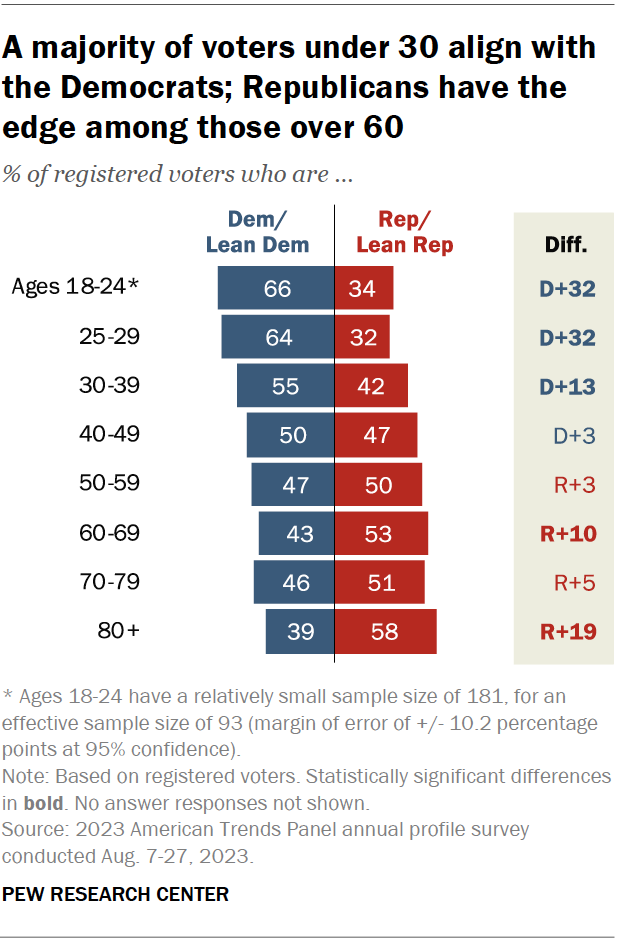
Interpret the data however you want. Policy through votes will come for the wealth eventually, and the folks at the top hold most of it. Progress is a function of cohort turnover in this regard. Old people with old ideas age out, young people age into voting.
> About 93% of U.S. households' stock market wealth is held by the top 10%. ; While it's true that a record high 58% of American households do own stocks via mutual funds or as individual shares, in the aggregate the amount of stock most of these folks own is tiny.
Yes, because many people choose not to save. While not everyone could save $100/month (double the amount I mentioned), almost everyone over the age of say 25 can. This was attainable for the majority even 40 years ago.
> 80% of households with older adults—or 47 million of such households—are financially struggling today or are at risk of falling into economic insecurity as they age.
I mean, of course people without any savings are struggling financially. I feel like I’m missing something here, the problem seems obvious.
If the majority of a people consider a thing to not be theft, then there’s a strong argument that it’s more not theft than is, since theft is defined by and for humans.
Theft is not simply taking something from someone, it is doing so unjustly, immorally, and/or unlawfully. Definitions of what is just, moral, and lawful vary significantly.
Of course, you must also consider how a thing is defined across time, and how stable that definition is.
The idea that taxes are theft applies to a specific mental model [1]. Whether that model is relied on for policy is up to political governance. It seems unlikely though [2] [3] [4], based on electorate sentiment, composition, and turnover rate. I cannot speak to this specific mental model, but it is important to be aware that it exists when interfacing with people who have such a belief system.