>Based on measurements gathered by the Copernicus Sentinel-5P mission between April and September 2018, the image shows high levels of nitrogen dioxide in London, Paris, Brussels, western Germany, Milan and Moscow. Nitrogen dioxide pollutes the air mainly as a result of traffic and the combustion of fossil fuel in industrial processes. It has a significant impact on human health, contributing particularly to respiratory problems.
It seems that farming isn't even mentioned in the issue of nitrogen compounds produced. Maybe they should work harder on the elimination of oil as an energy source.
We are already working hard on this: .nl is the country with the lowest average CO2 emmissions per new car sold in the EU (and thus also nitrogen most likely). We're finally building decent amounts of wind turbines (still a shame that we dutch don't lead in this).
That image and the description only applies to nitrogen dioxide; the problem in the Netherlands is mostly ammonia, which is for >85% produced by farming.
> the problem in the Netherlands is mostly ammonia
This is not true, and the article you're linking to doesn't support your claim. The majority of the nitrogen containing emissions are NOx. About the differences in harmfulness between both gasses not much is known, at least not when it's about soil pollution. NOx is a powerful greenhouse gas though, while NHx is not.
> This is not true, and the article you're linking to doesn't support your claim. The majority of the nitrogen containing emissions are NOx.
Only by weight, but one molecule of NO (30 u) and especially NO2 (46 u) is much heavier than one molecule of NH3 (17 u). If you read literally the next sentence in the article, they convert the gross weight into amount of nitrogen, and the ammonia contains twice the nitrogen content.


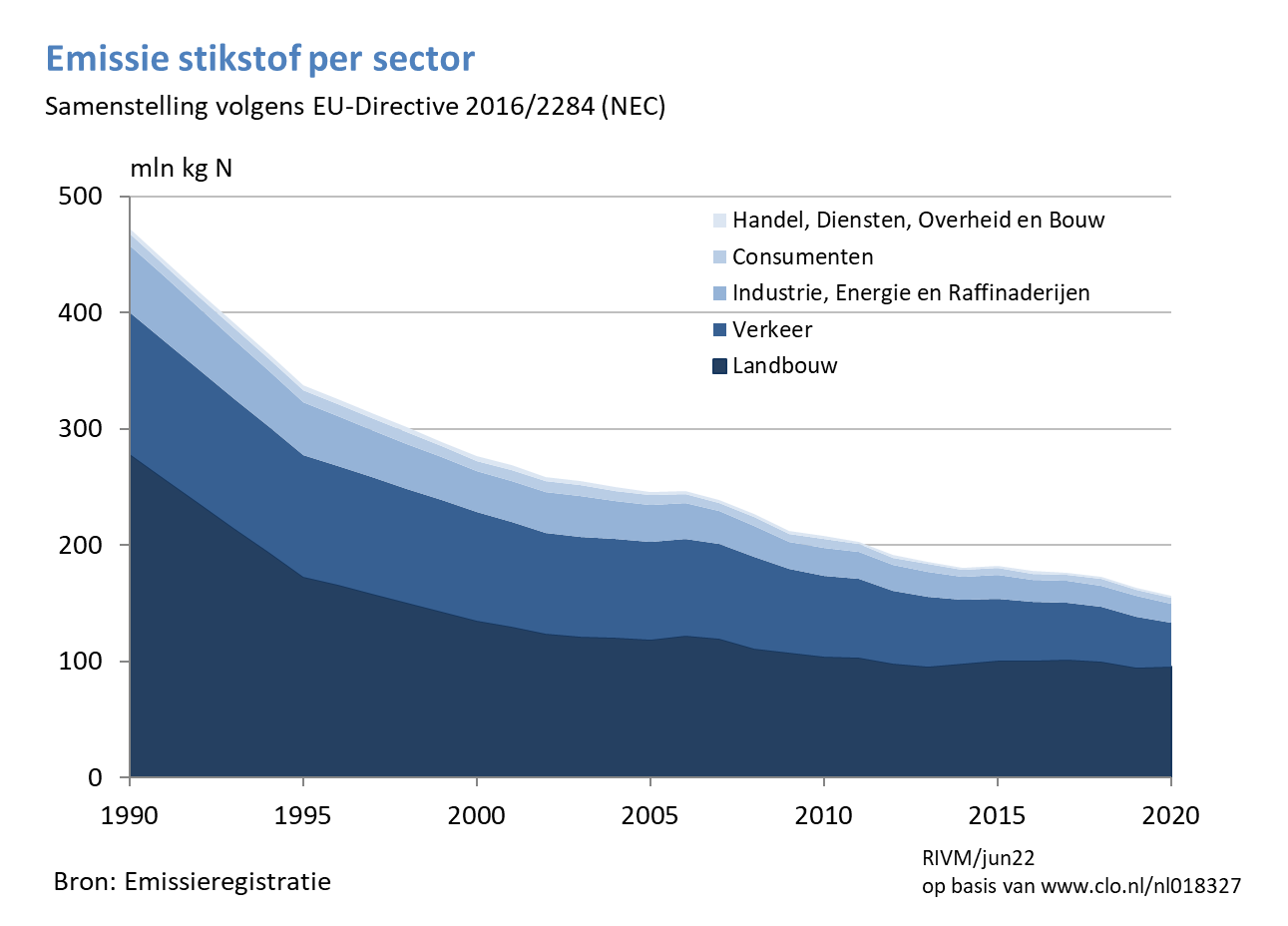
It seems that farming isn't even mentioned in the issue of nitrogen compounds produced. Maybe they should work harder on the elimination of oil as an energy source.