It definitely seems like Gnome has developed a toxic anti-user culture lately. Calling wiki contributors "clowns" and Gnome users "the peanut gallery" is exactly the kind of behavior that will lead to being surrounded by nothing but sycophants. And that inevitably leads to ridiculous bugs and design failures, like not being able to set a desktop background color, or planning to remove support for X11, or not having preview thumbnails in a file picker.
It makes me embarrassed to use Linux. People ask about simple features like supporting Nvidia hardware or letting us move the dock to the left or right, and I have to explain to them that the reason those features don't exist is because of "developer politics". I can't even recommend desktop Linux anymore knowing that this is the way the desktop is headed. If GNOME's desktop metaphor is just going to be whittled down to iPadOS-tier functionality, they shouldn't even bother calling themselves a desktop environment. Hell, they should have just separated from the Linux kernel when they decided to implement Wayland and saved everyone else the trouble of cleaning up their mess. Maybe that's a harsh way of looking at things, but it's not like they see the scenario as benevolent either.
I do use other desktop environments, and making them feel like home feels futile when a significant portion of development effort is focused on building Titanic-like projects such as Wayland or Flatpak. That's mostly the same reason that I can't recommend it to other people, there's no way to tell everyday people all this stuff with a straight face. The year of the Linux Desktop feels like it's been postponed indefinitely while we shave a bunch of redundant yaks. GNOME wants everyone to live in a world where they have two package managers and download multiple gigabytes of redundant runtime dependencies that shouldn't need to exist in the first place. Our overall community focus should be towards delivering robust software that works with live USBs, natively-packaging and Flatpak. I fear that we're heading down a pretty horrible path where people will build fragile software that links against even more esoteric runtime requirements, creating software that's completely unusable unless it's running in digital life support (aka, Flatpak).
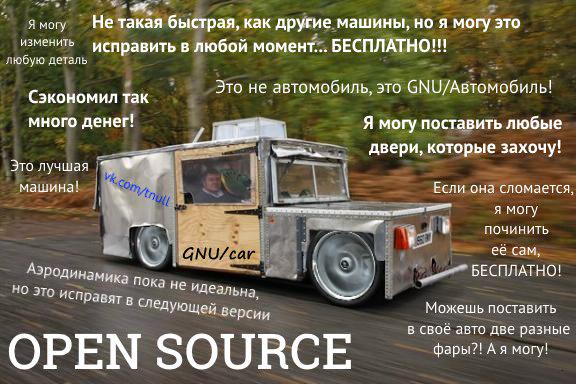
I despise Windows, but even downloading 10x 100mb C++ redistributables is better than having 5x 1.5-2gb GNOME runtimes. Nobody deserves to live in a world where that's how their software is delivered, it's a travesty. Even Apple doesn't hate their users enough to do this, not on MacOS and not on iOS. They had the dignity to make actually stable APIs that software could target, so they don't have to live in this virtualized hellscape that we've built for ourselves. Everything GNOME tacks on to the desktop Linux experience makes it increasingly feel like that 4chan image macro of the GNU/car (https://pbs.twimg.com/media/CDEORUBWAAENKFC.jpg). At least, that's how it feels when you have to explain to someone that screenshare isn't working right now because you're "logged in to the wrong desktop session"...
>I fear that we're heading down a pretty horrible path where people will build fragile software that links against even more esoteric runtime requirements, creating software that's completely unusable unless it's running in digital life support (aka, Flatpak).
This is an unfounded fear, you have placed the cart before the horse. It was much worse in the past without things like flatpak and docker. Old programs would still have the esoteric runtime requirements, except they would just break when the distro decided to stop supporting them.
As for the rest of your comment, it's not compelling to use 4chan trolling to make your case.
> This is an unfounded fear, you have placed the cart before the horse. It was much worse in the past without things like flatpak and docker.
Not really. "In the past" we could write hermetic packaging for our software so it doesn't break, but GNOME decided not to do that (despite the fact that Hurd and Nix both provide sane jumping-off points). They chose instead to create a world where we coddle our developers with a 1.6gb thick runtime that is apparently required to run a 4mb program. That is insane, and I'm not walking it back. There are real solutions to system breakage, and history has dictated that thick runtimes literally never work out well!
I don't really care though. I haven't had software break on APT or Nix in over 5 years of usage. Last night I boot up a Flatpak and it turns out they still haven't fixed the horrible font rendering issues in GTK4. If you still have problems with your software when you're running it with multiple gigabytes of explicit dependencies actively loaded on my system, what are we even doing here? I've had more problems dealing with Flatpak than I have with any other package manager, and I've only ever tried 3 or 4 programs with the damn thing. I can't imagine how useless a system like Silverblue would feel... Thankfully though, much like Wayland, there's no real motivation to switch to Flatpak besides a couple GNOME apps, which I'm pretty sure most people don't really want anyways (a clock app that's more than 1000mb to download? it's more likely than you might think!)
> As for the rest of your comment, it's not compelling to use 4chan trolling to make your case.
That's fine, I've known that ever since I wondered why there still aren't thumbnails in GNOME's filepicker (whaddya know, looks like stopping people from using their native filepicker is the parent article today). GNOME's developers will ignore me the same as everyone else who makes suggestions for them, so there's no point in filing issues (especially since I don't use their DE anyways).
I don't really care about the emotional appeals of my argument here. This is a well-documented shortcoming, and many people on HN seem to agree that GNOME's leadership is on a power-high right now.
>Not really. "In the past" we could write hermetic packaging for our software so it doesn't break, but GNOME decided not to do that (despite the fact that Hurd and Nix both provide sane jumping-off points). They chose instead to create a world where we coddle our developers with a 1.6gb thick runtime that is apparently required to run a 4mb program.
I am confused as to what you mean by "hermetic packaging" that doesn't also mean bundling the 1.6gb of dependencies into the program itself, either by static linking or some other similar means. Nix is also going to install the 1.6gb of dependencies if you don't already have them installed, like for example if you are a KDE user.
>Last night I boot up a Flatpak and it turns out they still haven't fixed the horrible font rendering issues in GTK4. If you still have problems with your software when you're running it with multiple gigabytes of explicit dependencies actively loaded on my system, what are we even doing here?
Font configuration issues in GTK aren't related to flatpak, that specifically would be a GTK or Pango bug. I don't think anyone said that flatpak (or any other package manager) is a solution to every bug in the packaged program and libraries that could ever possibly appear.
>I've had more problems dealing with Flatpak than I have with any other package manager
That's unfortunate, if you want to help out you should report those bugs in the individual packages and try to help fix them. There is no package manager that can do anything about bugs in the packages themselves. Ranting about it on HN is unlikely to result in any of them being fixed.
>why there still aren't thumbnails in GNOME's filepicker
It is because previously, GNOME did not have anything like the file portal, and without that any fix would result in a lot of code duplication while still being bad for other non-GNOME users of GTK. Someone is planning to work on using nautilus there: https://blogs.gnome.org/christopherdavis/2022/04/03/plans-fo...
>GNOME's developers will ignore me the same as everyone else who makes suggestions for them, so there's no point in filing issues
You can still report them and just exercise some patience, no developer has time to address every issue instantly.
>and many people on HN seem to agree that GNOME's leadership is on a power-high right now.
Now this one is just strange. What leadership? Power over who? The comment in the article here was made by one developer.
> Nix is also going to install the 1.6gb of dependencies if you don't already have them installed, like for example if you are a KDE user.
Correct. I prefer having those 1.6 gigabytes of dependencies handled with the rest of my system packages, rather than having them fragmented across separate package managers. I reckon most people would also prefer that, if given the choice.
> I don't think anyone said that flatpak (or any other package manager) is a solution to every bug in the packaged program and libraries that could ever possibly appear.
In fact, the situation is worse than it seems: Flatpak was used to apply an esoteric GTK patch that prevented text from rendering correctly. Instead of fixing the internal issue with GTK's text rendering, their official suggestion is to just uninstall everything and use Flatpak so you can get their monkeypatches. We're coming up on a year of this issue still being unaddressed, and apparently their workaround doesn't even work anymore.
> That's unfortunate, if you want to help out you should report those bugs in the individual packages and try to help fix them
Frankly, I don't. I personally don't see Flatpak lasting very long, and I'd rather contribute to projects like the AUR or NixOS that have a longer legacy of stability and more reasonable responses to legitimate community concerns.
> It is because previously, GNOME did not have anything like the file portal, and without that any fix would result in a lot of code duplication while still being bad for other non-GNOME users of GTK.
The file portal is bullshit, and contributors like the one in the parent thread goes to show that they don't give a shit about people who don't use GNOME. Frankly, that reflects a lot of the attitude I've seen from their contributors over the years, so it makes sense.
> You can still report them and just exercise some patience, no developer has time to address every issue instantly.
I'm not waiting 23 years to put a tiny preview of a photo in my file manager. I moved to KDE as soon as libadwaita hit stable repos, I don't have the patience for GNOME to "get around to it" while working on projects like libadwaita, Wayland and Flatpak, technologies that almost nobody else in the community has a need for or cares about.
> What leadership? Power over who?
It's about patterns of behavior. GNOME's developers have been gaslighting community members and other projects for close to a decade now, to the point that I see their contribution as overall hostile to the Linux community (Linus Torvalds calling GNOME a "waste of CPU cycles" famously). Nothing they build unifies the community or takes pointers from their criticism anymore. When I try to imagine the Linux desktop without GNOME, I don't imagine catastrophe. I think everything would be fine, same as it has been for the 30-some years we used x11 without breaking basic functionality.
You're right on one account, though. Arguing about this with people online is a waste of time, I should have just left it at my opinion and walked away.
>Correct. I prefer having those 1.6 gigabytes of dependencies handled with the rest of my system packages, rather than having them fragmented across separate package managers.
Well now this is different from what you said before. If you only use flatpak (or nix) for those packages, there is no fragmentation.
>I reckon most people would also prefer that, if given the choice.
I don't, I see a lot of people who have no problem with flatpak. Disk space is cheap these days.
>Instead of fixing the internal issue with GTK's text rendering, their official suggestion is to just uninstall everything and use Flatpak so you can get their monkeypatches
No, not really. It is a workaround suggested by the reporter, specifically as a temporary means to avoid some regression. No developer is going to say that's a permanent solution.
>I personally don't see Flatpak lasting very long, and I'd rather contribute to projects like the AUR or NixOS that have a longer legacy of stability and more reasonable responses to legitimate community concerns.
That's fine, but just understand that this attitude from those who are in the position to help is the reason why known bugs go unfixed. AUR and NixOS also do not solve the problem, nor can they fix upstream concerns in the community, so you're still not helping much by expecting them to do everything.
>The file portal is bullshit
No, this is wrong. It enables the very thing you want to happen.
>and contributors like the one in the parent thread goes to show that they don't give a shit about people who don't use GNOME.
Actually, it shows the complete opposite. I really don't know how you can see anything else. The change was completely because it was causing bad breakage on KDE.
>I'm not waiting 23 years to put a tiny preview of a photo in my file manager.
That's not that bad in open source, honestly. If you really want to talk missing features, I have been waiting for even longer for KDE developers to make a viable alternative for programs like MS Office, Photoshop, AutoCAD, etc :)
>I moved to KDE as soon as libadwaita hit stable repos
Switching desktops seems almost like a rite of passage for Linux users. There's nothing wrong with it. GNOME is not going to go out of their way to please users happy with KDE, just like KDE is not going to go out of their way to please users happy with GNOME. It is unreasonable to expect them to.
>GNOME's developers have been gaslighting community members and other projects for close to a decade now, to the point that I see their contribution as overall hostile to the Linux community (Linus Torvalds calling GNOME a "waste of CPU cycles" famously).
>Nothing they build unifies the community or takes pointers from their criticism anymore. When I try to imagine the Linux desktop without GNOME, I don't imagine catastrophe. I think everything would be fine, same as it has been for the 30-some years we used x11 without breaking basic functionality.
I am sure hardcore GNOME fans feel the same way about KDE. Actually I have heard both sides say as much, countless times over the last 20 years in fact.
>Arguing about this with people online is a waste of time, I should have just left it at my opinion and walked away.
It is not an argument unless you make it one. Remember, it takes two to tango.
Xfce relies on GTK, so it would seem subject to the whims of the Gnome team in a lot of ways. Do you know of any plans to wrest control of GTK away or fork it?
That's not the problem. The problem is that any Flatpak I download also comes with several gigabytes of GNOME runtime dependencies, which is absurd and shouldn't be treated as "the new normal" of software distribution. Running to alternative DEs doesn't solve the problem.
That was already the normal long before flatpak. Installing the same packages with your distro package manager will also install the same several gigabytes. The number you see in flatpak might be an illusion though, the real amount of space taken up on disk is less: https://blogs.gnome.org/wjjt/2021/11/24/on-flatpak-disk-usag...
So flatpak may actually be a solution to the problem that you don't realize. It can only cause a big issue if you have a lot of old software that never updates the runtime.
TL;DR: There is a GNOME feature toggled by an environment variable, which tweaks how apps are rendered, sometimes making them better. This developer proposes effectively removing this (making it into a "debug flag", which seems to mean only those using debug builds can enable it), while linking to a page on Arch Wiki which details how to use this environment variable, and calling the Arch Wiki writers "clowns".
The absolute disdain and hate the GNOME team has for anyone who uses their software in a way they didn't intend is staggering. Where does it come from? What's it like working on the GNOME team? Is it a cult where you're indoctrinated into believing that GNOME has the one true way and the rest of the Linux community are barbarian hordes? I really want to know.