There was a story I heard about the autistic guy who volunteered for transcranial magnetic stimulation. Those have been known to temporarily shift someone autistic into a consciousness state that is more neurotypical. In his case (and it is the only documented case), it was permanent.
He wrote a book about it. His marriage ended because of it (he had been a reliable emotional support for his wife while autistic), but he also became a lot closer to his son.
I think we’re only scratching the surface here, and even that, there are wide-ranging implications.
This is interesting because I recently read of a theory that clinical depression is actually an altered state of consciousness, like dreaming or being under the influence of psychedelic drugs. It seems to explain a lot about depression as well as posing the question what other things might be an altered state of consciousness.
I predict if we're successful in creating general AI and/or artificial consciousness, we'll uncover a veritable zoo of different, altered states of consciousness much like how the standard model of particle physics revealed many more particles.
I could say a lot more about this, but this would slip into what people would consider as woo.
So without treading there, I am just going to say, I think this field-effect of neurons will lead to discoveries about field-effect of all cells, not just neurons; that consciousness is not exclusive to neurons; and how acupuncture (at a mechanical level) might work.
Regarding consciousness, I don't get why people who submit to consciousness being everywhere in the universe have problem with simply calling it the universe. It seems to make discussions much more productive.
As someone who slipped into depression ~15 years ago and has had limited success pulling out of it, I would definitely consider it to be an altered state of consciousness. I remember what I used to be like before, and how I used to behave, and the relationships people seemed to want to have with me. Even recently, I was able to experience a glimpse of that former life when I got a job and was able to hold it for a few months.
I think it definitely is an altered state, and it frustrates me to the verge of (re?)insanity that you can buy alcohol everywhere, but can't get generic SSRIs over the counter.
At the moment in the US, you can't get an SSRI prescription without going to a doctor every 6 months to let them look at you for 30 seconds, mispronounce your name, and then declare you ready to continue taking their medicine. And that's if you have insurance.
The US medical system is too paternalistic, imo.
I feel this is an overly simplistic view of depression.
I imagine there's a thousand reasons for a state like depression to emerge — some, but not all of them external. I think the Venn diagram of people with depression and people whose "lives suck for whatever reason" is not a single circle.
> People need a better life so they don't get depressed in the first place.
You know, I think I actually agree with you on that point, despite the rest of your post. I won't address the rest of what you said, because it'd just get nasty.
The problem, in my opinion, can be described by Maslow's hierarchy of needs. In the US (probably elsewhere too, just speaking for myself), the layer below physiological needs, like clean air, shelter, clothing, etc, is: "Get a job."
Without that, you're dead.
All thoughts are altered states of consciousness. A collection of self reinforcing thoughts that represent an instance of depression are a state of consciousness in the same way that experiencing sun on your skin is a state of consciousness. All is qualia and we move between states of qualia like fish through an ocean.
An ocean with large pockets of powerful currents that are very hard to swim against, to stay in the image. Yes, everything is qualia/sensation/thought, and I get the appeal of the concept of "OMG, by me writing this and you reading it I just literally changed your brain!". But not every state of our brain/consciousness is the same, not every state allows for the same movement of the fish.
There's a higher-level interpretation of what the term "state of consciousness" means to many people. Not a "state of the brain, like a state of a cellular automaton" but instead a section in the incredibly high-dimensional space of possible brain states that greatly facilitates going to other interesting positions, i.e. thoughts or experiences.
I would certainly hope that an AI would be void of emotions, which I consider to be a relic of our primitive past.
Well, it's not really a relic since it's actually the driving force behind our daily lives and society as a whole, sadly. They do more harm than good in a modern society with billions of individuals.
Robert Becker wrote a book about the em field on the effects of the body, though I don’t think the book talked much about its effect on the mind. He did write the book to raise the flag about the unintended consequence of electrifying everything.
If consciousness is not exclusive to neurons, then how much affect does the consciousness have on shaping the body … and how much does the body shape the mind?
> Citing this large body of research, more than 240 scientists who have published peer-reviewed research on the biologic and health effects of nonionizing electromagnetic fields (EMF) signed the International EMF Scientist Appeal, which calls for stronger exposure limits. The appeal makes the following assertions:
“Numerous recent scientific publications have shown that EMF affects living organisms at levels well below most international and national guidelines. Effects include increased cancer risk, cellular stress, increase in harmful free radicals, genetic damages, structural and functional changes of the reproductive system, learning and memory deficits, neurological disorders, and negative impacts on general well-being in humans. Damage goes well beyond the human race, as there is growing evidence of harmful effects to both plant and animal life.”
The scientists who signed this appeal arguably constitute the majority of experts on the effects of nonionizing radiation. They have published more than 2,000 papers and letters on EMF in professional journals.
> The World Health Organization's International Agency for Research on Cancer (IARC) classified RFR as "possibly carcinogenic to humans" in 2011. Last year, a $30 million study conducted by the U.S. National Toxicology Program (NTP) found “clear evidence” that two years of exposure to cell phone RFR increased cancer in male rats and damaged DNA in rats and mice of both sexes. The Ramazzini Institute in Italy replicated the key finding of the NTP using a different carrier frequency and much weaker exposure to cell phone radiation over the life of the rats.
> Since 5G is a new technology, there is no research on health effects, so we are “flying blind” to quote a U.S. senator. However, we have considerable evidence about the harmful effects of 2G and 3G. Little is known the effects of exposure to 4G, a 10-year-old technology, because governments have been remiss in funding this research. Meanwhile, we are seeing increases in certain types of head and neck tumors in tumor registries, which may be at least partially attributable to the proliferation of cell phone radiation. These increases are consistent with results from case-control studies of tumor risk in heavy cell phone users.
Because all of the dumb people I know think 5G is causing health issues and all of the smart people I know think it's not.
Perhaps realign your priorities to worry about something imminently catastrophic like climate change. And if it's theories you want to worry about, check this one out https://en.wikipedia.org/wiki/Clathrate_gun_hypothesis
If you're still worried about Wifi, then I don't know what to tell you.
Yeah, it is certainly possible that it affects health. However, since we decided to live with such technology as a society, we'll have to deal with it.
People living in cities (or anywhere really) don't complain much about the massive amount of exhaust from cars, which is definitely proven to be bad for everyone's health despite all attempts at reducing it. It's just there, we won't give up cars, so everyone just kind of ignores it.
Well, we didn’t complain about 70 years of leaded gasoline exhaust either … but maybe our society had collectively lost the capability to understand the damage.
We’re ready to hyperventilate about spent nuclear fuel stored hundreds of miles away at the bottom of a vault under a desert, so I don’t think we’ve collectively lost the ability to be persuaded by charismatic people.
It seemed to me we are getting rid of exhaust gases in big cities, via stricter regulations on engine emissions, exhaust gas recirculation, catalytic converters, stop and go systems, lower speed limits, car free areas, electrification, etc, with very visible results.
So the car analogy seems a bad exemple to discourage progress.
As I said, it's not enough. As long as they exist, they're causing health problems. You just can't filter enough of the gases. But moving to full electric can solve that quite well (putting the dangerous emissions far away).
That only strengthens my theory that why most of the autistics and neurodivergent people are considered disabled is because of neurotypicals. When a ND isn't precise with their words, expect us to read into context, and then get angry when we don't understand - that's on them, not us.
NTs can either read in to context or willfully ignore it (choose to act as if they haven't noticed), while autistic people always have to act without that information. It is kind of like wheelchairs and ramps - people who can climb stairs are strictly better off than people who can only go up ramps, but a society with ramps isn't any less capable than one where you have to climb a ladder to get to your office.
> NTs can either read in to context or willfully ignore it (choose to act as if they haven't noticed)
This makes some assumptions about the nature of real-time cognition though...it is possible that any given individual can do this for a given scenario, but the likelihood depends on many variables, many likely unknown.
There is a very well-articulated argument by an autistic woman that, the clinical definitions for autism are framed from the disruption and impact to neurotypical society, but does not adequately address what’s going on for the autistic person.
For example, the author herself is diagnosed with high-functioning autism. Her social impact on others is miminal enough where it qualifies for “high functioning”, but having executive dysfunction means she is highly dependent on someone in her life to help her. Our medical and social system does not provide adequate services because she is “high functioning”.
She then talked about other people with a different blend of autistic traits who are considered low functioning (high impact on neurotypical social interactions), but don’t have the executive dysfunction like the author. Her example was someone who is non-verbal, yet has a well-developed intellect.
I too, thought the idea that “autistic people are disabled because neurotypical people considers autism is a disability” was not very convincing. This author’s argument reframed it in a way that makes more sense to me, and that is, us neurotypicals are only seeing autism only from the lens of how autism impacts us, and we frame the discussion, diagnoses, and public policies along those lines.
I'm going to assume that when you say "our medical system" you are referring to the US medical system.
And let me tell you, it's a WHOLE lot more bleak than that. The US medical system does not provide adequate services for ANYONE other than perhaps children (in some cases).
As soon as someone with a special need becomes an adult, nearly all public provided support is torn away. If you aren't 65, then when your child hits 26, they have no guarantee of being able to stay on your insurance. You might be able to make a deal with your employer and health insurance provider but that is by no means a given.
Now think of what that means in terms of estate planning.
It's possible for your child with special needs to qualify for social security and medicaid but their household income needs to be below poverty levels (with pretty crazy strict means testing). There's a reason so many people with mental disabilities often end up homeless.
The fact is, some individuals will need 24/7 care for the rest of their lives. However, because taxes and government are bad and "they should just pull themselves up by their bootstraps" or whatever, the US and many state government are setup to instead worry about keeping them off the benches when they end up homeless.
Yes, I have a child with autism, and yes one thing that keeps me up at night is worrying what will happen to them after I'm gone.
I think it'd be reasonable to say that if humans didn't have eyes (and didn't have any other sensory enhancements beyond what sighted humans have today), and then a new human was born with eyes, that new human would be strictly "better off" than the old humans without eyes. Certainly the new human wouldn't say the old humans were "disabled", but at the very least, the new human would not have trouble communicating with the old humans, or doing anything that the old humans could do.
But if everyone were autistic (as we define it today), and then someone was born that we would consider "neurotypical" (in this world, of course, they would be neurodivergent!), then that "non-autistic" person would probably be at a huge disadvantage (socially) in that society, so it'd be reasonable to call that person "disabled", even though we'd consider that person typical.
So yes, "disabled" is just a term we use to describe people in the minority, who have some sort of condition (physical or mental) that could confer a disadvantage upon them in our current society.
So to your statement:
> I too, thought the idea that “autistic people are disabled because neurotypical people considers autism is a disability” was not very convincing.
I've never really thought about it that way. My understanding would be more like "autistic people are disabled because their condition puts them at a disadvantage when interacting with the neurotypical world". And I think that jives with how we should think about disability: it's something that makes it harder for someone to interact (physically, socially, etc.) with the world as it is. We may try to make the world easier on disabled people -- ramps for those who cannot walk, audible signals for those who cannot see, attempts to change how we communicate with those who are neurodivergent -- but at the end of the day those people still have a disability, as there will always be parts of the world that they'll be unable to navigate the way a "non-disabled" person could.
I think the root of the word "disability" is where I have issues with.
Disability is a dis- (opposite of, or not) and an ability. If I cannot see, then vision is a disability. I wouldn't have it, but others would. Same if I was deaf, or had various types of mechanical physical problems.
Autism is different. Many types, depending on what's going on, isn't a dis-ability. Unlike me not having something that would allow me to perceive or do actions, this "disability" is instead of how other non-autistics treat us. I'm not lacking anything. Instead, I'm told I am defective because of the way neurotypicals treat us.
I use accurate language, and NT's assume that I'm talking in coded language... That's because NT's do just that. Or that I can hyperfocus. Most NT's cant. And worse yet, NT's make fun of us hyperfocusing. And being in IT, hyperfocusing is a powerful positive trait that puts me ahead of NTs.
Unlike other mechanical disabilities, this "disability" is primarily rooted in *others* treating us badly, over perceived badness.
As for me, I consider myself superior to that of most NT's. In fact, I feel sad for those humans who can't get the joy of deeply digging into an area of study, and then learning how other topics connect to it, and becoming an adept in a very short time. It might be an arrogant view, but I've seen NT's struggle with basic concepts time and again.


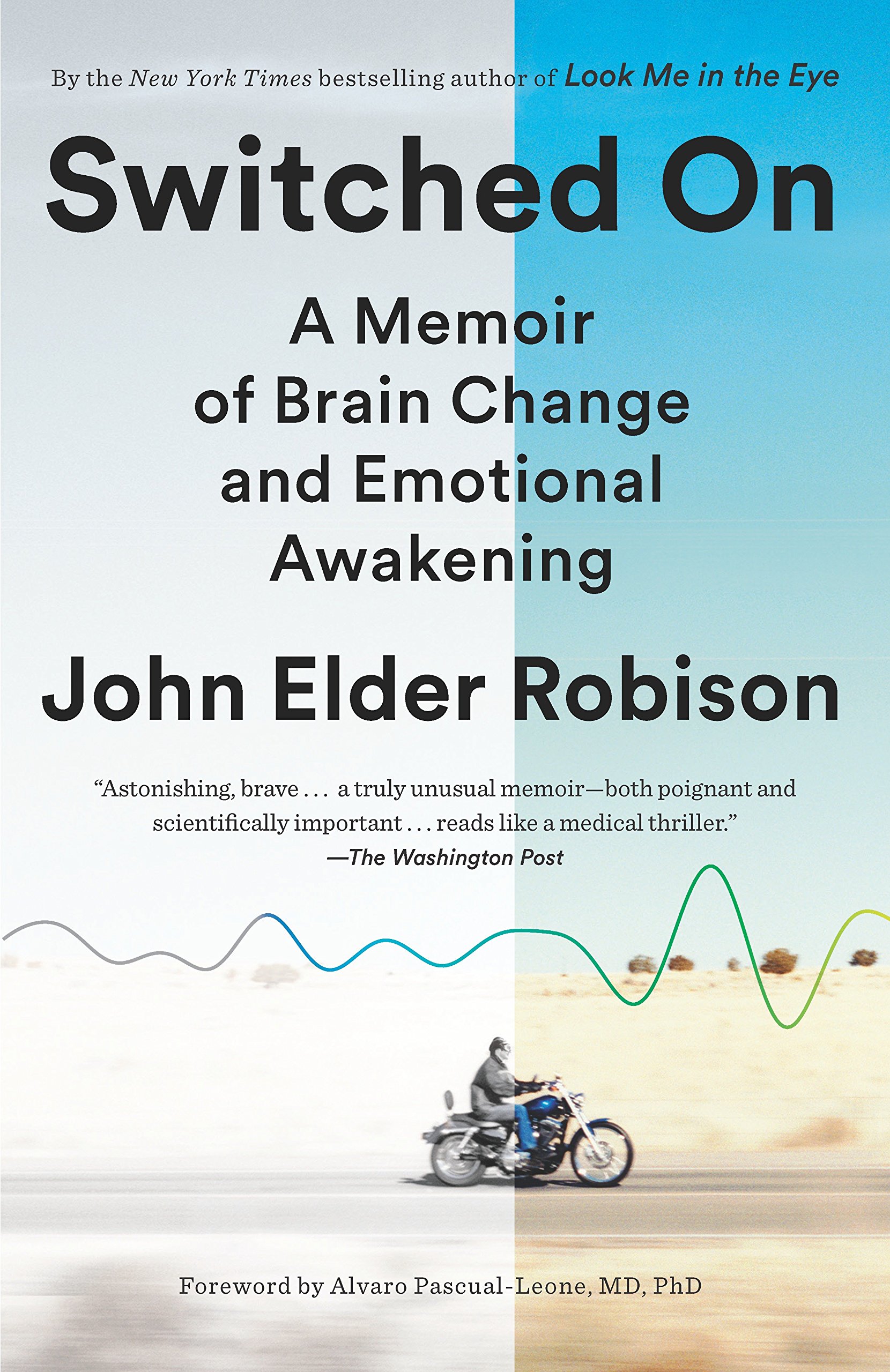
He wrote a book about it. His marriage ended because of it (he had been a reliable emotional support for his wife while autistic), but he also became a lot closer to his son.
I think we’re only scratching the surface here, and even that, there are wide-ranging implications.