> Mind maps are a great visualization tool. Use them smartly
I’m curious about this, since my experience with mind maps is that they rapidly grow into giant overly-connected graphs that are very difficult to translate to the sort of linear structure a book or blog post needs. What is OP’s workflow for connecting the two?
Check out OrgPad if you want to see an evolution of mind maps which is actually useful for serious work. For example this single diagram explains why Clojure is great: https://orgpad.com/s/oirCrD.
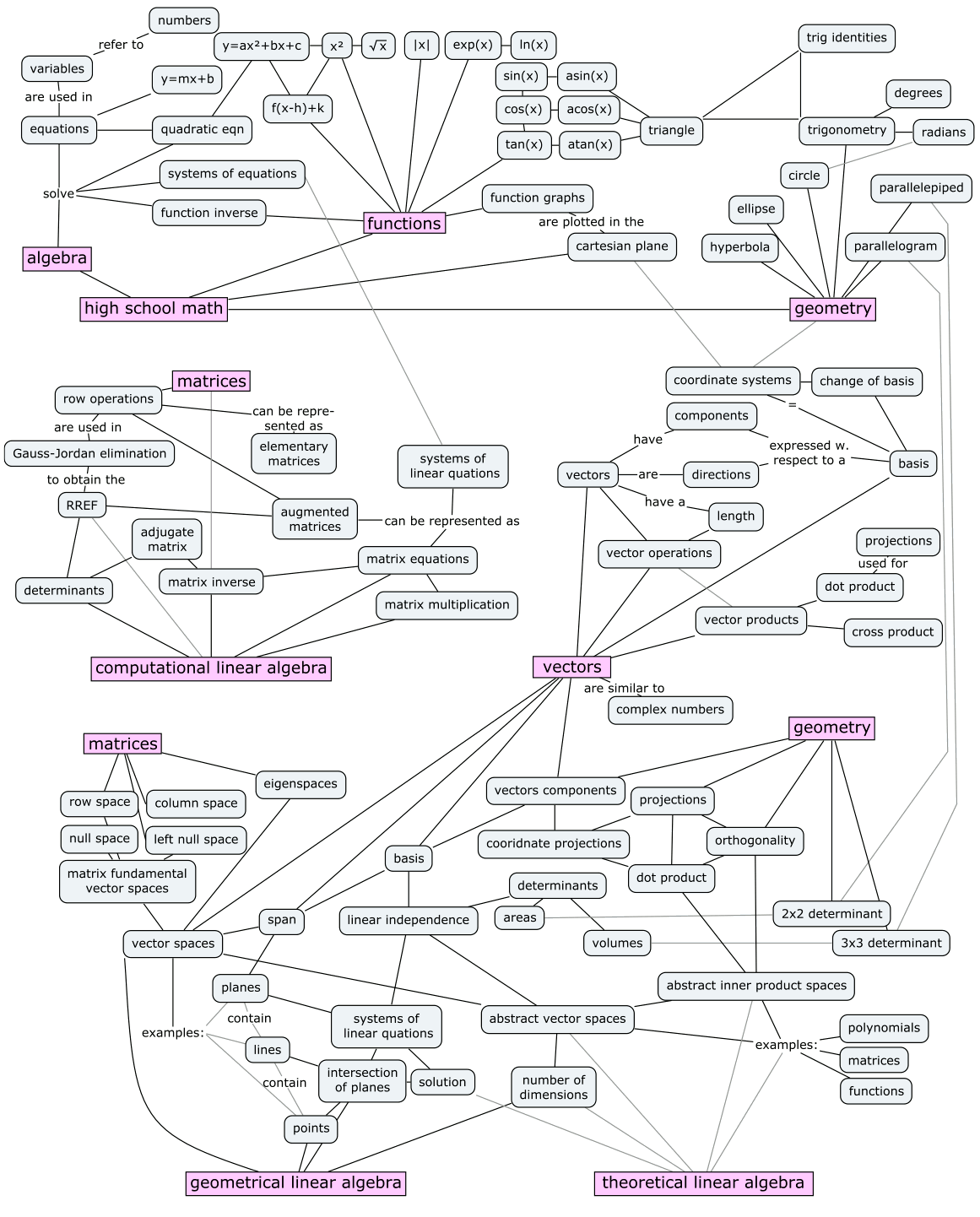
Partly related, the No Bullshit Guide to Linear Algebra has a concept map as a first page, which looks really stunning. Author definitely had spent time mindmapping stuff before writing.


I’m curious about this, since my experience with mind maps is that they rapidly grow into giant overly-connected graphs that are very difficult to translate to the sort of linear structure a book or blog post needs. What is OP’s workflow for connecting the two?