I got a 2020 forester at the start of the year and did three round trips to LA and Bay Area which allowed me to learn how well the eyesight system works right now.
I took Interstate 5 along the San Joaquin, pretty much a straight drive (I wouldn’t call it boring because the farmland is pretty beautiful).
It works very very well in predictable highway situations. Basically something I felt safe and comfortable using while in the leftmost lane, where there were no exits. It helped maintain the set speed subject to the constraint of maintaining a distance to the next vehicle. It also did lane keeping pretty well.
But it’s not a perfect system and it’s important not to trust your life to it:
* once, when on the right lane of two lane I5, it veered towards an exit ramp while going 60 mph+. I had looked away to grab a French fry.
* the detection of the car ahead of it isn’t perfect, I’ve had cars merge into my lane, which weren’t detected immediately, and distance wasn’t added until the system self corrected eventually.
* false positives on obstacle detection. It’s happened a few times, where hard sun lighting on the highway, combined with shadows on the payment from bridges/trees/other seem to make it pick up an obstacle and make the vehicle start to break hard.
* I get the sense that the control system doesn’t account for the physics of the car. For example, it’ll take highway turns at high speeds, because that’s the set speed. But we humans know to slow down as we enter such turns. They need to add a bit of fear of the unknown to this thing hah.
All in all it’s a neat system that makes highway driving fun. But one needs to closely monitor it or it’ll lead to a new class of accidents.
For city driving the only time I might consider using it is for bumper to bumper really slow traffic. Again with close supervision. But there hasn’t been much city driving during pandemic.
A coworker in Austin had a Subaru with the EyeSight system, and it would hard-brake on RM-2222 when it saw the rock walls in a curve. Presumably the "obstacle" took precedence over the fact that the road was curving. She pretty much had to stop using the system on her commute.
GM's Super Cruise system looks impressive (caveat: I haven't tried it out yet). But I'm not sure they have the funds and corporate will to create the LIDAR maps of the US road system that are needed for full coverage.
Yes, that wall looks like the type of pattern that would trigger the false positives. High visual noise or something. The street view shows pretty well why it might be hard, the shadows on pavement and the wall. I think it might also be confusing for humans, but we got a little bit of extra something that allows us to continue driving.
Maybe they're different now, with Mary Barra in charge. But previously they would flit from idea to idea, never fully committing. Like the Hy-wire concept. If you look at it's "skateboard" battery design, it's essentially what Tesla did in putting the pack under the floor to lower the center of gravity and give more interior & cargo room. Also - there have been numerous vehicles that they have cancelled in their last year of production (once the bugs were worked out), such as the Fiero.
I expect that if she retires soon, her successor will make a statement such as "We're a car company, not a map company!" and close the project. Which will doom Super-cruise.
If you get a chance, read On A Clear Day You Can See General Motors which tells the tale of GM from the viewpoint of John Z. DeLorean.
It's interesting how this varies between manufacturers, even though they're all using the same sensors.
I've used a Nissan SUV and a Honda car with the ACC/LKAS systems. The Nissan has automatic steering more than just lane keep 'assist' - there's a somewhat sharp curve on a highway where the Nissan takes it well, but the Honda has limited steering torque available and just gives up + turns off LKAS in the middle - which is a bit scary, especially since the audio alert is either quiet or not always triggered.
On the other hand, the Nissan has the same issue with merging cars that you mention, but the Honda seems to have an uncanny ability to recognize it and slow down / make space, just like a human would. Maybe their camera system detects blinkers, or their radar is more sophisticated? I haven't driven it enough to get a lot of insight on this.
Overall it seems like all three systems are just bad enough to require constant attention - each has weaknesses that make it unreliable in the right scenario, and other manufacturers have those specific issues resolved but have their own issues. Except maybe Tesla.
Nissan has had this since 2018, I wonder how their latest implementation is doing. And also the ones from more expensive brands. Honda's 2020 systems also have low speed follow which works for city driving where you come to complete stops, but my car is a manual transmission so I don't have that feature to try.
The real danger with Nissan, IMO, is the fact that their internal combustion engines are “interference mode”, which means that there are parts inside that pass through the same space, and the only thing that keeps them from colliding with each other is the timing chain. And when the timing chains goes, that wipes out the engine — to the tune of $10k or more.
So, whatever value you think your Nissan vehicle has, subtract at least $10k from that, due to the fact that you’re driving a rolling time bomb. It’s going to blow up on you, it’s just a matter of when and where.
Ask me and my former Nissan Juke how we found out this lesson, the hard way.
My family just bought one. Of course thanks to the COVID we have nowhere to go, and the car has mostly sat in the garage. But the previous car was riding up the bathtub curve, time to turn it in.
I tried out the new car on some curvy roads, and concluded it takes curves at a speed faster than my personal comfort zone, but it hung in there. Maybe I'm too cautious as a driver, but "not frightening the passengers" is one of my criteria for driving skill, I'd at least like the car to have a setting for taking turns a bit slower.
Yes, with passengers I feel like it makes people nervous with all the beeping (I’d rather sounds on than disable it). It’s why I’ve leaned towards only using it on hwy driving after getting a feel for it.
It would be nice if it would engage in some sort of tutorial mode as ones first learning the system. I feel like I was a bit eager to try it everywhere at first and tried different things which maybe now I wouldn’t, a bit of in city usage of it for example.
that's a lot of issues for i5 in the san joaquin valley. the speed limits are raised on that stretch because driving it is so unchallenging.
but hey, who knows, maybe judging and correcting for the system will keep bored drivers paying attention, and in the end there will be a net reduction in accidents?
How about that robo taxi network that operates without anyone in the driver seat in all human-drivable conditions and all human-drivable locations that is supposed to release in the next 4 days. They said they just needed winter 2019 to make sure it was trained up for ice and snow.
Subaru is the automotive manufacturing component of a conglomerate once known as Fuji Heavy Industries but now called Subaru Corporation. I'm not surprised at the home grown tech being available to create this in-shop product. As you say though, impressive.
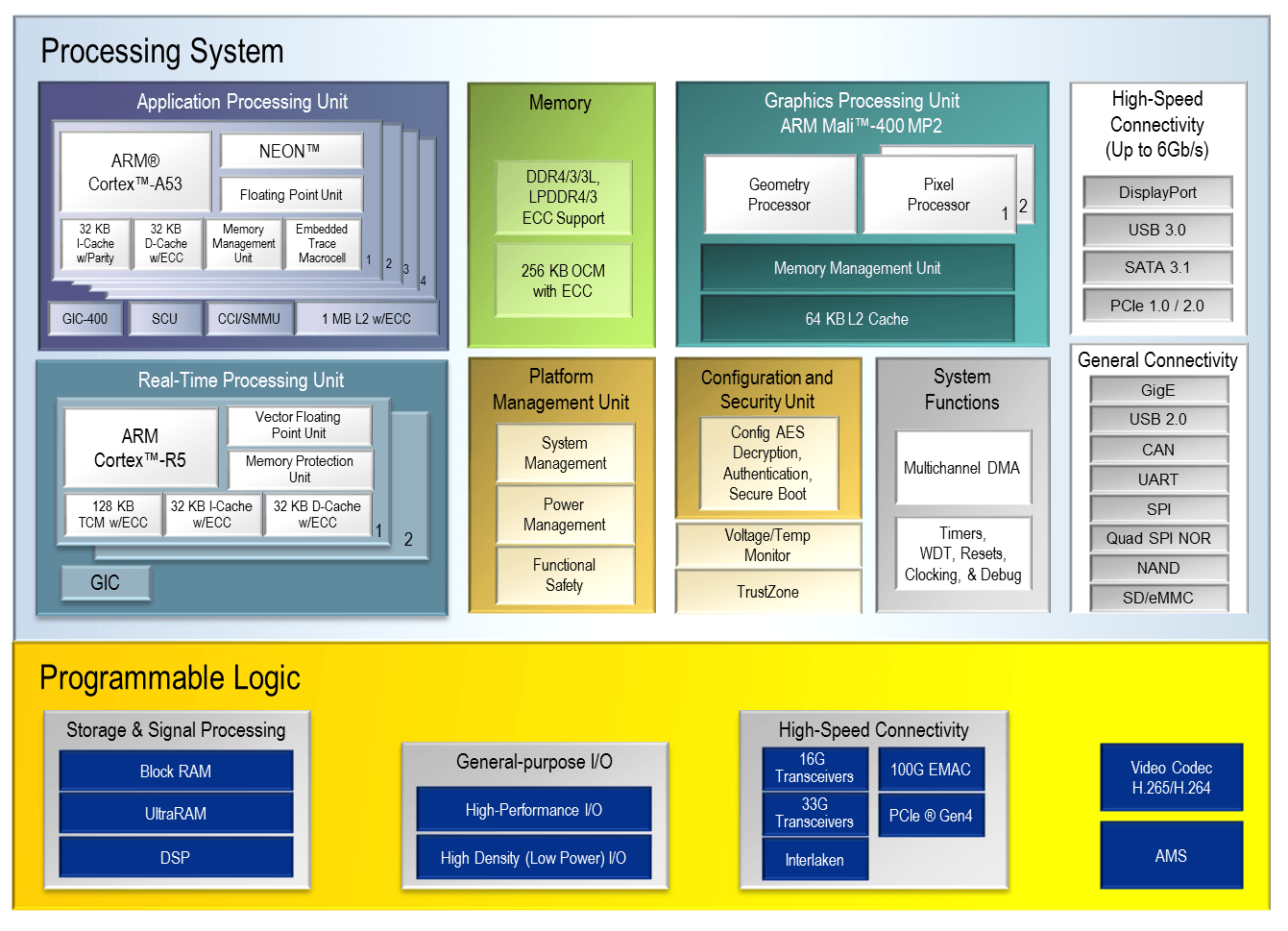
Yes, buying chips from Xilinx would be a bit like buying CPUs from Intel, not like buying a complete turnkey solution from MobilEye (which I realize is also Intel).
Maybe middle of the road. Xilinx seem to have developed a lot of CNN/DL API/library stuff recently. Far from turnkey, but I wasn't expecting so much stuff when I looked it up recently.
Yeah, I wasn't quite sure of that reading the article. I think to prove the usefulness of this hybrid SoC they did at least some of the development. There are situations where Xilinx makes a commodity product that you buy from a distributor, but based on almost nothing, I really suspect developing the software and logic of this system was a subaru/xilinx partnership, or maybe primarily Xilinx.
Oh, God help us - it apparently honks the car horn automatically in some situations. Fully autonomous driving may or may not be "AI Complete", but deciding when it is appropriate to honk the horn definitely is.
The feature should be called "road rage assist". After honking the horn, it could bring the car to a stop. Then you get out and brawl. (it's not a full self-fighting car yet)
ADAS == Advanced Driver Assistance System, which I didn’t know. Annoyingly “ADAS” is used in the article without description, until the text of a figure.
Probably because he already knew that Tesla hat something like that. But since Tesla is (sadly) still and outlier as the don't produce gas engine cars it might not be seen as a company in the same field.


I took Interstate 5 along the San Joaquin, pretty much a straight drive (I wouldn’t call it boring because the farmland is pretty beautiful).
It works very very well in predictable highway situations. Basically something I felt safe and comfortable using while in the leftmost lane, where there were no exits. It helped maintain the set speed subject to the constraint of maintaining a distance to the next vehicle. It also did lane keeping pretty well.
But it’s not a perfect system and it’s important not to trust your life to it:
* once, when on the right lane of two lane I5, it veered towards an exit ramp while going 60 mph+. I had looked away to grab a French fry.
* the detection of the car ahead of it isn’t perfect, I’ve had cars merge into my lane, which weren’t detected immediately, and distance wasn’t added until the system self corrected eventually.
* false positives on obstacle detection. It’s happened a few times, where hard sun lighting on the highway, combined with shadows on the payment from bridges/trees/other seem to make it pick up an obstacle and make the vehicle start to break hard.
* I get the sense that the control system doesn’t account for the physics of the car. For example, it’ll take highway turns at high speeds, because that’s the set speed. But we humans know to slow down as we enter such turns. They need to add a bit of fear of the unknown to this thing hah.
All in all it’s a neat system that makes highway driving fun. But one needs to closely monitor it or it’ll lead to a new class of accidents.
For city driving the only time I might consider using it is for bumper to bumper really slow traffic. Again with close supervision. But there hasn’t been much city driving during pandemic.