Ezra Taft Benson: "One must select wisely a source of news; otherwise it would be better to be uninformed than misinformed."
My own view is that you should reduce consumption dramatically, but still read some publications. And realize that in software, we have our own form of “news” that this missive applies to.
FWIW sharing my primary global non-tech news source while we are at it: The Financial Times to me is all the important news without the fluff and very much worth the subscription price. Obviously there is a heavy focus on economic news (but not exclusively).
I especially like the News Briefing which I can listen to conveniently with a "Hey Siri, play the FT News Briefing" while doing my morning routine. These podcasts as well as Alphaville (https://ftalphaville.ft.com) are actually free.
I probably should read more widely but I had been disappointed by traditional outlets like the BBC or The Economist for a long while now. It also feels like the world's balance of power is shifting heavily at this time so I'm not sure where I can get high quality global news without our natural western bias (our perspective increasingly feels like wishful thinking to me).
I will second Financial Times as a great news source. It's also a great conversation starter if you subscribe ("why is your newspaper pink"?).
Financial news, in general, tend to be my favorites because their biases don't tend to fall strongly along political lines, so you get fewer outrage-of-the-day stories, fewer what's-trending-on-twitter stories, and less politics in general - unless it's a really meaningful story that can affect markets.
I always remember what Chomsky said about this: Business newspapers actually tend to be as true-to-reality and BS-free as possible, since they need to present information as accurately as possible for businesspeople to make the right decisions.
There is always western bias. You are in the U.S., with your U.S. perspective, probably reading a piece by someone with a U.S. perspective. How can you possibly write accurately about Malaysia if you've never grown up there, don't know the social customs, don't know what people do there, don't know the slang, don't have friends or relatives there, never had a job there, never went to school there, never eaten the food there, never cooked the food there, etc. Bias exists because you can't possibly write about something you have no perspective on, and you can't find a good writer with relevant perspective on every single event in the world; there will never be unbiased news because it is impossible to get perspective on every event.
What I find fascinating is how we can quantify this bias. Here are two examples of my research on the NY Times with terrorism coverage by region + general coverage by country:
If you want more alternative perspectives, especially about the East, South China Morning Post could be an interesting choice. IMO they do a decent job in presenting opinions from both sides (definitely nothing similar to the CCP propaganda newspapers).
FT is fine as far as it goes, but it ignores most of the world's news except for business/finance stuff and the same mostly-useless "headline" stories you see everywhere else. Unless all you care about is the finance markets, it doesn't have much to say that is important your life and the world.
That filter is exactly what makes it valuable to me. Financial news still has to report political news if it has real-world impact on the economy, or a company or a politician of sufficient import.
So watching CNBC, for example instead of NBC Nightly News, you'll still know all about the government shutdown or the possible resignation of the governor of Virginia or a winter storm shutting down half the country, but you won't have to endure endless, excruciating segments about a kid smiling at a guy beating a drum.
I've noticed that ever since the blockade of Quatar began, Al Jazeera has been slowly starting to push soft propaganda. The Best thing about AJ is that has stories from places that other news outlets ignore.
That's a great article about how toxic media is. I skimmed but didn't see the part that helps me find good media, just a guide that will help me reject bad media (which is all the media I can find)
I'll add my daily list here if anyone is looking for other sources. I mostly use it as a 'headlines' method, but if something catches my eye, I'll dive in. If you have any suggestions, I'd love to hear them! Please excuse the wall of text:


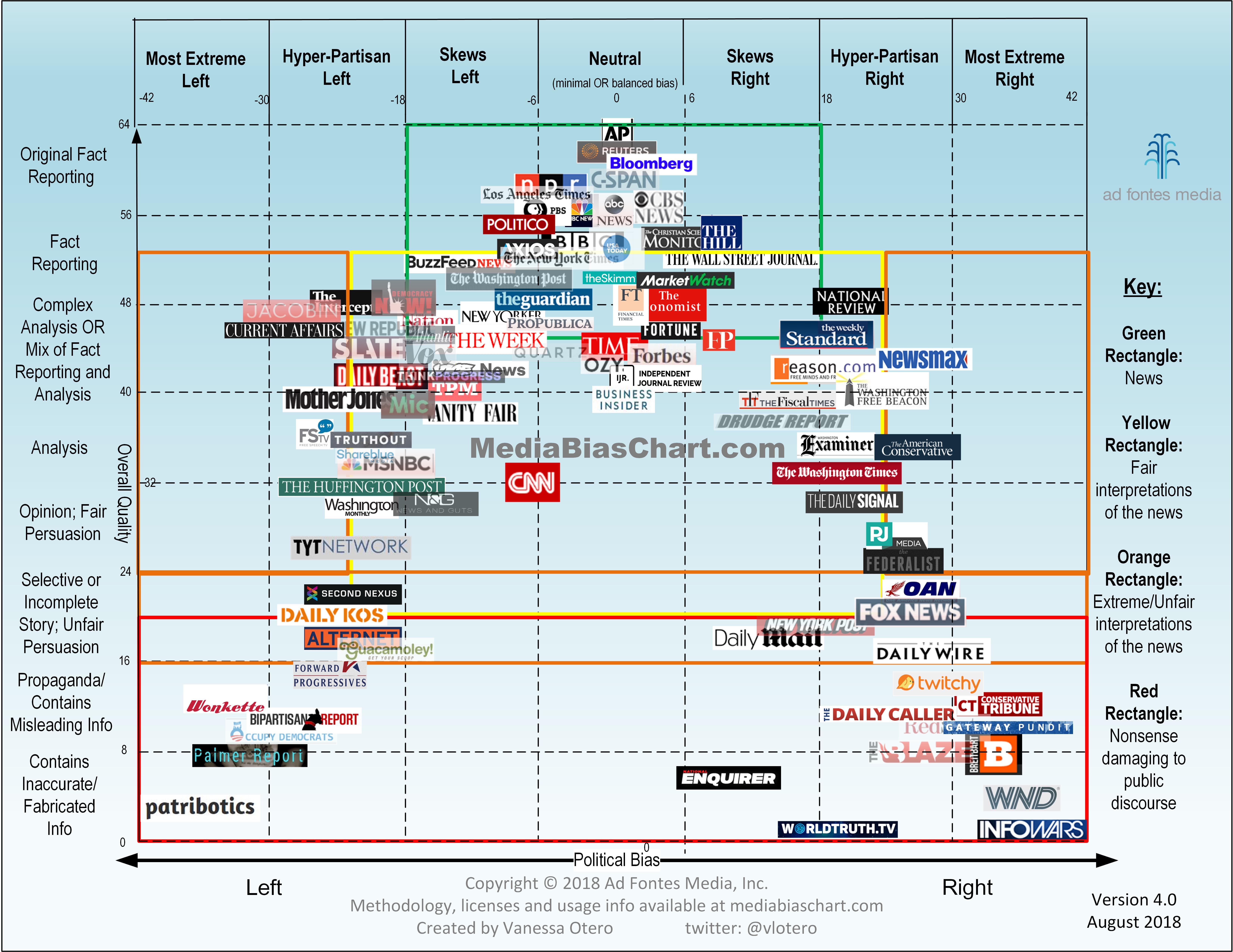
My own view is that you should reduce consumption dramatically, but still read some publications. And realize that in software, we have our own form of “news” that this missive applies to.
Here’s my media literacy guide:
https://github.com/nemild/hack-the-media/blob/master/README....
And one just for the tech industry (including HN):
https://github.com/nemild/hack-the-media/blob/master/softwar...