Fixing 1960s and 1970s electronics is hard. But they're fixing IBM's good stuff, not junk.
It's rare to see a transistor opened up today to see what went wrong. From the 1950s to the 1980s, the USAF did that on occasion. The USAF had a project, the Air Force Reliability Program, to make electronics more reliable. About 1% of the electronics boxes in the USAF were stickered with a note like "USAF Reliability Program - do not repair in the field, replace and ship back to ..." Back at Reliability Program HQ, technicians would figure out exactly what had broken and document it. All the way down to the individual component level and below. Transistors would be opened up and photographed under a microscope to see exactly what went wrong. They found problems like this bad transistor in the 1401, where a lead wasn't attached properly.
The USAF followed up by naming and shaming manufacturers. Microphotographs of bad parts were published in Aviation Week. Parts got better.
Used to be able to burn the package off with a torch and leave the chip somewhat unscathed. I hate to think of the chemicals I was exposing myself to when I did that as a kid, though.
Tektronix was over the top on quality. Ceramic terminal strips, silver solder, and all the component color codes facing in the same direction. They even put a little spool of silver solder inside the scope in case you had to make repairs. [1]
On top of that, if a board has utterly gave up the ghost and let the magic smoke out there's still a large market for donor boards, probably owing to the fact that they were such well built, documented, and repairable pieces of equipment.
Tektronix is a scientific instrument company that happened to get into computer peripherals. You could bet their gear was rock solid, and designed for engineers to poke at.
Like the mid 1970s Tektronix 4014 storage tube graphics display terminals. Saw one that was retired but still operational in early '00s used originally for CAD. Interesting how back then you could draw a circle in a box then morph the box (using scroll wheels) into a rectangle to form an ellipse.


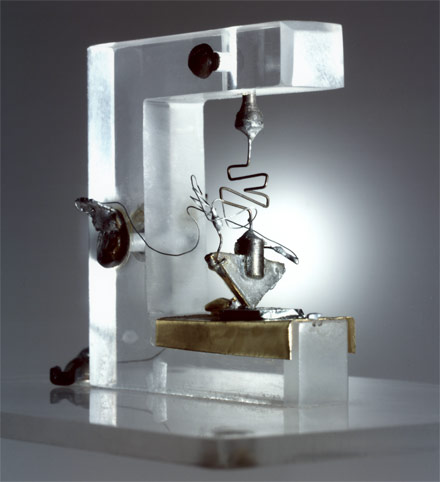
It's rare to see a transistor opened up today to see what went wrong. From the 1950s to the 1980s, the USAF did that on occasion. The USAF had a project, the Air Force Reliability Program, to make electronics more reliable. About 1% of the electronics boxes in the USAF were stickered with a note like "USAF Reliability Program - do not repair in the field, replace and ship back to ..." Back at Reliability Program HQ, technicians would figure out exactly what had broken and document it. All the way down to the individual component level and below. Transistors would be opened up and photographed under a microscope to see exactly what went wrong. They found problems like this bad transistor in the 1401, where a lead wasn't attached properly.
The USAF followed up by naming and shaming manufacturers. Microphotographs of bad parts were published in Aviation Week. Parts got better.