Senior Software Engineer and Infrastructure Architect with over 20 years of hands-on experience spanning core backend engineering, high-concurrency data pipelines, and infrastructure automation. Previously served as VP of Software Engineering at JPMorgan Chase, navigating complex data integrity and financial compliance frameworks. Founder and CEO of Theta 42, a technology consulting firm. Self-taught computer science background with current Cisco and A+ networking certifications. Extensive background maintaining high-availability distributed infrastructure, managing server clusters, and handling bare-metal and VPS networking. Strong track record of technical mentorship and training, including instructing Python/Django backends with a documented 90% placement rate for students. Actively building local AI pipelines, structured tool-use interfaces, and custom reverse-proxy systems.
Windows update is the number one driver for people switching to Linux in my experience. I personally know at least 20 people who are are non-technical who switched to Linux solely because of windows update.
We do get update notifications in many linux distros as well. I guess the difference is how aggressive the windows updates are. Its like having a gun to the head if at all there give a choice in the first place. The fact that windows is still kicking around with these shitty ux practices says how low the desktop or laptop market must mean to companies these days.
The major difference is Linux can update in the background, with out much effect on working performance. Linux also doesn't force you to update, or block shutdown/boot events to perform an update. Its simply a much better experience.
This is so weird to me because I'm very much a turbo nerd power user Linux dork and I will still contend that Windows has a significantly easier user experience. I certainly don't use Linux because it's a convenient desktop platform.
It is significantly more predictable, though. If I switch on my Windows computer to do some work, say, for a deadline, it's out of my control what happens next. If I'm unlucky, there's literally nothing I can do to make the computer functional and meet the deadline because it's stuck updating something.
Linux has warts, but being able to switch on your computer and definitely use it is pretty important.
It doesn't help if it boots, if then I have to continously battle with my wlan configuration that every other device on the house doesn't have any issue talking to.
So I just accept as fact of life that on a Asus 1215B, bought with Linux pre-installed, I have to reboot the network configuration every now and then.
I guess it is still better than when Canonical replaced the wlan driver with a half-working one because FOSS rulez, or having 3D capabilities downgraded to GL 3.3 support, when the legacy AMD commercial driver was capable of GL 4.1.
I guess the difference is that these problems are fixable: maybe they're going to be annoying to fix, but you can actually do it.
In windows, some problems are simply outside of your control, or if you dip down into the registry to fix them, and that's possible, then your fixes can get unfixed on update.
To be honest, I just find it mind-boggling that all around the world, there are offices of high-paid professionals waiting for windows to finish updating minecraft before they can actually do some work.
It's probably just a matter of fixing some inane configuration file under /etc/.
Don't get me wrong - I find that kind of thing annoying too. But it's nothing compared to the Windows approach of interrupting your work to give you a popup about 'connecting your device' or whatever.
Tesla "solar roof" are not panels, the roofing tiles them selves are solar and it looks like a normal roof. Its also suppose to last longer then panels.
Me too, I used 10.04(i think), the last gnome version until the repo stopped updating. Linux Mint has been my desktop of choice ever since. With their MATE and Cinnamon version looking like a DESKTOP and everything works out of the box its win/win. In 2010~ every one lost their collective mind when it comes to UI.
I have been using Linux on many higher end HP laptops without issue. At the moment I have HP Spectre x360 15in 2016,8th gen i7 16gb RAM, 512GB SSD and 2gb mx950 Nvidia. After installing Linux Mint 19 everything worked out of the box and i get about 6-hour of battery. I have a few older HP envy series and each of them work with out issue. The only issue i have had in the past 5years is laptops with more then 2 speakers. Linux just assumes 2 speakers and you get shit sound. This is fixable with jack-reset.
Also using hp here, i used 2 models (burnt the first one by connecting it to a cheap hdmi adapter while on battery). They're not the best but you get a great laptop for 600€. Nvidia graphic card handling needs tweaking on Ubuntu or it stays constantly at max power. I never tried to get the fingerprint reader to work. The rest works fine. I really like having 3 external screen outputs (vga + hdmi + usb c) to make a triple screen setup without needing an adapter
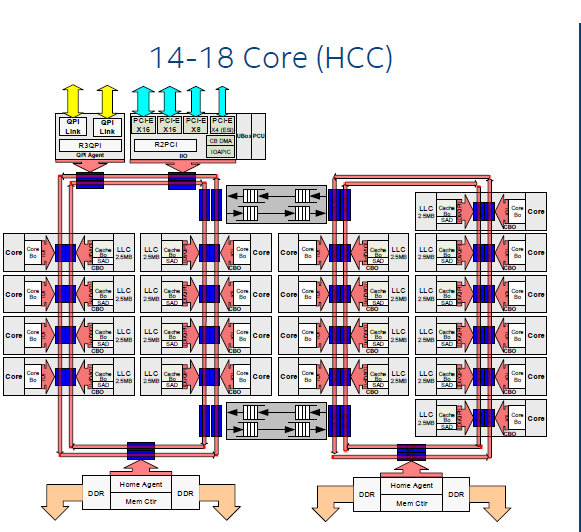
Threadripper ships in single-node interleaved memory by default, at least on my motherboard. This increases latency but doubles bandwidth (because now all 4-sticks of RAM are interleaved).
There's a BIOS setting. I personally enabled it using AMD's "Ryzen Master" program to setup NUMA mode (aka: "Local" mode in Ryzen Master).
The chart at the bottom of the output is the weight for accessing a memory pool from a CPU socket. This is the most important part of the output.
On this server, CPU socket 0 is hardwired to ram slots 0-15
CPU 1 to ram slots 16-31
CPU 2 to ram slots 32-47
CPU 3 to ram slots 48-63
If CPU 0 wanted to read something outside of its local ram slots, it would have execute something on CPU n, then copy that segment to its local ram group.
Where I work, if the smoke break isn't solo, it's a meeting. We even take non-smokers that would be relevant to the conversation. Sometimes us smokers are the only single to non-smokers that maybe you should get up for a few minutes. I use to work in windows building, after my first few days my co-worker who doesn't smoke thanked me for being smoker, he worked there for about a year prior and never knew when he should get up and go outside, I gave him that guidance.
Every job I have worked that isn't hourly, break times are not monitored. If you have something during the work day, just go, if you want to walk around the park and clear your mind, have fun, need a smoke, shit have 2. So long your not screwing something up timing wise.
Also, it seems to me that the people who complain about such things have unimportant roles...
I would be very weary of this product. I used it a while ago on a project for a course I was taking. During my research, I found a FAQ where the creator stated that if ever asked to place a back door in it, he would.
I don't think any creator of any "secure" messaging product would claim something like this.
But, given the possibility of something like this happening either way, this is why clean open protocols are more important for decentralized software, than reference clients.
I browsed the tubes for a bit and couldn't find anything but the following, which is a Feature Request comment under Backend[1] mentioning a "controlled backdoor", possibly added by this contrib[2]. It reads as follows:
at the cost of getting scorned, but dead serious: a controlled backdoor, with an automatic audit trail, to be used by lawful agencies for keeping us safe. Bitcoin by design supports criminal activities, which undermine the community. A community messaging system should have a way of cleaning itself.
No one has ever asked if I would backdoor it. I certainly wouldn't; that would defeat the purpose. Someone below linked to a random user requesting this feature:


Remote: Yes (Remote or hybrid/in-person in NYC)
Willing to relocate: No
Technologies: Python, JavaScript, Node.js, Go, PostgreSQL, ZFS, Linux (Mint/Debian/Ubuntu), Proxmox VE, Docker, Git, AWS, GCP, OpenAPI, MCP (Model Context Protocol), local LLM deployment (Ollama, vLLM), agentic RAG infrastructure.
Résumé/CV: https://william.mantly.vip (At bottom of page)
Email: william@mantly.vip
Senior Software Engineer and Infrastructure Architect with over 20 years of hands-on experience spanning core backend engineering, high-concurrency data pipelines, and infrastructure automation. Previously served as VP of Software Engineering at JPMorgan Chase, navigating complex data integrity and financial compliance frameworks. Founder and CEO of Theta 42, a technology consulting firm. Self-taught computer science background with current Cisco and A+ networking certifications. Extensive background maintaining high-availability distributed infrastructure, managing server clusters, and handling bare-metal and VPS networking. Strong track record of technical mentorship and training, including instructing Python/Django backends with a documented 90% placement rate for students. Actively building local AI pipelines, structured tool-use interfaces, and custom reverse-proxy systems.
reply