I was glued to the window while flying over southern China recently. There is so much infrastructure you can see from the air, even in fairly rural provinces. So many bridges. So many wind turbines. It is visibly a country on the move, a country that believes in itself and its ability to do things. The Chinese Century is increasingly palpable, for better or worse.
I have two chinese-born coworkers (who spent 20-30 years here in the us) in the same room. When we talk about china's expansion, I am always jealous of the public projects, infrastructure, housing, etc. They always point out the huge unemployment of young people, declining birth rate, and other social ills.
They say they're worried when the building stops. Even more people will be out of jobs. And when the nation ages all they built will be used and maintained by fewer people
I've never been to china so it's interesting perspective from people with family there and go back 2-3 times a year
In the same vein, it’s reasonable to take a foreigner’s view with a grain of salt. For all its impressive progress, China doesn’t show off its problems.
The “West” had the same problem many times during the first Cold War, where things in the Soviet Union seemed really great from the outside. Only after the collapse did the truth become clear.
Now, I don’t think China is even remotely similar, but never forget that it is not a free society.
Try browsing Chinese social media (WeChat, Douyin, Weibo, etc). The internet is ripe with non-anonymous criticism of the gov't
People often point to the take down of Winnie the Pooh memes as censorship but I don't think people realize there's a long history of racist groups using Pooh as a slur about Asian people and Tigger about black people. The meme exploded in popularity from a picture of Obama and Xi being compared to Tigger and Pooh.
You can have whatever opinion you want about taking down racist content but I don't it's any different from Western platforms. But spending any time on Chinese social media will quickly dispel the idea of harsh consequences for speech (an especially silly idea coming from members of the nation that contains 25% of the world's prisoners)
So is it your position that, when the Chinese government imposes takedowns or worse on Chinese people posting Winnie the Pooh stuff, it's primarily because the Chinese government is opposed to anti-Asian racism?
> nation that contains 25% of the world's prisoners
Among the problems is not being able to look in the mirror. There are those that don't realize, "when you point one finger, there are three fingers point back at you".
>In the US it's practically a right of passage to be a young adult and very vocally hate the country, hate the government.
Well, unless ICE murders you at a protest for expressing your hate of the government's actions.
>In China you don't have a life in front of you if you do that.
That's very much not true. China isn't North Korea like Westerners imagine. Unless you riot, take to the streets, or become a big agitator or dissident, Chinese government and media actually does allow some controlled escape valves for regular people to vent about problems, no issue with that. This isn't Stalin's reign of terror.
You'll only get disappeared if you end up becoming a big fish to threaten the CCP, like Jack Ma, but otherwise the CCP don't end disappearing every schmuck who complains about the government.
You might not know this, but as a nation, you don't get very far economically, academically and technologically in the long run by consonantly oppressing your people under a culture of permanent fear of their government. You can't bleed a stone.
And China got where it is, due to its successful policies from the last half-century that brought prosperity and lifted millions of of poverty, it's government has earned a certain level of "buy-in" from the majority of the population, meaning the people are more likely to be cooperative and work with the totalitarian government towards a common set of mutually beneficial goals, rather than wasting their energy trying to mass emigrate out of the country or to fight for democracy.
And that's what so dangerous about this, because unlike the USSR who served in the west as THE model of inevitable failure for such systems, China found a successful form of totalitarian governance, that some western governments are now trying to copy when they saw how effective it is.
> China found a successful form of totalitarian governance, that some western governments are now trying to copy when they saw how effective it is.
They are certainly trying to copy some elements, but also some parts might be inevitable in the age of decentralised social media which are much harder to control using the old tools. China just enacted that first and the West had to go through all the turmoil to arrive in a similar place much later.
Sure, but in this case it seems spot on. China really does have a disturbingly high youth unemployment rate, along with a population that's aging and shrinking. I have no idea if they're headed for a major economic crash, but the track record of command economies controlled by a paranoid aging dictator don't have a very good track record.
For all the things China does well there are plenty of reasons for Chinese people to be concerned about their future.
But we’ve seen this already in Japan, and it kind of worked out for them? Yes, they didn’t become the richest country in the world like everyone predicted in the 80s, they have stagnated a bit, but life there is still pretty good.
I’ve been visiting China since 1999 (and lived there for around 10 years). Rapid progress, lots of investments, over investment (ghost districts and ghost cities) are inevitable, but after its all over they will still have an advanced economy with lots of opportunities.
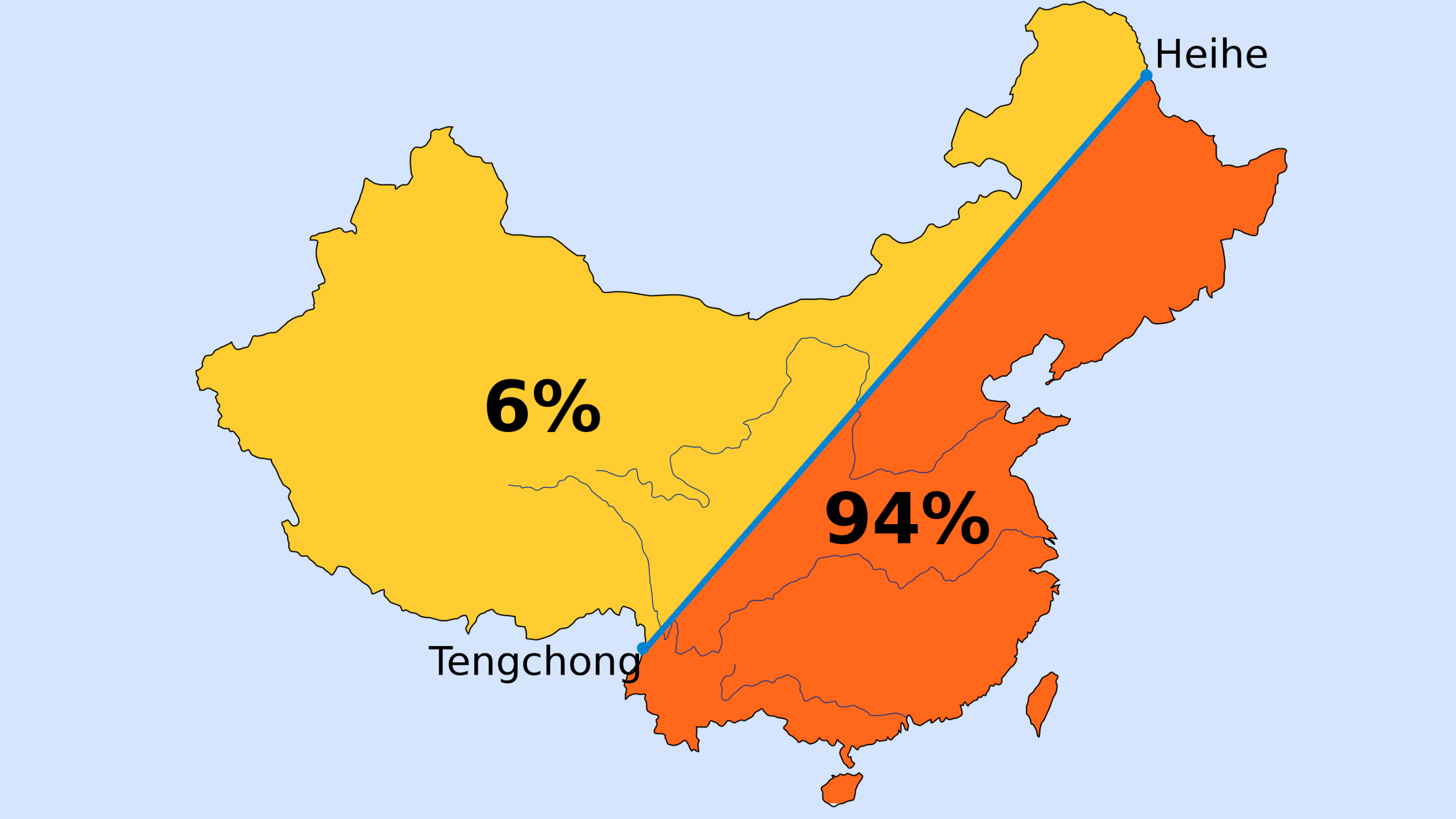
Why is that a problem? Most of the people in China live in about 1/3 of the country. Imagine if everyone in the United States lived in just 1/3 of the United States even with 350 million people that would be crowded , but China has 1.3 billion people living in an area the size of the United States from the Atlantic Ocean to the Mississippi river imagine 1.3 billion people living just in that area.
Building infrastructure for a civilized society is never bad and when I say that nothing is perfect. There are downsides. I would rather have the infrastructure and I wished the United States still had that can-do attitude. The rail system across the country needs to be upgraded desperately.
The Chinese have even taken the lessons of Oak Ridge, Tennessee, they have built two Thorium reactors and refueled one without turning it off, and they appear to be right on schedule to have that larger second reactor online by 2030.
> Building infrastructure for a civilized society is never bad
If only. Everybody loves cutting the ribbon on shiny new infrastructure, but the cost of maintenance is very real and never ending.
As a simple example, rezone some agricultural land as residential and sell it to developers. Yay, free money! But only once, and now you have a bunch of roads and plumbing etc etc that you need to upkeep forever. If there's people living in the houses and paying taxes, that's fine, but if there aren't or they go away, you now have a very big, very expensive problem. Japan is deep into feeling the pain of this and demographically China is only a decade or two behind.
IDK if pretty much everyone can exclude Florida and Texas, the second and third most populated states. (Or I suppose you could be excluding the Northeast Corridor instead of Florida)
I'm no expert on USA but looking at a map Florida is very obviously on the east coast, and the entire peninsula is only slightly wider than GP's 100 miles.
Touche, I was thinking of it more as 100 miles in length, not 100 miles in width running all the way down the coast, but your interpretation seems more correct.
Shanghai was great in the 2010s. Seems like a different place today.
Are the bullet trains making enough to pay down construction debt yet? My understanding is that that has been a struggle, which is going to be a problem when they get past being new and start having more and more maintenance expense on top of paying back construction debt.
It's not always the case, for example Japan has very low immigration.
And there is also the demographic disparity at play here.
The US is attracting migrants mainly from Latin America, that's a population basin of 650M people, roughly 2 times the US population.
In China's case, the surrounding countries susceptible to provide migrants is what? a third of China's population?
I'm not knowledgeable nearly enough about the area but I also feel there are also significant cultural and historical elements limiting large scale immigration (for example, the complex Sino-Vietnamese relations).
It's more likely PRC will have migrant labourers do low value work like Mexican fruit pickers. They're going to have ample high skill / tertiary workers for 50+ years, this baked into existing births... i.e. half the reason they have youth "unemployment" problem is they're generating so much tertiary talent vs opportunities, so there's no use for western based talent immigration to augment highend demographics.
The real shortfall is going to be low end blue collar - people willing to move dirt do shit jobs for peanuts, previously that's 100s of millions of undereducated who are aging out, so that leaves robots and south east asians and maybe africa because 1.4B PRC will require more remittance workers than poor asia can provide... unless they figure out automation. Even in west these cohorts are not immigration material, they're seasonal workers.
Neither do UAE or Hong Kong, and see how this ever stopped immigrants from making them immigrant-first economies. If anything, if you can successfully attract immigrants with a residency only, you get the best of both worlds.
Does it matter? If a permanent resident class exists (de facto is fine, if not legal), what would those folks be missing out on that citizenship would confer? You can’t legalize your way to cultural assimilation, and it’s not like the CCP would tolerate a meaningful vote.
> You can’t legalize your way to cultural assimilation
And that's why we are unlikely to see mass immigration allowed in China. They know that and can see what has happened and is happening in Europe and are thus likely to protect themselves. That's not my opinion but what Chinese think if you can discuss openly with people there.
This is a puzzling badly-received point of view here, but I think Europe and its official narrative that are actually the odd ones out globally.
China is investing a lot in automation and they already have state of the art automated factories. I think this will be the way forward for them and everyone (birth rates are dropping everywhere).
China had way more immigrants a decade ago, or even 25 years ago, than it does today. They have been opening up and then closing again for a while now, I think they found that they don’t really need many immigrants, if any, to develop. They aren’t going to become immigrant dependent like the west, at best it will be more like Japan where immigrants fly under the radar (literally, having African work crews out at night so the locals don’t notice).
I do wonder about this. With demographic collapse coming for almost all nations, or with a notable trend line for it to come, what would happen if other nations basically prevent emigration? Better to keep their people than lose them. Alternatively, those with large populations can use this as a bargaining chip in trade negotiations.
I don’t think so. They have a massive working population and foreign entrepreneurship is hard there. Also they have no process of assimilation and are pretty openly hostile to outsiders. If anything you might see low skilled immigrant labor moving there but I don’t think there’s going to be large numbers of high skilled workers moving there.
I doubt it because the Chinese are very protective of their homogeneity and see what has happened in Europe as a massive cautionary tale. So my guess is that they will be very picky and control both quality and numbers tightly.
>>and see what has happened in Europe as a massive cautionary tale
As a European - what has happened to us, exactly? I'm curious what kind of thing you think is happening to Europe that is such disaster that even China should be afraid of it.
European GDP per capita has not grown since the crash in 2008. Ever since we have heard that immigrants are being imported for jobs, yet the economy only gets worse, house prices increases due to supply and demand and crime rate is not equal among groups. Yes some people are just white supremacists but also, immigration hasn't solved anything in Europe in recent times. It is not like the US where you have a massive startup scene and get an Elon Musk from South Africa to create jobs and add meaningful value.
>>Ever since we have heard that immigrants are being imported for jobs
You do realize that most of European migration is internal, right? Polish workers going to Germany, that kind of thing? It would be like complaining that American migration is crazy because of all the people moving from Kansas to take jobs in California.
>> house prices increases due to supply and demand and crime rate is not equal among groups
As compared to....?
>>It is not like the US where you have a massive startup scene and get an Elon Musk from South Africa to create jobs and add meaningful value.
I'm like, honestly not sure what to say to that. I could maybe start listing successful businesses started and/or ran by immigrants in the EU if that helps? Or is the fact that none of them are as famous as Elon Musk a dealbreaker?
Complete demographic destruction waved off with "who cares" by the natives, strongly impoverished national culture and "3rd world problems" that any slightly attractive woman living in the city could tell you about? I'm french, btw.
I'm passively curious how the long-term maintenance of this all ends up. You don't just build a bridge, you have to keep it up when the natural strain of the world impacts upon it. Given provinces already have debt problems [0], how the hell will all of this infrastructure look in 50 years?
This is the structure of catabolic collapse. When the mere maintenance costs over run the capabilities/resources of the civilisation.
Funnily enough it may turn out that those nations that just muddled along could have the best long term out comes. Yes, they never got the really good stuff but they also won't have a harder decline.
"You cannot fall out of bed if you sleep on the floor" - Turkish proverb
>I have two chinese-born coworkers (who spent 20-30 years here in the us) in the same room. When we talk about china's expansion, I am always jealous of the public projects, infrastructure, housing, etc. They always point out the huge unemployment of young people, declining birth rate, and other social ills.
You have all of that (huge unemployment of young people, declining birth rate, and other social ills) also in Europe MINUS the Chinese progress, your co-workers are clearly biased
but for other perspective - I lived in China 5+ years, left in 2016, I returned for 3 weeks vacation/family visit last summer and honestly I didn't see that many changes as you would expect, in China in 9 years you would expect pretty much different country by previous standards, but I was like "meh", hardly any changes beside few more EVs on the road (even there I was disappointed, Beijing clearly ain't Shenzhen, maybe 25-35% cars on the road and I am including hybrids as well), bunch of new subway lines and skyscrapers, but nothing mindblowing, it was actually quite underwhelming, people still smoke in restaurants (and policemen in police station right under No smoking sign), still noise and mess on (some) streets, even more street markets (gentrification) closed, on the positive note thanks to crappy economy and zero inflation or maybe even deflation salaries are same and prices remained same (you can rent apartment for like 200EUR in Beijing suburbs), I can't imagine having pretty much same price for meal after 9 years in European restaurant
I traveled to Wuhan twice a year for business for much of the last decade (until the pandemic).
China was a growing country that clearly knew how to build infrastructure. In Wuhan, they built an entire development intended to employ 100,000 engineers (Huawei + our US company's 50). They built a subway system in a decade that's bigger than New York City's. I took the high-speed rail to Beijing and it was superb. They replaced an old, shabby international airport terminal with a new one with the widest concourse I've ever seen. They subsidized regular flights between Wuhan and San Francisco on China Southern airlines. The Hyatt Regency there was one of my favorite hotels I've ever stayed in (cheap and high quality). In a big commerical district, they had the largest screen I've ever seen that had a Blue Screen of Death :-)
Dazzling yet I'm not bullish on China due to its demographics, among many other reasons.
It has been called the 4-2-1 problem. 4 people had 2 kids. Those 2 kids had 1 of their own. This means there ends up with a more elderly people with far fewer young to support them. That doesn't look like a recipe for social stability. This is why they are going in so hard on automation nowadays, they are trying to do what Japan attempted in the 90s/2000s but hopefully with more success.
This was originally a side effect of the One child policy, but now it is continued due to difficult living situations. This is not a uniquely China issue.
Whenever the topic of Chinese infrastructure comes up I am reminded of a 2016 Wired documentary about Shenzhen. It was positive portrayal of hacker culture in Shenzhen. But one thing really stood out to me. They had demarcation line separating the city and “urban village”. It looked like lots of poor people lived in the urban village. The guide mentioned that the urban village will be torn down completely in 3 months to expand the city and people had to move. It sounded like gentrification. The host was impressed by the efficiency.
But it made me question how many countries can actually be that “efficiency” because matters of uprooting large swath of population will take years not months and run into significant legal challenges as well.
To be clear use of eminent domain and gentrification happens even in US but I doubt it can be as “efficient” as a technocratic government. It’s not a knock on Chinese government, just something I always wonder.
Gentrification is when existing communities that used to have decent if basic living situations get gradually priced out of an area as richer people and their expensive amenities move in. Gradually, as house prices go up and food gets more expensive, people sell and move. It's a slow, mostly voluntary thing, or at least, driven by market forces rather than official mandates.
Tearing down a slum is a much more disruptive thing that instantly displaces a entire community. Although it's unclear what happened to that community in this case and I can't find anything clear about it online (lots of clearly biased articles for one side or the other though).
A Chinese person who was here in the US as a foreign student once commented to me that he was so surprised that the United States was like the country side. He didn’t realize how rural the country was.
This was at UCLA which is in LA which is the second biggest city in the US.
I'd say it's a country that builds a ton of infrastructure, at the expense of living standards of common people. The money from infra has to come from anywhere, and an all-powerful central government can just redirect the stream from consumer spending into building out infrastructure. Whether Chinese are happy about it, you'd have to ask them.
It bugs me so much when people say that those black hole pictures “aren’t ‘real’ photographs, they’re composites created from reams of data and math.” All audiovisual media are like that!
It’s not, but I can understand how it might look that way to a tech industry professional used to dealing with scams (indeed, there are lots of scam-adjacent startups with quantum-flavored branding). Real science and engineering are just very difficult and take a long time. You can go to the arXiv, read the papers, and see the progress and breakthroughs that are made every year. But scientists are relatively honest, so even their breakthroughs are incremental.
this does not explain something like the manhattan project.
its not necessarily time that real science and engineering takes, but resources.
there's lots of fast progress happening in areas that get a lot of resources invested into them, and much slower on areas that dont have financial champions. moving fast doesn't necessitate that something is a scam
Sorry, I'm not sure I follow what the disagreement is? I don't claim that moving fast necessitates that something is a scam.
In any case (and I don't think this bears on your point, it's just something I'd like to add), building a quantum computer is very unlike building a nuclear fission device. Echoing my other comments here, it's almost misleading to call it "building a quantum computer," as that puts people in mind of 'unlocking' some single discrete technology in a strategy game tech tree. It's not that at all; it's a huge umbrella of (in many cases) extremely sophisticated technologies. The Manhattan project, as complex and astonishing a feat as it was, was a little closer to the strategy-game vision of research in that way. There's a reason it was possible in 3-4 years in the 1940s!
Maybe I should clarify that this isn't meant in a combative way, although it is in defense of scientists, who shouldn't be liable for other people's marketing.
Here's what's going on here: there's a way that people talk past each other, because they mean different things by the same words, because they ultimately have different cultures and values.
There's one kind of person (let's call them "technologists," but I'm sure there's a better word) who feels deeply and intuitively that the point of a technology is to Create Shareholder Value. There's another kind (let's call them "scientists") who feels deeply and intuitively that the point of a technology is to Evince That We Have Known The Mind Of God. I think that these two kinds of people have a hard time understanding one another. Sometimes they don't realize, as strange as it sounds, that the other exists.
There are many scientists who have been working on problems falling loosely under the umbrella of "quantum computing" for a few decades now. Most of them are not literally Building A Quantum Computer, or even trying to. Not exactly. For this reason it might be better to call the field "things you can do with coherent control of isolated quantum systems" than "quantum computing." There are many strange and wonderful things that you can see when you have good coherent control of isolated quantum systems. The scientists are largely interested in seeing those things, in order to Evince That We Have Known The Mind Of God. One sort of strange and wonderful thing, way down the line, is maybe factoring big numbers? The scientists honestly call that a "goal," because it would be strange and wonderful indeed. But it's not really the goal. The scientists don't really care about it for its own sake, and certainly not for the sake of Creating Shareholder Value. It's just one thing that would Evince That We Have Known The Mind Of God.
Incidentally, over those last couple of decades, we've gotten way better at coherent control of isolated quantum systems, and have, in many ways, succeeded at Evincing That We Have Known The Mind Of God again and again. We have made, and continue to make, amazing progress. One day we probably will factor large numbers. But that's not really the goal for the scientists.
On the other hand, there are "technologists" who hear about the goal of factoring large numbers, take this to be, in some sense, "the point" (that is, a proxy for Creating Shareholder Value), and expect it to happen in short order. They raise lots of money and promise a payout. They might act in very "commercial" ways, telling people what things are going to happen when, using an idiosyncratic, personal definition of truth. This is understood and expected in commercial situations. They and their creditors may be disappointed.
The trouble is that it's hard for people on the outside to tell the difference between the scientists and the technologists! This makes things confusing. On some level, this is a failure of science communication: laypeople hear about breakthroughs (from scientists), then don't see the promises of technologists immediately fulfilled, they get confused, and they start to think the scientists are lying. But they're not! They're different people.
Another thing that laypeople don't really know is that there are commercially-useful and near-commercially-useful technologies using coherent control of isolated quantum systems. They've come out of the same research program, but aren't strictly "quantum computing." I don't know why it's not more widely known that quantum sensors made out of qubits (usually a different kind of qubit than the kind used for computing applications!) are on the market today, and beat other sensors along a variety of axes.
This might sound like goalpost-moving, but I promise you it's not. If it sounds like goalpost-moving, it's because there are two different relevant groups of people you hadn't previously resolved!
Here's an analogous situation that might clarify the dynamic somewhat:
1. Sam Altman: [tells a tall tale to raise 100 quintillion dollars]
2. Outside observer: "hey, these so-called AI researchers have been pulling the wool over our eyes! They've promised AGI for decades. Where's my robot maid?"
3. Researcher who's been making steady progress in a niche subfield of optimization algorithms at Nebraska State University for the last 20 years: "huh?"
An old friend of mine went to work at a similar company, seemingly with no qualms. He praised how “nice” the ceo was. It was a sad and eye-opening experience of losing respect for someone.
The thing is, a lot of ordinary people in tech are naive, gullible, more intelligent than wise, easily flattered, limited to first-order thinking socially-speaking, and obsessed with rules and systems. Then there’s another stratum of actors on top who are all of the above, and sociopathic to boot.
I don’t know, I think it’s just the way it is. I’ve become very disillusioned with the ability of ‘tech people’ as a class to work for good.
Right, yeah, it’s a funny piece of terminology! The sense in which a ‘variable’ ‘varies’ isn’t that its value changes in time, but that its value is context-dependent. This is the same sense of the word as used in math!
people are so scared of losing market share because of art choice they make all of their products smooth dark grey rectangles with no features.
ugly.
at least this one has some sense of beauty, the courage to make a decision about what looks good to them and act on it. they'll probably have to change the heptagon shape because no way that becomes a standard
it costs so little to add artistic flair to a product, its really a shame fewer companies do
When I was a child, I was so enchanted by the look of the Cray supercomputers of old with their in-built furniture and great open arrays of status indicators. There is really something to making a machine show you the wonder of creation it unlocks
It looks super cool. I feel like I'm watching cyberpunk come to life with the way we're talking about technology these days, but this also looks straight out of the Neuromancer of my imagination.


reply