I'm going to go against the grain here and say this is probably a positive thing for Meta products, and honestly every other "free" service to provide these kinds of revenue avenues.
How many times do we hear things like "if the product is free, you are the product" - well, the consequence of that is development resources tend to be pulled into directions that benefit advertisers.
By having material subscription revenue coming in for things outside the advertising space, the product managers can justify investing in features that otherwise would be passed up due to lack of revenue potential from advertising.
Yes, in many ways Meta gets to have their cake and eat it too, because the ads are still there even with the plans, but this does give a meaningful voice to their customers who pay that they can invest in other ways outside of strictly advertising.
You paying just signals that you're someone to push more ads to and to harvest more data on, since it means you have disposable income to spend on something as useless as instagram or facebook.
Meta isn't going to stop harvesting all your information just because you pay for a subscription, they'll harvest and sell your data AND take your money.
"Meta isn't going to stop harvesting all your information just because you pay for a subscription, they'll harvest [and sell] your data AND take your money." (Meta sells access not data)
Google has been doing this for a while with YouTube
The data collection and surveillance will of course be used to support online advertising services. The ads can be delivered outside YouTube by other Alphabet business units or partners
There seems to be a myth that paying so-called "tech" companies solves the problem of data collection, surveillance and online advertising. As if for every subscriber the company will voluntarily collect less data, perform less surveillance and sell less ad services, leaving that money on the table
The truth is that these subscribers, by paying the companies that perform data collection, surveillance and advertising services, are actually subsidising the practice
You can accomplish "no ads" and arguably substantially less tracking without Premium, though, with (e.g.) firefox and ublock origin. The only downside is an occasional ignorable warning that you're "seeing interruptions".
I'd suggest getting them money through patreon, kofi or whatever patrons system they use instead. That's much safer for them than YT ad money and helps them feel less pressure when they get demonetized or whatnot.
I probably watch too many channels to pay them each outside youtube, it will become quickly logistically unmanageable, if not unaffordable. The maximum I can do is probably 5 channels or so.
If there are that many channels you watch regularly, what slice of the pie does each one get from your youtube subscription, a few cents?
You could possibly pick one channel you like each month and give it a one-time $5 donation, which would be equivalent to years of ad revenue from a single viewer.
This also involves a significantly larger number of people getting my payment details, actual proper name, etc. Even if I wanted to pay individual channels, I'd probably still do it through the YouTube channel membership feature.
> I pay YouTube Premium and get no ads there. It's totally worth it for me.
You pay for YouTube and don't get ads there, but you also just put a big red target on your back for Google to show you ads in all of their other products because you've just outed yourself to them as someone with disposable income. You can't opt out of ads in search, your personal inbox, etc.
Also the ads are not just classical ads for coca cola or a mattress sale, but people and organizations paying to boost their content in the feed, which can be all kinds of manipulation, political, but also more organic looking brand management or astroturfing. Marketing is way more nowadays than just straightforward "here is a product you may be interested in, buy it".
And YouTube recently (and silently) started approving multiple in-add ads for videos longer than 20 minutes. They destroyed the long-form content creators with their shorts push, and now it looks like they're trying to recover a little.
I don't subscribe to "YouTube Premuim" and I get no ads there
I avoid using Google's Javascript to play other peoples' uploaded videos
I get so much relief out of avoiding the Javascript, telemetry, data collection, behavioural surveillance, "recommendations" and ads, and whatever nonsense Google is doing behind the scenes
You WILL be getting ads in the app, though. There's nothing in the article that says you won't. This is like Snapchat's subscription. You get more features, but still have the ads. This isn't replacing "if it's free, you're the product", it's "if you're willing to pay, you're an even more valuable product".
>you have disposable income to spend on something as useless as instagram or facebook
Useless in the big picture, but I know people who are cobbling together various income streams to maintain basic quality of life- including sponsored posts on social media. Which gives the platforms a very real value. I'm not saying they aren't exploitative, and overall they don't contribute to the advancement of society- but there a a LOT of big employment holes in the west and like these platforms or not, these platforms are plugging a lot of holes, if only mostly timidly except for the usual stars.
Why would you want to signal that? It relates in no way as to what kind of person you are. In fact, the richer you are, the more questions I have about how you got it and who got shafted along the way.
I wouldn't, you wouldn't, and countless millions also wouldn't.
But there is clearly a demographic who do use social media to signal lifestyle status, often using that lifestyle status to sell products of various kinds.
The erosion of enthusiast fandom into paid influencer "fandom" is whole subculture.
What do I value? I believe I live in a society where wealth is earned through hard work. It would be awful living in a society where I wrongly think everyone who has something I don't earned it through nefarious means, and there is no way to be an honest broker and create wealth.
For attracting members of the opposite sex and wanting to connect with other people of similar wealth as their values and interests more closely correspond with your own. I don't know if you noticed, but there are cultural differences across socio-economic classes.
Ah, so you generally think about how other people perceive if you have money or not. Enough to answer an internet stranger inquiring about your wealth, and flexing about retiring at 40 (congrats).
Maybe hthe GP is confident enough to have passed by the shallow indicator of displaying their wealth? The richest people I know personally (and who I deeply respect) absolutely delight in people under-estimating them, assuming they're "poor plebs" like the rest of us. They like money, recognize it's important and appreciate what it allows, but feel no need to advertise it.
If it's a tech company it's not "if it's free you're the product" it's just "you're the product" nowadays. I am so happy kids these days no longer trust tech because I'd hate to see how exploited they'd be otherwise.
People who spew I'd rather pay, I'd rather pay often majorly underestimate how expensive Google and Facebook would have to be in the western world to offset the ad revenue per person. The irony is this is especially true for you if money is no object to you, as you'd be disproportionately valuable to the ad machine. It's not going to be ten bucks folks.
You can actually look this information up! For example, Instagram makes approx $2-50 ad revenue per user per year, depending on the region. Apparently it’s highest in North America.
So <$5 per month for someone in the developed world to keep using Instagram and stop being the product. If they redesigned the app around what’s best for users vs advertisers, it actually seems like a great deal, considering many people spend multiple hours per day on apps like these.
Of course this would get pretty expensive for all the services we use. But I personally would happily throw $100-$250 per year at my most used apps to stop being advertised to.
I think we are missing another angle of getting the data. Information is also power. Power to influence people (e.g. Cambridge Analytica). So paying will not stop the data collection. Actually I doubt anything will, unless people really push the regulators to do their job.
I’m pretty confident that at least 95% of HN users use adblocking so clearly the users are not worth much to the ad companies. Today I have absolutely zero ads on my devices.
I've never paid Google for anything. I usually get a check from them. What does Google sell? Office clone, ads, map api credits, search api credits, ad free youtube, ai credits sometimes phones and speakers that get bricked?
>> So <$5 per month for someone in the developed world to keep using Instagram and stop being the product.
This is only true if everyone does it; Why would they stop advertising for a tiny market, especially if they can get both? Why decrease the value of the tracking on a smaller userbase? Sales conversion says you'd have to charge $50 or $500 a month and you'd have a much smaller base; does social media like this even work with a fraction of the people?
Considering cancelling mine because they've introduced ads to it in the form of undismissable "purchase the product being discussed here" affiliate popups.
I don’t watch enough YouTube to warrant that. My elderly father on the other hand, who watches several hours of YouTube per day on his television, finally got YouTube premium and has found it to be life changing. The TV YouTube app regularly shows 2+ minutes of unskipable adds per video.
Fantastic, the family plan is probably one of the best subscriptions I've ever purchased. If one reads the comments in this thread you'd be left to assume YouTube Premium would have had to be $100/month/person though and not something Google could ever have considered offering.
That was a great deal when it came bundled with YouTube music. When they bizarrely tried to merge the two products so that when I was interested in watching videos, all I got was music video recommendations, it lost its lustre.
Now I would rather just pay for a couple Patreons. I heard there's some new pay to use YouTube thing out there that creators are pushing, I can't remember the name but I hopped on it and didn't see any extra content beyond what's offered on YouTube so I don't see the point.
Oh and before I got grayjay so I could have ad free casting of videos, premium was nice for when watching on the tv.
It's without a doubt one of the best value for money subscription available, except for electricity, water, a library subscription.
There's an endless amount of the highest quality videos available on YouTube. But you need to let the algorithm understand what you like by using the conveniently named "Like" and "Dislike" buttons.
most-all of the algorithm-served content (not from my friends list) is ad content, even if it's not a meta-served ad.
all content (even those who make legitimate content, if they intend on making a living on content) is just ads packaged in fancy UGC. we've reached a point of no return for ads and user targeting
This is true. But they would at least design the app around maximizing user satisfaction with the service (to keep you paying), vs maximizing time spent on the app (i.e. through making it addictive) in order to increase ad revenue. The current incentives are perverse.
That's a nice idea, but then there are all of the times we've started paying for services to have an ad-free experience, only to then have them toss ads back into the mix.
So it seems to go in capitalism sadly. If we could maintain healthy competition and avoid collusion, maybe we would be allowed to vote with our wallets. But right now that seems like a distant fantasy.
You've missed the point of the comment that you've replied to. There's a well known adverse selection effect because the people who would pay for no ads are exactly the people who you most want to be able to serve ads to: people with lots of disposable income, and people who are power users who see the most ads.
As a result the actual amount that they would need to charge for an ad-free version is higher than the average revenue per user, possibly significantly so.
edit: you can look at YouTube premium for an example of this in practice. It's $16/mo for no ads. That's around 2-3x or more what their revenue per user is.
The amount of money you spend doesn’t affect your disposable income, just your savings (beyond calculating interest). Unless we have different definitions of income or disposable.
Why would you include the money required to pay shareholders, pay the humongous parts of the company doing ad tech, the lobbying money, the fine money, etc. What is the cost of running a social media site?
I have previously calculated that Mastodon costs including development are on the order of 1 EUR/person/year [1]. Even if you 10x it, it's nothing. Facebook does nothing more technically complicated than the forums of the 90s. It's just smarter design.
I am not. I am explicitly saying to offset revenue from ads. That's a different question. Best of luck getting Facebook-level distribution in your 1 EUR Mastodon.
There are no technical reasons preventing the Mastodon federated network from scaling to billions of users. An individual server might not be able to scale to even 10 million users, but that is by design. There should be thousands or better tens of thousands of servers each supporting a small number of users, with moderation handled at the server level.
fb doesn't actually "sell your data", they use for ad targetting and even then, the ad targetting is waaayyy off, in my experience. they're hardly getting any use out of it for targetting me.
> You paying just signals that you're someone to push more ads to and to harvest more data on
No, qqtt is correct that if you're paying, you get a vote. It may not be all that much of a vote, but it's more than you'd have if you weren't paying, and Meta will pay attention to it.
For a recent example of how this works, consider that with the post-October-7th wave of pro-Palestinian activism on US college campuses, a lot of rich Jews moved to squelch it as best they could -- not by offering new donations conditional on universities adopting their favored political positions, but by threatening to suspend their existing, habitual, "unconditional" donations.
The 'vote' is real. But it is 'darwinian'. It's not that animals develop a certain adaptation on purpose in order to survive. Instead, out of many random changes an adaptation emerges by selection: those that are the most advantageous get the chance to pass on their genes.
If everybody stops using meta apps and starts using signal, bluesky, mastodon, etc., meta would instantly transform their business (if they still can make a profit).
The problem is, subtly harvesting data from and even shoveling ads into paid subscriptions actually doesn't make consumers immediately and massively cancel their subs. So you can make a profit from subscriptions alone, or make an even larger profit by also collecting and monetizing your customers data. Guess who will win?
> By having material subscription revenue coming in for things outside the advertising space, the product managers can justify investing in features that otherwise would be passed up due to lack of revenue potential from advertising.
You’re a Meta decision maker presented with 3 options. Which one do you pick? (remember, you’re not you…you’re a Meta decision maker trying to justify a trillion dollar valuation).
- Possible additional ad revenues
- Possible additional subscription revenues
- Possible additional ad and subscription revenues
> credit card itself can’t be used to ad targeting
Incorrect.
Credit card networks / issuers explicitly describe using payment, spending, and your personal data,
for marketing, personalization, audience segmentation, and advertising.
Mastercard’s privacy notice states that it may use personal and transaction-related information to:
“Provide you with personalized services and recommendations”
“Offer and support loyalty programs”
“Provide content and advertising tailored to your individual interests”
“Analyze spending behavior to improve the effectiveness of marketing programs and advertising.”
Visa has also historically offered an opt-out specifically for using card transaction data…
If only I could get rich, structured data access to my spending data... but many banks only allow pdf statement downloads, in inconvenient ways, and their UIs for drilling down into data...
Your lack of complaining is expected and depended on, but I do encourage your continued enthusiasm in that acceptance! Someone's bottom line depends on it, and they probably make way more money than you so they really need it!
I'm fine with the static ads in the digitised print edition and the paper edition I get on Sataruday (even though I find some objectionable), but I block any and all digital ads with uBlock Origin, whether I'm a subscriber or not. I pay for a good national newspaper; they either make do with that or lose me as a long-time subscriber.
Insufficient information. Each option will address a different part of the market with a different size. Unless the potential revenue is estimated for each option, an informed decision is not possible.
Heard it here on HN: problem is paying a subscription is purely additive. eventually, inevitably, they’ll take the subscription AND sell your data, serve you ads, etc.
it being against what your payment contract states just means they’ll reinvent and rename the tiers.
From what I can tell, that's already the case for these subscriptions. They give you some extra stuff but you're still getting ads, and they are still collecting your data
It seems like there's no solution, then: companies will always chase the next dollar that allows them to exceed growth expectations on the earnings call. It seems like no matter what, anti-user behavior in pursuit of profit is inevitable.
The golden age of the internet was when it was an enthusiast's space. It is now almost entirely a corporate space, where the remaining enthusiasts' content is scraped 100K times a day and sold without attribution by the corporates.
The fediverse is a step in the right direction, and Meta charging may create another wave of converts there. It has a lot of growth pains to endure yet, but the ability to painlessly spin up your own instance could be very attractive to young people looking for their own non-corporate spaces on the internet.
We may also see some renewal via large companies (Meta in particular) imploding, from mismanagement and disenchanted users. My experience marketing a new product is that online advertising is completely ineffective now the web is filled with slop, no matter how well targeted it is. We've recently pivoted to optimise for word-of-mouth with orders of magnitude better results. I think any adtech company without a solid alternative profit stream is in for a rough ride (and no, AI is not a solid profit stream for anyone but Nvidia).
well Apple is stated as an easy counter example. They charge money for premium hardware and software. everything else is downstream. So while they could squeeze at every possible opportunity, they are less incentivized to abuse the relationship because their core proposition is: you pay money for our premium hardware and software.
it’s imperfect but contrasts this with the modern approach of grow at all costs, light money on fire and punt entirely on how to ever make money. it usually doesn’t end well for customers.
This is just a copy of the YouTube model, to your point. It's not that you're going to get a premier experience. It's that you'll be spared from full enshittification. Only tech bros could possibly think making the default subscription level so bad that it would drive revenue. But here we are.
These products already do what basically everyone wants them to do.
The problem is now people are conditioned to having their privacy violated so they are still the product and they will pay to be the product.
The network effects with a product like WhatsApp are strong so that this opens the door to dark patterns for the non paying customers. After enough time the same level of effort will go into the now subscription app that went into it when it was free.
> The thing that determines whether you’re the product isn’t whether you’re paying for the product: it’s whether market power and regulatory forbearance allow the company to get away with selling you.
Or more simply:
> Companies don’t make you the product because you don’t pay — they make you the product because you can’t stop them.
As far as feature development goes, Meta isn't looking under the couch cushions for change. If they want to invest in a feature, they will.
Id pay money to not see ads. Like YouTube premium. And I’m sure I’m not the only one. Can’t believe they rolled out all these different plans and left out the one thing a lot of people would buy.
Does Youtube Premium track and build profiles and use and sell them? I assume so because Google, but does Premium remove advertising (in the broad sense of the business model and profiling) or remove just ads? YT in general seems "kinder" than others at a few things, like you can remove history and activity and even get a blank homescreen.
Aside: I think it's funny how with an NYT subscription, you still get not only ads, but frequent article-covering ads for NYT subscriptions (asking to upgrade to a family account).
Most of these big companies don’t actually sell your data directly, they monetize it through first party ads. If you have a well-oiled ad machine with strong first party data, selling the data just gives it to competitors, and is overall less valuable than using it for yourself.
I’d assume they’re still building that profile while you use the product, but you won’t see any ads, and can still delete the data from the various points like you’ve mentioned.
I believe the ads that "lite" Premium doesn't remove are on anything that has ContentID music in it, as they have to pay higher fees to the record labels for those.
I've been considering writing a nastygram to the NYT about their nonsense popups. Every time I open their web page I get not only the family account popup, but also a "use our app, it's better!" popup.
I refuse to install your app just because you intentionally trash the web experience with popups.
Someone willing and able to pay for something as frivolous as Instagram or Snapchat makes them priceless to an advertiser. They want to make it easier to identify those people.
But yeah, when Snapchat rolled out their subscription program, I was all set to buy it to get rid of the annoying ads and AI in my chat list, then I realized I could do none of that. So now I just use it a lot less, which is probably better for them anyway.
I paid for YouTube Premium until they started showing me ads for YouTube TV (and maybe YouTube Red at the time?). Cancelled and got into DNS adblocking.
Of all of the sites/apps that are immune to DNS adblocking, I thought YouTube was at the top of the list. Not that DNS adblocking isn’t a good thing, but I’d think Google & meta would make sure they couldn’t be defeated so easily.
Maybe this was something country or region specific. I don’t remember ever seeing ads for TV, Red, or other products with my US premium subscription. Now, some channels will promote specific products in their videos (like the mini ads some do for square space, nordvpn, etc), but YouTube, now has a button you can click to jump over that garbage.
Other people are mentioning that in the US there are two tiers of Premium, "Full" and "Lite", but I only see one tier in my country (fully ad-free, allows downloads).
None of the packages mention anything about removing ads do they? They're some silly premium features like custom stickers and themes. I don't see anything about removing ads.
I think given that meta has already sort of destroyed so many things, it's difficult to see this measure causing any _harm_. I'm not sure it's a panacea, as since you said meta will just take your money and track you. But the "tracking you ship" has already sailed. Maybe in a perfect world the "taking your money" bit is successful enough that they try to make that experience better? Ideally, meta would just take 100% of its intellectual assets and pay to have them subducted by the Mariana Trench, but I don't think that'll be happening for me.
> this is probably a positive thing for Meta products
If it was a subscription that eliminated all ads AND enshittification anti-patterns, like not putting every single notification, 'share my...' and 'show me...' option on separate toggles helpfully sub-divided into a dozen or more separate pages - I would be all in.
Seriously, what if Meta just said, in effect, "give us $XX a year" and you will be a "VIP Account" that's invisible to all our analytics systems, data collection, aggregation and profiling. The only metric where you will even be visible to our reporting systems is "VIP Account Revenue" as your payments hit our account. We will not care (or even know) if your usage is literally zero minutes a year.
I'm sure all the reasons you're thinking of for why Meta would never do this are probably correct. Those same reasons are why the reasonable-sounding thought "this does give a meaningful voice to their customers who pay" is moot. I believe there is no subscription amount Meta would accept to genuinely shift their entire way of thinking about even a small subset of users. Therefore, this much smaller subscription won't actually change anything that matters. This is just the diary farm trying to collect extra money by renting plastic stall decorations to the cows their business owns and milks. By definition these features will be trivial and purely cosmetic because anything that actually changes user behavior, would impact the real business and will be decided based on that.
That's ignoring that WhatsApp has been free for a long time and was end to end encrypted. Then a multi billion dollar corporation bought it and has slowly whittled away at it.
I don't think anyone ever paid the whatsapp subscription fee. I remember they announced it, nobody accepted paying it and the app kept functionning and they dropped the idea.
Friends of mine did for Android or the app stopped functioning. You also had to pay a one time fee to even download it on iOS. But yeah, most users didn't have to.
Their offer for subscribers are nothing but beads and sequins. A genuine offer [the kind i could accept] should contemplate an ad, bot and algo-free experience.
The only truth here is that meta is preparing for the AI bot apocalypse. When everything turns into AI noise, people will move on. Segmenting real (paying) users and bots is a strategy to sustain their business model, not welfare.
The only way for this model to work, is for governments to put high pressure on tech giants to put the breaks on the whole surveillance & data selling business. Otherwise they will take your money and sell your data at the same time.
I wonder if fully forbidding personalised ads will actually make gdp of developed nations to shrink.
You're right it's a good thing, but I think they're maybe 10 years too late. The issue is that their product is hateful, non-functional, and my feelings toward the brand are probably more negative than any other brand I can think of. So why would I give them money? It's a tough sell.
That’d be more relatable if they weren’t actively trying to remove encryption from their messaging to spy and serve even more ads at the same time they’re trying to charge a fee for the pleasure of giving them your data to sell.
Sisters, a 8B local model that hallucinates is better than that 50bn in sweaty VR shit they made. It is what it is, slap a monthly fee on the 3B model and move on, I suppose.
> How many times do we hear things like "if the product is free, you are the product" - well, the consequence of that is development resources tend to be pulled into directions that benefit advertisers.
Maybe. Or maybe this is the final stop on the route to enshittification: bill both the advertisers and the users.
Whatsapp metadata is one of the strongest signals about you. Your friends and family and your patterns of texting tells quite a bit information about you.
I disagree with that particular 'against the grain' (.. that this somehow is a positive thing for Meta products ..) for the critical reason that META corp is an established Advertising business and pivoting to non-Advertising-supported is likely infeasible. I think it is an absurd idea that introducing subs will help improve Meta's products, outside of this HN discussion .. there is no reasonable, direct connection between the two concepts. For instance, Metas own culture will sabotoge the effort.
It is certainly worthwhile IMO to consider the positive things for Meta -- I believe it's truly only to capture more of the market, and improving Meta's products means something which only META defines, like a snake eating its own tail.
This move is di-worsification -- Meta is fundamentally not in the subscription business. They don't provide ongoing accruing value..the subscription doesn't gain a user access to functionality.
My straw-man phrase, to illustrate the preposterousness .. for lols only .. "If only they had more money to invest in features which delight users." They have enough money.
> How many times do we hear things like "if the product is free, you are the product"
This is old school. Now we know for a fact from the "enshittification" concept that you are always the product. If they can keep abusing you AND make you pay on top of that, it's better than abusing you without making you pay.
There are no good monopolies, the solution really is to fight them.
You seem to be attacking a different statement that no one says: "if the product isn't free, you aren't the product". There's no "if and only if" in the maxim.
Pretty sure you agree that if the product is free, the company is definitely getting value by monetizing something else of yours. It very much is true as written.
But the context of the parent's and grandparent's comments was (paraphrased) "if you don't pay, you're the product, therefore it makes sense to pay in this case". But given what we know of Meta and their ilk, we have good reason to believe this is absolutely NOT the case: you'll pay but you'll still be the product, and their offerings will keep on the road to enshitification. So parent comment is correct given this context.
I don't believe they were making the case that free Facebook is in any way healthy or good for you.
I used to think like that, but then I realized that
> if you are paying for the product, nothing guarantees that you are not the product anyway
Companies like money and they will have no qualms against double dipping. Even if you refuse to be their customer (and thus they lose the revenue coming from you) as long as the majority of their customers are ok with being a product, they will keep doing it.
I have serious doubts that Meta is aiming to improve these products. Every time I open Instagram - ironically of course - it just seems like more and more AI slop.
C'mon, it's the oldest trick in MBA book: make a much-used service paid, make the free version of it terrible and you force people to get the paid service.
> How many times do we hear things like "if the product is free, you are the product"
As of late, not many times. Because it’s become clear that for the big players you’re the product even if you pay. See for example Netflix or Hulu, where you pay a subscription and are advertised to.
There used to be a single streaming service that had the majority of the content with zero ads. Now we are back to ad-ridden cable TV pricing with nearly zero product features. Paying these shitbirds will not cause them to invest in the product. Meta isn't even generating any of the content, at least streaming services are doing that much with the money they are given.
Except their "impersonation protection" subscription sounds more like a racket than a product. Basically, pay us or we'll spoil your brand. Now, they want to charge point addicts for getting access to very basic and limited stats about their 2 seconds videos.
I would argue the problem is multi-faceted, and screens are a convenient boogeyman which is a relatively easy thing to point to.
The harder problems are that both parents need jobs to make ends meet, meaning actual time with their children are both lower quality and less impactful due to lower energy and less time. Children are given devices to play with because the parents are exhausted and don't have the energy to fully engage with young children that are full of energy.
Education itself is also chronically underfunded, especially teacher salaries. Whereas before teacher salaries would pay something resembling a living wage, these days the cost of living has exploded and teachers are generally just simply left behind as an afterthought in public budgets.
So you have cohort after cohort of children with less quality education time with their parents being funneled into underpaid teachers who are expected to teach a class of 20-40 kids how to read, with poor support systems in place for everything from kids with behavior issues to even potty training in grade school.
As a society, we aren't valuing education - neither from the home side, to the workplace accommodation side, to the actual classroom. Until we all collectively agree that this is something worth investing in and we need to spend the time, money and energy to do it correctly, it won't get better.
Screens are a symptom but taking them away completely is just treating the symptoms instead of the underlying disease.
First, salaries for teachers must be compensated for the fact that teachers get three months off for summer amongst many other holidays that other workers do not get. Also, teachers get regular salary increases and have generous pension plans. I know several teachers personally that retired after working for 30 years and now have pensions paying 75% of their last highest salary for the rest of their lives, including survivor benefits.
Second. Screen Time causes many issues in schools. Not the least of which is the distraction they causes children in the classroom and between classes. Another issue with screens and schools is the cost of these screens and these Chromebook and all the IT and infrastructure that’s required in order to basically just read some material. Prior to chrome books you simply had books and the books lasted for decades, potentially with no further expenses required. The whole educational system is an absolute mess with tons of waste and inefficient processes. Adding technology in Chromebook on top of it all was not helpful.
I mean the thing with parents both needing likely stressful jobs just to make ends meet doesn't just stop at education, it also impacts fertility. We won't even have kids to educate if something doesn't change. It shouldn't require two people working full time to be able to afford a home and have kids, and we need to push against the various forces that have driven us to that.
Also, as a reminder, leaded gas (avgas) is still used all over the United States pumping lead into the environment. If you live near an airport you are especially at increased risk of lead exposure in the environment.
This is just for general aviation though. Jet fuel has no lead in it. Not that this means it’s healthy, just that jet exhaust pollution does not include appreciable amounts of lead.
Generally speaking, it's better to cover up asbestos than it is to remove it. Remediation attempts can easily go wrong, moving the asbestos from "hidden and staying put under tiles" to "free floating dust in the air and your lungs". One of my parents' friends got mesothelioma from doing just that.
I don’t think that is specific to Amazon. If anything I think the whole paradigm of “over analyzing communications with vacuous update suggestions that don’t matter” is probably the most consistent thread I’ve found in all of corporate America. I’ll never forget early in my career we had huddled around a coworkers computer with our entire team including senior manager writing an email to a VP and the senior manager was making punctuation and the most inane wording updates you can imagine. I once thought there is no way the absurdity of the cost to benefit of that situation would be topped, but how naive I was - turns out generally companies seemingly can’t avoid that kind of atmosphere.
As someone who was super interested in the 538-style of election coverage in 2008, I've kind of fallen "out of love" so to speak with election models and forecasting in general. I'm not really convinced about what it adds to the conversation around elections. We can all look at various polls and get an assessment of who is generally ahead. Weighted polling aggregators and forecasting models just collect all these polls and spit out some data. It's easy to hand wave and think some new information is being revealed, but ultimately it is just a "garbage in garbage out" situation - you are entering polls as input, some hand waving is going on, and you get some forecast as a result.
I think part of my cynicism comes in the wake of the 2016 election, in which the forecast rightfully counted some scenarios in which either candidate could win, upon which conclusion of the model was basically "the result fits in with the forecast, because either candidate could have won according to the model" - in which case I personally concluded, if no matter what the result, we can always just say "the candidate who won could always have won given the forecast" - what are we really adding to the conversation here? We can simply look at polls and understand who is generally ahead, and not be any better or worse off.
538 in its final form was not about predicting election outcomes, it was about the business and science of polling, and contrasting factual data with the way people perceived related issues. It was an interesting outlet that helped illuminate the data side of political science, and at its best also provided some insight into the disconnect between how the general public thinks about a topic versus what is actually happening.
Disney killing 538 is broadly a loss for political journalism in the US, imo, because most other American media is more interested in sensationalism and hyping imaginary culture war issues, i.e. exacerbating exactly the disconnect with reality that 538 was trying to combat with its more evidence-based reporting. From my perspective the only place still doing this kind of work outside of niche, single-topic outlets like SCOTUSblog is ProPublica, and even they don't tend to be as politics-centric as 538 was. So I definitely will miss the site, and the pod. I don't have the stomach for most other American media.
> We can all look at various polls and get an assessment of who is generally ahead.
I probably could, but there's a lot of polls to look through and I don't really want to spend the time. Much rather have someone else do it for me.
> if no matter what the result, we can always just say "the candidate who won could always have won given the forecast" - what are we really adding to the conversation here?
Isn't this hypothesis testing? If you have a weighted coin and a guess as to which side is heavier and by how much, you're going to need multiple flips to see if you are right. And it doesn't even really make sense to talk about how right/wrong you are about a single flip, only on the aggregate.
It's possible someone has already compiled FiveThirtyEight's results to get some aggregate accuracy, I haven't checked. If they have and he's wrong on average and that's what you are referencing, my apologies.
The trick here is that if the election is close enough that you'd actually want/need multiple pollsters aggregated, the aggregators will indicate high uncertainty. If it's enough of a blowout for the aggregators to indicate low uncertainty, then the individual polls are going to be showing a large gap.
An aggregator saying "foo has a 65% chance of winning" may seem like it's providing more information than a single historically reliable poll (say Reuters/Ipsos) stating "foo is up by 2 points but there's a 3 point margin of error" - but isn't it just an illusion? High quality pollsters very seldom deviate very much.
And even if you grant that the aggregator is closer to being "right" than any single pollster, is that difference actually meaningful enough to impact any real world behaviors? Would you do anything differently with a 50% chance of victory versus a 70% chance?
I've honestly come to think of them as entertainment, with no real value.
I know the folks at 538 meant well, but I think the ultimate impact of their work was to accelerate the politics as entertainment, team sports-ification of elections, to our nations detriment.
I kinda get your point - statistics suck the air out of the room. If regular people are talking about swing state poll margins of error instead of the actual issues, something's gone wrong.
538 democrasized the numbers that were the domain of political whizzes. I don't know if that's a good thing.
Well swing states are the issues, aren’t they? I’m happy to live in a place where it isn’t a small fraction of individuals deciding the fate of the country.
Eh, this seems to just promote armchair quarterbacking. What moved voters is an issue for the campaigns to track. We should listen to what the campaigns say about what we care about.
Like the Rationalist's "Bayesian priors," the election models were a remnant of the "big data" hype from a decade and a half ago. This article is a decent overview for anyone who forgot about it[1]. Like with many hype cycles, there was something actually important underneath the surface (useful statistical modeling), but then people with a poor understanding of the limitations ran wild thinking it could do things far beyond its capabilities (in this case, the degree to which one could use statistics to predict the future).
Industry gave up on the more extreme claims fairly quickly because it wasn't able to produce. But it lingered on in other places where there was less direct feedback or it was telling people what they wanted it to hear.
To add to this, it became obvious that many of the leaders in this "field" were people who believed they had an expertise that was far beyond their actual capabilities. Nate Silver ended up accusing much of the polling industry of fraud recently, because he wasn't able to do basic statistical math[2].
I disagree. Before 538 people were still offering lots of election predictions and it was much much worse, because it was based entirely on hunches and vibes. Silvers rates the pollsters and provides confidence intervals far better than a simple average of polls does. I’d much rather read his forecasts than any number of bloviating opeds.
But that's because elections these days are incredibly close. It's like being upset that the best statistical answer to "who will win a coin toss" is "well it's 50/50".
edit: facts cannot be insolent. The youtube link is a guest on the view named Stephen something, from this week, saying the words that i typed into the comment box. Not clicking it is doing yourself a disservice; as it is "source cited."
Don't get mad at me for relaying this information.
Sure. And what was the probability of something like that happening? About a coin flip.
It is an election using First-Past-the-Post counting. A 50:50 probability doesn't mean the final count will be close, it (usually, anyway) means there is evens odds which side is about to win decisively. The county results are expected to correlate, as are the swing states in all likelihood.
You'll note that the distribution mode for a Trump win was 312 electoral votes; which is what he got. They do a good forecast - it suggests there was a 50-50 chance Trump wins, and if he wins the most likely outcome is ... exactly what happened.
If it was a Harris win the best bet is she would have gotten 319 electoral votes with high correlation in the swing states too.
you still didn't watch the video i linked^, and you did not answer my actual question: 89% of counties turning red compared to the 2020 election is a 50-50 chance? Can you show your work?
^ The person in the video explains why thinking it is 50-50 chance is detrimental to the liberal cause.
Counties don't vote and Trump's popular vote "mandate" is smaller than Clinton's popular vote win in 2016.
Here's a fun stat: literally 40 states have a population that is less than the population of Los Angeles county alone. Why doesn't Los Angeles itself have 80 senators?
> why doesn't Los Angeles itself have 80 senators?
The electoral college internally balances the power of a population against the difficulty of holding land. Look at New York State, where NYC mostly holds court. If it were a country you’d see rebellion. Because while the city outnumbers the country, it’s culturally more similar to itself than the country, and that in practice leaves lots of people disenfranchised.
(Personally, I think the President should be popularly elected. But the Senate should continue resembling our geography.)
Even if you buy into the whole notion of "representing geography", the problem is that state boundaries ceased to be representative of any meaningful kind of political distinction a long time ago, as evidenced by the massive red/blue splits in many states. It's not just NY - you can see the same thing in other large states, e.g. in WA where the split is geographical within state boundaries - west of the Cascades is very blue, east is very red. Nor is it unique to blue states - TX has the same exact issue with blue counties having a lot of population that is effectively not represented at all.
Unless and until this is fixed, there's no meaningful "geographic representation" in the Senate, so it's strictly a negative.
> Here's a fun stat: literally 40 states have a population that is less than the population of Los Angeles county alone. Why doesn't Los Angeles itself have 80 senators?
Because in a federal system it is often considered important to provide the less populous states with some protection against the more populous states always getting their way. The US Constitution does this by balancing representation based on population (the House) with equal representation of each state (the Senate).
The US is not the only federal constitution to do this - the Australian constitution has the same design (indeed, copied off the American model), except having 6 states instead of 50, Australia went with 12 senators per a state instead of only 2 - hence Tasmania (population 571,200) gets 12 senators, and so does New South Wales (population 8.153 million).
Things don’t have to be this way - instead of a federation one could have a unitary system. But in the case of both countries, protecting the power of the smaller states was considered important at the time of the constitution’s drafting - and the smaller states likely would not have agreed to it otherwise
Where it is different, is Australia doesn’t have the same “red state” vs “blue state” dynamic the US does. In Australia, while some states lean more one way than the other, they essentially all are “swing states”
Well, both by the majority of the drafters of the US Constitution, and the majority of the drafters of the Australian Constitution.
And the authors of the German Constitution – the German upper house, the Bundesrat, represents the German states (Länder), and although (unlike the Australian and US Senates) it does give more populous states a greater number of seats, the number of seats is still out of proportion to population: in Bremen there are 223,830 people per a seat, compared to 2,977,586 people per a seat in North Rhine-Westphalia.
And the authors of the Swiss Constitution – the Swiss upper house (Council of States) gives two seats each to twenty of the country's cantons, and one seat each to the other six (which six are traditionally referred to as "half-cantons")
And I'm sure I could dig up more examples – globally, the majority of federations have an upper house which provides, either equal representation to each state/province, or if not equal, then at least representation that deviates significantly from proportionality to population.
> Definitely not James Madison who only grudgingly accepted this framework in Federalist No 62
I'm not sure if Madison should be interpreted as "only grudgingly" accepting this framework – but even if that's true (Madison was very much an advocate of centralized power and supporter the interests of the big states over that of the smaller states), many of the other delegates at the 1787 Constitutional Convention viewed it more positively, even as a necessity – the majority of delegates agreed to the Constitution containing this provision, and it is unlikely such a majority would have if it had been ommitted.
> the German upper house, the Bundesrat, represents the German states (Länder), and although (unlike the Australian and US Senates) it does give more populous states a greater number of seats, the number of seats is still out of proportion to population: in Bremen there are 223,830 people per a seat, compared to 2,977,586 people per a seat in North Rhine-Westphalia.
To be fair, though, in the US, the House also has unfortunate proportional-representation anomalies, too, because the total number of Representatives has not changed in over a century. See Wyoming vs. California for an illustrative example.
I've heard this my entire life, too. However, having lived more places than just California, I see California as having undue influence on the entire country. Prop 65 warnings pop up on things outside of California. I've even seen stuff labeled as CARB outside of California. These are trivial examples, but both of those things are California legalities. If Louisiana had undue influence on the US, more packaging would have French language as well as English; just as a trivial example.
Something that affects someone living in Los Angeles County may not affect someone in any of the other "2xxx" counties that have less population. For instance, i have a well for water. I don't worry about water shortages in California when i run my well. My water usage doesn't affect Los Angeles at all. And not even in the "butterfly" way because the jetstream goes the other way. This, again, is a trivial example.
Policing in L.A. is different than policing in LA. roadworks are different. Disaster preparedness is different. Fire risks are different. Taxation is different. Health needs are different.
What this boils down to: Californians, and specifically the valley and L.A. County residents, have a loud enough voice to push this agenda, but only when someone they don't like wins. California was happy to put a republican actor in office when the republican actor was "from California."
I think prop 65 warnings are about the worst example of undue political influence. Companies do this outside the state on a completely voluntary basis.
Their adoption in other states completely bypasses the national legislature due to the real world economic power of the Califonia market. They dictate external behavior by regulating their internal market.
What part of this is undue? States and individuals should have the ability to exercise power through self regulation, essentially threating to take their ball and go home.
Where I find more fault with California and Californians is when they interfere directly with external state politics. The classic example of this would rich Californians dumping money into political campaigns and ballot initiatives in other states, influencing their 'internal* politics.
The joke in California is that everything both causes and cures cancer. Because of all the hippies, and the generally massive concentration of people. If someone accidentally dumps a ton(2000lbs) of lead in podunk, nebraska, it might affect 10 people. it might affect 100. That same ton of lead on Sepulveda Blvd in the basin would affect millions. So i get prop 65, i get "CARB" - in california you want small engine exhaust to guarantee no sparks, because California is a tinderbox. I gave those two examples to show that i understand that things can have nuance and be good for the general public.
Uh, i am unsure if i used "affect" correctly. Substitute "effect" if i used it wrong.
California is larger than many countries, and more productive than many countries as well (at least as far as GDP goes). Of course it should have a proportionally large influence on the rest of the country; it's not "undue".
Pretty much all state boundaries are historical artifacts at this point. We could ask the same question about Texas, or even NY for that matter.
But when it comes to changing the boundaries, you need the state legislature and Congress acting in agreement. And state boundaries are inherently a partisan political matter at this point because every new state is going to be either "red" or "blue", and this then means the corresponding adjustments to Senate representation (and House too, actually, it's just less pronounced) as well as EC. If, say, Republicans drafted a bill to split red rural areas off CA into its own state, as often proposed, what sane Democrat would ever support it knowing that it means +2 Republican senators in Congress? For the same reason, we aren't going to see statehood for Puerto Rico or DC anytime soon. The only way it could possibly work out is if states are carved out in pairs - e.g. separate deep red areas from CA, but at the same time also do the same for deep blue areas of Texas. But deep blue areas also tend to be the ones that bring in the most taxes, so Texas Republicans might balk at that on economic grounds...
Truth is, our system is too broken to recover. Too many deadlocks. It was possible in the past, when fewer issues were quite so partisan, but of course back then the need for it was also much less obvious. But now, I think it's just going to deteriorate until the dysfunction on federal level gets so bad that the country literally cannot proceed without a major constitutional reform. At which point it'll likely break apart because we won't be able to agree on the new constitution.
> If, say, Republicans drafted a bill to split red rural areas off CA into its own state, as often proposed, what sane Democrat would ever support it knowing that it means +2 Republican senators in Congress?
> The only way it could possibly work out is if states are carved out in pairs - e.g. separate deep red areas from CA, but at the same time also do the same for deep blue areas of Texas. But deep blue areas also tend to be the ones that bring in the most taxes, so Texas Republicans might balk at that on economic grounds...
Couldn't they find some way of splitting CA into 3 states, two "blue" and one "red", such that you'd get two new Democratic Senators and two new Republican Senators, which would cancel each other out?
> For the same reason, we aren't going to see statehood for Puerto Rico or DC anytime soon.
Puerto Rico isn't a solid lock for the Democrats. PR's new Governor, Jenniffer González-Colón, is a Republican, and prior to becoming the Governor, she was PR's non-voting delegate to Congress. Of course, it would be a gamble for the GOP, but not one they'd be guaranteed to lose. Especially if you consider Trump has made significant inroads with Hispanic voters over the last two elections, and the GOP might do even better if they were to pick a Hispanic candidate.
DC, I agree it is unlikely Republicans would agree to it.
But, admission of a new state only needs a simple majority of Congress – in a Democratic trifecta, like Biden had 2021–2023, or Obama had in 2009–2011 – that DC or PR statehood didn't happen then was ultimately due to decisions made by the Democrats, not by the Republicans – if the Democrats had been totally committed to it, it would have happened over Republican objections – but obviously they weren't.
A Democratic trifecta could easily happen again – e.g. Trump II turns out to be really unpopular, and Democrats have a big win in 2028 – but will Democrats do anything more about PR/DC statehood in 2029–2031 than they did in 2009–2011 or 2021–2023? I doubt.
> To be fair, though, in the US, the House also has unfortunate proportional-representation anomalies, too, because the total number of Representatives has not changed in over a century. See Wyoming vs. California for an illustrative example.
This is not unique to the US either. Section 24 of the Australian constitution guarantees each "Original State" [0] a minimum of five seats in the House of Representatives. On a population basis, Tasmania should only have 3 seats, but due to this clause they have 5 instead. This means Tasmania gets one seat per 114,240 electors, compared to one per 179,021 for NSW. This means Tasmania's seats-per-population in the House is 1.576 times that of NSW.
This is actually more disproportionate than the US House – Wyoming gets 1 Representative for 587,618 people, California gets 1 per 758,269 people – hence Wyoming's seats-per-population is only 1.290 times that of California. (Australian politicians have significantly fewer voters electing them, but that's almost inevitable with a population over 13 times smaller than the US – although consider Ireland, who have 174 seats in their lower house, but only 5.308 million people, meaning each TD only represents 30,000 people – that would be like Australia's House having 888 members, or the US House having over 11,000; if the US House had Australian-sized districts, it would have around 2000 members)
One difference is the size of the US House is at the discretion of Congress, so by increasing the size of the House, they could reduce the disproportionality. That is not possible in Australia without a constitutional amendment [1] since the Australian constitution requires the House to be "as nearly as practicable" twice the size of the Senate. Since the Senate has six states with 12 senators each, for 72 senators (plus 4 territory senators, but the High Court has ruled they don't count for this purpose), the House must be "as nearly as practicable" twice 72, which is 144 members. Currently the House has 151 members – but the 5 territory representatives don't count for this calculation, which brings us down to 146, which is "as nearly as practicable" to the required 144. The phrase "as nearly as practicable" lacks a precise definition, but it would seem any deviation big enough to significantly impact proportionality is likely to be ruled unconstitutional, while the small deviations (a handful of seats) that have thus far gone unchallenged are unlikely to make much of a difference to it. One method which wouldn't require a constitutional amendment would be to significantly increase the number of states, by splitting the existing six states into multiple parts, which in turn could significantly increase the size of the Senate and hence the House – but that is even less likely than a constitutional amendment is.
[0] an "Original State" means a state at the time of the Australian constitution's enactment. Australia currently has six states, all of which are Original States – like the US, the Australian constitution has a procedure to admit new states, but unlike the US, that procedure has thus far never been used
[1] the procedure for amending the Australian constitution is very different from that of the US – a national referendum, with both a majority nationwide, and a state-wide majority in a majority of states. What it has in common with the US constitution, is being very difficult to amend in practice – because most attempts to change the Australian constitution end up failing to pass the referendum
I don’t personally recall, but it’s kind of a silly idea to break down presidential votes by county anyway. At least counting states matters legally in elections. And counting people matters as a way to judge desires and sentiments.
Counting by counties combines the unrepresentativeness of the Electoral College with the legal irrelevance of the popular vote.
Not sure why I can't reply to the sibling comment...
anyway, the reason for the east/west divide in population density is that the west is dry. See maps at climate.gov (https://www.climate.gov/news-features/featured-images/new-ma...). By convention people refer to this line as being at the "100th meridian" but the 98th may be more accurate.
Bit of a tangent, but I've always wondered why the United States has a very clear dividing line between the populated east and relatively empty west. It's really visible in the first map you shared. Is there a historical reason behind that line? Or some geographical boundary?
My understanding, as an american, is that the Federal government "owns" most of the land west of either the Mississippi River or the Sabine. Or used to "own" it. So getting land for personal/business use in that geographic region is harder than eastward. I don't know the term of art, but it's like the Federal Government - via the BLM, USDA, USFS, or whatever - has right of first refusal for all land sales.
I know that my understanding can be wrong, but this is what i've heard and perusing some maps bears out at least some validity.
If you include Alaska, which is a huge state (I hear bigger than Texas), land starts voting very blue due to Alaskan native influence. They don’t have counties though, just boroughs (Alaska still goes red even if it’s land goes blue due to population distribution).
Louisiana doesn't have counties, either. I live in Louisiana, and when i said "counties" i included the parishes in my state, and any other geographically distinct entity of the same legal merit.
there are 3300 counties in the US. People live in all of those counties.
Did you know that there are about 2,160 counties across these 40 states that collectively have a smaller population than Los Angeles county? Who cares about a "county map"?
it tells you that your neighbors voted for trump, and we might ask why. It isn't meaningless, if you live in a historically "blue" county and it went red, why did it go red?
I understand that counties can have various sub-regions and cultures and all of that, but not every county does. there's 3300 counties, and people live in all of them. Knowing that your neighbors voted for Trump might incline introspection.
at least that's what i hoped i could point out. Apparently shoot the messenger!
The View is just a chit-chat show anyway, so a source that proves that somebody said something on it doesn’t prove anything compelling.
Anyway, my computer can’t play YouTube (ad blocking issues).
The underlying thing that is annoying people, I think, is that this is (as far as I can tell based on what you’ve written) a factual mathematical issue. That sort of thing is easily conveyed via text and equations. Why would anybody want to watch a video of somebody explaining math?
> The View is just a chit-chat show anyway, so a source that proves that somebody said something on it doesn’t prove anything compelling.
This is a fallacy. I repeated numbers, that person was also repeating numbers, however, they're on a national news program and no one has given any reason that the numbers stated were wrong. It does not matter who says something, you have to weigh it on the merits of the statements.
It isn't a "factual mathematical issue" it's a sociological issue, and it's bearing out in this comment thread - burying one's head in the sand because "Los Angeles is bigger and has more people" or "land doesn't vote" or "so what, it wasn't a majority" is missing the forest for the trees. Something about the platform did not work for our neighbors. A platform that worked in 2008, 2012, (2016 if you reckon the pundits are correct), and 2020 - it ceased working in 2024; and merely "doing the same thing" going forward won't work.
I think the unspoken part is this: "If the left just pushes on as it has been, the midterms and 2028 aren't going to be '1.5%' margins"
People often assume i am part of the opposition party.
And to answer your question, the video is a guest on the view who i don't know, saying the exact numbers i quoted. I was quoting the person on the view, which aired yesterday or something.
what's interesting, is instead of discussing what i said prior to the link, you chose to instead try and make me feel bad for linking a video.
also what bias? I didn't make the stats up. Statements of fact cannot be insolent. If you disagree with the facts, then let's talk about that, and look for more data. However, what has happened in this thread is thinking i have an agenda, other than i think people need to hear what they were talking about - in that clip
The mentality that "it was real close to 50-50 and trump didn't get a majority of the vote and therefore we can keep on doing what we're doing" is what the video clip was talking to. It didn't work, and the tactics need to change if anyone wants to see change.
I don't care that people want to argue with me personally. But it's not doing themselves any favors, as it pertains to getting people elected they want to see in office.
>what's interesting, is instead of discussing what i said prior to the link, you chose to instead try and make me feel bad for linking a video.
Others had already rebutted your assertion at least as well as I could, so I didn't feel the need to repeat what had already been offered.
However, given your initial rationale:
>>note: not clicking that because you disagree with me is really doing yourself a disservice.
was a poorly constructed straw man. Which I noted. It wasn't that I was rejecting you, I was clarifying that I (and likely many others) come to HN to discuss matters of interest to us.
If I wanted to watch videos, I'd go to youtube and the like. I came to HN instead.
I'd point out that you didn't make clear that you were "citing your sources" with the video link.
Now that I know the source ("Stephen Somebody or other" who managed to get himself booked on some low-information blab fest to make his important pronouncement), my initial response, "[s]o tell me what you think, don't link to some rando on youtube," was spot on.
All that said, linking to video sources is absolutely reasonable. In fact, I've referenced stuff from videos several times.
But each time, I made sure to explain the context of the video, the text of the quote and, most importantly, who was being quoted.
The thought that the vote was "real close to 50-50" and "trump didn't get a majority of the vote" and "therefore we just need to do what we're doing and it'll work out OK in 2028 and the midterms" is what the video clip i linked was talking to.
Specifically, nearly every reply to my comment, other than yours, argued that "the number of counties that switched" is irrelevant, as if that happened by accident, as if your neighbors apparently changing from blue to red for the 2024 election isn't a bellwether of something else. Trump still got a plurality of votes. Asking "why" is something that needs to be done.
Nearly every comment assumed something about me, because i quoted a statistic. I knew, because i have been on internet forums for over a quarter century, that no matter how i phrased my comment, i was going to get downvoted and argued with.
>The thought that the vote was "real close to 50-50" and "trump didn't get a majority of the vote"
Yes. Both of those things are true. Other folks correctly mentioned that.
>and "therefore we just need to do what we're doing and it'll work out OK in 2028 and the midterms" is what the video clip i linked was talking to.
Who said that? Not me. Not anyone else on this thread.
Rather, various folks rebutted[0][5][6] your assertion (whether you're quoting some rando or not) that "there absolutely is a mandate." Which is a ridiculous statement, as the current incumbent only received 1.5% more votes than his opponent. That's not a mandate, that's a squeaker.
What would constitute a mandate? Contrast the results with the 1972, 1984 or 1996 elections, which actually conveyed a mandate. Go ahead and compare the results of those elections (definitely mandate elections) with the 2024 presidential election where[4]:
   Trump won the Electoral College with 312 electoral votes,
   while Harris received 226...

   Trump won the national popular vote with a plurality of
   49.8%.
1972: "President Richard Nixon defeated Democratic Senator George McGovern in a landslide victory. With 60.7% of the popular vote, Richard Nixon won the largest share of the popular vote for the Republican Party in any presidential election.[1] Nixon also won 49 of the 50 states.
1984: "Reagan won re-election in a landslide victory, carrying 525 electoral votes, 49 states, and 58.8% of the popular vote. Mondale won 13 electoral votes: 10 from his home state of Minnesota, which he won by a narrow margin of 0.18% (3,761 votes), and 3 from the District of Columbia, which has always voted overwhelmingly for the Democratic candidate."[2]
1996: "Clinton defeated Dole by a wide margin, winning 379 electors to Dole's 159 and taking 49.2% of the national popular vote to Dole's 40.7%."[3]
As you can see, 1.5% is a tiny margin compared with real mandate elections. So your youtube/The View rando is flat wrong about a mandate for Trump.
Which says nothing at all about future elections or election strategies for the Democratic Party. You're trying to put words in the mouths of others. Please stop.
again, i was quoting THE VIEW, which is a left leaning news and entertainment program. Arguing with me about whether or not there is a mandate is silly, as, in my first comment, put those words in quotation marks which means i was directly quoting someone - and then i linked the video i grabbed the quote from.
How many minutes did you spend writing all of this to me? The video i linked is less than 5 minutes long and it answers "rebuttals" you or anyone else has said.
I'm going to assume that you're operating in good faith and really don't understand (is English your native language?) not just being deliberately obtuse.
I don't think someone can claim a "mandate" based on not even having won 50% of the vote. You need to at least be able to say that over half of the voters wanted you to win in order to use language like that.
That 1.5% is the only thing that mattered for "mandate" purposes. Trump won, but on a razor's edge, and that should give him some pause. (It won't.)
I largely agree with your points. Election modelers and forecasters really don't add much to the conversation after 2016, despite their attempts and even purported success at correcting their models and mistakes. The only election forecasting model that I take seriously these days is my own vibes based forecasting.
I have enjoyed the meta-drama around forecasting and modeling that pops up every election season though. It's hard to beat "[Nate Silver] doesn't have the faintest idea how to turn the keys," or "I ran 80,000 simulations."
Would note that Silver owned the election model 538 ran on. When he left, he took it with him. The recent election forecasts 538 put out were not Nate Silver’s. (In my opinion, his were more accurate. More importantly, his commentary was more informative on the model’s shortcomings and insights.)
>if no matter what the result, we can always just say "the candidate who won could always have won given the forecast" - what are we really adding to the conversation here?
When the "upset" candidate wins, it will have been statistically likely. Yes. What they're adding are error bars in the collective consciousness.
Ironically enough, the hype pop of 538 was actually driven by people misinterpreting the stats and using them to feel vindicated in their support of Obama. The comedown was finding out that 25% is still 1-in-4 odds.
538 should be killing the horse race coverage by doing the most sober version of it. But horse race is big business. Therefore: boo 538, booooooo, they're harshing the vibe of my favorite reality show.
I agree it's mainly entertainment, but it also affects a lot of people "involved" in campaigns who aren't "running" them - mainly people donating their money or time.
I find it useful in the general way that having corroborating sources for election data is useful. If the election is reasonably close to models, exit polls, etc. then it is more likely to have been run fairly.
As a resident of Kitchener ON, I'm privileged to live in one of just two Canadian ridings represented by the Green Party— I worked on Mike Morrice's first campaign in 2019, and I remember being frustrated trying to talk to voters on doorsteps and having to explain over and over that the purported "polls" on 338 (Canadian knockoff 538) showing us at 3-4% support in the riding were based on projecting forward previous results and adjusting slightly for national polling trends.
Sure enough, we ended up coming in at a whopping 26% in 2019, and in 2021 won the seat with 33%. Certainly the win was in part because the incumbent was embroiled in a last minute scandal, but I truly believe the polling aggregators have a huge suppressing effect on breakout candidates— without that effect it's possible we could have taken the earlier election too.
Now that seat is "safely" Green, it's been twice affirmed with huge wins for a separate Green candidate at the provincial level:
I expect this year's federal election will deliver another 40-50% result for Morrice, as he's very popular locally, but there's 338 again showing a big upswing for the Liberals in Kitchener Centre, when almost certainly there is no such thing, it's all just hallucinated from national polling:
I find the modeling super useful, many conventional media outlets still don’t properly communicate probabilities to their audience. For instance, I vividly remember the following exchange between Nate and some news anchor in during one of the 2016 conventions:
Anchor: So Nate, you say Trump has a 25% chance of winning, can you tell us exactly what that means?
Nate: Sure. So imagine I flipped two quarters, and they both came up heads. In that scenario, Trump wins.
Anchor: (shocked) Wait but that’s… that’s a thing that actually happens! You’re saying Trump has an actual chance of winning?
Nate: Well I’d rather be Hillary than Trump right now, but yes, people shouldn’t be that surprised if Trump wins, his chances aren’t insignificant.
I remember people in October still saying that Nate had to be wrong, that there was just no way Trump could win. There was even a growing market for what I would now call “cope forecasts” that “unskewed” the results to show that, really, Hillary had a 99% chance of winning, just like you knew she did (all of these people looked extremely foolish after the election was over).
I also feel like good models provide valuable pushback against media narratives that try to characterize the “closeness” of a race. In 2016, people wanted to hear that Trump had no chance of winning, but Nate/538 correctly pushed back that the race was actually pretty close and both candidates had a good chance. And he did the opposite in 2012: Pundits wanted to cast Obama and Romney as being neck-and-neck (which makes for a more exciting story) and Nate had the stats to push back that actually the race was not very close at all. If Romney had won in 2012, Nate would’ve had to eat crow, but Romney didn’t win.
Nate and 538 also do senate races, which are super valuable if you’re figuring out which candidates to donate money to. Often there are Democratic candidates in totally doomed races against Republicans I really don’t like, and the data helps me look at those situations and go “yeah I hate Lindsey Graham, but his challenger has no chance, I’m going to donate to the milquetoast Nevada senator whose race is on a knife’s edge instead”.
I could probably just look up polls, but the way Nate/538 process the polls into results with error bars and probabilities makes it a lot easier to reason about.
I see this argument a lot, but it's contradictory. You're simultaneously arguing that people don't understand statistics because they're treating a 25% chance as no chance to win, but then you're doing the same by saying that the other predictions, in the 15% to 2% range[1] are "cope forecasts" that people who followed them "looked extremely foolish" (the only major 99% forecast was PEC, but Wang said that's because the model broke down and the actual forecast was around 5% [1]).
25%, 15%, 5%, even 2% chances happen with a decent amount of frequency. I don't understand how people can say that people don't understand probability because they think a 25% chance won't happen, but then turn around and treat a 15% chance the very same way.
I agree with basically this whole comment, but the sad/ironic/whatever part of it is though even though Nate Silver was doing the thing you are describing ("actually, Trump has a real shot of winning"), afterwards he got constantly dinged (either by people incorrectly conflating him with the 99% models, or by people who just didn't actual listen to him) for "getting it wrong" because he "only" gave trump a 30ish % chance of winning.
I still come across it every once in a while and it probably has the highest ratio of level of infuriating-ness to low-value of the stakes of the opinion of just about any political opinion I can think of.
But how else will you know the correct emotional tone to use when complaining / gloating about the upcoming election with friends? Or know how seriously to take various prepper activities like stocking up on Twinkies in case the wrong team wins?
I wonder if there is a big disconnect partially due to the fact that people are talking about different models. The top tier coding models (sonnet, o1, deepseek) are all pretty good, but it requires paid subscriptions to make use of them or 400GB of local memory to run deepseek.
All the other distilled models and qwen coder and similar are a large step below the above models in terms of most benchmarks. If someone is running a small 20GB model locally, they will not have the same experience as those who run the top of the line models.
The top of the line models are really cheap though. Getting an anthropic key and $5 of credit costs you exactly that, and gives you hundreds of prompts.
Well you have to keep in mind that Nvidia has a 3 trillion dollar valuation. That kind of heavy valuation comes with heavy expectations about future growth. Some of those assumptions about future Nvidia growth are their ability to maintain their heavy growth rates, for very far into the future.
Training is a huge component of Nvidia's projected growth. Inference is actually much more competitive, but training is almost exclusively Nvidia's domain. If Deepseek's claims are true, that would represent a 10x reduction in cost for training for similar models (6 million for r1 vs 60 million for something like o1).
It is absolutely not the case in ML that "there is nothing bad about more resources". There is something very bad - cost. And another bad thing - depreciation. And finally, another bad thing - the fact that new chips and approaches are coming out all the time, so if you are on older hardware you might be missing out. Training complex models for cheaper will allow companies to potentially re-allocate away from hardware into software (ie, hiring more engineering to build more models, instead of less engineers and more hardware to build less models).
Finally, there is a giant elephant in the room that it is very unclear if throwing more resources at LLM training will net better results. There are diminishing returns in terms of return on investment in training, especially with LLM-style use cases. It is actually very non-obvious right now how pouring more compute specifically at training will result in better LLMs.
My layman view is that more compute (more reasoning) will not solve harder problems. I'm using those models every day and when problem hits a certain complexity it will fail, no matter how much it "reasons"
I think this is fairly easily debunked by o1, which is basically just 4o in a thinking for loop, and performs better on difficult tasks. Not a LOT better, mind you, but better enough to be measurable.
I had a similar intuition for a long time, but I’ve watched the threshold of “certain complexity” move, and I’m no longer convinced that I know when it’s going to stop
When it comes to comparing market cap, the more apt business relevant to AMD's MI line is Nvidia's data center division, and investors are probably rightly assessing that AMD will not dent Nvidia's market position any time soon. That said, AMD's data center GPU is growing at an extremely healthy pace and enjoys high profit margins, so they have proven their ability to execute in this space to a degree and as a business it shows a promising future.
When looking at the market cap, there are three main pillars of valuation - revenue growth, profit growth, and net income. If all three are growing, you are an industry darling. If two are growing, you are still likely to be valued highly. If you have only one, you are much riskier. If you have none, it's a red flag.
As of the latest earnings report, AMD profit, revenue and net income are all increasing. Intel, they are all decreasing. If analysts assume trends hold, AMD can grow into its valuation and Intel is currently heading towards being worth nothing unless they change their business. Simply put, a business that is losing all three of revenue, profit margin, and net income is simply headed on the wrong path for investors, and will be punished in an outsized way when it comes to predicting it's future value (ie, market cap).
I honestly don't think there is any algorithm. For all the bluster and commitment to being "data driven", none of the companies I've seen mandate RTO have provided any sort of data-driven reason why it needs to happen. Amazon's policy might as well be "Jassy feels it in his gut that RTO is better for the company so we are doing it".
All the communication of RTO invokes the most fanciful and vague references to "magical hallway conversations" and "increased collaboration" without a single data point to back up any of the claims.
It has been almost humorous to watch such stalwarts of "data driven decision making" turn up a giant goose egg with respect to actual evidence on such a huge, impactful, and far reaching decision.
Amazons RTO is a hidden layoff round. They are overstaffed because they hired like crazy during the pandemic, now they need to slimmdown and will simply wait for people to quit because of the RTO and fire those that dont comply. And they dont have to pay anything because those that leave do so out of free will, and the fired people were simply breaking their contract
People keep saying this, but I don't believe Amazon is that unwilling to pay severance. They excel at making tough business decisions and paying for sunk costs. It's an incredibly risky way to run a layoff - top talent will leave at the same rate as bottom. I don't buy it.
Open office plans have data that shows it costs less than individual offices but it is sold as "fostering communication" and "team culture." The cost per office is easier to count than the lost productivity of a distracted programmer.
RTO has similar data. If we require a highly distributed workforce to be in a specific physical location x amount of time, y percentage will resign and we don't have to pay severance or announce layoffs. That's easy to calculate vs. the lost productivity of individuals or the impact of losing top performers and lowering the bar.
Data-driven management is primarily to find goldbrickers and troublemakers through statistical mumbo-jumbo performed over shoddy proxy metrics. It's not supposed to promote or encourage sensible decisions.
It's really impossible to understand and determine before hand how the court would rule on any of these theoretical cases that may result as a consequence of this decision. It is up to further cases to actually establish was constitutes "official" versus "unofficial" capacities as President and we can absolutely not guess before hand what that entails. From the decision, it seems that only those duties constitutionally mandated would fall under the "official" capacity, with quite a lot of leeway for determining how to evaluate individual actions.
Also I think we should all be reminded that there is separation of powers for a reason. The President is ultimately largely beholden to Congress. The government cannot sink into a dictatorship without the explicit approval of the majority of Congress. It is Congress' duty to remove Presidents from office that it feels are a danger to the country.
All these checks and balances still exist and will still be enforced. The President can not unilaterally go off the rails as many of these extreme hypotheticals seem to be implying.
> It's really impossible to understand and determine before hand how the court would rule on any of these theoretical cases that may result as a consequence of this decision.
I've got a pretty good guess, and it will be based on the political party of the defendant.
> The President is ultimately largely beholden to Congress. The government cannot sink into a dictatorship without the explicit approval of the majority of Congress.
This is nonsense. The President can just assassinate all of their political rivals in Congress that would hold them to account. Before this ruling there was an assumption that any such actions would be prosecuted after the President was no longer in office (assuming they didn't have enough power to interfere with a free election). Now that can't realistically happen.
There's a reason why folks are saying this ruling, "paves the way to a dictatorship"!
If president has gone rogue and is assassinating members of congress (or rival candidates, why would they need legal immunity? Assassinating opponents is already the action of someone that refuses to relinquish office and has de facto immunity. They don't need the validation of the Supreme Court to do this; nobody is going to charge them in the case that it'll bring a death sentence.
Because there's a gap between here and there, and we don't want to make that gap narrower than it already is. The president can now do a whole lot of illegal shit that falls short of "assassinating anyone at any time," and face no consequences. By allowing one we inch closer to the other.
This is not really true though. Congress is responsible for granting authority to the President regarding valid military targets. This is why drone strikes are only legal against targets recognized by Congress as security threats. It cannot realistically happen for the President to start targeting individuals outside of Congressional authority.
For your hypothetical situation to arise, Congress would have to declare members of Congress themselves as valid military targets.
"As reported previously, United States citizens may be listed as targets for killing in the database. Suspects are not formally charged of any crime nor offered a trial in their defense. Obama administration lawyers have asserted that U.S. citizens alleged to be members of Al Qaeda and said to pose an "imminent threat of violent attack" against the United States may be killed without judicial process. The legal arguments of U.S. officials for this policy were leaked to NBC News in February 2013, in the form of briefing papers summarizing legal memos from October 2011."
It's an interesting read, but part of the argument was that there were Congressional checks and balances in place for security threat review and congress authorized force against the group in question which essentially gave the executive branch authority to add the specific targets in question.
The legality of the disposition matrix at large can still be tested and re-tested depending on the specific actions of the executive branch.
The judge ruled there was no violation of their constitutional rights, explicitly because Congress was involved in authorizing military action against the wider threat and specifically in this case Congress was in the approval process for authorizing individual targets.
There was no violation of checks and balances here. That is not to say other uses of the so-called "disposition matrix" might be challenged in the future, but at least in the cases of these individuals, the courts have ruled that no rights were violated.


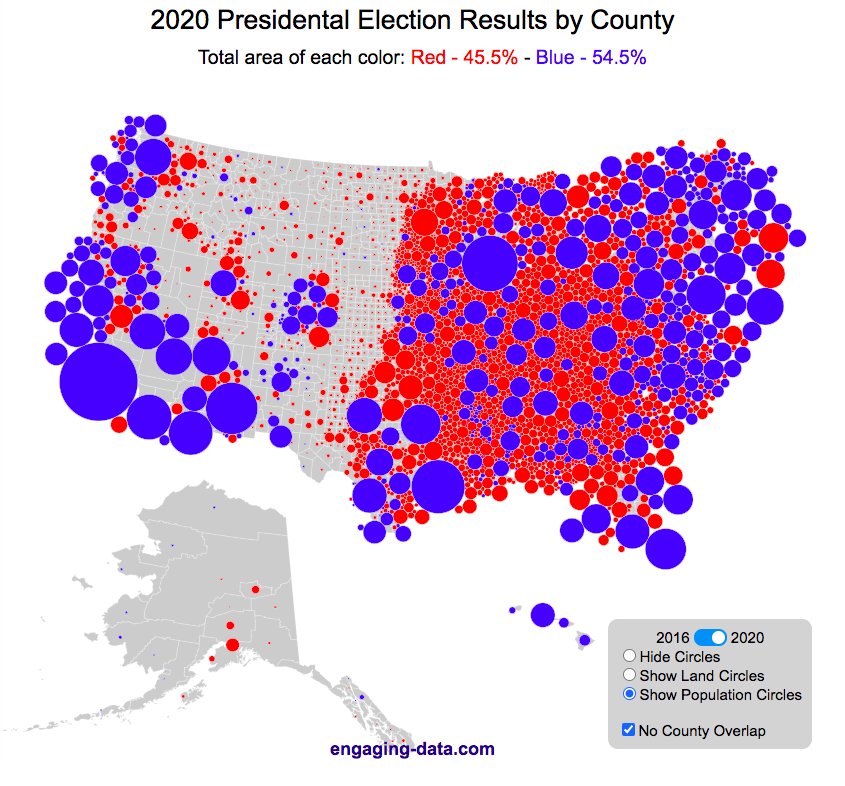
How many times do we hear things like "if the product is free, you are the product" - well, the consequence of that is development resources tend to be pulled into directions that benefit advertisers.
By having material subscription revenue coming in for things outside the advertising space, the product managers can justify investing in features that otherwise would be passed up due to lack of revenue potential from advertising.
Yes, in many ways Meta gets to have their cake and eat it too, because the ads are still there even with the plans, but this does give a meaningful voice to their customers who pay that they can invest in other ways outside of strictly advertising.
reply