I am a junior FE dev and might not have that much experience in this field as other commenters.
Still, my senior told me a few days ago: "The only way to avoid being replaced by AI as a dev is to become a dev that knows how to work together with AI". And I think this is the only way to stay relevant as a dev in the future.
It can be a full-time job depending on what you choose to do or it can be the simplest thing for you. It's scary at first. You kind of just dive in and learn as you go. Watching videos will certainly prepare you but having the backbone to do what you need to do is necessary.
You choose whether you want to pay all utilities or include them for which there are pros and cons. If you can imagine yourself having one monthly bill, would you prefer that?
So you can do this in two ways:
1) DIY (easy, moderate, hard): this requires you write up your own contracts and agreements which can be automated through rental management software such as Zillow. You can list on there too. Most of these online software companies will do the background check and you decide if you want them as a tenant. This also requires that you be on point such as being strict on rent and establish some rules as well as try to think of several scenarios that could go wrong. You can either rent a furnished place or an unfurnished place. The furnished places where you include utilities and the Internet can go for a lot more. A lot of travel people love those. Especially if you can come in as competition to a hotel/motel. You at least have the kitchen. It also means that you maintain and upkeep your place, so any of their complaints you must handle.
For this, there is a dark side of DIY.
There are things that can go wrong and there are plenty of people who will take advantage if you are not strict. For example, I was actually still living in my house renting a room out. I went away for a month to take care of my family. I come home and there's a random person living in my house. I have no idea who she is. I ask her and it turns out she's a friend of the roommate. So I ask her if she's ready to sign a lease. She says she's still looking for a job. I tell her she has a week and we'll talk. A week later, I go to hand her the lease which would be due on the first (giving her a full 2 weeks before rent is due) and she says she's been paying rent. To whom, I ask? You guessed it! So you have to have to harden your heart and say, "See this contract right here? The one you and I both signed? Where does it say you can sublet? Where does it say there is an authorized tenant besides you?" Then you have to do all the legal work as you can't just kick them out depending on the laws in your state. It's usually like 30 days notice so then you have to hope they don't destroy your home knowing they have to get out of it eventually. Not much protects you except maybe your insurance. Everything is pretty much by notice but certainly helps you when you have to go to court. Oftentimes, as much as you "don't care", you legally can't just kick someone out into the cold overnight.
2) Hire a property management company (easy): the pricing varies usually from 10% to 25% of the total rent or a monthly fee but they do all the work for you. Some even offer to furnish the place for an extra fee if it's not already furnished. You can opt out of that and have someone move their stuff in. The issue with this type of renting is that moving around heavy ass furniture can damage your flooring. There are pros and cons to furniture but the way many people are nowadays: they don't want to even worry about it. But these types of companies will do all the work from listing the property to signing a tenant into the lease, collecting the rent, and even doing the monthly or tri-monthly inspections, maintenance, as well as possible evictions. For this, you're just paying the mortgage and supplying the home. If you financed at a reasonable rate, you could make $300+ a month after all is said and done and once you pay off the mortgage, it's just pure profit. If you send extra towards the mortgage, you'll be that much quicker to getting there. However, you might want to even just save the extra money and start putting money down on another place.
I have actually tried #1 when I was renting out my house while living in it and tbh... I'd rather just go with #2. True passive income there. Just be careful about who you sign with and their policies about letting that company go. Some don't have an "expiration" and you have to pay a fee to break the contract you have with them.
It's clear that you have a lot of experience with managing rental properties and have learned a lot along the way.
What advice would you give to someone who is considering investing in real estate for the first time? What are some important factors I should consider before making a purchase?
Also, given the potential risks and complexities involved in real estate investing, don't you think it's less worrisome to just invest in stocks?
Thanks again for sharing your expertise on this topic!
I'm actually just starting out and fell into it all at once and had a few friends who have been doing it for years, so I called them up for the advice.
Let's start from the bottom up: I love stocks. I love investing into the stock market, but it was a wake up call when the tech stocks crashed and the market was going crazy. Is it better than stocks?
Real Estate is often a bit more stable than the stock market because it can be better predicted. If the houses around you are selling for X dollars... chances are, your house will too. A house is never going to be $0, even some of the houses in really bad shape that still have their structure and foundation cannot go down to $0. Stocks are a bit of a waiting game and they have their advantages and disadvantages, but you can't do anything to make extra money on them.
For a house, make the extra money on it by renting it out, improving on the structure itself, and after you pay off the mortgage (or even if you don't pay it off), sell the house for more or hold on to it. Housing is supply and demand with many opportunities to take advantage of. Most people got a very amazing surprise in 2020, especially those that had just closed on their homes, only to see the values go up by $100,000 the very next day. However, people buying houses at those prices... they might only see a $20k or $30k increase over the next few years. There could also be a housing crash though at this moment, its unlikely.
So now let's get into your top questions: What advice would you give to someone who is considering investing in real estate for the first time? What are some important factors I should consider before making a purchase?
This depends on what type of investor you are. For most appraisers, the only thing they care about is the square footage and everything in between and top to bottom. Thus, they value the house and structure, nothing more, nothing less. For others, they may also include in the view. For me, I love a damn good view. Nothing like waking up in the morning and opening your windows to an ocean or mountain view vs. a bunch of other houses that allow your neighbors to see you naked. I just don't care to be staring at neighbors' houses when I look out of the window. I value privacy more than I value neighbors. I also like to buy places that are "centrally located" meaning they are within walking distance to entertainment, food, movies, gas stations, etc.
I also tend to prefer buying condos than houses, but this comes with the overhead of an HOA fee to maintain the property. Pros and cons to this wherein someone else maintains the property and I just have to worry about insuring the inside walls, but condos are slower to increase in value than houses are. However, I prefer to rent them out, pay off the mortgages, and make the profit from that.
Going back to the stock market real quick: I could've kept money in the stock market and waited to take that out and retired at a certain time. Or I can hold on to mortgage-free places and live off that income every month. Plus, if you hold on to it for 30+ years, inflation and cost of living is going to give you more money in your pocket. Real Estate does require a bit more work upfront, but seems to pay off and is more predictable, while the stock market -- has its ups and downs and its knowing when to hold em and when to fold 'em , as the Late Great Kenny Rogers sang.
So let's talk about two friends I have.
Friend #1: George.
Friend #2: Joe.
George is more of a risk taker and a lavish spender, while Joe is more calculated and likes to save his money.
George uses the bank's money all the time. He barely ever uses his own money. He is always pulling the money back out of his properties to re-invest in new properties. The upside is: he's not using much of his own money. The downside is: those houses technically always belong to the bank.
George owns 10 houses. He said, "Every month, it's like Christmas when I get those rent checks coming in." George takes out the equity of the house and puts that money into another house. He's always buying something -- just bought himself a trailer park somewhere in the midwest. Anyways, George said, "I don't care about views. I don't care about location. I care about how much is my ROI. If I put $10k down on a house and I'm renting it out for $2000 a month and I'm making $1000 a month on that house, that house only cost me $10k, that's a good investment for me." George will buy any house in any location as long as he can make money on it. George always knows he will find a renter so he doesn't care where he's buying.
Joe owns his own limo service located in three major cities across the USA and gets a lot of his money from his business, so he tries to buy houses outright and pays off the mortgages pretty quickly so he's making pure profit from rent and owes nothing to the bank.
Joe, on the other hand, is more about location. He bought every single house on his block, 10 houses total, all of them with mountain views in the backyard, that were next to his house. Joe values the fact that he can keep an eye on all his houses everyday. He would go to his neighbors, ask them if they were interested in making money while either still living on the property, or moving away. Many neighbors wanted to move, while others were older and ready to receive that paycheck upfront so they could go traveling and things while still being able to live in the house. He would assume their mortgages and pay the difference of what they were asking.
Two investors in real estate, but two very different types of investors. And me being the third: I love location. I value location as much as I value the property. Start small if you want. Nothing too crazy. If you're not good at fixing up properties, than buy something that was already remodeled. If you are good at fixing up properties and have handimen friends to help.. you'll save a ton of money, especially by buying worn down properties, restoring them, and reselling. This is another type of investor. Real Estate has tons of different types of investors. I hope this helps a bit. Take a leap of faith.. the worst thing that is going to happen is that you find yourself not interested in doing it anymore and you just sell the property. If you aren't going to do it.. there's a hundred other people who will. There are even women-owned companies buying up houses and doing everything from renting, renovation, and reselling.
Thank you for your very detailed answer mattbgates.
I must say that currently I am not looking to buy a property as an investment since I live somehow close to Ukraine and am waiting for the situation to cool down a bit. Still, it's my plan to diversify by investing into real estate in the future.
Yes, you're 100% right about the mentioned freedom of speech and that's how it's supposed to be like.
Still, as the far-left/far-right gets more media coverage due to recent protests here and overall mood (read pro-Russian (and we've been occupied by Russia before lol)) on social media, some of them won in the recent regional elections and now these extremists have officially their electorate inside town halls.
Ironically, I moved back to Europe from Mexico, since the life here is much easier and I had more opportunities here as a Junior Dev (still am a junior).
That being said, I miss the locals & the way of living there very much.
It's all about putting all in the balance. More money, more safety and security (it almost every aspect of life). On the other side, family and friends left behind.
If you just came: don't think people are different here (anywhere in EU) as in Mexico. You will do new friend here, locals, and for sure other expats. The food, if you search, you can find almost everything. I've been many places (also Mexico) I found China and Japan to be very different than Mexico, but the EU is not that far away. Just chill, enjoy the good, and if at any time it gets too heavy, you can always go back, and have an interesting experience in your CV.
I am European and I've spent in Mexico only 2 years of my life which is not much.
Anyway I cannot help myself but to disagree with "don't think people are different here (anywhere in EU) as in Mexico".
My experience have been the total opposite: I consider us, Europeans, generally much more distanced and serious. It was definitely easier for me to make friends in Mexico (as an expat with locals) than as a local here with other locals.
Of course that talking about infrastructure, money, security - that's a whole different story.
I realised that I have all the answers (regarding my own life) already right within me - I just need someone from the outside to dig through it with me.
I could name all the Navals of the world, and yes, these people do help. Still, I believe that very often, maybe more than ever before, we underestimate our own thoughts.
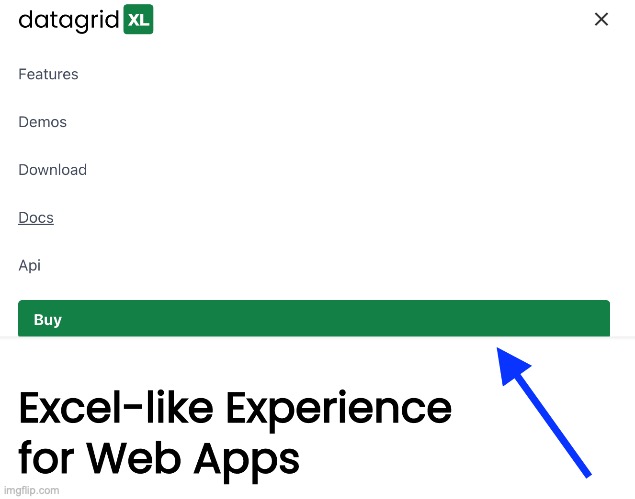
I love the simple design, just one thing: consider adding to #header .menu-btn:checked ~ .nav larger max-width and some margin to .buyMenuOption, since .buyMenuOption button gets covered by the .nav div on smaller screens: https://i.imgflip.com/6c1c7a.jpg
I prefer not to go into details, but current circumstances are kind of forcing me to choose between one of them(I'll be leaving the country I currently live in and will be returning to my home country).
The same goes for Mexico and probably you could apply this for the rest of LATAM, too.
The thing is that you need to get used to live in a bit of a disorder. I still cannot get used to it sometimes.
Anyway, if you want to live in a "first world country", I cannot recommend Czech Republic enough. It's modern, super safe and still cheap. Plus we definitely need a bit more of diversity there.


reply