If they lacked the foresight to be born wealthy and enroll in an ivy league college, that's their fault.
Cyni-casm aside, yours is a crucial point I think gets forgotten too often. Just yesterday I was scrolling through the comments on a Fox News post about an 18 year old who'd been sentenced to 25 yrs for being present during robbery when his friend killed someone.
Obviously substantially different crimes, but the comments were mostly people salivating at this "animal" getting "what he deserved."
> Just yesterday I was scrolling through the comments on a Fox News post about an 18 year old who'd been sentenced to 25 yrs for being present during robbery when his friend killed someone.
You misread this, likely because that would have made more sense than what actually occurred. The friend/accomplice did not kill anybody, but was killed by police in a shootout; the defendant was charged with murder for this death.
Taking cheap-shots at southern states with disreputable histories is easy, but the vast majority of states (46 out of 50, as of 2008) in America have a Felony Murder rule.
But tellingly, virtually only in the US. Other common law countries which had it, abolished it for being unconstitutional.
In any case, calling the (lawful) killing of a kid by the police a murder by an accomplice, is making a mockery of the term murder and of justice in general.
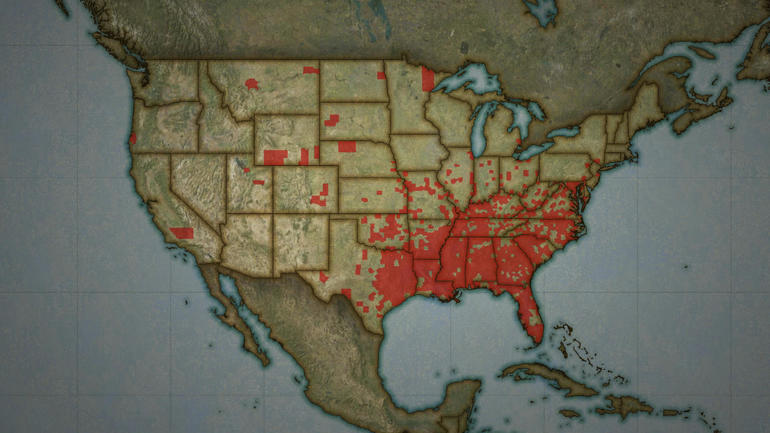
Here's an image showing lynchings (what you call "disreputable histories"): Alabama earned it's disrepute, which is why I wasn't surprised.
I am not taking a cheap shot, unless you can prove to me that these "histories" are firmly in the past for Alabama, and that the attitudes have not lingered and that lady Justice is now color-blind in Alabama courts.
Edit: I've just realized your post is what-aboutism, I regret taking the bait.
Replying to myself because I can no longer edit my post to include the image[1]. The image comes from a fortuitously timed "60 Minutes" episode[2] that discusses a lynching memorial that's opening soon. In Alabama.
If I said that America has a "history of military power projection", would you object that military power projection is the present reality as well? It certainly is, but you probably would not object to that phrasing. You're reading much more into the use of the word 'history' than you should be. I'm well aware of the civil rights problems in southern states. Save your outrage for a situation more deserving than this conversation, in no conceivable way did I defend honor or reputation of Alabama. I used the word disreputable specifically because the social problems of Alabama are widely known, you needn't teach me something every schoolchild is taught.
The simple fact of the matter is that when it comes to the felony murder doctrine, that boy could have just as well been in San Francisco. Rather than allow you to write felony murder off as a consequence of Alabama being a typical southern state, I decided to give you a brief education on the true scope of the issue. Since you were obviously distressed by felony murder doctrine, I expected you to thank me. Instead I get the feeling you're looking for a fight. That's disappointing.
>"histories"
English isn't my native language, so please correct me if I'm wrong. However I believe when you're referring to Alabaman history specifically (not the history of several separate states at once, as I was in my previous comment) you would use the singular "history" rather than the plural "histories".
> Rather than allow you to write felony murder off as a consequence of Alabama being a typical southern state
Ahh, I see where we're crossing lines. I was writing off my lack of surprise at this occurring in Alabama. I would have been more surprised if this had happened in San Francisco, which as you said, has the same law. I'd love to see how frequently it's enforced by location as uneven enforcement is a thing, especially as societal attitudes shift but the laws are yet to be revised (see possession of small amounts of drugs in certain jurisdictions).
> ...I expected you to thank me. Instead I get the feeling you're looking for a fight.
I was merely rebutting your accusation that I took a "cheap shot". The first half-sentence in your initial reply has no substances, and serves no other purpose except to antagonize. I would have been grateful had you replied with just the second half instead.
> English isn't my native language, so please correct me if I'm wrong...
I wasn't attacking your grammar, I was suggesting that the reasons leading to my lack of surprise are very much in the present.
Doubtful. In most scenarios where it applies the cops are not involved in the killing (For instance, if bank robber Bonnie commits murder, bank robber Clyde can be charged for that murder.)
Furthermore if a cop lawfully kills a criminal who was acting alone, felony murder doctrine is not involved in the scenario but the cop is still subjected to the same level of scrutiny as he would be if it were.
And if a cop unlawfully kills a criminal who was working together with other criminals, felony murder doctrine doesn't make it easier for the cop to get away with it (nor harder, for that matter...)
This week there was an event at the UFC where on of their biggest fighters (Conor McGregor) and a dozen or so of his associates attacked a bus, smashed windows and injured several people in the bus who then couldn't fight at the event. He posted 50k bail and is now on the way home to Ireland.
When I saw this I thought to myself if some poor black teenagers had done exactly the same thing they would be in jail for the next 10 years or be dead by now.
I wrote "poor black". I think being poor gets counted the most but being black also gets counted against you. I think the point of this thread is that bad behavior gets treated differently for different people. I don't even want to consider what would have happened if a bunch of illegal Muslim immigrants had attacked the bus.
Another thing that many people do not realize is that not all systems of servitude are the same. [1]
In the New World, all African slaves were treated as property and dehumanized. Slave masters sought to erase the slave's identity, to destroy the family, and to sow division in order to exert and maintain control. This form of servitude is called "chattel slavery", and was written into law in the United States.
There were many different forms of slavery practiced in African societies during the 1500-1800s. Commonly, slaves were given rights and were treated like indentured servants. Slaves could own property. They could marry and start families. Some slaves were treated brutally, but it is a tragic oversimplification of the Trans-Atlantic slave trade to suggest that all Africans sold to European traders were "doomed to enslavement". [2]
Even to this day in African slavery is almost entirely heritable, I'm using 'almost' completely as a weasel word - to my knowledge it is 100% heritable and is certainly a major cause of the perpetuation of slavery in Africa today. In your links there you'll find numerous contradictions. The second wiki leads with, "In general, slavery in Africa was not heritable – that is, the children of slaves were free – while in the Americas, children of slave mothers were considered born into slavery.". That is followed near immediately with the quote, "The slaves which are thus brought from the interior may be divided into two distinct classes – first, such as were slaves from their birth, having been born of enslaved mothers; secondly, such as were born free, but who afterwards, by whatever means, became slaves. Those of the first description are by far the most numerous....".
Similarly the first link tries to downplay chattel slavery at one claiming that "Precise evidence on slavery or the political and economic institutions of slavery before contact with the Arab or Atlantic slave trade is not available." And almost immediately following, "Chattel slavery had been legal and widespread throughout North Africa when the region was controlled by the Roman Empire (47 BC – ca. 500 AD). ... Chattel slavery persisted after the fall of the Roman empire in the largely Christian communities of the region. After the Islamic expansion into most of the region, the practices continued and eventually, the chattel form of slavery spread to major societies on the southern end of the Sahara (such as Mali, Songhai, and Ghana)."
Wiki does not tend to deal with issues that are contemporary, or involve social issues. And I think this is probably an instance of that. I think instinctively some want to demonize our actions so much as possible even if only as a sort of self flagellation. And so appealing a spin on the myth of a noble savage would certainly do as much. In reality we utilized, incentivized, and adopted an inhumane system, but it was not our direct creation in this case. And while we have learned from the past and moved on, these systems of inhumane exploitation which existed before us continue to exist without us.
> With the nation edging closer to civil war over the slavery issue, Alabama steamboat captain and plantation owner Timothy Meaher made an infamous bet that he could sneak slaves into the country, right under the noses of federal troops at the twin forts that guarded the mouth of Mobile Bay. Historian Sylvianne Diouf traced the evolution of the wicked scheme and the resulting journey in her excellent book, Dreams of Africa in Alabama, published in 2007. Attempts to contact Diouf were unsuccessful.
The author is clearly excited about the find (and should be, after spending years working on it), but there's nothing in the article to indicate that he's excited about slavery.
I’ll use an alternative historical example to explain why your assertion is not true.
My grandmother was held in concentration camps. She was in this time raped regularly, starved, beaten, debased, and so deprived that when her closest friend died all she could think of was taking her shoes.
Eventually she was liberated, walked thousands of miles across Europe looking for family to no avail, and finally by chance met my grandfather.
Throughout her entire life she was emotionally destroyed, on edge, and nearly a witch in her ability to direct her emotional energy at those around her in order to protect herself when she felt threatened.
This hard edge of survival and death migrated into the emotional lives of my mother and aunt. Both of them demonstrated symptoms of severe PTSD even in early childhood despite having no personally experienced events that would be considered traumatic enough to induce such behavior. It was in the air.
I in turn have as well, two generations later, demonstrated a tendency toward self-protectiveness, have developed symptoms of PTSD from what would be considered normal life stressors, and have struggled to overcome this emotional inheritance.
Now, my personal example is the result of only a few years of war and inhumanity.
African Americans who descend from slaves descend from people who for hundreds of years underwent equally debasing, dehumanizing treatment. They were in the struggle so long that they developed broad cultural and interpersonal coping mechanisms to make life bearable beneath the threat of death and the absolute absence of personal control or privacy.
It is quite easy to see how, even many generations later, even if there were no more reinforcement from the environment of the trauma, that it can live on and continue to destroy the descendants of its victims.
Couple this with the continued social discrimination faced by African peoples and it becomes impossible to not see that the echoes of these atrocities live on in the minds and hearts of their victim’s descendants.
> Couple this with the continued social discrimination faced by African peoples
Such discrimination often (though certainly not exclusively) perpetrated by the same forces who claim that no lingering disadvantages persist and thus each individual who does worse than average represents a failure of motivation, morality or inherent talent.
Thank you for sharing your painful family history, and with it, helping us better understand what a large percentage of Americans are still dealing with. A lot of us (white Americans) want to believe that slavery's harms ended with the end of the Civil War, and that the Civil Rights movement made right the rest of the damage - I've come to understand over the last few years that the harm didn't end in either 1865 or 1965.
Exactly. I would think that someone who dismisses the significance of the discovery could be thought of as being an apologist for the crime it was associated with.