Covid is a serious illness. It can cause a wide range of effects from death, to myocarditis, to immune system resets, to long covid, to permanent scarring on the lungs, mood disorders, embolisms, and permanently reduced mental capacity.
Covid is not a tail risk.
Additionally, by not getting a vaccine, you potentially put people at risk who cannot get a vaccine -- immunocompromised folks, etc. Vaccinating your child also protects everyone in their communities.
Choosing not to vaccinate because you want to limit the number for no expressed reason is vaccine hesitancy. You have expressed a position of vaccine hesitancy here.
You are incorrect and are harming public trust in vaccination with your comments.
COVID-19 vaccines are no longer indicated for most healthy children (or most healthy young adults) in most jurisdictions as the risk benefit analysis no longer supports it.
In healthy children the chances of any of that happening are effectively 0, and while vaccine injuries and significant side effects are rare in their case it might actually be more likely. That’s why very few countries other than the US ever vaccinated healthy children, especially post-pandemic.
Almost literally everyone has and will continue to get COVID at this point. Not vaccinating your child, or all of the children in the US, won’t prevent that. I don’t know a single person that hasn’t had it, vaccinated or not. So, your child gets the vaccine. They’re then, what, maybe 50% less likely to get COVID for 6 months? Not exactly moving the needle as far as community transmission goes. This isn’t 2021 anymore.
If we had a better, longer lasting vaccine you might have an argument. Very, very few parents are going to do the COVID vaccine for their child every year. At the very least you’re risking them picking up something more serious just by going to a clinic or pharmacy to get it.
I don't know that I've had covid. My SO had it twice during the pandemic and i was testing myself daily but never tested positive. I like to joke that I'm immune. Of course I also had the vaccine but I understand that I should still get the disease, just less severe.
Anyway I haven't tested since the pandemic so I wouldn't have known if I'd had it afterwards.
Yeah, did self-tests and have thought the same. I definitely followed the instructions and my SO is a nurse so she knew how to do it, but who knows. I also had some very mild symptoms at least one of the times.
Could be something like our viral load wasn't high enough to register on the test, maybe our immune systems just dealt well with covid.
Judging by how badly I got COVID (twice) and how I tend to get every single cold my daughters bring back home, I'm pretty sure that gene is running in reverse for me.
Covid was literally 10x more dangerous than the vaccine for those without comorbidities, but it's played out now. The vaccine is about as effective as a flu jab.
This seems like a bad way to phrase it. The vaccine is certainly a lot (many orders of magnitude) less dangerous than just 0.1x as dangerous as COVID. Maybe you wanted to say that the risks from COVID are only 10x more without vaccination than with it due to limited effectiveness of the vaccine?
I've discounted the other effects as they were generally associated with comorbidities (lung scaring was a % of hospitalized people).
I've also discounted long-covid because of comorbidities, self-reporting bias, nocebo effective, and depression/anxiety overlap. Yes I know its still real, but the true rates are difficult to know.
Myocarditis from the is usually mild while myocarditis from COVID may have worse outcomes. And for myocarditis, the 10x would apply only for a specific age group and males, and not overall.
friend of mine (early 20s) got his atp production severely damaged (not annihilated but way less than normal).
he can't really use stairs, or walk a long time, etc. he sleeps a lot, and basically can't be active for a long time anymore. his reaction time also worsened apparently (used to be ridiculously fast).
hospital folks (in 2 different countries) directly linked it to the vaccine.
>Additionally, by not getting a vaccine, you potentially put people at risk who cannot get a vaccine -- immunocompromised folks, etc. Vaccinating your child also protects everyone in their communities.
No. You probably thinking some other vaccine and infection, not covid. For covid once infected, vaccinated people express similar number of virus in their saliva as unvaccinated (see for example [1]). Additionally, infected vaccinated people have lower intensity symptoms or now symptoms at all, and thus more likely to go about their business as usual (and thus spread the virus) than to stay home like unvaccinated. As a result the vaccinated people do possibly spread more infection than unvaccinated. The obviously propagandistic and using government force push "do it for the good of the community" (very USSR style) for covid vaccinations against the science - as those results were already known at the end of 2021 - drove a lot of new people into vaccine-sceptic crowd.
"new study from the University of California, Davis, Genome Center, UC San Francisco and the Chan Zuckerberg Biohub shows no significant difference in viral load between vaccinated and unvaccinated people who tested positive for the delta variant of SARS-CoV-2. It also found no significant difference between infected people with or without symptoms.
...
Although vaccinated people with a breakthrough infection are much less likely to become severely ill than unvaccinated, the new study shows that they can be carrying similar amounts of virus and could potentially spread the virus to other people."
> For covid once infected ... and thus more likely to go about their business as usual (and thus spread the virus) than to stay home like unvaccinated.
> As a result the vaccinated people do possibly spread more infection than unvaccinated.
You are using a subset of the groups to argue around the entire groups.
If the entire (much larger) group of vaccinated got infected at a rate of unvaccinated, your argument would hold, but they don't and it doesn't.
>If the entire (much larger) group of vaccinated got infected at a rate of unvaccinated, your argument would hold, but they don't and it doesn't.
they do. Covid vaccine doesn't significantly decrease infection rate [1] (that, if you think a bit about how immune system works and how covid infects, in particular is why viral load is the same in vaccinated and unvaccinated). The vaccine only softens, a lot, the symptoms.
Thus widely vaccinating healthy people, we do increase threat to immunosuppressed and the likes.
"The results suggest even those who are fully vaccinated have a sizeable risk of becoming infected, with analysis revealing a fully vaccinated contact has a 25% chance of catching the virus from an infected household member while an unvaccinated contact has a 38% chance of becoming infected."
> they do. Covid vaccine doesn't significantly decrease infection rate [1] (that, if you think a bit about how immune system works and how covid infects, in particular is why viral load is the same in vaccinated and unvaccinated). The vaccine only softens, a lot, the symptoms.
No they don't.
> "The results suggest even those who are fully vaccinated have a sizeable risk of becoming infected, with analysis revealing a fully vaccinated contact has a 25% chance of catching the virus from an infected household member while an unvaccinated contact has a 38% chance of becoming infected."
A couple of points here:
1) 25% vs 38% is an enormous difference in compounding risk of transmission across populations.
2) Accepting the premise that viral load at peak is the same, multiple studies still show that vaccinations reduce duration of shedding and transmissibility. [1]
> Thus widely vaccinating healthy people, we do increase threat to immunosuppressed and the likes.
This is simply wrong based on above in both first and second order effects. On top of that, having fewer/less severe reactions in otherwise healthy people leaves more healthcare resources for immunosuppressed.
>1) 25% vs 38% is an enormous difference in compounding risk of transmission across populations.
there is no compounding in a wide spread infection like Covid where you're guaranteed to meet a carrier several times a day, and thus there is no practical difference between 25% and 38%. You'll get it either way - say you meet 10 carriers, each time probability 25% or 38% (or even if were just 5% and 10%) - the end result is indistinguishably similar. And you meet carriers every day. So if not today, then tomorrow.
>2) Accepting the premise that viral load at peak is the same, multiple studies still show that vaccinations reduce duration of shedding and transmissibility. [1]
yep. Unvaccinated is sitting at home, feeling ill, shedding, yet not transmitting. While vaccinated is out and about, no symptoms, shedding and happily transmitting to everybody around during that "reduced duration".
>On top of that, having fewer/less severe reactions in otherwise healthy people leaves more healthcare resources for immunosuppressed.
That is another propagandistic BS. I've been to ER in the summer 2020 for a non-covid related issue - it was empty.
> there is no compounding in wide spread infection where you're guaranteed to meet a carrier several times a day, and thus there is no practical difference between 25% and 38%. You'll get it either way - say you meet 10 carriers, each time probability 25% or 38% - the end result is indistinguishably similar.
Is your argument: "I can come up with a scenario where the real-world-measured statistics are not relevant?"
> yep. Unvaccinated is sitting at home, feeling ill, shedding, yet not transmitting. While vaccinated is out and about, no symptoms, shedding and transmitting during that "reduced duration".
You're making up scenarios not reflected in real-world data.
> That is another propagandistic BS. I've been to ER in the summer 2020 for a non-covid related issue - it was empty.
Like the flu (the real flu). Viruses are always dangerous and carry a risk of long term neurological issues, always.
He did all the mandatory vaccines, the rest is a tail risk. Unless you vaccinate yourself against the flu and your children for both flu and COVID, I don't think you have any leg to stand on.
Everything you listed are tail risks of COVID, even in individuals with comorbidities, and are far more characteristic of the early strains than what’s circulating today. The only exception in your list of side effects is myocarditis, which is also a side effect of the COVID vaccine. Furthermore, the vaccine’s target population is individuals over 65 years old, immunocompromised individuals, obese individuals… not newborns or infants.
Alarmism, militant shaming, and omission of details like the ones I mentioned above are three strategies that steer vaccine hesitant people away from taking vaccine advocates seriously. Personally, I would raise concerns about anything but COVID and ease up on the Newspeak.
> Except long term effects from COVID are not fully understood yet, especially in children.
Most European countries don't offer vaccines for under 18's unless there's a very specific reason. Some don't offer the vaccine for general public except for vulnerable groups. Why? All medical interventions carry a risk and there is always a threshold where that risk outweighs any potential benefit. This is what sensible public health policy looks like.
> All medical interventions carry a risk and there is always a threshold where that risk outweighs any potential benefit.
Neither Germany nor France nor the UK advise against vaccinating children against COVID. The Germans explicitly say that the absence of a recommendation to vaccinate is only because children have relatively mild cases and safety or risk concerns are no factor.
Go look up long term effects from COVID in children. Everything I find says children are at risk for long COVID just like adults, and the effects and risks are not understood yet. Then tell me you won't vaccinate your child. (Or yourself, for that matter.)
Wasps in a high traffic area are definitely bad, but if the nest is somewhere not too in the way I'd encourage folks to leave it be. Wasps are predators, and they eat a lot of the bugs that damage gardens. Yes, they are also assholes, do you have to strike a balance, but they can be really beneficial.
Obviously, if you've got young kids around or the wasps are being aggressive, take care of the humans first, but understanding them a bit can really reduce the conflict with them.
I’m fine with your garden variety paper wasp, along with its European counterpart [0] that is all over the US and closely resembles a yellow jacket, but the latter tucks its legs in flight while the former doesn’t, which makes distinguishing the two relatively easy. Paper wasps generally aren’t aggressive unless you’re in their business, and they’re easy to deal with if you have to.
Yellow jackets are a different story entirely. Sometimes they nest underground which can be a real problem (mowing/lawncare, pets, children), and they are far more aggressive than paper wasps and hornets. The sting is quite a bit worse than either, too, so my philosophy is if I find a nest in the spring it’s given no quarter with no remorse.
A tablespoon or two of carbaryl dust dumped right at the main entrance hole (at night, of course, and use a red headlamp light etc., nothing bright) will put the hurt on. They carry the dust inside the nest and get it all over the place, but it doesn’t alarm them like spray cans of insecticide do.
Wait a couple days to see activity die down, might need another application. Eventually the queen will die which will kill the colony. Any stragglers can be handled with spray cans.
There are some YouTube videos [0] that show the idea of using carbaryl dust that might be helpful. An insecticide dust applicator would be the perfect thing to use, but all I did was slowly march up to the hole and dump the dust from a cup right onto it.
When we were kids we used to catch wasps in a plastic cup, put them in the freezer until they were anesthetized, and then tie a little leash on them with sewing thread.
Then you chase your friends around the neighborhood with your personal attack wasp. Good times.
I fried them in a piece of glass tube from a neon sign, with the high voltage wires from the transformer poked into the opposing ends of the tube until it started to arc from wire to wire through the wasp. Stank.
I'm neither proud nor ashamed. Today in my more boring older age I just grab whatever random inappropriate houshold or automotive chemical is handy that squirts or sprays.
Soapy water (dish soap) in a spray bottle works wonders. Once they are wet and bubbly they can’t fly, making it safe to knock them to the ground and squish them.
If you happen to have the spray bottle in hand while they are flying at you, a quick mist in the air in their flight path will turn them away.
Slightly tangential but this was a learning moment for me.
This reminds me of a story where Sage Mandavya established the first juvenile law in Hindu mythology.
<story starts>
Long ago, there lived a great sage named Mandavya who had taken a vow of silence and spent his days in deep meditation. One day, while he sat motionless beneath a tree with his arms raised in penance, a group of thieves being pursued by the king’s soldiers fled into his hermitage. They hid their stolen loot near the sage and escaped through the other side.
When the king’s soldiers arrived, they found the stolen goods but the sage—deep in meditation and bound by his vow of silence—neither confirmed nor denied their presence. The soldiers arrested him and brought him before the king, accusing him of harboring criminals.
Despite his spiritual stature, the king ordered a severe punishment: Mandavya was to be impaled on a stake (shula)—a horrific execution where a wooden spike was driven through the body. However, due to his immense yogic powers and detachment from the physical world, the sage did not die. He remained alive on the stake, enduring the agony with superhuman patience.
Eventually, other sages intervened, the king realized his grave error, and Mandavya was freed. But the damage was done. When the sage finally left his mortal body, he went directly to Yamaloka—the realm of Yama, the god of death and justice—to demand an explanation.
“Why did I have to suffer such a gruesome fate?” Sage Mandavya asked Lord Yama. “What terrible sin did I commit to deserve impalement?”
Yama consulted his records and replied, “When you were a child, you caught a dragonfly and pierced it with a needle through its body, watching it suffer for your amusement. That act of cruelty resulted in your punishment - you experienced the same suffering you inflicted on that innocent creature.”
Sage Mandavya was furious. “That was when I was a child!” he protested. “I was too young to understand the difference between right and wrong, between sin and virtue. How can you punish an ignorant child with the same severity as a knowing adult?”
Yama tried to explain that karma operates impartially, but Mandavya would not accept this. In his righteous anger, the sage cursed Yama himself: “For this unjust judgment, you shall be born as a human on Earth and experience mortality yourself!”
This curse led to Yama being born as Vidura, the wise and virtuous counselor in the Mahabharata - a human who, despite his wisdom and righteousness, had to endure the limitations and sufferings of mortal life.
But Mandavya didn’t stop there. Using his spiritual authority, he proclaimed a new divine law: “No sin committed by a child below the age of fourteen shall count toward their karmic debt equivalent to that of an adult. Children who do not yet understand dharma and adharma shall not be punished for their ignorant actions.”
This became the first “juvenile law” in Hindu mythology—a recognition that children, in their innocence and ignorance, deserve compassion and correction rather than severe punishment.
<story ends>
When I was a child, I too wanted to catch a dragonfly and tie a thread to it so it would fly around like a little pet. But my mother stopped me. She told me this very story of Sage Mandavya, and it scared me for life. I never forgot it, and I never tried to catch and bind a dragonfly again.
1. If is were possible for an ordinary mortal to impose arbitrary curses on the god of death and justice, the world would quickly descend into utter chaos.
2. If children are completely free from accountability, adults will form them into an army and convince them to commit crimes on their behalf, leading to an intolerable situation. This may already be a standard way of doing business in some parts of the world.
> If children are completely free from accountability, adults will form them into an army and convince them to commit crimes on their behalf, leading to an intolerable situation. This may already be a standard way of doing business in some parts of the world.
This is an ongoing problem in Norway now and I think it has been in Sweden for some time.
If you want to read more, search for the foxtrot network.
> 1. If is were possible for an ordinary mortal to impose arbitrary curses on the god of death and justice, the world would quickly descend into utter chaos.
Mandavya is not just any mortal; he is an enlightened sage. In Hinduism, enlightened beings are considered superior to gods. There’s another story about Sage Markandeya (one of the nine immortals, the Chiranjeevis) who caused the death of Yama, the God of Death. In Hindu cosmology, all the gods hold honorary responsibilities, and nothing is permanent - not even the position of Brahma, the Creator
> 2. If children are completely free from accountability, adults will form them into an army and convince them to commit crimes on their behalf, leading to an intolerable situation. This may already be a standard way of doing business in some parts of the world
I believe he introduced a juvenile law, which involves reduced sentences or milder punishments rather than granting complete immunity from consequences.
> 1. If is were possible for an ordinary mortal to impose arbitrary curses on the god of death and justice, the world would quickly descend into utter chaos.
Opportunity myth? Mortals are simply temporarily embarrassed gods?
I used to want to kill them all, regardless of where they were, until I watched this excellent SciShow video[0] titled "What If We Killed All the Wasps?". (but ticks can still go fuck themselves to death)
Very much this. After multiple very painful stings, I have a zero tolerance policy for nests on the house, but I am very grateful when they show up in the garden. Wasps are more effective at controlling garden pests than any chemical means I've tried. Plus they seem to be the only pollinators of my passionfruit.
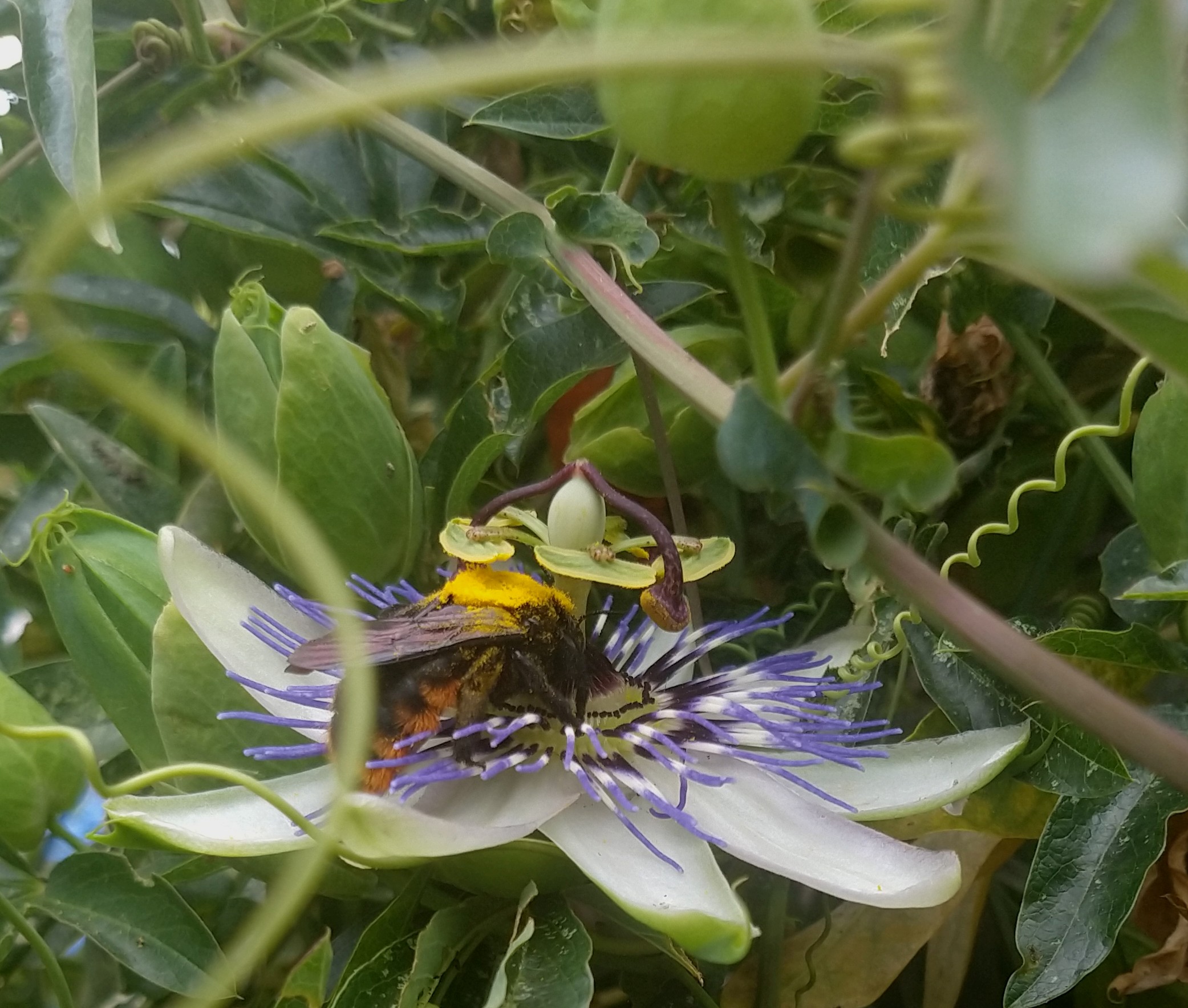
Around here the passion flowers are mostly pollinated by a species of bumblebee with an almost-all-black abdomen and beautiful violet wings. So far they haven't stung me, although I'm sure they could, and it would be very painful. I haven't tried capturing them.
When the crusader army reached Béziers, they demanded that all heretics be handed over. The townspeople refused, and the crusaders stormed the city. Once inside, they couldn’t tell Catholics from Cathars—everyone spoke the same language and lived side by side.
That’s when the Cistercian legate Arnaud Amalric supposedly gave his infamous order:
“Caedite eos; Novit enim Dominus qui sunt eius.”
“Kill them all; for the Lord knows those that are His.”
It’s a paraphrase of 2 Timothy 2:19 (“The Lord knoweth them that are his”).
The crusaders slaughtered virtually the entire population—estimated between 10,000 – 20,000 people—before burning the city.
The answer to your question is "yes, but typically only very mildly".
Offense is not some Boolean, and intent matters in determining how offense something is.
For example, a kid reading Tom Sawyer and Huck Finn might unknowingly repeat a word they learned from that book that we consider extremely offensive today. We'd probably all pause that conversation and explain that they should not use that word.
Ideally, most folks upon learning that a word is offensive go, "oh, apologies, I had no idea" and the other party goes, "No problem, now you know" and everyone moves on. Doesn't have to escalate, doesn't need to be bigger than that.