My gripe with some of these simple questions is that they do not provide a framework to answer the questions within.
"How often do you feel X?" With answers as "very often" means very different things to different people. For one person once a month could be very often since they expect this to never happen, while for another person a few times a day might be expected.
The problem here is that if people think that they might have a condition or be sick, it has been shown time and time again that this might emphasize the symptoms and make a person "sicker".
In addition these general questions that a lot of people can relate to will cause a lot of people to get unneeded screening, thereby straining an overloaded health service (it might be different in the US, I'm in Europe).
I "muddled through life" until I got diagnosed at 42 with inattentive ADHD.
At that age the brain has already developed and meds are less helpful than when you are young. Even taking meds out of the picture, a diagnosis would have helped me a lot and not being diagnosed had very negative consequences.
I was told to "brighten up" my whole life while growing up. My parents well not abusive - it's just that I had good grades at school, so they didn't understand why I struggled with tasks that were "simpler than school". I also struggled with social interactions. I ended up with very low self-esteem, thinking I was just "slower" or "more stupid" than others. Most teenagers try to find and define the final shape of their mind. I though the "real me" was an embarrassment that needed to be hidden. So during my teenage years I built a "mask" instead. ("Masking" is a psychological phenomenon, I have now learned)
I am very good at "faking" not having ADHD now. Most of my friends and coworkers don't know. I can't mask all of my symptoms, though, nor all of the time. I can't "fake" not forgetting my car keys, or doing my taxes. I still wear my mask most of the time.
Sometimes I don't know whether my wife got in love with me, or with the image I project of myself. I don't know if there's a "myself" any more.
Also, ADHD has a genetic component. Having a diagnose for myself would have been useful before I had my son, who turned to have hyperactive ADHD. I love him to bits and I would not change him, but he's a handful. When he's off-meds he's almost intolerable. I would have had him nevertheless, but I would have had the right expectations.
> Also, ADHD has a genetic component. Having a diagnose for myself would have been useful to have before I had my son, who turned to have hyperactive ADHD. I love him to bits and I would not change him, but he's a handful. When he's off-meds he's almost intolerable. I would have had him nevertheless, but I would have had the right expectations.
This seems like an underappreciated side-effect of awareness of these things. I can't imagine what some parents must feel - about themselves, and their kid - when raising a child with ADHD and not knowing much or anything about it.
This is my case. Undiagnosed, not knowing much about this condition (but with a great score at TFA's test), and struggling with one of my kids which has some symptoms I recognize. And I know why she struggles in the school system, and how she will struggle later in life, but I don't know how to help her.
I'm lucky enough to live somewhere where healthcare is a given and she's currently in the diagnostics phase (for the second time), but I'm still scared for her future. Even with help and meds and whatnot, life won't be easy I guess.
Life is Sheldon “easy”, for anyone. And it’s a relative term. I did struggle with my mental condition, but I ended up with what many would consider “a comfortable life”: good salary, a family, a house. No major health issues, both parents alive until I was able to fend for myself, etc. I didn’t take drugs although I do have some compulsive behavior issues I still work on, through therapy. Which I recommend considering! Your family deserves a mentally strong parent. And that sometimes unpacking and dealing with stuff.
On that note, when your kid becomes a teenager, he’ll be more likely to get hooked into addictive substances like drugs, tobacco, or alcohol than others, I’m afraid to say. I will be paying attention to this matter very closely and will make sure that my son has all the information about them when that period comes.
Good luck on raising your kids! It’s the biggest adventure in life.
You are helping her by getting her professional help :) Do some research, talk to a psychiatrist, talk to your daughter; there are lots of ways you can help her cope with things.
> life won't be easy I guess.
Probably not, but at least she won't have to struggle with not understanding why her life is so much harder than others. And having a parent who understands that struggle and the problems she faces will help a lot.
It's not a cure but it will definitely help kids with suboptimal executive function.
My primary school had a run club at the beginning of the day we'd hit laps of the school between roll call and 1st session, iirc we had 10 minutes you had to do at least one lap, you had to have good pace for two to be allowed a third, I don't recall many doing 4.
When I moved to highschool I didn't immediately notice why I was suddenly struggling to keep my shit together in class, the absence of moderate intensity cardio at the start of the day.
There's a few books and papers that back this up also
> it has been shown time and time again that this might emphasize the symptoms and make a person "sicker".
While that's true, for ADHD self description it's common to under estimate the impact. That's why you typically get asked for someone who knows you to join the diagnosis visit - because they're likely to say you're actually doing worse than you think.
This is a screener questionnaire, not a diagnosis tool. If you answer "very often" to enough of them then it's the author's suggestion that you should look into it, not that you have ADHD.
I wonder if finding it hard to answer these kind of questions could be an indicator for some other kind of neurodiversity.
Yes, it's even worse when you're diagnosing a child, as you will have to answer these questions for them, which puts your parental expectations into the mix. In the end however, people get diagnosed, get medication and start to feel a little better, so maybe it's all worth it.
> In addition these general questions that a lot of people can relate to will cause a lot of people to get unneeded screening
Yes, a lot of people have ADHD. I link to the study that shows high specificity in the general population. Empirically, the tool works. You gotta start getting concerned about your symptoms from somewhere.
This might depend on the country for EU. In France especially if you're an adult, getting an appointment for a diagnosis is either extremely long (public health sector delays regularly exceed one year), very expensive (over a 100€ out-of-pocket) or downright impossible (if you're in a big city you're fine, some places don't have anyone available at all). Sometimes it's a combination of those (yay).
And then if you're getting medicated, another whole world of fun begins (restricted prescriptions, shortages, etc)
You're talking about Paris here, not France. Even 'big' cities like Rennes or Nantes I never had to wait more than a week or two, and in the small city I live in I usually get appointments within a week (but I'm in a high QOL area so we might have a large concentration of specialists), and never out of pocket. But yes, in some areas you will have to drive up to two hours before finding a specialist.
Hey this is not my experience. Getting an appointment for my daughter - in France - was a few weeks wait. But also the whole diagnostic was around 500€, barely touched by the Sécurité Sociale and totally reimbursed by the insurance (mutuelle). This was in a minor city.
My understanding is that you typically pay something like this in the US for a specialist visit even if you have insurance, especially if you haven't already paid the year's deductibles.
You massively overestimate what people actually know and read about. If you are in the tech sphere these things might be obvious to you, but I assure you regular people are not keeping track as closely.
I bet at most 10 % of people in the West can name the CEO of OpenAI.
"Lørdagsgodteri" here in Norway was always restricted though. I read your comment as if kids have unlimited access to candy, which I have never heard of. The idea is that the parents give the kids the amount of candy allowed, and they only do that in saturdays.
Right? When I was a child growing up in Norway, we went to the kiosk on Saturdays to buy my lørdagsgodteri and I was given a very specific small amount of money to buy a couple of hectograms of candy for or thereabouts.
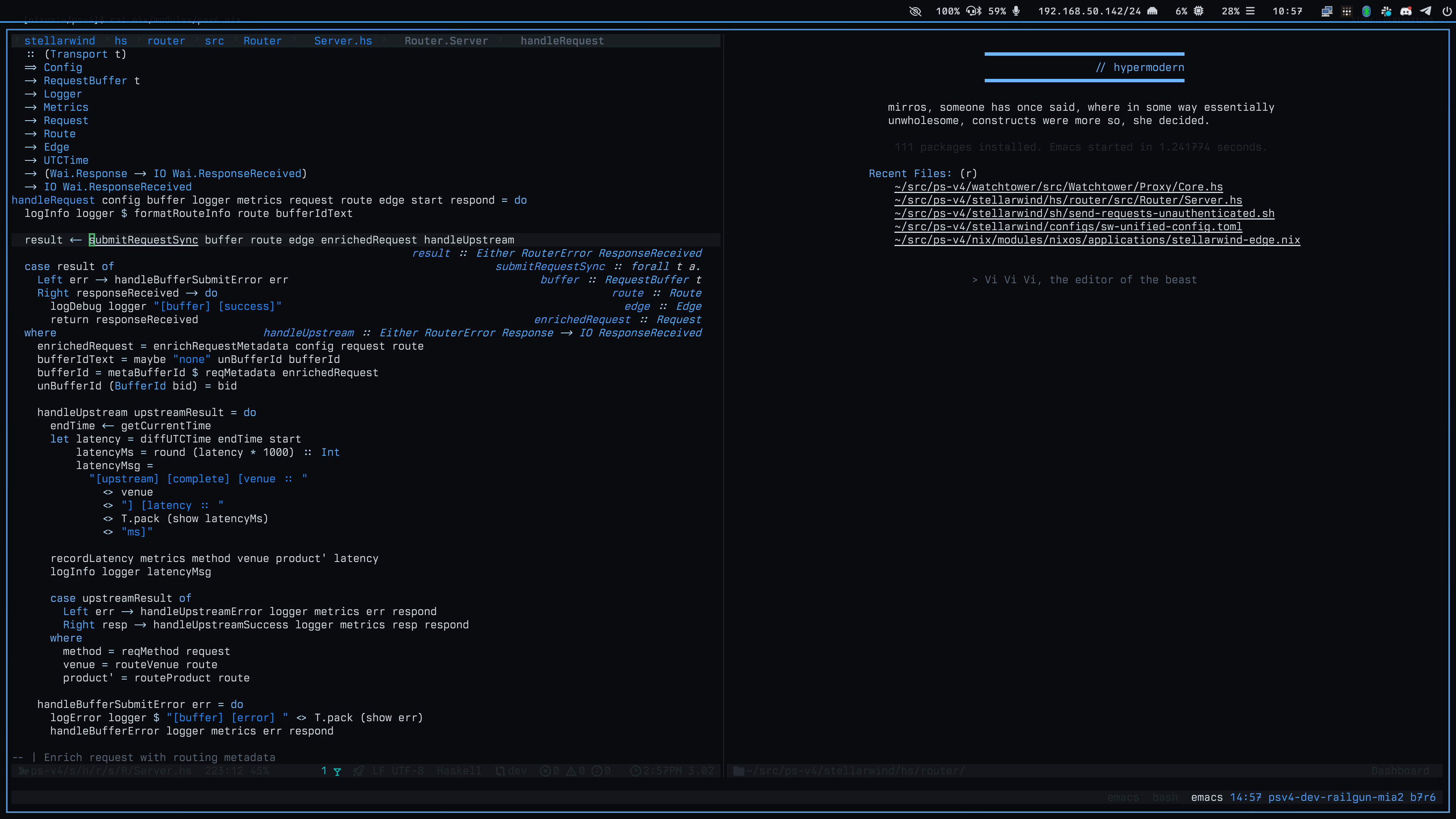
Pretty cool! I love that these battle proven editors (emacs and (n)vim) seem to follow along with new technology, even though one might think overwise given their age.
Neovim and to an extent emacs are where corporate IDE vendors go for ideas.
From ergonomics of the UX, performance, portability, design sense (!!) and theming?
It's like Sun and GNU in the 90s. Those UI/UX folks getting pissed their perfect HSL wheel and black balance got dicked with by some PM which is why the GitHub theme is great not legendary?
They go home and rice Arch or NixOS and just shit on the dayjob stuff.
These people are artists, and hacks follow.
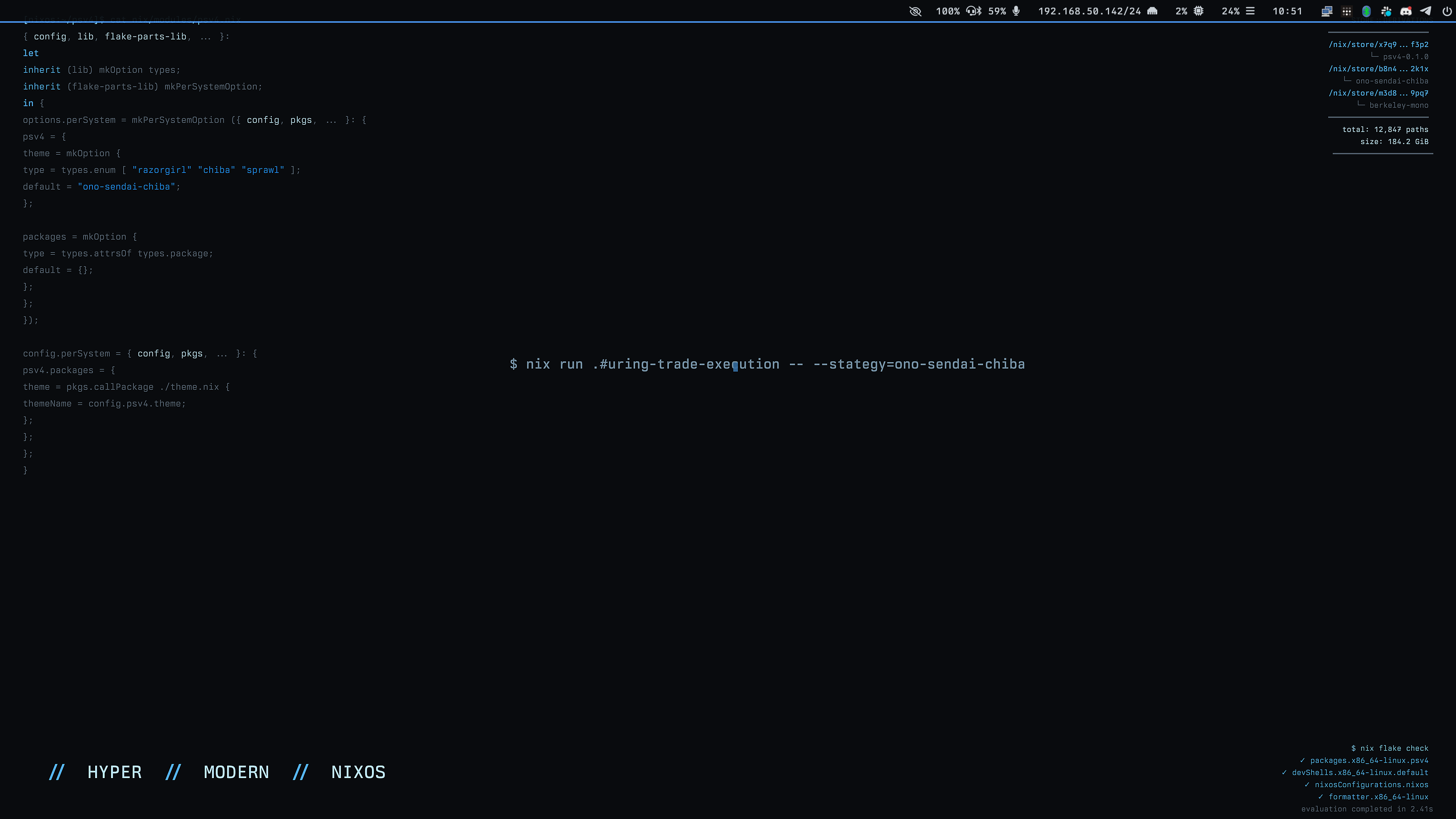
edit: My black balance is calculated on a per-display basis with an HSL-space transform from a hero color by the same NixOS module tree that builds the background from it's own source code as SVG and renders it before downsampling it for the specific display it's on. Of like two people helping beta it, both said roughly "using another desktop is like using the screen at the ATM". DHH is doing something similar with Arch, he's not quite as far along but this is the future.
I don't really understand what you're talking about but it sounds cool. Naive question: what's wrong with just #000000 as black? I often change blacks to that in "dark mode" themes that are actually just dark grey. I want BLACK!
Yeah, I also like being able to get real blacks, and certain kinds of panels can do it (I'm not an expert on panels by any means but I think this is one of the bigger selling points of the OLED family of panel designs is that they can turn off a pixel completely, which let's them get an infinite contrast ratio and therefore pure blacks).
But on a lot of displays (including a couple of the ones I use all the time) the panel can't really do it well, and so there are all kinds of hinting and cheats and other workarounds, and so to get perceptual black, you actually wind up cranking the lum up a little, and that's what I've tried to do with the baseline Ono-Sendai Hypermodern blacks, is give a range of options starting from absolute black, and going up incrementally to GitHub "black"/darkest which is a very expertly designed grayscale (their designers on this are world class), but it's light, it's really high to cope with just about any panel.
If you want to try it out, you can pop these codes into whatever way you set colors:
Ha, it's a working title. The name I want for what this will become is `straylight v4`, but that name belongs to a friend, and it has to be a worthy successor to earn being called that. :)
Berkeley Mono, which I highly recommend if you're into that sort of thing. It's finnicky, has to be hinted right. But the ligatures and stuff are pretty unrivaled IMHO. I think it's like 100 bucks or something, but I bought it once 10 years ago and the license is still good, so it's got an amortization schedule that makes it a perfectly sensible part of a toolbox for a professional if you like myself find it more legible and pleasant than most alternatives.
I do understand that. I was just illustrating that it's possible to do very holistically integrated desktops programmatically and in a way where you can do some math once and leverage it again.
I'm personally a fan of `ono-sendai-blue`, but I have a friend in a defense adjacent space and I gather `ono-sendai-tactical` is enjoyed there. The blacks in these reference palettes are a reasonable starting point for many displays, you'll want to hint for your specific one to get optimal outcomes.
Haha, no worries friend. I find it's just totally counter-intuitive how much difference a little configuration makes relative to the cost of the monitor. Even a relatively inexpensive monitor (I've got like a 200 dollar gaming one that's like an Acer Predator clone and it just looked awful but tuned up it looks great, not as good as my real LG panel but still really good). I never really thought of monitors as something that need a bunch of tuning, but it really makes your dollar go further to get the black balance and subpixel hinting and stuff dialed in. For someone like me who can't afford to just go buy an Apple XDR on a whim, it's worth it.
I agree with the notion here that things are moving so fast that most blog posts will be outdated quickly.
However posts like this is valuable for new people to get a basic understanding of how these tools could be used in a very simple, beginner friendly, setup.
One of the difficulties -- and one that is currently a big problem in LLM research -- is that comparisons with or evaluations of commercial models are very expensive. I co-wrote a paper recently and we spent more than $10,000 on various SOTA commercial models in order to evaluate our research. We could easily (an cheaply) show that we were much better than open-weight models, but we knew that reviewers would ding us if we didn't compare to "the best."
Even aside from the expense (which penalizes universities and smaller labs), I feel it's a bad idea to require academic research to compare itself to opaque commercial offerings. We have very little detail on what's really happening when OpenAI for example does inference. And their technology stack and model can change at any time, and users won't know unless they carefully re-benchmark ($$$) every time you use the model. I feel that academic journals should discourage comparisons to commercial models, unless we have very precise information about the architecture, engineering stack, and training data they use.
- Kujtim Hoxha creates a project named TermAI using open-source libraries from the company Charm.
- Two other developers, Dax (a well-known internet personality and developer) and Adam (a developer and co-founder of Chef, known for his work on open-source and developer tools), join the project.
- They rebrand it to OpenCode, with Dax buying the domain and both heavily promoting it and improving the UI/UX.
- The project rapidly gains popularity and GitHub stars, largely due to Dax and Adam's influence and contributions.
- Charm, the company behind the original libraries, offers Kujtim a full-time role to continue working on the project, effectively acqui-hiring him.
- Kujtim accepts the offer. As the original owner of the GitHub repository, he moves the project and its stars to Charm's organization. Dax and Adam object, not wanting the community project to be owned by a VC-backed company.
- Allegations surface that Charm rewrote git history to remove Dax's commits, banned Adam from the repo, and deleted comments that were critical of the move.
- Dax and Adam, who own the opencode.ai domain and claim ownership of the brand they created, fork the original repo and launch their own version under the OpenCode name.
- For a time, two competing projects named OpenCode exist, causing significant community confusion.
- Following the public backlash, Charm eventually renames its version to Crush, ceding the OpenCode name to the project now maintained by Dax and Adam.
The performance not only depends on the tool, it also depends on the model, and the codebase you are working on (context), and the task given (prompt).
And all these factors are not independent. Some combinations work better than others. For example:
- Claude Sonnet 4 might work well with feature implementation, on backend code python code using Claude Code.
- Gemini 2.5 Pro works better for big fixes on frontend react codebases.
...
So you can't just test the tools alone and keep everything else constant. Instead you get a combinatorial explosion of tool * model * context * prompt to test.
16x Eval can tackle parts of the problem, but it doesn't cover factors like tools yet.
I'm continuing to be amaxed at the astral team and what they do for Python. It's become so "bad" now that when I use Rust or OCaml I find myself constantly annoyed by the build systems. What a great time to be alive!
What does uv do that Cargo does not? Cargo has been excellent in my experience, to the point that (in comparison to CMake and wanting to flee it) it is a large part of why I initially learned Rust.
Just the git code according to their'd README.md, however it seems heavily influenced by it.
Before uv I was doing everything in a devcontainer on my Mac since that was easiest, but uv is super fast that I skip that unless I have some native libraries that I need for Linux.


"How often do you feel X?" With answers as "very often" means very different things to different people. For one person once a month could be very often since they expect this to never happen, while for another person a few times a day might be expected.
The problem here is that if people think that they might have a condition or be sick, it has been shown time and time again that this might emphasize the symptoms and make a person "sicker".
In addition these general questions that a lot of people can relate to will cause a lot of people to get unneeded screening, thereby straining an overloaded health service (it might be different in the US, I'm in Europe).