>while the new Inspire 2 gives insights into sleep stages, the Smart Wake feature is absent. We’re not sure why this is. Hopefully it will come via a software update.
For me, the best DEI successes are the ones that reduce bias without relying on clumsy quotas. Blind auditions in orchestras led to a big jump in women getting hired. Intel’s push to fund scholarships and partner with HBCUs broadened their pipeline in a real way. And groups like Code2040 connect Black and Latino engineers with mentors and jobs, targeting root causes instead of surface-level fixes.
The difference was within the margin of error (only a 3% change), which is very inconclusive. That's fine. Making the world a more inclusive place is hard. There's lots of people (see this thread) who clearly believe that certain races and genders are biologically superior.
Hilarious that you mentioned the blind auditions in orchestras because now the DEI goons want to get rid of them! They say it hasn't got enough minorities in. Absolute proof that these people care only about race and don't give a damn about fairness. Source https://www.google.com/url?sa=t&source=web&rct=j&opi=8997844...
That article is not “absolute proof” of anything, it’s just a discussion if blind auditions are the be-all end-all. Your comment is very low quality and unnecessarily hostile. Referring to Black people discussing how to get more minorities interested in orchestras as “DEI goons” is one step removed from a slur.
I intend to slur the DEI goons. My opinion of the DEI bureaucracy is such that there is no way to express it politely. 'Contempt' and 'hate' would be such an understatement as to be dishonest.
So what do you think of all the "DEI" hires in the Trump administration? Or do you think a second-rate alcoholic domestic abusing Fox News host is the best individual on the merits to run the DoD?
The article you linked discusses how problematic the other non-blind parts of the audition are: leaving people out ahead of the blind audition, pre-advancing people, and so on. One of the conclusions was that if the whole process was actually blind, the outcome would be better.
I think the vast number of small and medium sized companies who quietly opened their hiring funnel up to a wider audience, would be considered good implementations. Not all companies reached for quotas and other hamfisted efforts that detractors constantly point to.
Examples are going to be hard to come by. No company is going to publicly admit that they used to be limiting their hiring pipeline in such a way. Admittedly, this also means that I'm speculating that the number of companies are "vast". Surely many have quietly made the change.
Sample size of one, I worked in the past for a company whose entire staff was white men, 100%. Except for a single role: the receptionist at the front desk. There is no reasonable biological explanation for this extreme distribution.
There are tons of studies that have shown that if your name is sounding like you're from a minority your chances of being invited for an interview are significantly lower. Similar if you include photos.
As a side note, it's quite ironic that engineers often tend to complain about performance metrics and that they are being gamed, not really a good measure of merit..., but the same people turn around and argue that the everything should be a meriocracy.
DEI was the reason GitHub was forced to remove its meritocracy rug. Do you remember that? People questions whether it was a meritocracy based on disparate impact[1].
It has almost never been about widening the size of the funnel, and almost always about putting the thumb on the scales for chosen people.
~180k from 2015-2022 [1]. If the fraction of fentanyl is similar for 2023 and 2024 [2], then the number would be over 300k (I don't see direct numbers for 2023 or 2024).
I would think that your claim about "99% of people asking questions have literally zero interest in answers" applies more to 'both sides' than one might initially think.
Is either side open to being told "no", or at least "wait, we need to be more cautious about this"? Or do both sides just want their demands to be accepted?
Would either side actually back down if the research said that what they were doing was harmful or ineffective?
> "wait, we need to be more cautious about this"? Or do both sides just want their demands to be accepted?
I think that yours "wait, we need to be more cautious about this" or is this just another "I do not care about answers, I just want to pretend so".
> Would either side actually back down if the research said that what they were doing was harmful or ineffective?
Research is there and it is saying current clinics were not harmful and were not ineffective. So yes, one side cares about research and the other is not.
>I think that yours "wait, we need to be more cautious about this" or is this just another "I do not care about answers, I just want to pretend so".
I don't know what you're referring to, but if you would like to get specific about it, many authoritative medical organizations, such as the one that presides over Sweden, have declared a halt on procedures such as prescribing puberty blockers to minors. This is an example of a "wait, we need to be more cautious about this", saying that the risks outweigh the benefits.
But here you are implying that the science is already "settled" and that there is no harm. So when you say that one side cares about the research and the other does not, are you completely sure about that?
I am completely sure about that, yes. Because even your "many authoritative medical organizations" thing cherry picks one organization saying maybe and ignores any positive results entirely.
You do not care about which procedures were actually done nor about what it took to get them. Puberty blockers for minors are not something new or done to transgender kids only. They have been used for years for non-transgender kids and they are not the only treatment constantly under attack.
If you cared about puberty blockers safety, you would care about also about when they work, you would care about accessibility when they do work ... and you would not act as if they were so easy to get in the first place.
It's not just Sweden, I could list other countries too, such as Denmark, Finland, England (outside of trials), Wales and Scotland. Norway calls it "experimental". All this information was found on the homepage of the same site I linked earlier.
But you don't seem to be open to discussion on this issue, and that's the double standard I'm pointing out. "They do not care about what research say or whether there is harm or not" is what you've said about others, and it seems like it applies equally to you as well.
And since you don't seem to be open to discussion on this issue, I'm going to leave it here. I think my point has been made.
It seems to me that prigs, as defined in pg's article, are just jumping on the transgender issue because it's an easy way for them to enforce rules. From my understanding, having read both articles, PG might say that the prigs have chosen to ride the lgbt movement. The problem is not with the lgbt movement itself.
Unfortunately, this gives the movement a bad reputation. Some prigs aren't lgbt people at all, but they speak on behalf of them, as they also speak on behalf of other groups that they aren't a part of. Some prigs might actually be a part of the minority they speak for, but I would hazard a guess, based on no data, and say that these are the minority of all prigs.
I think PG's problem is with the prigs, not the lgbt movement itself.
Can these be separated?
Self-congratulatory, self-righteous prigs are all over the place within human society.
When people complain about them, the substantive content of their complaint is the context in which they issue it. For example pg is complaining about the prigs who nag everyone about transgender acceptance, but not the prigs who nag everyone to reject and abuse transgender people.
Matters of speech, manners, and decorum are convenient ways to launder the advocacy of a certain set of values. All you have to do is accuse your enemies of violation when they advocate, and stay silent when your allies apply the same tactics.
In order to consistently navigate politics, one needs to start with one's own values. That's why I posted my comment above. The core issue for me is whether transgender people can show up in their preferred gender. Not whether other people are annoying jerks when they talk about that question. There are plenty of annoying jerks on both sides of any value question, if one has the open eyes to see them.
> Self-congratulatory, self-righteous prigs are all over the place within human society.
They try to be. A given social movement will be judged on how well it deals with them - whether it embraces/encourages them (or, worse, makes them its leaders), or discourages them. Bullies, grifters, and sexual predators are everywhere, but "this organisation protects/doesn't do enough against its bullies/grifters/sexual predators" is a legitimate criticism (in cases where it's accurate); it's the same with prigs.
> The core issue for me is whether transgender people can show up in their preferred gender.
Break down what that means. Are you talking about whether these people act in a particular way? Or whether they demand that other people treat them in a particular way? Those are very different asks.
Perfect example of what I'm talking about. People criticise traditional religions for that kind of thing (and criticise specific sects as handling it particularly badly, rather than just throwing up their hands and saying every community has bad actors) and they are right to do so.
Except many of the most vocal criticizers of progressive prigs come from reactionary prigs and their enablers, and many of the most vocal criticizers of the reactionary prigs come from progressive prigs and their enablers. There isn't really a lot of reflective self criticism - the whole dynamic looks more like a prig battle, with criticizing the current popular fashion myopically just used to attract otherwise disinterested people to the cause of enabling the next trend.
Maybe I've just gotten older and less worried about social consequences, but as priggishness goes the currently-passing fashion felt pretty tame. In the mainstream culture - thirty years ago it was "godlessness". Twenty years ago it was "support our troops". Ten years ago it was "gender". And today it's "woke". Within specific subcultures, "gender" will continue to be one, as "woke" has been for quite some time. When someone starts talking (or even preaching!) with any of these unquestionable assumptions, you just keep your mouth shut, and hold your real thoughts for your real friends with whom you can imperfectly express nuanced views in an environment of good faith rather than getting jumped on for social points.
> Except many of the most vocal criticizers of progressive prigs come from reactionary prigs and their enablers, and many of the most vocal criticizers of the reactionary prigs come from progressive prigs and their enablers.
I don't think that's true. I'm old enough to remember when priggishness was mostly right-coded, but at that point it looked like church ladies and curtain-twitchers complaining about boobs on the TV, which is not the group that's criticising leftist priggishness by any means. In political compass terms, it's something bottom-left attacks top-right and bottom-right attacks top-left for, because it's more of a top-bottom issue than a left-right one, and it's not really hypocrisy from one side or the other, it just looks like it when viewed through the left-right axis (of course there are some legitimate hypocrites who just cheer for their own left-or-right side and have e.g. flipped from being pro-free-speech when it was left-coded to being anti-free-speech now that it's right-coded).
> Maybe I've just gotten older and less worried about social consequences, but as priggishness goes the currently-passing fashion felt pretty tame. In the mainstream culture - thirty years ago it was "godlessness". Twenty years ago it was "support our troops". Ten years ago it was "gender". And today it's "woke".
The part that worries me is that this time we don't have the separation of personal and political (partly because feminism deliberately, explicitly tore it down) that ensures people don't have to fear for their livelihoods because of their views. It was illegal to fire people for godlessness (or its opposite) or gender, and that was an important protection that unions fought hard for. Wokeism is akin to religion in most of the ways that matter, but since it isn't recognised as such, people can be (and are!) fired (not to mention socially excluded etc.) because they were too woke or not woke enough, and we seemingly just accept that.
Have you considered that using the term woke as a pejorative is priggish behavior? Because amongst my conservative friends it is used at least once every social setting.
Well, I think "priggish" better describes how a person advocates for a belief, not the belief itself.
I do think the issue is more complex than just women's rights, in part because a lot of women are fine with trans women being around them, and in part because biological females can express a variety of genders, including male.
Women who say they find it acceptable for males to impose themselves on female spaces don't speak for all women and cannot consent to this intrusion for all women.
>I think PG's problem is with the prigs, not the lgbt movement itself. Can these be separated?
You're essentially asking if the LGBT movement can be separated from the exact kind of activism that's enabled the advances in LGBT rights that we've seen since the 1960s. In a word, no, they can't be separated. The 'priggishness' of one or two decades ago is the moral truism of the present. Here, for example, is a spoof flyer in the British satirical magazine Private Eye published in 1969:
It's funny. But what's even funnier is many of the items in the list of obviously ridiculous demands (demands that surely signal that Political Correctness Has Gone Mad, etc. etc.) have turned out to be completely reasonable and, in time, uncontroversial.
As always with history, you can imagine how things might have happened differently. For example, you can imagine gay marriage having been legalized without people ever having put social pressure on others not to use homophobic language. The two things are certainly not inherently linked. But then, very few things are inherently linked in history and politics. It's not much of an argument against a certain form of activism to point out that its results could in principle have been obtained by other means.
I think this is spot on. The confusion for me comes from the fact that, as far as I can tell, I've never met a prig in real life. And yet they seem to be the biggest political issue of our time. Is it because I live in Australia and it's more of a US thing? Or is it because I'm not online as much maybe? I find it really confusing.
Yes on a pragmatic basis, if the coworker is male and gets upset at being referred to by "he", but it goes against your own personal beliefs to refer to him as "she", it's best just to refer to him by name and practise wording your sentences to be pronounless. And, where possible and not disadvantageous, to avoid situations where he's involved in your own work.
With this approach, he's less likely to make a complaint to HR about you (though he might notice the careful lack of "she", but that's much more difficult to make a substantiated complaint about), and you still get to stick to your own beliefs.
It's still somewhat vexing to have to do this, but at least it prevents you from getting in the crosshairs of HR.
If it goes against your personal beliefs to call someone what they prefer to be called at no expense to yourself, then you need some new personal beliefs.
What about neopronouns? Can someone just make up a new set of words like zi / zim / zis and expect you to remember them whenever talking to or about that person?
You already remember what standard pronouns to use to refer to each person in your life. They're words you learned right from the start of learning the language. The same isn't true of "neopronouns".
Probably that gender ideology played a sizable role in getting Trump re-elected. It was the topic of his most popular ad, and IIRC the plurality of swing state voters said it was the most important issue for them.
So getting people to use preferred pronouns was a bit of a Pyrrhic victory in my book.
>IIRC the plurality of swing state voters said [gender ideology] was the most important issue for them.
I don't think that you RC. Citation very much needed here.
The issue of neopronouns is largely theoretical, since almost all users of neopronouns also accept the gender neutral 'they'. The Trump ads weren't about neopronouns, and I doubt that most Trump voters (or indeed most Democratic voters) could tell you what a neopronoun is.
Using people's preferred pronouns out of he/she/they is just common courtesy. It's essentially what everyone, social conservatives included, already does whenever they take someone's word regarding their gender rather than looking down their pants before talking about them in the third person.
Eh, ok. [1] I guess there must be another reason Trump's campaign spent hundreds of millions of dollars broadcasting that ad. It was way more than they spent on any other ad.
You're moving the goalpost here and pretending that neopronouns is not that big an issue. But it's obviously just part of the gender ideology issue, which was clearly part of the reason Trump won.
I can see that there are still people out there with their heads in the sand. I wonder who you'll help elect next time around?
You said ‘swing state voters’. The survey you indirectly link to is talking about ‘swing voters’:
>Our definition of swing voters includes those who are undecided in the presidential race, have changed their voting preference since 2020 (voting Democrat in one election and Republican in the other), or are independents who either indicate they split their votes between Democrats and Republicans, or who hold either favorable or unfavorable views of both Trump and Harris.
The sample of voters is weighted towards swing states, but judging by the numbers for 'All voters', gender wasn't the predominant issue for swing state voters in general.
I don't think that neopronouns are a big issue outside of hypothetical arguments on the internet. You can certainly link neopronouns to a broader issue that people care about. But this thread was just about neopronouns (starting from your question "What about neopronouns?") before you brought Trump into it!
Personally, agree with calling people what they want to be called. That said, here's a thought experiment: What if someone is inconvenienced? What if someone feels uncomfortable using pronouns that don't match the sex of the person? What about uncommon "neopronouns" like "zhe", "xe", or "fae"?
We expect people to say things that make them uncomfortable all the time. I don't feel comfortable telling my boss that I'm the one who wrote the buggy code that caused the incident, but I have a responsibility to do it regardless. I might be expected to thank everyone involved in a project, even if I don't feel personally grateful to them. And so on.
Obviously there's no easy way to reason these cases from first principles. As it is, I'm aware that being affirmed in their gender identity is recognized as therapeutically important for trans people. On the flip side, I'm not aware of any condition that causes people to suffer significant distress due to using a particular pronoun. So in this case, I feel like it's a pretty easy decision.
EDIT: The "neopronoun" question was added after I replied, or I missed it. I have never met a person who expected me to use them, nor have I ever encountered a workplace environment where policies required their use, so I haven't formed an opinion.
I've never met anybody who used neopronouns either, I've only heard about it online.
I wonder if there are any long term effects of forcing someone to say something that they consider to be untrue? Taken to its most hyperbolic extreme, it could be used as a form of psychological torture, like something out of 1984, where Winston is tortured for not accepting that four fingers being held up is five, or "Four Lights" from Star Trek.
To get one to renounce what they know to be true and accept whatever you say without question is probably the ultimate form of control and subjugation.
For emphasis: "taken to its most hyperbolic extreme".
edit: more realistically, you could say that transgender or gay people might feel like they are compelled to lie about who they are in order to fit in, or in certain circumstances. Surely, if we recognize this as psychologically damaging, then we should recognize all other types of forced lying to be similarly damaging.
I don't think so. If someone shows you their baby you say "how adorable, how beautiful" no matter how ugly the baby is. If you haven't learned to accept that by the time you're an adult you're going to live a miserable life.
The analogy in my comment was about adherence to philosophical beliefs, in response to what appeared to be a suggestion by you that such beliefs should be ignored if someone else finds them to be an inconvenience.
Could you explain why you think your analogy works, please?
Your right to untrammeled adherence to your philosophical beliefs ends the moment that those beliefs result in conduct affecting other people. After that point, some form of balancing occurs.
So is it a problem to use the "wrong" pronouns for someone or not? You take people at their word on their gender every day. Why go out of your way to fret about what you call people only when they tell you they're trans?
No, to the whole sibling thread. He’s talking about the “pledge of allegiance” required to get hired in a university or like company, circa 2020. Also posts that imply you’re a monster if you don’t conform.
Sticklers for rules are the traditional definition. I think most of us have met a tyrant before, ruler of a very small kingdom. Often in a government position.
Read his essay again, past the first two paragraphs. Look at the social movements he describes as priggish, woke, politically correct etc.
> There was at this time a great backlash against sexual harassment; the mid 1980s were the point when the definition of sexual harassment was expanded from explicit sexual advances to creating a "hostile environment."
> In the first phase of political correctness there were really only three things people got accused of: sexism, racism, and homophobia
Going by the examples pg gives, anyone willing to support women, or LGBT, is a prig. Don't let his abstract theory cloud the rest of the essay. He says it in black and white, his problem is with minorities standing up for themselves.
Consider, for example, expanding the definition of sexual harassment to also include creating a "hostile environment".
I think that pg's point is that this expansion to include a "hostile environment" makes it fall under the "eye of the beholder", which makes it a lot more vague and arbitrary. Something being vague and arbitrary is the perfect playground for a prig, because they can essentially invent new rules and enforce them. For one example: Microagressions. What are they? They could be anything, really.
"Supporting women" and "enforcing arbitrary rules" are not necessarily the same thing. One can claim that they're doing the former when they're really just doing the latter.
If you were to make up a new rule and say that men need to bow to every woman within a 10ft radius in order to show respect, is that really "supporting women"? Is that what women want? This is an intentionally ridiculous hypothetical (in certain cultures), but I think it demonstrates the issue that an arbitrary rule is not necessarily "support".
Did this joke create a hostile environment? Did the shaming of these people make anything better, or did it make things worse? Was this an example of "supporting women", or was this just an example of punishing people for not following arbitrary rules?
>He says it in black and white, his problem is with minorities standing up for themselves.
Someone who acts priggishly may not be a part of the minority that they are 'standing up' for.
I agree with the definition pg gives in the first two paragraphs of what a prig with, which is why I suggested you reread past that section. As OP said, DEI initiatives are regularly hollow and performative. Re: dongle gate and the other hypotheticals, sure, not great, I agree enforcing arbitrary rules isn't good for society, and we really gain nothing.
Let's look at this essay critically, and let's not doing any legwork for PG. He has an opening statement about priggishness that, again I agree with, and then (eventually) dives into examples that we're discussing re: hostile environment. Does this example support his argument about what wokeness is?
You claim that the goal of this example is for PG to provide evidence
> that this expansion to include a "hostile environment" makes it fall under the "eye of the beholder", which makes it a lot more vague and arbitrary. ...
Which i agree is PGs point in introducing this example as he says so himself
>But the vagueness of this accusation allowed the radius of forbidden behavior to expand to include talking about heterodox ideas.
So we have this example, and we can clearly identify how PG /thinks/ it supports his argument. This is where I disagree, and like almost all of the examples in the essay, it does not support his argument.
Do you believe that, as PG says, in 1986 and the following few years, (not now, we'll save that for later, he specifically is talking about the 1980s) this title IX ruling that expanded the definition was misused in a priggish sense, to punish people arbitrarily, and that it did not support women? Talk to some women who were alive at that time, and you'll soon realize that yes, outside of direct sexual advances there are many things that professors would do or say to dehumanize female students. So by giving these students a mechanism to hold professor accountable for dehumanizing them, we are... supporting them!
Now maybe you believe that is the minority case, and that in general this was misused. Would you trust women in the 1980s to decide for themselves whether or not they were being sexually harassed by a professor in this expanded definition? Remember, the original definition was just when a professor/whoever would make a direct sexual advance. Ok, so say we trust women to know when they themselves are being sexually harassed. Do you think that men were going around in the 80s accusing professors of sexual harassment? Yea probably not. So who was misusing this? Basically no one. Who was benefiting from it? Women. So this is not priggish in any sense.
As far as today goes, I went to university within the past few years, at a very woke school even by my standards, and even with this expanded definition, I have not heard of any professors suffering from false accusations of sexual harassment. I have had quite literally dozens of friends tell me their experiences where professors dehumanized, belittled them, or have even blatantly asked for sexual favors or been assaulted by them. And of course these reports go through title IX, with this expanded definition, and even today rarely is a professor's career upended. So even today, not priggish.
You can rinse and repeat this for almost any example pg gives. His examples do not support his argument at all. So either his initial argument is wrong, or this essay is just plain bad. Either way it's worthless as a way to defend the argument we both agree on. OP explains why it's also harmful.
>Do you believe that, as PG says, in 1986 and the following few years, (not now, we'll save that for later, he specifically is talking about the 1980s) this title IX ruling that expanded the definition was misused in a priggish sense, to punish people arbitrarily, and that it did not support women? Talk to some women who were alive at that time, and you'll soon realize that yes, outside of direct sexual advances there are many things that professors would do or say to dehumanize female students. So by giving these students a mechanism to hold professor accountable for dehumanizing them, we are... supporting them!
I have no reason not to believe that Title IX in the 1980s was misused in a priggish sense, other than what you've told me just now.
He doesn't give any examples of how it was misused in the 1980s, but says "...but since for a professor merely being the subject of a sexual harassment complaint would be a disaster whether the complainant was reasonable or not..."
Did this mechanism support women? Perhaps. Was it also misused? Perhaps. Does it support his argument? I don't think I agree that he has an "argument", so much as he is merely telling a story that he believes to be true, and this bit of history is part of that story.
Even if this was never misused in the 1980s, it laid the groundwork for the future.
>Would you trust women in the 1980s to decide for themselves whether or not they were being sexually harassed by a professor in this expanded definition?
Well, I wouldn't trust anyone, in any time period, to have all the power of a judge, jury, and executioner. What I quoted above from footnote 5 indicates that. If there is any kind of accusation, it should be taken seriously, but it should also go through the proper procedure for determining guilt while presuming innocence.
Handing the female students of the 1980s virtually unlimited power to ruin the lives of others with just a word could be said to be "supporting" them, sure, but that comes at the cost of everyone else.
> So who was misusing this? Basically no one.
He gives no examples of this being misused in the 1980s, but he does give an example from the 21st century with Larry Summers.
> I have not heard of any professors suffering from false accusations of sexual harassment.
What can I say to your anecdotes, except... "Great!" Or perhaps it's not great that dozens of your friends have had such bad experiences with their professors.
First, let me say that your comment is thoughtful and makes many good points, and it lacks so many of the strawman arguments that some others have laid out.
Thank you for that.
That said…
> Do you think that men were going around in the 80s accusing professors of sexual harassment?
Yes.
I will be sure to tell my roommate from college that you don’t think he exists.
> So who was misusing this? Basically no one. Who was benefiting from it? Women. So this is not priggish in any sense.
I’ve been involved directly or indirectly with the academic world since the 80s.
The best I can tell, you weren’t alive then. I’m not sure who you got your information from, but it seems to be selective. There have been more than a few abusers of the “expanded definition”.
These provide some well-documented examples of questionable title ix implementation. There are many more examples if you look for them.
> I have had quite literally dozens of friends tell me their experiences where professors dehumanized, belittled them
I’m a straight, white male (allegedly a privileged class in these situations), and this has happened to me more than a few times, usually from professors (usually older) who were known to have a bad attitude.
I imagine that a lot of these cases are not related to being a woman — it’s just general shithead behavior from the professor that should probably be addressed by the administration, but not under the umbrella of title ix or sexual harassment.
Of course, crossing the line of asking for sexual favors does fall under that umbrella.
As for anecdata, I know of:
- a professor who was investigated for sexual harassment and inappropriate touching for… wait for it… tapping students on the shoulder to get their attention in a silent way. I was the observer. I saw what he did. When I asked the accuser if this was the behavior she was referring to, she said yes. It was a total nothingburger, but it put a massive stress on his life unnecessarily. An appropriate complaint/suggestion would have been to ask him to speak softly from a distance, which is what he did moving forward. There was no reason to put this under the umbrella of sexual harassment.
- a k-12 teacher who was accused of sexual harassment for engaging in standard classroom safety procedures. Lost his job. Later found not guilty on the criminal side, and won a civil lawsuit for wrongful termination (and other things). In this case, it was the administration weaponizing title ix against a teacher while putting minors (the students) into the middle of it.
- a professor was accused of sexual harassment for… again… wait for it… sliding a handout across the table to a student in a small graduate seminar… after the student decided to sit as far as possible from everyone else in the seminar. This was her statement, and it was corroborated by other students, and the action was not seen as sexual or aggressive by anyone else. This student had accused every professor she had taken a class from with some sort of abuse, so the investigation was cursory. Again, why should someone like this be able to weaponize some of the powerful systems of title ix so frivolously?
Lest you believe that this is only a teacher/professor thing, similar examples exist in administration as well as the private sector. Often they aren’t spoken about publicly in order to avoid giving other bad actors ideas that they can work with.
I could go on, but I will spare you.
Let me be clear, I do believe that something needed to be done in the 80s to address callous behavior (both by educators and by the population at large), but I think that too many actions started to be categorized as sexual harassment that were probably better addressed in a different way (probably much lower key) and under a different label. Sexual harassment accusations end up being a scorched-earth approach to conflict resolution, and sometimes the best way to affect change of minor issues is with a deft touch.
Getting back to the original point, when I read pg’s essay, my experiences jibed with his interpretation of events during that time frame. It’s fine to disagree with him, but I hope that folks will at least take a charitable read of his interpretation of the zeitgeist of that time — at a minimum, it passes the sniff test for me.
Thats a good call out, I was definitely being hyperbolic re: no one was misusing the expanded title IX definitions, and I appreciate the anecdata, since you're right that I was not alive back then and so don't have a grasp of exactly what it was like. I trust you that it happened back then, and I have also seen similar situations happen now.
> I imagine that a lot of these cases are not related to being a woman — it’s just general shithead behavior
I agree, a lot of these cases are just shithead behavior, but a lot of them are not, and were overtly sexual in nature (though not direct, but maybe thats up to interpretation), or just overtly sexist. E.g. discussing sexual fantasies or their ongoing sexual escapades, commenting on bodies in a sexual manner that may not be an advance but instead negative in nature etc. But I would agree even within that, title IX may sometimes be overkill, and I've said that to friends and peers myself.
But this exchange touches upon why I still think PGs essay is not worth a charitable read, and just overall more or less harmful. We both have anecdata about correct and incorrect uses of title IX, ways that title IX could be better, etc. How society should treat this and other issues relating to class and abuses of power is an important discussion to have and should be ongoing. What PG is doing is claiming that changes to title IX (along with his other examples of wokeness/priggishness) are in conflict with "truth":
>Surely if truth should prevail anywhere, it should be in universities; that's supposed to be their specialty; but for decades starting in the late 1980s the politically correct tried to pretend this conflict didn't exist.
Which, given your anecdata, is sometimes a fair assessment, and given mine, sometimes unfair. But PG does not allow this nuance in his arguments, and completely disregards the problems any of his examples were trying to treat in the first place. In fact he claims that the thought process that leads to these changes causes disaster, and need to be stopped.
So PG is not directly arguing whether or not the 1980s title IX change was effective in its goals, but instead arguing that the type of thought that lead to that change (and others) simply needs to be stopped entirely. There is no allowance in his argument to affect change, with a deft touch or otherwise, to these societal issues. The only change he suggests are ways to stop or tune out those trying to solve these issues.
Contrast that with Adrienne maree brown's essay https://adriennemareebrown.net/2018/05/10/we-will-not-cancel... Although a different type of writing for a different crowd, it also acknowledges that cancel culture (or wokeness, priggishness, whatever) is harmful and must come to an end, but acknowledges that the problems that have spawned it are real and still need to be fixed.
> We must all do our work. Be accountable and go heal, simultaneously, continuously. It’s never too late.
All great points, and I think we more or less see eye to eye on most matters as they currently stand.
But getting back to pg’s essay and the zeitgeist of the late 80s and early 90s…
> But PG does not allow this nuance in his arguments, and completely disregards the problems any of his examples were trying to treat in the first place. In fact he claims that the thought process that leads to these changes causes disaster, and need to be stopped.
In the quote above my quote of you, pg was talking about how “political correctness” began to limit the ability to discuss heterodox ideas at universities. He was lamenting the fact that “the search for truth” had given way to “the search for ideas that generally do not offend” (my wording, not his).
He gives an example of Larry Summers discussing a theory of Darwin’s. Whether that theory is right or wrong is irrelevant — the mere discussion of it cost him his very high profile job because it made some people feel uncomfortable. Note that Larry Summers continued to have great jobs after being ousted as Harvard’s president (including remaining a professor at Harvard), so it’s not like anyone that mattered actually thought he did anything particularly heinous, it was just a forced and capricious move in the performative art of “social justice”.
This happened in many other lower profile examples, and it produced (and has continued to produce) a chilling effect on the discussion of ideas that might be offensive to certain groups (mainly the folks that pg is referring to in his essay — call them whatever you want).
So why is this important?
1. When ideas, especially controversial ones, can’t be discussed, then research areas tend to end up at local maxima. This is incredibly regressive and limiting for research fields. Note that this already exists by way of not being able to challenge the ideas of certain researchers while they are still active/alive, and limiting this by not being able to challenge ideas that certain groups might find offensive (even if backed up by data) is even more restrictive. I’m guessing this is one reason why pg regularly takes shots at the socials sciences — the discussion of ideas is often to limited to that which is fashionable/acceptable to a small group, and progress in the field languishes and is limited because of that.
2. Ideas that are important but controversial end up either being shelved or (at best) discussed behind closed doors rather than openly. As a simple example, when scientists realized that challenging certain aspects of the efficacy of covid vaccines (a completely normal and relatively banal topic in public health circles) was grounds for getting canceled, they just had to do it in secret. By limiting the pool of people who can discuss a matter, the ideas are either less finely honed or take longer to hone. In the case of Covid, this literally cost lives. There are many ideas out there that fall into this category, and what is happening is that these researchers are either researching in relative silence (loss for the world, imho) or they are just leaving academia and either going to the private sector (where research is sometimes not shared for competitive reasons) or just leave academia completely (thereby thinning the pool of talent, also a loss for the world and the search for truth, imho). As a former academic myself, I can just say… I have stories, and they sadden me.
To summarize, the chilling effect I mentioned has made a mockery of certain areas of academics and university life.
Are the benefits better than the losses. I think that’s an interesting discussion that is beyond the scope of a forum like this, but I would say that, as a whole, they are not. Many/most of the benefits that came out of the PC movement and the “woke” movement (as defined by pg) could have been accomplished without the massive amounts of collateral damage that they caused in other areas due to casting an unnecessarily wide net.
[edit: I think this is the crux of the issue. The pc/woke folks seem to take an approach of “at any cost”, while more moderate folks who support many of the same ideas of fairness and equality care deeply about potential collateral damage. IMHO, the pc/woke folks would gain much more support if they were willing to negotiate on this aspect rather than completely ignore it.]
I think that we will find an equilibrium at some point [1], but I think that the “woke” folks are going to find that some of their sacred cows get absolutely destroyed on the way there. Again, it will be an unnecessary over-correction to an unnecessarily extreme intervention. It didn’t have to be this way.
[1] Note that some of the best practitioners have pretty much already found this equilibrium, but much of their best work is (again) only discussed in limited circles. One of the most amazing people I’ve ever met was the head of dei (or some title like that) at a widely known gaming company. We discussed all of the hot-button topics in her field, and she gave answers that I think would be widely acknowledged (e.g., by both “liberals” and “conservatives”) as being actionable and incredibly reasonable. She was a prime example of knowing when to use the deft touch (e.g., someone just wasn’t socialized well) versus using the scorched earth approach (e.g., someone had deep-seated issues that made them a danger to those around them). I think that the “woke” community would win massive kudos from large swathes of the general population if they rallied behind folks like this woman, but the “behavior police” and the “ragers” (my term) would then have no cause celebre, so I doubt it will happen.
Again, thank you for your thoughtful and interesting comments. This exchange has caused me to exercise some rhetorical muscles that I haven’t had to use in a while.
Please continue your search for truth with passion and vigor — I’m certain that you will wield that knowledge and power constructively.
The prigs are doing a motte-and-bailey thing, where if you're against them, then they will claim that you're against trans people or gays or minorities or whoever.
Maybe the people who voted for Trump genuinely don't like trans people and the prigs have nothing to do with it.
I mean its really fucked up to vote for someone who will dehumanize and villainize a population NOT because you dislike that population but just because SOME OTHER people are speaking about it vehemently. Is this what you are suggesting happened?
Yes that is what I’m suggesting. Don’t ask don’t tell type policy would be acceptable to many voters where current dem policy is not. Fucked up but the voters were heard
"Consumers have emphatically rejected brands that ventured too far into wokeness. The Bud Light brand may have been permanently damaged by it."
Bud Light sent promotional cans to a trans influencer. The content of the promo was completely anodyne, a joke about March Madness. For this, a boycott was led by social conservatives.
Aren't the people who led this boycott "prigs"? Why is Graham referring to them in a neutral-to-laudatory way if he's so opposed to priggishness? What "wokeness" does he think Bud Light was punished for?
It's hard to prove that this happens to any given individual, because employers aren't mandated to announce why any person was "overlooked". One might be quick to blame "structural oppression", racism, sexism, or any other -ism or -phobia, but that doesn't necessarily make it true.
Because you said that this author has the "wrong take on wokeness", what do you believe to be "the right take on wokeness"?
And by the way, I do think you are being more than a little bit performative here, because it seems you're just displaying how morally superior you believe yourself to be over Paul Graham, your heroes, and the readership of HN. But I would still like to hear your answer to my question.
Apologies for my late reply. I wrote an answer the day you asked, but was hesitant to post it due to length. I just got my first "That comment was too long" error from HN.
-
In the meantime, I've been wrestling with difficult feelings around Donald Trump's inauguration and the TikTok ban. This is the darkest time in America that I've experienced since 9/11. As a whole, we made the wrong choice then, a series of wrong choices, that sent us down the wrong path onto this timeline. Now we have a chance to avoid similar mistakes, but with the powers that be asserting their dominance over us at the worst possible time by plunging us into darkness through censorship, I worry that we'll sleepwalk into a new era of regression.
I've lost respect for the elected officials who voted for the TikTok ban, that I thought were on my side. Just like I lost respect for the ones who voted to invade Iraq after 9/11.
Before I answer, let me give you an example of what it is to be truly woke:
If Bill Maher's message resonates with you, take a moment to note the sensation of the feelings you're experiencing. That little tingle of endorphins is your ego. The ego evolved as a survival tool to keep us alive during adversity. The ego grows more powerful with every win. A win often means a loss for someone or something else. The food we eat, the clothes we wear, the place we live, exists because life, energy and time were taken from people, living things and the environment. The rush you feel is you taking some measure of power from the protected groups that Bill Maher admonished by claiming that they got preferential treatment instead of focusing on the true causes of the disaster.
To blame the failed LA fire response on diversity, equity, and inclusion (DEI) is particularly offensive. It doesn't matter if there is an element of truth to anything he's saying. Because there are higher principles to aspire to.
The fires were caused by global climate change, decades of poor urban planning, greed in construction where improper materials were used to save costs, building in areas that should have been left wild because there isn't enough water, past leadership incompetence, and most importantly a lack of empathy that led to unprecidented wealth inequality which drove the tendancy to live in ivory towers as well as the lack of sympathy from spectators.
In fairness, Bill Maher mentioned these causes. But to give air time to criticizing DEI, without criticizing the criticizing of it, is ignorant. Enough so that it drove me to write this essay when some might say there are better uses for my time. Which is exactly my point. The strongest argument against wokeism is that there are more important things to do, making it appear performative. Which is no argument at all.
Ah, CNN just said that the TikTok ban has been lifted as I write this, and I see that it works again. It may seem silly to post this now, since there was optimism that the ban would be suspended. But that's not the point. Which is, that it never should have been banned in the first place.
> what do you believe to be "the right take on wokeness"?
That's a fair question, and I'll answer it. Admittedly, I thought-policed Paul Graham when I said that he had the wrong take on wokeness, taking exactly the stance that he called out. I must choose my words carefully here, because whatever I say is likely to offend someone. I'll get to that in a moment.
But first, let's look at the literal definition of woke, to try to avoid misinterpretation:
  1 chiefly US slang
    a: aware of and actively attentive to important societal facts and issues (especially issues of racial and social justice)
    b: reflecting the attitudes of woke people
  2 disapproving: politically liberal or progressive (as in matters of racial and social justice) especially in a way that is considered unreasonable or extreme
I'm familiar with both of these, but feel that pg was voicing his disapproval of wokeness, as in definition 2. Which is an attack on my values, because like I said, I identify as woke and progressive, and feel that criticisms of those are rooted in prejudice and intolerance. Since wokeness focuses on justice, pg's focus seems to be on libertarian values. My focus might be deemed justitarian - if that word existed.
Before I knew what woke meant, I thought it was a reference to the Matrix movies. That awakening was about seeing the simulation, how all of this is a construct of the human mind with its habits and traditions, completely arbitrary but with subjugation as a primary goal. And that people who haven't awakened yet are effectively non-player characters (NPCs), instruments of the status quo who unwittingly perpetuate it and its inequities.
That probably came from my roots growing up in a small town of 10,000 people in the northwestern US in the 1980s. I was a computer geek who got bullied by athletes and children of ranchers who didn't know what to make of me. I felt profoundly alone and alienated. But I wasn't wrong, I just felt like a loser. And they weren't right, they just felt like winners.
When we look around at our leaders today, who do we see? Are they people who came from adversity and now pay it forward for others? Or did they win the internet lottery and pull up the ladder behind them? The important question here is: are they right, or do they just assume they are because they won? The answer to this defines the status quo.
-
So I feel that the right take on wokeness is to quite literally be woke and not act like an NPC on the side of the oppressor. A person can write in the most eloquent fashion with an air of impeccability but still be tactless. Which is just exactly what pg did.
I've never met him, but I'm certain that for the most part he's a decent person. I'd even wager that there's no discrimination in his hiring practices, for example. But he's the beneficiary of privilege as a middle-aged white man. There is power imbalance at play in his status. To pretend otherwise is an insult to people who have experienced discrimination or been otherwise suppressed in achieving their own success.
Specifically, the right way to practice wokeness is to conduct oneself in a manner which recognizes injustice without perpetuating it. What does that look like? It means never mentioning aspects of someone's personal identity or things about them that can't be changed, while being an ally to reform the systems of control that undermine them for those traits anyway.
For example, in a group with multiple races, creeds, genders, sexual orientations, differing physical abilities, ages, etc, in polite conversation one should never mention anything having to do with those things. No assumptions should be made about someone's familiarity with or stance on an issue simply because of their demographics. Everyone in the group should be given equal respect for their dignity. The group achieves power that overcomes injustice against any one member.
The key is not to concern ourselves with maintaining our image if we fail to conform to contemporary etiquette around wokeism, but to treat others as they wish to be treated and practice the golden rule so that we don't have to.
How is that different than what pg said? After all, treating everyone the same way is admirable. Why might he feel like he's walking on egg shells while I don't share his cognitive dissonance? Because I don't feel threatened by wokeism or its implications for how I got to where I am and why that might drive a need in me to project my criticism of it.
-
It's important here to distinguish between equality and equity. For example, if a company board has 9 men and 1 woman, but there are an equal number of men and women working for the company, then giving the woman 10% of the speaking time may be equal but probably isn't equitable. If I'm a board member, I'm going to put effort towards giving the woman more speaking time. I'll likely sacrifice some of my own time to achieve that. And most importantly, I'll call out other members of the board who talk over her or otherwise treat her disrespectfully, so that anyone on the fence about an issue can consider my offering in their own vote and hopefully join us in overcoming inequity.
Let's talk about why I didn't say 9 women and 1 man in my example. It's because the realities of the world in these times may make that come across as condescending. Injustice is asymmetric. This is why "both sides" and "not all men" statements may have some basis in fact but carry prejudice. Maybe men are underrepresented in other places, but in most cases the board room isn't one of them.
-
Here's where we get to the part where I've offended someone. There are countless hardworking white men who feel like they got a raw deal in life, and I'm one of them. Life can be brutally hard and unfair. My demographic shoulders insults and injustices that too often lead to a lifetime of self-doubt and self-harm. We can't always articulate the mental, emotional and physical pain we endure. That can cause us to become self-absorbed and ego-driven. Diving deep inside our misfortune and letting ourselves be vulnerable feels undignified, so we put it behind us and do our best to provide for our families, to work hard and be happy.
But it's precisely for those reasons that I speak out against injustice. Because as hard as I had it, it could have been worse. Why should it be worse? Why in the world would I want to inflict injustice on others? Revenge? A sense of control? That feeling of control would be me feeding off the same emotional energy that others used to hurt me.
That's what I meant about losing my heroes. People who I thought would work to change the status quo just sold out. Being woke means promoting self-awareness and changing one's mind when presented with new information. If the people we hold in high regard were to read all of this and still subscribe to the idea that wokeism is bad like pg was suggesting, then do they really deserve our esteem anymore?
Thank you! I'll respond to both of your comments here:
>If Bill Maher's message resonates with you...The rush you feel is you taking some measure of power from the protected groups that Bill Maher admonished by claiming that they got preferential treatment instead of focusing on the true causes of the disaster.
I chuckled once or twice, but I think it's odd to view that as a way of "taking power away from protected groups", and by these I assume you mean the "diverse" people in charge, such as the lesbian fire chief, and the other woman shown in a clip. I certainly don't feel any more powerful, or even vindicated.
For example, was "power taken away" from white police officers after George Floyd's death? Maybe perhaps in a real way, yes, since, not only is the white officer in prison, departments presumably reorganized and placed an increase emphasis on public relations (as in not appearing racist), accountability, and not killing suspects.
Perhaps, in a similarly real way, these fire departments will be restructured, and they will place a greater emphasis on preventing and stopping fires, and less emphasis on DEI in response to public outcry that may or may not be happening. In this way, you could say that "power" is being taken from "protected groups".
>To blame the failed LA fire response on diversity, equity, and inclusion (DEI) is particularly offensive. It doesn't matter if there is an element of truth to anything he's saying. Because there are higher principles to aspire to.
I would agree to that. If we're ranking principles, I would think that the preservation of human life would rank above DEI. Is that offensive to say? I can certainly see how offensive it is to blame DEI where there are plenty of other more immediate reasons why the fires were as bad as they were, but I think we should also be concerned with that "element of truth". We don't do ourselves any favors to ignore elements of truth.
For example, what if the firefighter mentioned in the clip that says "you want someone who looks like you" can't actually save a person from a burning building, because "looking like you" was prioritized over "being able to lift your weight"? Is that an element of truth we should consider before someone actually loses their life?
---
>... he's the beneficiary of privilege as a middle-aged white man... There is power imbalance at play in his status. To pretend otherwise is an insult to people who have experienced discrimination or been otherwise suppressed in achieving their own success.
>Specifically, the right way to practice wokeness is to conduct oneself in a manner which recognizes injustice without perpetuating it. What does that look like? It means never mentioning aspects of someone's personal identity or things about them that can't be changed, while being an ally to reform the systems of control that undermine them for those traits anyway.
Didn't you just mention that PG is a "middle-aged white man". Isn't that an aspect of his personal identity that can't be changed?
>For example, in a group with multiple races, creeds, genders, sexual orientations, differing physical abilities, ages, etc, in polite conversation one should never mention anything having to do with those things. No assumptions should be made about someone's familiarity with or stance on an issue simply because of their demographics. Everyone in the group should be given equal respect for their dignity. The group achieves power that overcomes injustice against any one member.
This is the first time I've ever heard of this, so thank you for that. I've actually heard, from other people who call themselves 'woke', that the opposite should actually be done. What you describe here seems more like the "color blindness" of the 1990s, which means that a person should be treated as a person, not as a 'white person' or a 'black person'. You should behave as if you don't 'see' their ethnicity.
So what I've heard from others is that you SHOULD see someone's race, and to not do that is damaging to them. You SHOULD recognize a black woman as a black woman, and not just see her the same as you would see a white man, because to treat them the same would actually be harmful or dismissive of the black woman, for example. That's what I've been told about why 'color blindness' is wrong. You touched upon that point otherwise when you said that we shouldn't pretend that PG isn't a beneficiary of privilege as a white middle-aged man.
Of course, I don't know which is 'correct', your view, or the view I've been told, or if they can be harmonized somehow.
>if a company board has 9 men and 1 woman, but there are an equal number of men and women working for the company, then giving the woman 10% of the speaking time may be equal but probably isn't equitable. If I'm a board member, I'm going to put effort towards giving the woman more speaking time.
Why? Isn't that treating her differently because she is a woman? What about the "everyone in the group should be given equal respect" part you mentioned earlier? Would this be called "equitable respect" instead? Why are the men lumped together as if they are a monolith, as if their concerns can be presumed to be shared, so that they do not individually deserve an equal 10% of the time?
I think this is what PG touches upon when he mentions the dizzying array of rules that one has to memorize to avoid committing an offense. At face value, it seems very difficult to navigate.
If I were to throw my own definition of "woke" into the ring for consideration, it would be something like "someone who knows all these rules and how to navigate them".
Hey thanks for responding too. I never know if anyone actually reads these things.
When I said "you", I should have clarified that I meant the reader. Words are imperfect and I'm only human. Conversations about sensitive topics like this can feel personal. But you have a right to your opinion, regardless of my opinion of it.
I should have mentioned that the firefighter who said "you want someone who looks like you" was also in the wrong. Leaving them out could be seen as ignorant on my part. To this I would say, we can still strive for a more equitable world tomorrow even if it's imperfect now.
Also remember that people in historically oppressed groups need to be mindful of their behavior, just like people who don't want to be lumped in with the oppressor. Because they will be singled out and made examples of, which sets back the cause of liberation.
This is also why it's so important to practice nonviolence and peaceful protest. Because the battle for equality happens in everyone's heart, but the oppressor has the media. The public is insulated from news of corruption and centuries of abuse, but any impropriety by those being oppressed is broadcast for all to see, just like Bill Maher did. Which triggers a disproportionate level of violence in response, even the enabling of violence by tacit indifference, which perpetuates the status quo.
I think your arguments hinge on what happens if political correctness, wokeism and DEI go too far, and preferential treatment is given to marginalized groups to the point that it infringes on the freedoms of people not siding with oppression. That's a valid concern.
I would say, the reason that it's not a valid call to action is proportionality. Reparations for centuries of slavery would amount to trillions of dollars which have never been paid back, and maybe never will be, because the victims are long deceased and efforts to trace lineages get derailed easily. That money would come from the businesses and families that received the profits of unpaid labor. Basically the wealthiest corporations and families today, who are beneficiaries of that earlier stolen investment. And go to the descendants of families that struggled for all of those years for having the fruits of their labor stolen.
Since reparations will likely never happen or even start to happen, then concessions to that fact (like affirmative action) amount to a drop in the bucket. That's why it's disingenuous to point out the fire chief's sexual orientation and people hired as part of affirmative action in LA's hiring practices, because the injustices against them and their ancestors is far greater but left out of the conversation.
So then we can talk about, ok, what if DEI is partially responsible for the poor LA fire response? Let's think this through. If the real cause of the failure was decades of poor urban planning and little or no fire suppression infrastructure, then would the fire chief have performed better had they been a straight white man? Of course not. That's why sexual orientation is a non sequitur, and why we don't bring it up in polite conversation.
And that's why even though the goal of preserving human life ranks higher than promoting DEI, deciding between them is a false dichotomy.
So what if it's not just about the fire chief, but a pattern of hiring practices, why wouldn't we bring up DEI then? Because if we followed the money trail, we would find the specific people who voted against fire response infrastructure to save money and line their own pockets. We'd discover why insurance companies cancelled policies in the months before the fires, and who profitted by not paying claims. Using DEI as a scapegoat distracts us from the truth, the same way that making examples of recipients of affirmative action allows wealthy corporations and families to avoid paying reparations in the form of higher taxes on the rich.
And more importantly, it allows tragedies like the fire to be used as an excuse to undermine DEI efforts. This is how political capital works. When there isn't enough political will for a vote to end DEI to pass, political capital can be borrowed from public sentiment in times of crisis to get the vote passed anyway. In this way, long-term public sentiment can be overridden at points in time to sway policy away from majority rule towards minority rule. In other words, from democracy towards republicanism, authoritarianism and eventually aristocracy if left unchallenged by a governing system of checks and balances.
> So what I've heard from others is that you SHOULD see someone's race, and to not do that is damaging to them. You SHOULD recognize a black woman as a black woman, and not just see her the same as you would see a white man, because to treat them the same would actually be harmful or dismissive of the black woman, for example. That's what I've been told about why 'color blindness' is wrong. You touched upon that point otherwise when you said that we shouldn't pretend that PG isn't a beneficiary of privilege as a white middle-aged man.
You bring up a good point. How do we go about recognizing someone's identity without letting it affect our behavior in ways that might negatively impact them or someone else? I think the best way to look at this is that it is a practice. A black woman may want to achieve success on her own merits, not because of her identity. When reviewing her resume against a number of white men for example, one way to make it equitable would be to remove race and gender from the application. Of course, there are other hints that might reveal her demographics with a high likelihood, like which schools she attended or where she lived or worked. So we try to be impartial the best we can, while also weighing the needs of the community, such as having more black women represented in our company to make up for the years when they weren't.
Note that the reason the reverse consideration isn't as applicable to Paul Graham is that he is in the same demographic as the majority of business owners and wealthy people in the US. He already fits the generalization in the public's mind, which gives him inherent advantage. Devoting the same effort to his representation as a black woman's would be inherently inequitable at this time in history.
> Why? Isn't that treating her differently because she is a woman?
It sounds like you might have misunderstood me. Because the company has an equal number of men and women working for it, then having 1 woman on the board instead of 5 is inequitable. I'm not treating her differently because she's a woman. I'm giving her some of my time and the benefit of the doubt so that our voices speak for the women who aren't being represented.
I see how this can be confusing. How is it that giving her this preferential treatment, without specifically mentioning that she's a woman or why I incorporate that into my behavior, is somehow woke? Because through my actions, she can see that I identified the injustice at play and am working towards healing it. Whereas telling her that I'm doing it solely because she is a woman denegrates what she has achieved through her own efforts.
I should clarify that if she has her own motives for being on the board outside of equity, for example nepotism etc, then I will just as easily be an ally for men who vote to have more women on the board or otherwise align their vote with the needs of women working there. I'm incorporating context into my actions, but not letting demographics override my decisions.
> I think this is what PG touches upon when he mentions the dizzying array of rules that one has to memorize to avoid committing an offense.
It sounds like you might be misunderstanding how woke etiquette works. It's not about avoiding offense, but changing behavior. For example, say I don't know if someone I'm speaking with prefers the term black, african american or person of color, but the topic of conversation involves race and I must choose. Say the person is my age and I was raised with the term black in the 1980s, so maybe I say black because I'm nervous about sounding patronizing. That's ok. I watch for their reaction. They may say black in their next sentence. They may say that they prefer the term person of color. In the 1990s they might have said that they preferred the term african american. It doesn't matter which. I show respect for their dignity by using the term that they prefer from then on. No offense needs to be given or taken.
What I forgot to say most in these answers is why we're doing all of this. It's because as we all work to change our behavior on the road towards equality, the status quo changes. There are countless efforts to make the world more equitable, everything from resisting to protests to strikes. But because not enough people practice wokeism, those efforts are often suppressed. Which creates an ongoing illusion that everything is ok, when countless people are suffering under oppression. That's why wokeism looks performative to people who benefit from the status quo and don't see a problem.
So we should consider the reverse. How the actions of the rich, powerful and indifferent look to the woke. If someone is exposed to all of these concepts, yet still clings to the notion that wokeism is bad, then (to use a similar word) that behavior looks pejorative to people who don't benefit from the status quo.
Thanks again for continuing this conversation! I'm enjoying it.
Also, can you recommend me a book or two to read on this subject? Thanks in advance.
>Since reparations will likely never happen or even start to happen, then concessions to that fact (like affirmative action) amount to a drop in the bucket. That's why it's disingenuous to point out the fire chief's sexual orientation and people hired as part of affirmative action in LA's hiring practices, because the injustices against them and their ancestors is far greater but left out of the conversation.
This is sort of like the concept of "original sin", isn't it? The notion that certain people have a debt that is so big that it is impossible to ever be paid back, and so they must forever remain burdened with the guilt of the sin that their ancestors committed. The scale can never be zeroed. The guilt can never go away. The transgression can never be forgiven, because the effects linger down to our day.
And this is a good example of that. You say it's disingenuous to point out the role that DEI played in LA's fire planning, prevention, and response, because of an unpaid debt that happened centuries ago. Is the concept of this "unpaid debt" a golden, reusable "get-out-of-jail-free" card that means that DEI can never be criticized?
Given a different disaster, unrelated to the LA fires, we could imagine this conversation: "Sure, we hired the wrong person for the job, but as X people, we owe an everlasting debt to the Y community for hundreds of years of suffering, so don't mourn for what you lost, it's just a drop in the bucket compared to what our ancestors did".
I'm being overly dramatic, but only half so, because this, to me, actually sounds like something someone might say.
In the case of the LA fires, and for the additional reasons you've given, I agree, DEI was not to blame and is being used as a scapegoat.
I wonder, if the fire chief were instead a straight white male, and if there was no firefighter that "looked like you" but instead, was capable of saving your life, would people still have blamed DEI, or would they instead shift their focus towards the "real problems" that you mentioned? Perhaps if these people weren't in these highly visible positions to begin with, DEI would not have been undermined as it was.
>A black woman may want to achieve success on her own merits, not because of her identity. When reviewing her resume against a number of white men for example, one way to make it equitable would be to remove race and gender from the application....So we try to be impartial the best we can, while also weighing the needs of the community, such as having more black women represented in our company to make up for the years when they weren't.
That last sentence seems to be completely at odds with the first. If you give preferential treatment to black women to make up for "years" of this type of original sin, you are no longer allowing this person to succeed on her own merits. Imagine that you let this black woman see all the metrics you used to make the decision to hire her, and you showed her the section marked "We need more black women in our company in order to atone for the sins of the past". Do you think she would still feel confident that she was the best person for the job? I think she might sooner feel insulted by 'the soft bigotry of low expectations'.
Merit based is merit based. It should be simple, self-explanatory. A test score, credentials, years of experience, that sort of thing.
>I see how this can be confusing. How is it that giving her this preferential treatment, without specifically mentioning that she's a woman or why I incorporate that into my behavior, is somehow woke? Because through my actions, she can see that I identified the injustice at play and am working towards healing it. Whereas telling her that I'm doing it solely because she is a woman denegrates what she has achieved through her own efforts.
preface: I would like to think that everyone on the board has in mind the good of the entire company, and that the men don't just have in mind the considerations of men, and that the woman is not the only advocate for all the women of the company.
Given the above, what injustice is there? Assuming that everyone earned their seat on the board fairly, without nepotism, sabotage, or shady backroom deals, why do you consider there to be an injustice happening here?
The only way I can see there being an inherent injustice in a board room like this is if my initial assumptions aren't true, and that the men aren't advocating for the concerns of the women. But that would be to assume the worst of people. That sort of thinking is racist and sexist. That leads to tribal thinking, where people think that people from other demographics are similarly only looking out for "their own group".
Sure, as humans, we all have some biases and preferences towards our own "groups" and to recognize that is healthy, but to look at a group of male board members and automatically assume that there is some injustice happening towards the women of the company seems to be too extreme.
>It sounds like you might be misunderstanding how woke etiquette works. It's not about avoiding offense, but changing behavior. For example, say I don't know if someone I'm speaking with prefers the term black, african american or person of color, but the topic of conversation involves race and I must choose. Say the person is my age and I was raised with the term black in the 1980s, so maybe I say black because I'm nervous about sounding patronizing.
That anyone is nervous in this situation is already kind of ridiculous to me. I am black (but grew up with African-American), and if it makes people nervous to just pick one of the words... that's just sad. If this is what goes through the heads of certain people, the need to be lovingly reassured that they should not be made to feel this way, and that anybody who did is in the wrong.
If this is how you feel, I am sorry. This isn't how it should be. Neither should you be made to pay for the sins of your father.
>What I forgot to say most in these answers is why we're doing all of this. It's because as we all work to change our behavior on the road towards equality, the status quo changes. There are countless efforts to make the world more equitable, everything from resisting to protests to strikes. But because not enough people practice wokeism, those efforts are often suppressed. Which creates an ongoing illusion that everything is ok, when countless people are suffering under oppression. That's why wokeism looks performative to people who benefit from the status quo and don't see a problem.
Honestly? It seems that I benefit from the status quo just fine. I don't feel oppressed. I don't feel like a debt needs to be repaid to me. I'm typing on my computer from the comfort of a electrically-heated room. I don't blame anyone for what I don't have, and I would feel hurt if what I do have was given to me by someone who felt that I needed a handout.
I am part of a religion that teaches that all mankind faces, and will continue to face, suffering and injustice, and that all men are limited and inherently flawed. Though some have less than others but we are all equal. What we have does not matter since we can not take it with us. If one among us is suffering or lacks sufficient food, clothing, or shelter, of course we should help them out.
Where we differ is that it seems like you are working towards a certain 'utopia', where the various 'debts' of sin you've incurred have been paid off. In contrast, we have already been forgiven, and have already arrived at our utopia.
> Thanks again for continuing this conversation! I'm enjoying it. Also, can you recommend me a book or two to read on this subject? Thanks in advance.
Hey sorry for my late reply, I really didn't mean to waste your time, I just got super busy and spun a bit responding. Honestly I haven't read as much as I'd like to after discovering the internet around 1995, so this is mostly what I've picked up online.
To me, wokeism is fundamentally about stuff we can't unsee. It's like being friends with someone in an abusive relationship, where the other partner takes us aside and tells us that if we knew what they knew about our friend's behavior, we might not want to be friends with them anymore. The more we learn, the more that America's origin story becomes a twisted fable of revisionist history, written by the winners to cover centuries of oppression and violence. These stand out to me:
I went to South Carolina a few years ago and stood on a small plantation cotton field they keep preserved for tours. It was suffocatingly hot, felt like 100% humidity under intense sun, and not even the hottest time of the year. I just imagined people forced to pick cotton all day, every day, their entire lives. It was soul-crushing.
Then the tour guide called the Civil War the Northern War of Aggression and my eyebrows raised. Reality shifted and I suddenly saw the feelings from that time still running strong today.
Maybe I can relate my experience better through pop culture references..
I grew up on movies like To Kill a Mockingbird, The Color Purple, Do the Right Thing, Glory, Schindler's List and Amistad, to name a few. I never read Black Like Me and never saw Soul Man. I think I may start with these, regardless of if they aged well, to get an impression of where my head is at now vs then.
This search brought back a memory, that in Short Circuit (one of my all-time favorite movies), I didn't know that Fisher Stevens wore brownface to play Indian engineer Ben Jabituya until maybe the 2000s:
This just goes to show how ignorant people were (including myself) as recently as a couple of decades ago. I think that the makeup in Soul Man is forgiveable because it's explicit and the subject of the film, much like Dustin Hoffman dressing as a woman in Tootsie. Whereas Short Circuit did it for convenience, without considering that it might be offensive.
I also grew up playing with the toy car with the rebel flag on it from the Dukes of Hazzard, completely oblivious to any racist connotations.
And sexual harrassment was so prevelant that we had never even heard of it until Anita Hill vs Clarance Thomas in 1991 before he was appointed to the Supreme Court. I remember that we were really appalled by that, because it was so obvious that he was guilty of the harrassment, even if that didn't bar him from being appointed. This was just after the Rodney King beating and LA riots, but a few years before the OJ Simpson case if I remember right. Racial tensions were running high, but also there was a feeling that minorities were being kept from positions of power, so there was a lot of cognitive dissonance. There was no Me Too movement and we didn't have a words like cancel culture yet. I didn't feel at the time that he should have been appointed, because he gave me creepster vibes. I think his decisions in the time since have shown that he is very, let's just say tempted by financial favors.
> This is sort of like the concept of "original sin", isn't it? The notion that certain people have a debt that is so big that it is impossible to ever be paid back, and so they must forever remain burdened with the guilt of the sin that their ancestors committed. The scale can never be zeroed. The guilt can never go away. The transgression can never be forgiven, because the effects linger down to our day.
Ya that's a good point, I hadn't considered that. It reminds me of how young people in post-WWI Germany felt that it was impossible to pay back the war debt that their elders faced when they lost the war. So they felt oppressed by who they viewed as Jewish elites in banking, eventually using them as scapegoats and starting WWII against the countries whose loans they were defaulting on.
Which has eerie similarities with the dissilusioned feelings of young men in America today, who due to wealth inequality can't earn the level of income needed to provide for a spouse or family, as they watch women and minorities rise without them. Blaming liberal and Hollywood elites, as well as immigrants, for bruising their egos instead of the real culprit, late-stage capitalist patriarchy.
I think what we're talking about is: how can the rights of individuals be upheld when our debts to previous generations are so high that we'd lose ourselves in an attempt to pay them back?
I guess my only counter to that is, if winners and losers resulted from the inequities of previous generations, leading to the vast wealth inequality we see today, then what would healing look like? Letting it go without making ammends, or going too far with violence as a result, both seem extreme.
I feel that affirmative action and taxing the wealthy are two solid approaches. But I don't feel that either have been tried to a degree nearly approaching reparations. Because if they had, then Congress might be 50% women, we wouldn't have such a large national debt or high poverty rate, etc.
> In the case of the LA fires, and for the additional reasons you've given, I agree, DEI was not to blame and is being used as a scapegoat. I wonder, if the fire chief were instead a straight white male, and if there was no firefighter that "looked like you" but instead, was capable of saving your life, would people still have blamed DEI, or would they instead shift their focus towards the "real problems" that you mentioned? Perhaps if these people weren't in these highly visible positions to begin with, DEI would not have been undermined as it was.
Ya, DEI probably wouldn't have been blamed had the people involved in the response fit prejudiced notions of what they should look like.
It seems that we both agree that DEI wasn't the cause of the fires. But maybe we should ask if putting such priority on DEI is undermining the cause of reaching equality. With so much political manipulation happening these days, it makes for an attractive scapegoat for those wishing to distract us from the real issues.
I don't know the answer, or if DEI should be put on hold temporarily. What I do know is that with controversial issues like gun control, we can find ourselves on hold indefinitely. So I am suspicious of calls to halt DEI when the problem of discrimination in hiring still exists. It feels too opportunistic IMHO.
> preface: I would like to think that everyone on the board has in mind the good of the entire company, and that the men don't just have in mind the considerations of men, and that the woman is not the only advocate for all the women of the company.
> Given the above, what injustice is there? Assuming that everyone earned their seat on the board fairly, without nepotism, sabotage, or shady backroom deals, why do you consider there to be an injustice happening here?
> The only way I can see there being an inherent injustice in a board room like this is if my initial assumptions aren't true, and that the men aren't advocating for the concerns of the women. But that would be to assume the worst of people. That sort of thinking is racist and sexist. That leads to tribal thinking, where people think that people from other demographics are similarly only looking out for "their own group".
Ya good point about the dangers of tribalism, since that is the single greatest threat facing the US today. We've grown so divided and provincial that we can't seem to work together, and that's undermining our credibility in the eyes of the world.
And I agree that people don't just work towards their own best interest, and that assuming they do is putting them in a box.
What concerns me though is that some people only respond to authority, not what society deems common decency. So without a law in place, they will return to discriminatory practices.
Trump just issued an executive order revoking Lyndon B. Johnson’s Executive Order 11246, promoting affirmative action in federal contracting:
Even though this move claims to encourage merit-based hiring, it will undoubtedly have the opposite effect. Because authoritarian-minded people will no longer be forced to practice nondescrimination. So they will hire candidates who appear to fit their own projections and stereotypes, causing them to overlook similarly-qualified candidates from other demographics.
When the laws aren't there, companies have a track record of accepting a certain level of human cost if it raises profits. Seatbelt laws, pollution laws, etc reflect the need for those regulations.
Now, we can argue whether the free market would take care of discrimination on its own. But in these times of little or no antitrust enforcement, often workers have few alternative employment options, so are at the mercy of employers. I'm not seeing politicans in favor of deregulation also calling for antitrust enforcement, so they are having their cake and eating it too, making this argument suspect.
> >It sounds like you might be misunderstanding how woke etiquette works. It's not about avoiding offense, but changing behavior. For example, say I don't know if someone I'm speaking with prefers the term black, african american or person of color, but the topic of conversation involves race and I must choose. Say the person is my age and I was raised with the term black in the 1980s, so maybe I say black because I'm nervous about sounding patronizing.
> That anyone is nervous in this situation is already kind of ridiculous to me. I am black (but grew up with African-American), and if it makes people nervous to just pick one of the words... that's just sad. If this is what goes through the heads of certain people, the need to be lovingly reassured that they should not be made to feel this way, and that anybody who did is in the wrong.
> If this is how you feel, I am sorry. This isn't how it should be. Neither should you be made to pay for the sins of your father.
I have inadvertently mansplained before, but I certainly did not expect to be talking at someone who is black about wokeism! I really have egg on my face. This is one of those teachable moments, and I certainly learned a lesson here.
This is as good a time as any to bring up white savior complex:
I should clarify that I'm not uncomfortable with wokeism or my interactions with people outside my demographic. What I was trying to say there was, we should be confident going into any encounter if our intentions are genuine. We shouldn't be afraid to use the wrong word. Because we shouldn't let our ego get in the way if/when we are corrected. And we should stand up for ourselves if we get attacked for innocently using the wrong word.
I'm disappointed in political correctness for creating a climate of uncertainty. But I think that's a small price to pay if it gets us to the point that everyone feels included. I don't like to see crocodile tears for the people who now have to watch what they say. Because they should have already been treating people respectfully.
> Honestly? It seems that I benefit from the status quo just fine. I don't feel oppressed. I don't feel like a debt needs to be repaid to me. I'm typing on my computer from the comfort of a electrically-heated room. I don't blame anyone for what I don't have, and I would feel hurt if what I do have was given to me by someone who felt that I needed a handout.
> I am part of a religion that teaches that all mankind faces, and will continue to face, suffering and injustice, and that all men are limited and inherently flawed. Though some have less than others but we are all equal. What we have does not matter since we can not take it with us. If one among us is suffering or lacks sufficient food, clothing, or shelter, of course we should help them out.
> Where we differ is that it seems like you are working towards a certain 'utopia', where the various 'debts' of sin you've incurred have been paid off. In contrast, we have already been forgiven, and have already arrived at our utopia.
I'm going to defer to you on this. If that's how you feel, that society has reached a level of equality where affirmative action has become counterproductive, then who am I to argue?
I'm willing to acknowledge that maybe the situation has changed and I am out of touch. My embarrassment and regret over being around blue humor in my youth, and using slurs before I even knew what some of them meant, haunt me. I had horribly negative experiences working in a warehouse in my 20s where I saw people at their worst. And I've witnessed discrimination and harrassment at office jobs. Despite a lifetime of hard work, I don't feel nearly as successful as I wanted to be at this age, and I wonder where I'd be if I hadn't been held back by ageism and the mistreatment of neurodivergents by neurotypicals.
That working class hero mentality mixes with the injustices I saw and creates a kind of acquired oppression in me. Where I see my failures as handed down from oppressors instead of being due to my own lack of discipline or perseverance, or just bad luck. I see that rebelliousness reflected in the eyes of the people who voted against democrats that they see as elite for their DEI priorities. Their logic doesn't make sense to me, but their feelings do.
While I can't agree that all of this is utopia, I do want to say that I'm happy that you're able to feel creation's grace and be thankful for your blessings. I believe that the world is what we make of it, and that prayer/manifestion or whatever we call it is moving us towards forming a more perfect union.
I'd like to give you the last word, if you're inclined to share one. Otherwise I wish you well, thanks for being patient with me and taking the time to write such thoughtful responses.
A traditional forum/message board is much better for archiving that fruitful technical knowledge. How many of us have found answers to a problem thanks to a forum post from 10 or 20 years ago?
I've never liked Slack/Discord for anything other than instant messaging, and always thought of it as ephemeral. If it's anything of significant importance, it should be documented in a place that is meant, by design, for documentation.
> If it's anything of significant importance, it should be documented in a place that is meant, by design, for documentation.
The challenge we have found is that amazing technical documentation is often born from ephemeral conversations. I would love a solution that eliminated the toil required to clip out those comments into a long-term store.
The flip-side to the challenge is that moving our team from Slack to another platform better suited to long-term technical Q&A requires a significant cultural shift that may not be practical.


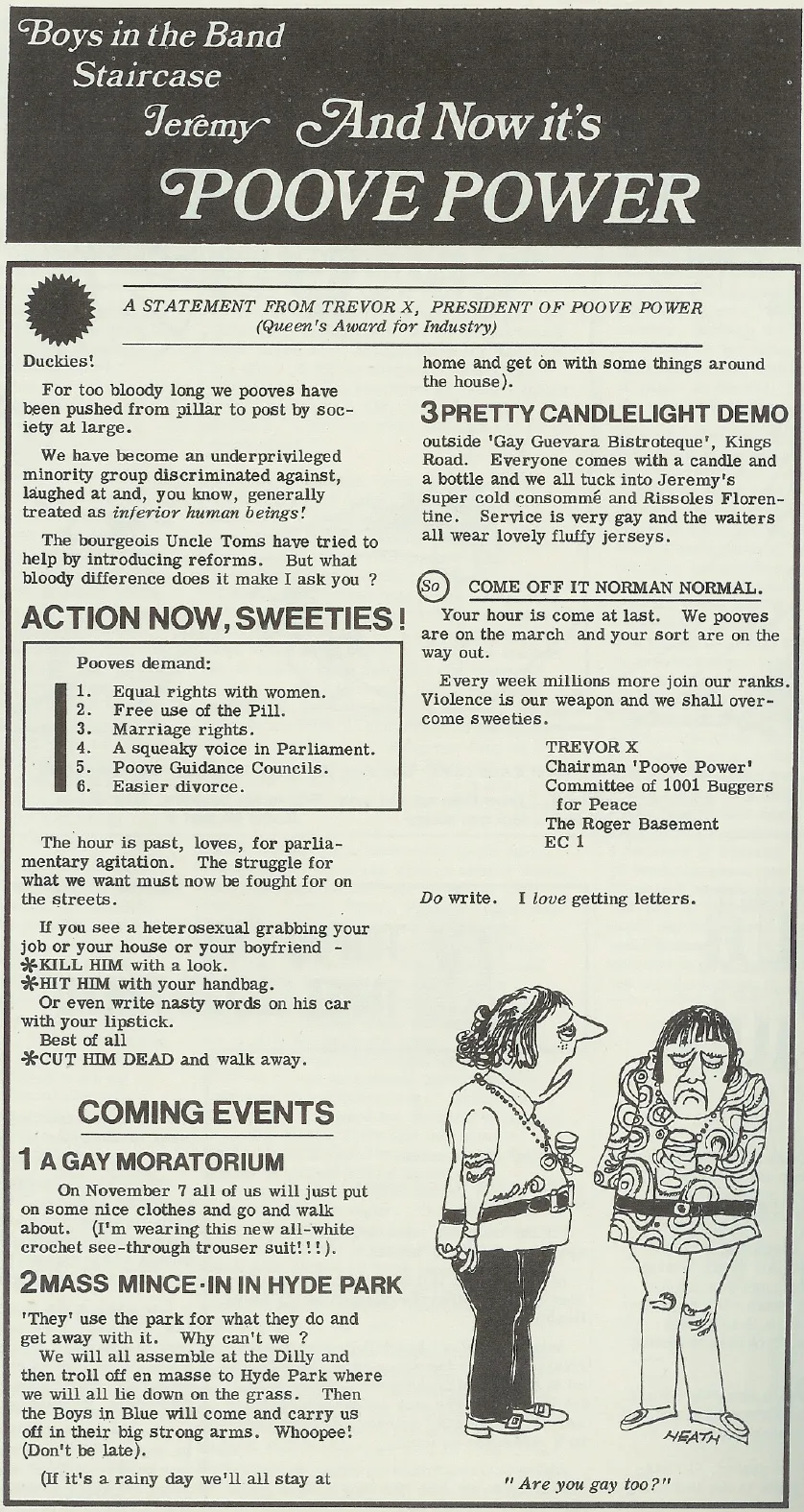
#/media/File:Slaveshipposter.jpg)