You can't control a society without keeping them afraid, so roll that tape of predators, kidnappers, gangs, and drug pushers!
What? A child doing something without adult supervision? Next thing you know they'll start thinking for themselves, asking uncomfortable questions, or looking for forbidden books in the library. Better call the cops and accuse them of vandalism or something.
A lot of the restricted stuff is cargo-cult fear of symbols that could be used in SQL-injection or XSS attacks.
A properly-coded system wouldn't care, but the people who write the rules have read old OWASP documents and in there they saw these symbols were somehow involved in big scary hacks that they didn't understand. So it's easier to ban them.
It was earlier than the 90s, and came with popular 8-bit CPUs in the 80s. The Z-80 microprocessor could address 64kb (which was 65,536 bytes) on its 16-bit address bus.
Similarly, the 4104 chip was a "4kb x 1 bit" RAM chip and stored 4096 bits. You'd see this in the whole 41xx series, and beyond.
> The Z-80 microprocessor could address 64kb (which was 65,536 bytes) on its 16-bit address bus.
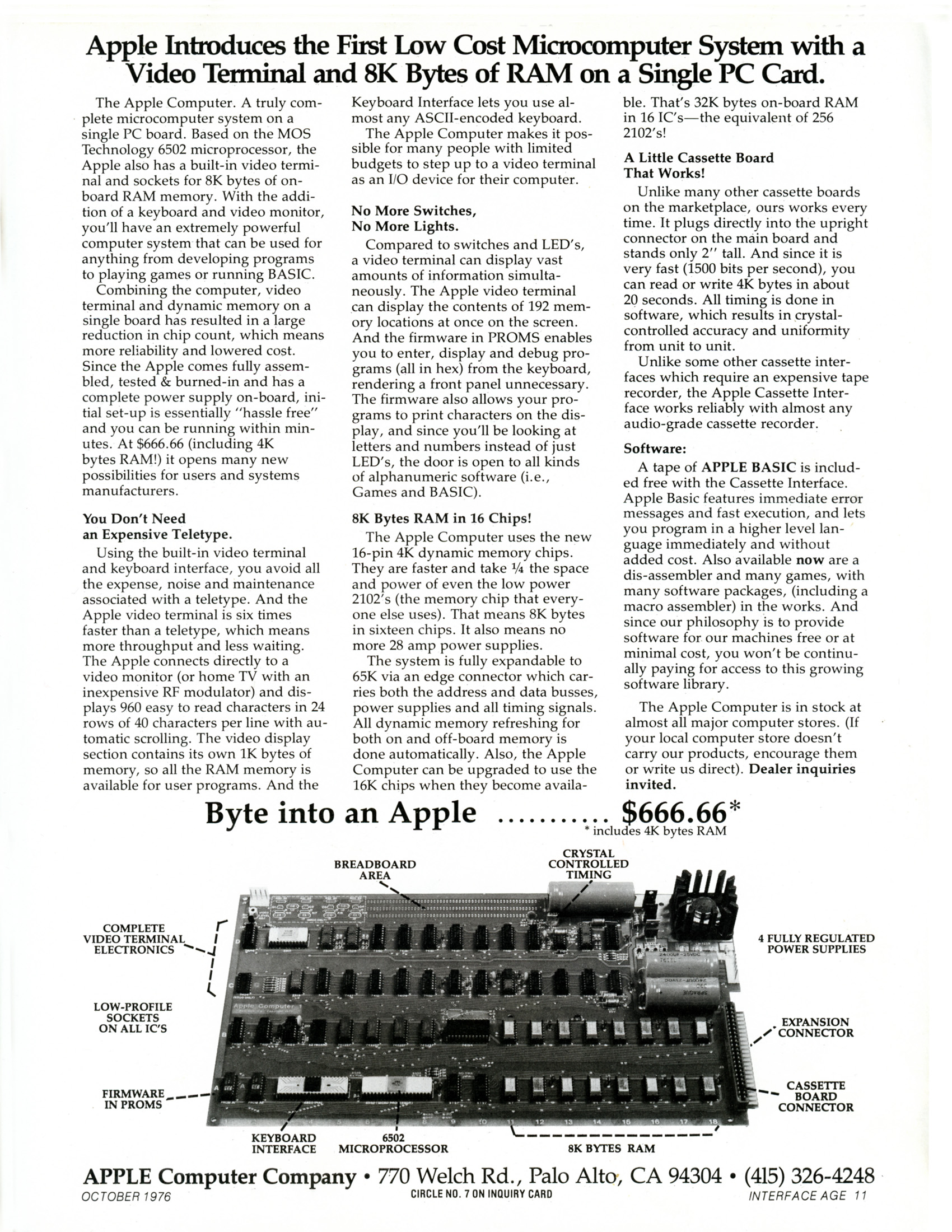
I was going to say that what it could address and what they called what it could address is an important distinction, but found this fun ad from 1976[1].
"16K Bytes of RAM Memory, expandable to 60K Bytes", "4K Bytes of ROM/RAM Monitor software", seems pretty unambiguous that you're correct.
Interestingly wikipedia at least implies the IBM System 360 popularized the base-2 prefixes[2], citing their 1964 documentation, but I can't find any use of it in there for the main core storage docs they cite[3]. Amusingly the only use of "kb" I can find in the pdf is for data rate off magnetic tape, which is explicitly defined as "kb = thousands of bytes per second", and the only reference to "kilo-" is for "kilobaud", which would have again been base-10. If we give them the benefit of the doubt on this, presumably it was from later System 360 publications where they would have had enough storage to need prefixes to describe it.
Still the advertisement is filled with details like the number of chips, the number of pins, etc. If you're dealing with chips and pins, it's always going to base-2.
But I've always found Paul to be a good guy, who was helpful and honest and provided a great product. Teensy is a great platform, and it's too bad these other players will have a negative impact on it.


reply