This style of simulating faux-realistic materials (such as glass or aluminum) on the screen looks dated and cheesy now -- (Windows engineering team 2012)
Oh wow, a statement like this coming from a blog entry about creating windows 8??
Maybe it has to do with that I‘m Gen Z but I absolutely love Frutiger Aero. It never looked cheesy, first it was modern then it was nostalgic. All meanwhile I still have trauma from the hideous Metro tiles.
I'm also gen Z. For me the reaction to Windows Aero was similar, but I guess that's just how it is because it's what we grew up with. The blog post is talking about imitating materials in general though, and I can totally see how it can be taken too far. Think putting wood PNGs as backgrounds for app elements or adding brushed aluminium textures on sliders, things like those look pretty dated to me now. I'm guessing the Microsoft designers just had a far lower tolerance for that stuff, since IMO Windows 7 was very tame in terms of this - it felt just abstractly transparent and shiny more than skeuomorphic.
Metro was also just pretty bad on its own, irrespective of what came before or after. It was way too simplified, and despite that everything was HUGE so you could really see every bit of detail that was taken away. As usual, Microsoft was chasing the big new thing that never came by designing half the OS around tablet PCs. Windows 10 toned it down like how 7 toned down on Vista, and after that it was pretty alright for me. A much better example of a UI that came out then and aged well was Android 5 with Material Design.
> Think putting wood PNGs as backgrounds for app elements or adding brushed aluminium textures on sliders, things like those look pretty dated to me now.
This was a late 90s/early 2000s thing. I remember it on some Win98 and XP applications.
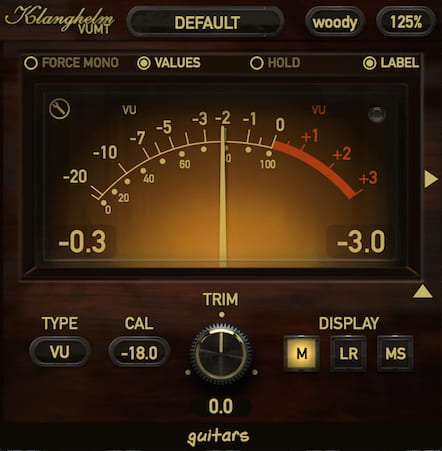
Nah, it persisted in many places, in some to lesser extents than others. It feels like in the 90s it was more of a "look, we can make UIs so flashy now!" thing, which then morphed into an actual design philosophy. See for example the Apple Newsstand app from iOS 6 [0] or lots of VST plugins from any time period, even up to today [1]
Must be a Gen Z meme because it was traumatic for those that lived it. It reminds me of Windows Vista and, my god, the first few years of KDE 4 - it has taken me until last year to try KDE again (and finally it has shed it’s silly hard contrast black transparency phase)
Gen Z like it because of nostalgia, not because of quality or because it actually looks any good.
I have to agree. Windows Aero is a visual mess, especially on Vista, and many of the comparable UXes of the time were not much better. Apple's Aqua UI was the best of the bunch, and it still looked like a child's toy.
It was especially confusing at the time because Windows XP was so straightforward and correct. Flat, contrast-heavy UI elements that overlap without interacting when they aren't supposed to. Drop shadows used for good instead of evil. Skeumorphic design elements that are intuitive, not desperate and corny. The cutting edge in PC usability is arguably still technology designed in 2003.
Aero was kind of a mess in Vista, but improved substantially in 7 (and a lot of that was due to more frosted glass look / less transparency). I would still rate 7 as the best balance of usability and eye candy that Windows has ever had, and I've used all of them heavily starting with Win 3.1.
There's always "old wine in new bottle", but this latest take by Apple seems a bit too gratuitous.
Time will tell whether it's a flop -- I'm inclined to believe this is evidence that they're on par with MS now, and their solidly creative streak is over.
Yes making everything skeuomorphic is the ultimate finger in Ivy’s eye for no apparent reason other than it was very different and got some designers promoted. They had to answer the “iOS isn’t changing a lot” with something so they went with the dumbest regression ever.
Now when I try to hit send in messages I often have to hit it twice because it has to show the dumb flash which requires a longer delay than I’m used to in order to register the send. There is no aspect the redeems it and many that damn it.
Utility-scale solar is very unpopular in Japan. Because most suitable lands of them are densely forested, and installing utility-scale solar systems requires destory the forests.
There are concerns landslides due to reduced water storage functionality, and emotional antipathy at having their hometowns' mountains covered with solar panels.
(utility scale solar generators typically have a 35 year lifetime, so in areas of Japan where you’re not cutting down forests, it makes sense to build where depopulation is occurring in a “last person out shut off the light” sort of way before the rural community goes extinct)
I think Rust is the biggest winner that has from LLM support. When I got an compile error, it is painful without LLM to reverse-thinking how to re-write something and why it needs to be written that way.
Funny trivia. But of course -- there is absolute zero reason to base64 encode ascii text. Evenmore laughable to put Json encoded in base64 text inside regular Json.
The ideal HTML I have in mind is a DOM tree represented entirely in TLV binary -- and a compiled .so file instead of .js. And a unpacked data to be used directly in C programming data structure. Zero copy, no parsing, (data vaildation is unavoidable but) that's certainly fast.
This style of simulating faux-realistic materials (such as glass or aluminum) on the screen looks dated and cheesy now -- (Windows engineering team 2012)
They really took that idea a little too far especially considering they never executed it even more than half way. We still have control panels that are using their pre-2012 look and feel.
They skipped iPhone 9 once. So iPhone 17 and going for iPhone 2026 could be better for measuring the age of the device and could be beneficial for consumers -- but what about the OS version? No one care that.
From an engineering standpoint, skipping a sequential number is just wasteful.
I don't see the point - ASCII vs. binary doesn't make any real difference. And there's no an actual unencrypted HTTP/2 traffic, so there's no incentive to censor.



https://web.archive.org/web/20120614042824/http://blogs.msdn...
--
"Cheesy and dated" -- it keeps hitting me through the years.