"Your margin is my opportunity" is probably my favorite Bezosism. Given that perspective and Apple's very cushy margins, I expected Amazon not to approach the market with an expensive phone packed with new features, but to approach the market from the bottom, with a good phone that is free or nearly free. The problem, of course, is that Google seems to have that segment wrapped up.
Instead of competing with the iPhone, this seems to more targeted at Android -- only priced uncompetitively.
The features themselves seem slightly gimmicky. I tend not to want to move my phone physically as a way to interact with apps. (Doing that figure "8" when my GPS goes out for some reason is incredibly awkward.) Searching via photos is awesome, but the only use case it seems well suited for is shopping. The built-in Genius Bar is cool, but it seems targeted toward smartphone noobs, which is oddly coupled with features targeted to smartphone pros.
If I'm reading the tea leaves correctly, this will probably be a novelty, like Windows Phone, for a while to come.
iTunes: Amazon Prime Streaming TV + now music, Google Play
iPhone: Kindle Fire Phone, Nexus 4
I think they're all playing for the same territory. The big difference seems to be that Apple really only sells the technology. Google sells the technology so that they can sell advertising for third party products. Amazon has the only complete end to end solution where they sell you the products and advertise for their own "other stuff" they sell. IMHO Amazon is going to be the big winner in the long run. Whether or not that's good for all of us is yet to be determined.
You're saying that Amazon will be the big winner in the long run because they can control the phone, and the products you buy on Amazon?
If I'm interpreting that correctly, I don't see how that holds. People use smartphones/tablets/televisions to consume many things. Amazon products are just one of them.
I don't think that just because controlling the entire product ecosystem would work to Amazon's advantage means that customers will want a phone that enables that end-to-end control.
The end-to-end control works well for the Kindle, because eReaders are used really only for reading the books that are available only on Amazon's eReader marketplace. But I can shop Amazon from any device I want. So having a phone that owns that experience isn't a major value proposition for me. I'm much more interested in things like display, battery life, camera quality, sound quality, and the phone's popularity than which product ecosystem it taps into.
To me Amazon is working from a major disadvantage here. The technology doesn't seem mind-blowing, the device at first blush doesn't look remarkably different from what's already available, and since phones are largely subsidized by carriers, most customers aren't going to be hugely price-sensitive. If anything, people opt for the most expensive, newest phones. If Amazon is looking for the people who will spend the most money, they certainly won't be interested in customers who think $199 is too much to spend for a new phone that they will use every day for at least two years (which is a moot point since the phone is priced at $199).
Google sells you a device so they can show you an ad encouraging you to buy a rake. In turn Google gets a sliver of the profits from selling a rake in the form of ad revenue.
Amazon sells you a device so they can show you an ad encouraging you to buy a rake. Amazon sells you the rake, has it delivered in 2 days, and makes 100% of the profit.
It's not that people will actively look for that integration, but that it exists gives Amazon a significant advantage imho.
Amazon sells you a rake made by a 3rd party who was put into FBA by a wholesaler and makes a reasonable cut of the profit in the process.
Amazon has more control but also takes all the blame when things go wrong.
Tbh, as someone who works at a business who does both the ads & selling stuff via Amazon as a manufacturer...Google actually makes more money off of us than Amazon does. I don't mean like a "little more money", I mean something like 5x as much money. This part is anecdotal obviously but I think you are very, very wrong in assuming that "Sell Product" > "Sell Ad".
When you say 5x, are you considering the acquisition cost for each product sold, or the annual budget?
Unless you only sell through Amazon, then a global comparison wouldn't be fair, because Google is semi-monopolist in ads while Amazon is far from it in retail. You should compare your average user acquisition cost with the wholesale margin left to Amazon; eg: how much does it cost to acquire through ads a user that buys products for $100? And how much of those $100 are left to Amazon?
> When you say 5x, are you considering the acquisition cost for each product sold, or the annual budget?
When I say 5x, I mean Google gets 5x the amount of money than Amazon does. I think that is more relevant than a "per item" basis.
> Unless you only sell through Amazon, then a global comparison wouldn't be fair, because Google is semi-monopolist in ads while Amazon is far from it in retail.
It isn't my fault Amazon can't sell more of our products. ;)
> You should compare your average user acquisition cost with the wholesale margin left to Amazon; eg: how much does it cost to acquire through ads a user that buys products for $100? And how much of those $100 are left to Amazon?
That is a bad way of comparing for purposes of this conversation.
Amazon has to pay for shipping, pick & pack, customer service, return shipping, etc. That isn't free.
- Amazon has more control but also takes all the blame when things go wrong.
that would make it sound like amazon's current business model isnt working, which I think its doing pretty well. Amazon has razor thin margins for sure
Amazon hardly takes all the blame when something goes wrong - they mostly just discretely recoup from the vendor all while looking like a benevolent company.
Personally, I have a very much love/hate relationship with Amazon and I blame them, not the vendor.
I've had to issue a chargeback because of Amazon's incompetence...which most customer's probably haven't. It is literally the second chargeback I've ever had to do in my life, so it tends to stick with me more than it might for other people.
My problem is the price: at $199 with contract is going against a lot of much better phones.
The eye tracking is nothing new and 3D as a sale gimmick crashed and burned years ago and I don't amazon doing anything revolutionary with it here.
If it were $200 unlocked then I can see it selling like crazy, but the current plan makes no sense, if amazon was providing the service as a MVNO and offered stuff like truly unlimited data and stuff then maybe, just maybe, but $199 for this phone and on AT&T? PASS....
That doesn't get Amazon any market share, it just increases their profits - assuming that they can get anyone to buy it in the first place. And even if the money starts rolling in, that's not going to be able to overcome the legendary inertia of the Google Play and Apple app stores. Google and Apple already have the "dump billions on it until people buy it" angle covered.
Market share is only meaningful if the lack of market share makes a particular product untenable. For example, if someone came out with a new platform that was incompatible with everything else- a lack of apps in the beginning is a huge hurdle to overcome, and the platform may die before achieving a critical mass of third-party support.
That is clearly not the case with Amazon. "Just increases their profits" is pretty much the only thing that matters. Dominant market share comes much later, if at all. Dominant market share might even be a bad thing, if attaining it requires a race to the bottom. Most companies would (and should) prefer to sell a million devices with decent margins than 10 million devices with little or no profits. Amazon is known for pursuing market share at the expense of profits, but that's often not the best strategy and they can be excused for not taking it this time.
It's also better from a risk management perspective. For the first iteration of a device like this, it's less risky to try to sell a few of them at reasonable margins then to try to sell a gazillion of them at razor thin margins. The price of failure is far less, and depending on how this one does, then the next time around they can start adding cheaper models and gradually expand the user base. Or not, their choice. It's not always worth it.
Fair enough. Still, Amazon is already making money. Amazon making money isn't news. The question on everyone's mind is whether this will actually make a difference in the smartphone market.
But you have to consider R&D costs. If they get one million people to buy this phone over the next year, how many of those customers will buy more products from Amazon than they already were?
At $199, my gut tells me that the early adopters of this phone will largely be people who already use Amazon regularly.
The term "big winner" to me implies that the thought process is that they will win out over Samsung and Apple in the long run, but I don't think that is very likely anytime soon. I don't hate the move by Amazon because you have to start somewhere, but predicting them the winner as this device is first launched is very optimistic in my eyes.
Amazon has always been viewed in the long-term as the 'big winner'. But, Apple makes good money and is growing revenue, on the back-end with their 850 million iTunes users.
Amazon's dominance is always a 'future certainty', meanwhile Apple eats it's lunch.
i.e.
"iTunes, Software and Services has been growing between 30% and 40% for four years and is on its way to $30 billion/yr in transactions and sales for 2014."
Except it isn't being sold at a low price, and doesn't really offer anything valuable to the customer that differentiates it from the competition. The implicit deal was always the product is sold at cost so they can encourage sales on the store, why would anyone pay full price for this?
Fair enough, but I suspect the profit margins on this phone are pretty slim, given the hardware features. I think Bezos figured the high end hardware was necessary to initially break into the market.
It's likely subsidized by the AT&T exclusive. I believe it's $200/month plus some contract. Which means they may be getting kickbacks totaling more than $200/device which would improve their margins. Or more interestingly, mean the device can be higher end and impress people more while at least not being a loss for Amazon. It's basically a store interface, leading to increased sales. Firefly is like Shazam for products, people will likely buy way more from Amazon.
What trend, the trend where Amazon is an also ran in tablets, set top boxes and soon to be phones? Apple's hobby TV product which hasn't been updated in 18 months made about the same profits last quarter as Amazon's entire business. Let that statement sink in.
Revenue =/= profits. Amazon is a middleman and are only successful at generating revenue growth because they don't make profits.
I wonder how this relates to IBM of old which had a business model that amounted to "Sell at high price, high tie-in revenue." It didn't work out so well for them (at least for their PC business), turned out that people didn't really want to be "tied"-in.
Given the PC business was already commoditizing (because of IBM's insane reliance on Microsoft without the proper contract to prevent what happened), the high price sale couldn't compete as well against lower priced products.
Plus most of their sales were B2B where brand loyalty means little for commodity products, esp. given the high tie-in strategy.
I don't think this perspective is correct regarding to the current different business models these companies have.
Apple: We sell an experience of software and hardware.
Google: We sell ads, based on data we gather from our users.
Amazon: We sell commodities\services as close as possible to the marginal utility, so we're very competitive.
Altough each of these tech giants are competing, each has quite a different strategy.
As for the Fire phone, I think that Amazon realized that they could deliver an excellent shopping experience from the mobile phone.
This would enable massive future growth: Think about going home in the train and buying groceries instead of driving to your nearest Wallmart.
no, Appple margins- HUGE, Amazon margins - small (like a few hundred million on 50 billion top line). Google is somewhere in between. On content, they deliver content very differently. delivery is important
> Amazon has the only complete end to end solution where they sell you the products and advertise for their own "other stuff" they sell. IMHO Amazon is going to be the big winner in the long run.
I think you are vastly under-estimating Apple's dominant position in the fastest-growing and most profitable category of "selling other stuff": digital content. Itunes is on track to $30 billion revenue this year with huge yearly growth several years in a row. That is almost half of all Amazon revenue combined! And presumably with vastly better margins, too.
In the next decades people will spend more and more on digital goods (Apple's turf), at the expense of physical goods (Amazon's turf). Amazon will do anything to avoid being leapfrogged that way. They have a very strong cloud infrastructure story, obviously, and are playing decent catch-up in many other areas, but in the grand scheme of things they are very far from the guaranteed winners.
Amazon is the only one with a physical goods tie-in, but Apple also sells apps, songs, books and films. I think Tim Cook recently mentioned 75 billion app downloads.
Amazon and Google both also sell apps, songs, books, and films. Apple's selection is larger, but they're all somewhat equal in the sense that they have similar offerings.
But Apple's products are so far superior it's almost comical to say they compete. Quality of construction and UX are what make amazing products. Not overhyped hardware specs that the average user doesn't even take advantage of.
Until Google or Amazon comes out with a truly gorgeous easy to use interface and a metal/glass phone I don't see them competing with Apple.
EDIT: Apparently the Fire Phone has a glass back, but it looks like plastic bevels. No thanks.
Google sells the technology so that they can sell advertising for third party products.
I see this a lot of HN, and I wonder if people are just assuming? To put it into context, I see far more ads on my iPad and iPad Touch than I ever have on my Nexus 5.
Outside of the money Google makes from their book, video, and apps stores, they sell the technology to ensure that their services remain viable, and cannot be cut out of the market. They make the platform so Google has less concern about being cut out of the ecosystem.
I mean we see the paradox on here constantly where people will gloat about how much more valuable iOS users are to advertisers, but then that Android is a platform for ads.
<quote>I see this a lot of HN, and I wonder if people are just assuming? To put it into context, I see far more ads on my iPad and iPad Touch than I ever have on my Nexus 5.</quote>I have zero ads on any of my apps on my iPhone (if I find one that has added ads, I discontinue it's use and buy another app that doesn't insult me). If you see any ads on your apps, you're buying the wrong ones.
If you mean website ads, then you can thank Google for that - I'm pretty sure that a significant majority of all web ads use Google's ad networks. Of course, thanks to Apple's double-tap for zoom, I usually bypass most of this visual cruft when browsing on my iPhone.
>They make the platform so Google has less concern about being cut out of the ecosystem.
True, but let's not ignore that their core business is selling advertising. Before Android came along that business was at the mercy of Apple (in the mobile space anyway).
>I mean we see the paradox on here constantly where people will gloat about how much more valuable iOS users are to advertisers, but then that Android is a platform for ads.
Android isn't specifically a platform for ads, but it was indeed built so that Google wouldn't lose the ability to serve ads on mobile hardware.
> Before Android came along that business was at the mercy of Apple (in the mobile space anyway).
Android has existed for the entire time mobile advertising was becoming huge. The iPhone was a big innovation, but in its first year it wasn't nearly the mass market device it is now, and its impact on mobile advertising at the time should not be overstated. Mobile and mobile advertising only started becoming really big in 2010.
I don't think Android was built with the specific goal to directly put Google's services into people's hands. I believe Android was built and released as free to be used by anyone to create an easy-to-use platform for any vendor with very capable connectivity features. It was hoped that this would increase use of Google's services on mobile, not because Google was forced into the market, but because people would have devices capable of web services in general.
Android seems to be made with a goal of making a market, not taking a market. That is why there is this diverse market for Android, and that's why all those associated problems exist. Its strategy also directly made possible this Fire Phone.
Google's core business is making services that people like to use. That they monetize some of those services via advertisements is a function of the industry that they operate in: There was no market for a pay search engine, or even a pay consumer mail provider: Those genres had long been supported by ads, and users expected that. Anything else was a non-starter.
Their core business is that monetization, by definition. Making services that people like to use is what they do to feed that core business, not vice versa. They are constantly scrambling to find different ways to make money because they are a company run by extremely wealthy and intelligent people who would love for all of the great things they do to be in service of some core business other than selling targeted ads. So far they haven't had the same level of success in any of those other endeavors, but I completely understand why they keep trying.
Your redefinition of 'core business' is confusing.
IBM's core business is monetization, by definition. Making services that enterprises like to use is what they do to feed that core business, not vice versa.
Walmart's core business is monetization, by definition. Selling goods that people like or need is what they do to feed that core business, not vice versa.
Toyota's core business is monetization, by definition. Selling cars that people like or need is what they do to feed that core business, not vice versa.
The local florist's core business is monetization, by definition. Selling flowers that people like is what they do to feed that core business, not vice versa.
Every for-profit's core business is monetization, by definition. Performing a large variety of things that make money is what they do to feed that core business, not vice versa.
Their core business is that monetization, by definition.
The NFL is primarily sponsored through network agreements, which themselves are primarily sponsored through advertisers. Is the "core business" of the NFL, then, advertising?
Of course it isn't. Such an argument is specious to the point of uselessness, and only appears in the form of rhetoric. The NFL's core business is making an entertaining sports product that people like watching, and then they find ways to monetize from that.
The discussion is what Google's "core business" is. Google makes less than 1/5th of their revenue from their ad network in third party products and sites. The overwhelming majority of their money comes from monetization of their own services.
Apple operates and promotes its own ad network, and its lack of success in that market doesn't somehow separate it from that reality. No one would claim that Apple's core business was iAds.
The key part is third party products, most of the ads you see on your iPad is served from Google's infrastructure. Google makes money on all platforms.
>If I'm reading the tea leaves correctly, this will probably be a novelty, like Windows Phone, for a while to come.
Agreed. I'm having trouble visualizing how it moves from being novelty to being ubiquitous. I purchased one of the original Kindles back when it was a novelty, but I understand why it became the dominant eInk device since it was a novelty item with little to no competition. For the Fire, it's a novelty with stiff competition from the beginning.
As someone who rarely shops on Amazon and doesn't want a Prime subscription, why would I chose this phone?
Maybe the answer is Amazon doesn't expect this product to take off fast. Maybe it's a much longer term play initially targeted just to those already comfortably engaged in its ecosystem.
Prime customers are Amazon's highest spending customers. They, according to this report[1], spend more than 2x what non-Prime customers spend - $1340 / year. Prime customers aren't likely to be swayed by a low-cost, budget phone. So it makes sense for them to tie their premium Fire Phone to this segment of their customer base.
This also doesn't mean they can't do a budget phone later.
Only one data point, but I'm a Prime customer that spends significantly more than $1340 a year on Amazon and I have a Nexus 5 which costs just a little more than half what this Amazon phone costs.
I don't need a "budget" phone, I can afford something much higher-end; but I still like to get value for price and in the face of the Nexus 5, the Moto G, the Moto E or the Lumia 635 all of which cost half or even less than a quarter of the price of the the Amazon Fire phone, it just doesn't look like a good value to me.
YMMV if the 3D perspective thing is that appealing to you, or you want a cellphone with a relatively very good camera, but neither of these are particularly important to me.
I agree that the dynamic perspective and angle detection just seems like a gimmick.
The 2 serious uses for it I can see are:
* Scrolling through things by tilting the phone. Personally I think this seems like a useful feature.
* Playing certain mobile games.
For general use, I don't think it'd be that helpful or aesthetically appealing other than "oh that looks cool". I don't really see the purpose of it when looking at maps, or especially looking at your home screen... In fact I imagine many people may find it annoying in many of the phone views.
There have been a few apps with tilt scrolling such as instapaper, kindle, etc. Mostly reading apps. If found them impractical as I tend to read at a pretty small area of the screen, constantly adjusting the text so my reading area is at the top. I tried tilting but it never felt as natural as just keeping my thumb in position to scroll.
My suspicion is that the pricing is to intentionally depress sales initially while they work out supporting a phone at scale, since this is a new segment for them.
Maybe the reason amazon prices that way, is that it's really expensive ?
It seems that the most expensive thing here would be the mayday service. And maybe it's the killer feature here?
One big reason why seniors buy the iphone is that there are classes in the apple store which help them learn to use the device and overcome their fear of tech.So mayday could work well for that segment.
Also, many tech people hate coming home after work and doing tech support for their family. They could have a strong influence on their family members phone purchase decision.
And i'm sure amazon has got data from their mayday on tablet to estimate the value of mayday.
Another reason seniors buy the iPhone is that they have gained some limited amount of wisdom, and one thing some of them have learned is that buying crap usually ends up being a waste of money.
> I expected Amazon not to approach the market with an expensive phone packed with new features, but to approach the market from the bottom, with a good phone that is free or nearly free.
It'd make sense to price the phone high at release, both to maximize revenues and establish the phone as expensive ('good' in consumer's minds), and then slowly mark the price down while your supply chain ramps up.
I think Amazon are taking the "learn as you go down market" approach exemplified by Tesla.
This is the pilot model, which enables Amazon to earn revenue fast and capture early adopter surplus. We'll soon see a cheaper model with the more lavish and underused features trimmed, and other features much improved thanks to real world testing of the first model.
Is applying the Tesla business model applicable in a case where the product doesn't cause you to salivate?
Seems for each interested buyer, I see ten who are more like "meh". Perhaps a rigorous demo of the phone's features would highlight it's "must-have" features.
There's still plenty of time to generate a buzz. I'll wait until I've heard the opinion of a few reputable reviewers before I consider it writing it off as an "also ran".
Why does this seem to be targeted at Android? If anything, I would say the price differential between this and good android phones reflects that it might be more an iphone competitor if anything, and so it seems to be more targeted at Apple.
Perhaps the Fire phone is targeted a new segment that neither Android nor iPhone.
People that aren't interested in the high end features of smart phones as they are now - people who might even choose a flip phone - but will spend money shopping for traditional items.
Some studies say iOS users (as a whole) are more willing to spend money through their phone than other demographics, but are they willing to spend on what Amazon is selling? This seems to refer mostly to musics, apps.
Cover the internet/messaging basics, offer quick & easy support, make traditional shopping easy - plus add price comparisons and you may tap a large non-tech segment.
My thinking (often flawed) is that as an iPhone user, if I could buy an iPhone or a Fire Phone for the same price, there's no way I'm going with a Fire Phone just for one of these features.
If, however, I was an Android user, I would consider buying the Fire Phone as a replacement device, along with similar phones like the Samsung Galaxy.
You can sum up Google and Apple's market positioning in a tweet if you wanted. (Apple: premium phones, premium prices. Google: give away the software, monetize the search.) Amazon's positioning here is more vague, or perhaps nuanced.
iPhone has the build quality though. This is rubber and glass, not metal.
There's also a degree of app quality that iOS still has over Android - I'm an Android user: 'Secret', for example, only just came out, and it's very unstable.
This is a mid-range smartphone at a premium price.
I could argue in the same manner about things that Amazon's phone has but the iPhone doesn't --- I just think that the people that are considering an iPhone vs. something else will consider Amazon's phone (along with the high-end expensive android phones). The price differential is a huge factor in determining what products actually compete with one another. Along the same lines, I think this also competes with the expensive android phones --- but (smart) people on the cheaper prepaid plans aren't going to consider the Amazon phone very heavily with the Nexus and Moto phones available. It's clearly not worth it for the huge markup.
iPhone has the build quality though. This is rubber and glass, not metal.
"Build quality" is such a meaningless term in common usage of smartphones, and speaks to personal subjective aesthetics, not some utility of purpose.
And this is all particularly interesting given that there's a good chance a significant part of the new iPhones will be made with plastic. But I'm sure it'll be a "better" plastic.
I don't think you are using "objectively" right here. It could very well be my opinion that rubber actually ages better, because it scratches far less than metal does. Subjective though.
...so build quality is hard to quantify, and in most practical cases is subjective.
No, it isn't objectively. You are subjectively choosing the criteria that makes one purportedly better than the other, yet they have zero applicability to the use or operation of a smartphone.
Grip matters very much with a smartphone. Rubber breaking down? Has anyone ever actually seen this happen? Is this actually a problem? Torn or stained? Again, is this actually a problem in the context of a smartphone? I would say no, it isn't at all.
A soft, comfortable, lightweight device that you don't have to immediately shroud in a protective case is, by actual use-based criteria, arguably the better "build quality". Build quality is suitability to purpose, not aesthetics or cult of material.
I would say the price differential between this and good android phones
The Galaxy S5 is a $600 device. The HTC One is a $600 device. The LG G3 is a $600 device. The iPhone is a $600 device.
I'm not seeing the price differential.
However, the notion that this competes with either Android or the iPhone is utter nonsense, and we saw exactly the same noise with the Kindle Fire. People seem to have some need to try to assuage their corporate leanings that it's "someone else's problem".
Only it's a smartphone. People buy smartphones, not brands, even if they have brand associations. This device, just like every device, is in the mix for people who are considering a smartphone and who don't attach their ego to a company.
Other android phones: Moto phones are <= $300, Nexus 5 is at $350.
You claimed that it was targeted at the iPhone based upon price, when many of the top selling Android devices are the same price as the iPhone.
So you would say this competes with nothing though?
I disagreed with any binary analysis of what it competes with. It doesn't compete with "either", it competes with both. People buy smartphones to provide information and value, and any possible smartphone is a potential candidate.
We'll it's usually advised that if bitten by a spider you should kill/capture it or take a picture so it can be identified and the correct anti-venom administered.
So yes, do call 911, but taking a picture could be potentially life saving.
To my knowledge, there aren't any North American spiders that would cause a "seconds count" type threat to your life. I suspect the way this normally works today is:
  Black Widow: Have a painful bite on the house!
  User: "Ouch!"  *slap*

  [one hour later]

  User: "Oh my god, I am in unimaginable pain."
  * User is driven to the hospital.
Or
  Brown Recluse: Have a painful bite on the house!
  User: "Ouch!"  *slap*

  [several hours later]

  User: This is starting to swell rather
        disturbingly, and smarts quite a bit.
  * User drives to their doctor
With snakes it's probably another mater. If a snake I could not identify bit me, I would be calling 911 first, and taking pictures afterwards before the ambulance arrived. If it's not a snake that I recognize as safe, then I wouldn't be taking the risk that it wasn't a venomous pet that escaped (since I can recognize the venomous snakes native to my region).
Identifying (or capturing!) the venomous spider or snake that bit you can mean the difference between them identifying the right antivenom or not. So, yes, surviving the trip to the ER is unaffected, but it might mean the difference between losing a life, a limb, or not.
The OP was indicating taking a picture of the spider then having the Amazon phone tell you if its a dangerous spider, then deciding on whether to rush to the ER or not. Sure take a picture of it and get it checked out, but this use case for this feature is a bit over the top.
Are the very low margin phone customers desirable media customers?
When I look at my low margin phone and service and almost non existent media consumption (nothing beyond shared cable or free streaming), I sort of doubt it.
It might be a flagship device to attract attention (gimmicky new features for differentiation) and pave the way for lower cost phones. Mayday is a great strategy too, I've always wondered why so few companies go after the tech-illiterate market.
A risk with that strategy is that it may only get you the tech-illiterate market because the other potential customers think your stuff is for idiots and don't want to look stupid.
With Mayday, I think there is another side to that risk: if they only get the market segment of customers who use Mayday a lot, that can get expensive, especially since they promise "Help in 15 seconds or less" (they do weasel out of that a bit by stating that is the goal, but if it comes to a court case, I doubt that will fully absolve them if average response time is, say, 30 seconds)
> The problem, of course, is that Google seems to have that segment wrapped up.
No, there's still place for a great, cheap phone that's aimed at the consumer market rather than the geeks or the developers who usually buy Nexus devices.
Then again, it could be more about software and services than just hardware. They've offered a competent competitor to high end smartphones to be sure, but they've also extended and bolstered the Amazon ecosystem with Firefly. I don't think it would share the same fate as Windows Phone, because it is still largely an Android phone and switching from samsung android to Fire won't be as costly. At the same time, it has some interesting features to compete with Apple as well. Windows Phone models never had that much differentiation, and on top of that. its metro UI was a big change for smartphone users that didn't gain traction.
I agree. At a pure product level this isn't competitive with an iPhone. It's exclusive to ATT and apparently only available in the US but still priced to compete with the iPhone. They should have done something with sponsored data or subsidized it heavily for Prime customers, but as it stands this isn't a compelling offering in the market.
I agree with you here; I was really surprised by the price tag, considering that over the course of a 2-year contract you're on the hook for another $200 worth of prime membership to get the most out of the features. I'm already on the edge of cancelling my Prime membership because of the problems with "2-day" shipping turning in to "3-5 day" shipping thanks to UPS Surepost being complete garbage, and I already have an Amazon Music player app on my phone. When I saw the price my enthusiasm dissipated completely.
The sci-fi firefly stuff is cool and very tempting, but I don't have a strong use case for it and it's not going to drag me out of my current phone ecosystem at that price point.
Small correction: you get a year of Prime free with purchase of the phone, and if you're already a Prime member, they extend your existing membership by one year. This is way down the page though.
I'm really surprised that they didn't feature this information in the price displays themselves for existing Prime members.
That's not a small correction and it's worth noting, thank you for pointing that out! Yeah that information should be prominently displayed there. "This phone costs $200+contract and comes with $100 worth of Amazon Prime for free" is a much better selling point than "This phone costs $200+contract, just like every other high-end phone out there"
You aren't a soccer mom who loves Amazon and buys everything on there because it still saves them time (even if its 4 day free shipping). Amazon Mom says there's a huge market for this sort of stuff. These Mom's have phones.
Imagine the point in time where anyone with a fire phone firefly's EVERYTHING they buy, before they buy it. Cheaper from Amazon, and free "2" day shipping? Killer feature. Never pay more again.
Fairly powerful for price conscious customers. Add in Spotify at $10 a month, Netflix at $10 a month ($240 a year, over $500 over the life of a 2 year contract), and you are getting the entire phone for FREE if you already have Prime.
At total value, if you wanted to have a "similar" phone with similar streaming services and content providing, you'd be paying more than if you bought this $200 phone, with a data plan you most likely will already have.
Looking at it that way, Amazon is paying you to use their phone. Understanding how the Prime model works, this makes a shit load of sense.
Such a temporary argument, especially when you consider Amazon has "increasing selection" as a core tenet[1] of how they grow any business they've created over the last 20 years.
The phone comes with 1 year of Prime at no additional cost. So it only costs you an extra $100 if you stay on the same phone plan and would pay for Prime anyway.
If you wouldn't pay for Prime anyway, the phone isn't very competitively priced.
It depends on what they use the movements for. If it allows me to navigate more things with a single hand without me looking like a white man trying to boogy down, then I'm all for it.
edit: plus, if they really have strong kindle/amazon streaming, they could be looking to try and take some of hulu/netflix's thunder.
Sounds like this phone does a good job of solving Amazon's problem of getting customers to buy more from them. I don't see how it makes my life any easier though.
3D? Ok, that is really cool. 2D hasn't really been a limiting factor for me though.
One-handed navigation and autoscrolling? Wow, that just sounds terrible. I'm trying to read and my kid bumps my arm. Now where am I on the page? And how do I quickly get back to where I was?
Mayday seems nice but then if the phone is that intuitive I can't see needing it much. Loss leader for them I guess.
Tangle-free premium headset. Finally, a feature I would pay money for. Seriously. Do they sell these separately? Because I want.
Perhaps my consumer lifestyle strangely aligns Amazon's incentives with mine, but I'm actually really happy how they solved the problem of me buying more stuff from them. It seems that they observed very common patterns people already use poorly and streamlined them.
Case in point, almost everyone I know takes pictures of books and items they want to buy or investigate further later. Currently this 1) clutters my Photos app with this overloaded behavior and 2) additionally requires me to then manually re-enter the information/remember to look it up. Just having Amazon scan and put it on some list for me is killer in my opinion.
Additionally, I've wanted something like X-Ray for so long and it seems so obvious. Shazam style movie/tv show detection and bringing up IMDB and other useful info on my phone is great. Having Airplay style functionality built into Samsung TVs and play stations is also great (hopefully we will move to a standard protocol to stream video content to TVs in the near future, but this is a positive step in my opinion from just Apple TV in Apple land and just Amazon TV in Amazon land).
I think Mayday may just be the feature though. People like me will have no use for it, but its definitely the case that most people don't really know what they're doing at all with their devices. The threshold for "user friendly" is so laughable right now. iOS AND Android really are quite complex for any non-standard task ("What does it mean I've run out of iCloud space??"). And this is not easily implementable I think -- it will take serious investment to copy this feature on other platforms, you can't get away with a half-baked software solution.
Google Goggles was always able to look at pictures of all sorts of things and provide you with more information about them, including but not limited to UPC codes, books, etc. The rub lies in the fact that Google wouldn't actually sell those third part products but Amazon more than likely does.
I agree with you entirely on X-Ray. I don't have any Fire products personally but that's clearly a missing integration on the competing devices.
I agree about the mayday. One big reason why seniors buy the iphone is that there are classes in the apple store which help them learn to use the device and overcome their fear of tech.So mayday could work well here.
Also, many tech people hate coming home after work and doing tech support for their family. They could have a strong influence on their family members phone purchase decision.
Mayday is actually a killer feature on a phone for Grandma. With 24/7 on-device tech support, relatives would never have to field tech support requests.
If the original (non-Fire) Kindle is any indication; no. I gave mine a pre-Paperwhite Kindle and she loved it. Then someone bought her a Kindle Fire ("If you like that you'll LOVE this. You can play games!"). She hated it and went back to the regular Kindle.
Turns out, if she wants to play games she'll grab a deck of cards.
You're questioning whether someone wants a phone without easily available support? I'd venture to say if anyone marketed a phone with a 'feature' like that, it wouldn't do well.
Or are you questioning whether a grandmother want's a smart phone? The answer is yes.
Unfortunately, there are grandma's who are practically forced to have a smartphone "since the family plan has data" and...they would probably like live support (I'm just saying they do exist).
Wonder how large the cross-section is of people that could use that feature versus people that could remember / figure-out how to initiate that feature.
Talk about losing your place -- I just want a phone that I can hand to someone when I'm showing a picture, and not have it exit the app or something when they inevitably touch the screen. Would be nice to have a touch screen lock gesture, which keeps the current app active and displayed.
Oh, and the 3D -- is that really a 3D screen, or does it just change the screen when you move the phone, based on the position of your face relative to the front camera?
Soft buttons drive me crazy. When I hand my Android phone to someone to help me take a picture, about half the time they inadvertently close the camera app.
How do you know that this phone has that problem? I would certainly hope that Amazon's engineers thought about those use cases... Until I read some reviews that actually find those problems with the phone, it's meaningless conjecture to believe them.
Mayday is cool. I had a kindle fire hd and the power button wouldn't work. The only way to get it to turn on was attach a power cord. I hit the mayday button, the rep talked with me briefly and then auto-ordered a replacement. I didn't have to turn on my computer, I didn't have to dig up a customer service number, I didn't have to sit waiting in a customer service chat (which is usually more like email with the amount of time between responses). Is saving me 10 minutes revolutionary? I'm not sure, but it sure was nice.
I suspect Mayday is targeted more at older users (e.g.; my parents and grandparents). Which is why it doesn't really appeal to me much since, as someone who works in technology, I'm less inclined to need it.
Still, you're right that Amazon offers great customer service so I'll give them props for Mayday.
Continuing on that train of thought, I'd guess the "Amazon experts" basically just know the UI pretty well, but they won't help much with questions the hackernews community might have.
they might not right now, but presumably all calls will be recorded for quality assurance purposes. they'll assemble a list of all questions people have, at all levels, and can improve at all levels as well.
Apple's essentially owned 'end to end' for a while - they design the chips and hardware, the physical retail stores, and handle customer support. The amount of info they have on problems people have and how to optimize for that must be huge. Amazon getting in on direct customer interaction for support will give them a similar, yet different, potential usability goldmine for years to come.
I agree with you that Amazon will probably feed back on the data they receive from Mayday, and I would also assume that Apple considers that data when it designs products and considers improvements. I hope that this means that the customer service will continue to increase in quality, but I think we are looking years in the future.
Who do your parents and grandparents go to for help with their phones? In my family everyone comes to me, so even as a fairly technical person this Mayday feature seems great. :-)
It feels almost exclusively like a device you carry around in your pocket to help you buy more shit from them. Regardless of the usefulness it just feels super slimy.
The compelling feature on this phone everyone's missing:
Let's say you have to browse through a bunch of stuff on your phone. The very moment you start doing this, you have a problem: There's a #%&! finger covering up the screen now!
The idea behind this phone is simple: All browsing of information is done by tilting the screen, leaving the display completely unobstructed... sure, other phones have tried to do this before. However, they were shit, because they didn't involve 4 years of AI research to develop the world's most sophisticated head positioning system ever, like Amazon apparently did. This is probably the only way to make the tilting accurate enough to not be annoying.
Only a company run by a fantically focused guy could put that much R&D towards such a specific and non-obvious feature.
That said, until I can hold the device in my hand and verify that this "tilt to browse information" is 100.00% perfectly implemented, this phone can still end up being a failure, like all similar devices that came before it.
I'm taking the opposite stance, this is a stupid gimmick until proven otherwise. Scrolling with my finger can happen on the very edge of the screen or area of interaction and it's easy to move out of viewing obstruction.
Tilt-based interaction has existed for years on iOS and Android using the accelerometers. It's not a responsiveness or tracking issue, it's that interacting with screens at oblique angles is annoying and many times tilt/rotation interactions require pretty large arm movements compared to finger movements, limiting when and where they're useful. Maybe Amazon made it so amazing these can be overlooked or they were solved, but I'm not buying into the idea just because it uses cool computer vision technology.
> it's that interacting with screens at oblique angles is annoying
When I saw the tilt features, I was very confused. Tilt the phone's screen away from you in order to read Yelp reviews? What? So in order to get more details, I need to make the device harder to read. Maybe it is a good feature, but the examples just make it seem like a gimmick that will get in the way.
Yeah those example really don't sound appealing. Basically instead of hiding additional options in a slide-out menu you can now tuck them to the side of your app and make users tilt their head or hand to find them.
> There's a #%&! finger covering up the screen now!
At which point I use the abductor pollicis brevis, adductor pollicis, etc. to do something quite amazing: I move my thumb out of the way. Alternatively, I can use the same muscles to scroll the screen to a point such that I can see any obstructed content.
The benefit of this method is that I maintain my original viewing angle. I also have finer motor skills in my thumb than in my wrist, and thus I suspect I have greater control.
(FYI: Might want to tone it down a bit. You sound like an astroturfer.)
It's not about your finger being in the way necessarily, it's about usability. Supppose I'm eating lunch. It would be nice to read an article with my phone in one hand and hold my sandwhich in the other. Or if I'm lying in bed just reading. It would be great to not have to keep scrolling the phone with my other hand. I'd rather my phone just do it for me.
Can you not do all of that with one hand already? Reading while eating is actually harder if you need to tilt the device rather than swipe your finger. You could always place the phone on the table and just use your finger, or move the phone while you eat to keep it in your view without any of the tilting being interpreted as other things by the phone.
I've never heard of evidence that auto scrolling behavior is actually better UX as a general design decision for scrollable content. In fact, I've heard the opposite: when users can't control the scroll of content or scrolling is difficult to achieve, they give up more easily on their task.
Everyone's experience is different I guess, but I have never once in my life found myself trying to peer around my own finger. Touching the screen to control where I want information to move is intuitive and precise. Tilting a screen is, for me, very counterintuitive and imprecise.
And despite Sergey Brin claiming it's emasculating to touch a screen, I still find the experience a bit magical.
Really I don't see the Fire as being any different than what Samsung has done: it's harder and harder to innovate on hardware, so you come up with some whimsical feature that solves a problem few actually have.
Exactly. I've never felt like it was a fundamental issue because I can always move my finger. My biggest concern is this will be the new phone rotation that I always turn off because as soon as I want to read in bed it'll start to scroll constantly. Maybe they've figured this out but knowing the correct orientation plane to start, figuring out that I'm simply moving myself around or temporarily putting the phone down and I don't want it to scroll, or any of the many other similar scenarios seem very problematic to me.
That said firefly and the dynamic perspective looks very cool. Not sure how often I'll want to scan the world around me but maybe I'm wrong. The DP seems more like the thing that would affect everyday more radically. Hopefully it doesn't get gimmicky and annoying and instead seems like what it should have always been like all along.
I noticed it most glaringly in playing Samurai vs Zombies. You tap to the right or left of your character to move them, and that means that my finger is directly in the way of seeing whether there are enemies to interact with.
That doesn't really seem compelling to me. I've never felt the problem of having my finger in the way while scrolling, and I'm pretty dubious of tilt scrolling. I'll reserve final judgement until I've had my hands on the phone or seen other people's hands on reviews, but right now this really seems like a solution in search of a problem.
My hypothesis is that adding this feature to a 4.7 inch device has the potential to make the user experience equivalent to maybe a 6.7 inch device, because a finger covers up the equivalent of 2 inches worth of screen real-estate.
Wouldn't you like a 6.7 inch phone that only takes 4.7 inches of space in your pocket?
Sorry to pile on here, but this is not a real problem for me and as someone who is 6'2" with hands to match, someone would seem to have to be really fat fingered for this to be an issue; plus tilt scrolling is worthless in one of the primary contexts I use my phone, which is mounted to my dashboard as a GPS/hands-free unit.
I bought a Nexus 5 this year and kind of pre-regretted it because I thought I should wait to see what Amazon came out with when they announced their long-rumored phone, but now I feel great about it. None of the much touted features here are really things I care about, though I get that my perspective is not universal (eg. Mayday might be great for my mom(1), but not useful for me. Ditto unlimited cloud storage, I already need a long term solution for the images I take with my Canon 70D and Sony A7 cameras, having something that is unlimited only for the small set of cellphone camera photos I take isn't useful for me; YMMV if all you use to take photos is your cellphone, but even in that case I would be reluctant to tie myself to Amazon in that way since it becomes a friction point to upgrading to a different kind of phone in the future).
The glass back doesn't help things either; I learned that lesson with the Nexus 4 -- never again. And lastly the price isn't very attractive in the recent world of inexpensive but powerful Android phones, especially when you're tied to AT&T.
(1) [except for the fact that the most likely big problem someone like her would run into is not being able to connect to the network in the first place, which is obviously not a problem Mayday is well equipped to help with]
Forgive me, but this was the first thing I thought of. (A collection of clips from television commercials for as-seen-on-tv gadgets, showing helpless ordinary people trying to do things like slice tomatoes, etc…)
"A tribute to doing it wrong" That's classic. It could have just as easily been called "Over-acting Theater" or "Solutions for everything except ineptitude"
> However, they were shit, because they didn't involve 4 years of AI research to develop the world's most sophisticated head positioning system ever, like Amazon apparently did.
As someone with some experience with amazon's kindle labs, IMHO, the only accurate part of this statement is that Amazon invested 4 years in it.
Also Bezos isn't focused - he's a micro manager, who is constantly muddling the work of the people he's hired, to ill effect.
> Let's say you have to browse through a bunch of stuff on your phone. The very moment you start doing this, you have a problem: There's a #%&! finger covering up the screen now!
Unless I'm wearing mittens, it's never been a problem in ~6 years of smartphone use.
Plus, fine motor skills seem easier with my fingers rather than my whole hand having to learn to tilt in increments. I find that mobile browsing (especially with smaller text on my phone) involves smaller, fine movements that I can't imagine doing by tilting.
Didn't Samsung already try to address the "finger issue" (which has never been a problem myself or anyone I know of complaining about) with their scrolling via eye tracking, which turned out to be a nothing more than a gimmicky battery slayer?
I hope it doesn't end up like playing balance a bubble to keep things from constantly sliding around. You think people's motion sickness from iOS7's parallax lock screen was something?
But I would love to see solid, intuitive improvements in UI like this.
This could be on par with the switch from resistive to capacitive touch screens.
It's a smack in Apple's face that they took a feature that iOS 7 had as a utterly useless and distracting gimmick and did something useful and disruptive with it.
except this may not be either useful or disruptive. Perhaps Apple relegated it to a gimmick because they knew that tying something as fundamental as navigation to it would not work. Just think of all of the people who claimed they got sick from or were simply terribly annoyed by all of the motion in iOS7. Now imagine that this motion is the foundation of your device. Does not sound useful or disruptive to me.
I think Apple's face is blissfully smack-free after this particular announcement
Hopefully there is more to it than just using the cameras like a gyroscope. Because tilt to scrolling with just rotational information is already very possible.
i don't think finger-in-the-way is the problem. i think reaching for buttons one-handed is the real problem they're trying to solve. on my iphone when the back/forward button is at the top of the screen, i can't reach it.
From my post in another thread: It's $199 with a 2 year contract with AT&T, meaning it's a $649 phone (now confirmed). It's priced with other 'premium' phones like the iPhone 5S and the Galaxy S5 (both $199 with a 2 year contract, $649 off contract at AT&T). Unfortunately, Amazon's other products like the Kindle Fire are anything but premium hardware and software-wise. On the software side this is partially due to the Amazon-first mentality for all media and partially due to the extremely clunky Amazon UI and app store. Then again, I wouldn't consider Samsung a 'premium' phone software-wise either due to my poor experience with the Galaxy S4's clunky setup after coming form 'pure' Android. It's still far better than the Kindle Fire, though.
How is this remotely competitive in a world full of $179 Moto G's? $219 Moto G LTE's? Or even a $350 Nexus?
This seems like a phone from two or three years ago where $650 for a non-premium brand would have been passable. I just bought a Moto G LTE for my wife and its a wonderful phone. I don't see what Amazon would bring to the table for an extra $420. That's almost 10 months of service right there.
I don't think it is. Except for people who buy on-contract and don't know better about the pricing and features compared to other phones. Heck, you're even stuck with Amazon's Silk browser... there's no Firefox or Chrome in the Amazon App Store... so most users can forget about syncing this with anything.
I bet if you went and talked to people if they were comfortable with all of their online banking being routed through Amazon...I suspect most would say No. Just a guess.
If you put it in terms they understand, they care.
2) Silk is the only one I know of that a mere coding error could cause this. It isn't like Chrome and Firefox have a fleet of machines and code designed to act as an always-on proxy.
You can certainly side load applications so Firefox is not a problem and if you know what you're doing Chrome isn't either. Definitely less than ideal though.
You can, but you have to enable side-loading (most people who buy this phone won't even know what that means) and then you need to worry about it getting out of date. That's a big deal for browsers and not having the app store automatically update you (as it will on Android) to the latest version is a big security risk.
Different markets. The Moto G (and Moto E, cheaper at $130) have much lower specs, and there are phones that have the same specs as a Moto G or Moto E for half the price (like the AT&T Radiant) because they don't carry the "Moto" brand.
The Moto E and the ZTE Radiant do not have identical specs. But the Radiant is half the cost at almost the same specs. It's clearly a better value. If you can't stand not having the latest Android you can install many custom ROMs, or just wait a year or two for another dirt-cheap phone with a newer version and buy that.
AT&T made significant changes to their plans earlier this year, so buying a 2-year contract from them is now a terrible idea. You're much better using their installment plan or just paying full price for the phone.
With a 10GB plan you end up paying $800 for the phone ($199 up-front, and $25mo extra) under the 2 year commitment plan. Definitely a better deal to just pay $650 up-front.
I agree with you in regard to the software on the Kindle fire, but I actually felt the hardware wasn't so bad. Anandtech did a review of the screen and found it to be the best screen (if not, close to the best screen) on any android tablet, including the updated nexus 7. Are there specific aspects that make the hardware less premium?
I had typed this up before they announced the off-contract pricing in another thread and was quoting it here. The off-contract price was an assumption at that point.
I am always a little skeptical about gestures that involve physically moving or tilting or swivelling the phone.
Maybe it works well for others but I find it getting very much in the way when I use my phone in bed, or lying around on the couch, or walking even.
On my iPhone 5, I have the screen rotation locked for about 99% of the time.
That seems like the only way to prevent it from being some kind of torture chamber. Although it still could be, hopefully you can turn it off if necessary.
I think the subtle tilt-to-scroll paradigm, if it works well, could become widely adopted. It seems to make one-handed scrolling much more approachable without any fingers obscuring content.
Question: Does it seem like it requires the camera system to make it usable or could it be done reliably with just the accelerometers now common in smart phones?
Does anyone know what actual mail and calendaring system this thing even uses? What about maps? All the other stuff aside, texting, mail, calendar, and maps cover about 80% of most people's phone use; if those pieces stink, it's going to be a problem, and I see absolutely no mention of where they're getting map data in particular.
+1, weight has a huge impact on the user experience of a smartphone and doesn't get enough attention in specs.
There is a significant comfort difference between light phones in the 100-150g range (latest iPhone, Nexus, Galaxy) and heavy phones in the 150-200g range (e.g. most Nokia Lumia phones, phablets).
I think there's a big difference between 720p and 1080p in how much shit fits on the screen. I love 1080p @ 4,95" on my Nexus 5; the 720p @ 4,65" on Galaxy Nexus is clearly not as good to have as much shit fit on the screen.
It's not so much the fidelity as it is about the screen real estate. People tend to hold the phones much closer to their eyes than tablets, so, the extra pixels don't go wasted.
Amazon can't make folks do anything. So they have to concentrate on what makes money. They can sell features to developers as ways to make more money, thus making their phone more desirable. Those are the creative folks anyway. So Amazon enables them, and makes a buck too.
So, essentially, a high end Android phone, only with Amazon's ecosystem rather than Google's.
As others have mentioned, the price seems to be difficult to swallow. They'll be fighting against Samsung's flagship Android device and the iPhone.
What sells the Amazon phone at that price? I don't think 3d tilting gimmicks will.
Its primary differentiator versus other Android phones is that Amazon controls the ecosystem for this device, rather than Google, and while that will appeal to some, it will be a negative for others, and a non-factor to many.
I think the price needs to drop for this to be a real competitor, but I certainly am glad to see Amazon entering the game even if the initial offering doesn't seem to be a home run. More competition against Samsung and Apple is good.
While looking at the product page, I thought: "So, I'm tied to Amazon and AT&T, and I'm paying for the privilege. How is this any better than my cheaper Nexus 5?"
Also, isn't this going to be decimated by Google X's Project Tango?
So, they're going to use everyone's mobile phone to 3D map the entire world? Privacy advocates are going to scream, but roboticists are going to rejoice.
The 'superior app store' note applies equally to proper Android (the non-Amazon version) users as well. Amazon App Store users can't even download Google Chrome or Firefox, let alone the hundreds of thousands of other apps and games that are available to non-Amazon folks.
X-ray is really cool. Imagine if you were watching a video on your iPad and decided you wanted to see more information about one of the actors on screen. With X-Ray you can click on their face and it'll automatically bring up their IMDB info. This is a really cool integration that is lacking in competing devices.
I'm not saying things like that make up for the inferior app store, just that it's really cool.
As someone who spent a couple of weeks with a Kindle Fire tablet, I want to mention that the Amazon ecosystem is frustratingly closed. There are many apps that I use and prefer on my nexus phone that I just can't get in the Amazon appstore, and ultimately that's enough to keep me away.
So hang on....are you telling me that $199 is the cheapest price WITH A CONTRACT??
Obviously things are different in the US,but in UK it's almost unfathomable to be paying anything for the phone if you are getting a contract. Sometimes the latest iphone will have an upfront cost of 29 pounds, but it's rare.
It is worth mentioning that they are including a year of prime which is worth $99 and a $10 credit on their store so the actual price compared to say an iPhone is $90.
That's normal in the US. The difference here is that there is no specific price point you have to get on - I've been moving up and down with how much I pay each month on my contract, which I couldn't do in Australia. The contract termination fees are also much lower, and if you're on family plans the month to month costs can go down drastically.
> in UK it's almost unfathomable to be paying anything for the phone if you are getting a contract. Sometimes the latest iphone will have an upfront cost of 29 pounds, but it's rare.
My observation is that the telcos will often offer the more expensive phones on higher tariffs, and that it's cheaper over 12/24 months to buy a phone off-contract, and then get the cheapest SIM-only plan for your needs.
My experience of EE this week was that they attempted to sting me with a £150 up front charge for a phone (HTC One m8) on a £35pm contract. So, this does happen.
My two cents: First, I'm actually surprised as to how much they are selling the dynamic perspective, and I think I'm actually more interested in how well firefly works. Dynamic perspective may be very "cool", but I'm not convinced it's not just another fad --- will it change the way I work with my device? Will it empower people? I don't see it as a transformative technology, and it's almost as gimmicky as (if not as gimmicky as) some of the extra "features" you get when you buy a galaxy S phone.
Firefly has a chance though. I've spent some time with google goggles before, and I wasn't super impressed (have they updated it much recently?) --- on the other hand, I've had some success with Amazon's Flow app, in which you point your camera towards a product (in a store, for example), and it tells you the Amazon price for it. Will Firefly work well enough for people to rely on it on the host of use-cases that Amazon gave in its presentation?
Other quick thoughts: Amazon claims some great battery life on the page, but didn't mention it at all in their presentation today. Also, it's kind of weird to think I would have 6 cameras on me at any point in time. Are those cameras accessible to developers, beyond their dynamic display apk? Lastly, how will this compare with google's "Project Tango" efforts?
3P Android apps will not have access to the "other 4" cameras.
As for the battery life, there have been some amazing initiatives and innovations to squeeze every ounce of juice from it. I wouldn't be surprised if the stats claimed on Amazon.com were indeed right.
Disclaimer: I work for Amazon, but I do not represent them, or speak on their behalf.
The battery life alone would be impressive, but I don't know how you can get a phone battery to last almost 12 days except maybe by having the phone off.
So who's the actual manufacturer? I had read at one point that Google has locked up most major cell manufacturers so they are prevented from offering handsets with non-Google-integrated Android. That and the somewhat lackluster screen leads me to believe it's a no-name OEM.
The trojan feature for Amazon is the eye-tracking. Tracking a user's gaze while they are shopping is the ultimate way to increase sales, and this extends to eye-tracking while a user is browsing. I imagine that even Google would want the information that Amazon is going to generate.
"Great phone for reading?" If they really cared about the reading experience, they would have put an AMOLED screen on it. AMOLED screens are far superior for night-time reading, which is when most people do their reading.
Agree - he said they were "lavish" in their attention to make it a good phone for reading and I'm like how much can you actually do? It's a 4.7 inch 720p LCD, there's your reading experience. Reading on a phone plain sucks for anything more than a couple articles. Autoscroll doesn't float my boat either.
This phone will find a market amongst amazon addicts. While not bleeding edge, specs are somewhat solid[0].
However what set Kindle Fire apart from competition and allowed it to gain foothold in the market was competitive pricing, I see none of that here. Amazon is obviously making a bet that software they are shipping with the phone will be a killer feature that will overcome the shortcomings, I do not think broader market will agree.
[0] Until you look at the price and AT&T only lock in, considering that, specs are mediocre at best.
Amazon is obviously making a bet that software they are shipping with the phone will be a killer feature, I do not think broader market will agree.
If the barriers to get users to spend money are lower on Amazon's phone, then this is exactly the right move to capture developer and content producer mindshare for their ecosystem!
Good point, made the edit to clarify that I meant that I do not think that software alone as a killer feature would be enough, considering the price of the phone.
I really wish Amazon would just make all of their obviously Android devices into actual, Google-approved Android devices. Google Apps and all. I get that they want their own market for apps, etc. But yuck.
Also, I wish things like Amazon Movies would just stinkin work on Android devices, like a normal app. I mean, come on... I have like 6 Android devices, 1 Kindle Fire, 1 TiVo, and 1 Roku. Why are the 6 Android devices left behind? Ug.
Maybe someone can enlighten me; but why does AT&T seem like a popular launch partner with new mobile handsets?
The only reasons I can come up with are a) money (AT&T taking a smaller cut of subsidies/paying the manufacturer more for the device) and b) "portability" between the US provider and International providers.
Are there any other reasons? Or is it really that simple?
The question is very important because it's claiming Android app compatibility. What API level it's running is therefore critical information to any developer.
Fire OS tends to be more a "skin" than a fork anyway, it's similar to TouchWiz or Sense. The core framework, services, and runtime are all Android.
Well, yes and no. My understanding from talking to the Trello Android team is that Fire OS has a lot of subtle differences in its APIs from the official Google ones, especially around things like mapping and push notifications that otherwise rely on Google services. Sometimes that sounded like it was trivial to work around, and sometimes not, but the overall discussion reminded me more of porting between Windows 3.1 and NT than anything else.
Mapping and push notifications are both Google Play Services APIs, not Android APIs. So it's not that Amazon forked the APIs as much as the app that implemented those not-platform APIs isn't installed.
Slightly off topic regarding the phone, however still related to Amazon: As an e-reader enthusiast, I was scanning the news this morning hoping there'd be a new Kindle e-ink / e-paper reader announced. Alas, there's no news on this front yet?
Currently I have the old DXG and the first Paperwhite, having also had the unit preceding the Paperwhite. Whilst the Paperwhite is fantastic for novels, the DXG whilst nice and big is dragging its heels now with no software updates in a long time.
I am wishing for an even higher higher resolution screen with colour for reading technical books (some illustrations tend to become unreadable in grey-scale), and reintroduction of side buttons.
All of the features they demoed in that video seem pretty gimmicky at best. The kind of stuff that you show off once in a while, but never actually use. Tilt to scroll sounds like it would be maddeningly imprecise compared to finger scrolling. With so many functions apparently tied to various gestures, it seems like you better be real careful using this phone when doing anything but sitting still and devoting your full attention to it.
Meanwhile, where's email, photography, calendering, web browsing, contact management and sync? Who's their map data provider? You know, all of the stuff that you actually depend on a phone to have day to day?
I'll definitely be interested to see what compelling applications people find for Dynamic Perspective. Currently most of the applications that they previewed look like they aren't very far off from what could be accomplished with accelerometer data. It's mostly people tilting the device and seeing a different perspective which isn't too hard to simulate with an accelerometer... Still excited to see a new player in the space that will hopefully help push innovation.
I'm always surprised by Amazon's lack of fanfare. Even for such a huge release, their product page is literally the same as that of something as random as a blanket
When will people stop building map apps that are reacting to gestures or the device position in a confusing manner? I love my paper map so much! When it lays on the table I can touch it with my finger and it won't wiggle or wobble. I can just use it without fear that one subtle movement from my side will obscure everything I see and I'll have to search the place I were looking for from the beginning.
What sucks about this, and Android in general, is that if you have an app that uses Maps or Push or a bunch of other basic features, you have to write tricky duplicate code to make it work with both Amazon and Google's systems and jump through hoops to make it work on both devices. And it's getting worse with Google's moving more functionality into their proprietary Play Services lib.
You would think that Android's vaunted Intent system would be perfect for this, but Intents are basically dead for cross-system functionality, there few open Intents published with android.intent.action., a lot of the good stuff is published by google as com.android. (which should really be com.google.*) so you can't rely on it unless you know you're running on a google phone.
Google is not really working towards the interest of AOSP, it should be taken from Google's full control and placed under a neutral body so its full potential for developers can be realized.
The gestures, especially auto scroll, seem to lend themselves to phablets especially well.
Market fit is really interesting and confusing (see nostromo's comment at the top for great discussion).
I'm a little tired of the tech giants trying to convert every digital thing I do in my life to their platform. I like my iPhone with my Amazon Prime with my Dropbox thank you. I realize they're trying to include more people on the platform and just want another point of entry, but I hope people still standup for their own choices instead of going all in on one of the big players.
Lastly, what does this continued push on custom android oses mean for Android development? You already have a host of operating system versions and screen sizes to deal with when developing for android, now there are more and more custom OSes with different features. You'll submit to different stores and have different apps? Blagh..
E.g. even http://oneplus.net/one will likely come sooner than this! And at half the price, plus much better specs!
I still think that 4.7" Fire @ 160g and 5.5" OnePlus One @ 162g is way too heavy for a phone. At least OnePlus One has a much bigger screen, comes at half the price, and has more DYI OSS under the hood.
iPhone 5s is only 112g, Google Nexus 5 is 130g, iPhone 5c is 132g, Amazon Fire Phone is 160g.
The extra 30g to 48g is very noticeable in your pocket, and you're not even getting a bigger screen, plus if you compare with iPhone, those extra 48g don't even seem add extra battery life, since iOS is just so much more efficient.
Well at least that preview video makes sense now with the dynamic perspective. Curious how functional that really is. I cannot think of an immediate use of why I would want that on a communication/media device but would love to be wrong.
A tilt UI is ridiculous. In many environments, there will be horrible glare at many angles due to overhead light sources. If you want to solve the finger-in-front-of-the-screen problem, put a capacitive touchpad on the back.
The 3D capability of the phone has a lot of potential in terms of shopping. Imagine not this generation, or the next, but the one after that, being able to just lay the phone down flat and swipe through holograms of different products for sale on Amazon. You could draw your hands outward and that would scale the item. You could flip your thumb like there's an imaginary coin on it and a coin would appear next to the item your shopping for to show scale.
I'm not interested in making any predictions as far as how the phone will fare against Apple and Android, as this is literally a few hours old.
That exists on certain of their products already and they marketed the hell out of it, so it's an interesting reflection on said marketing that you're asking this question. Nothing against you, mind, just interesting about the messaging. (I actually forgot it was called Mayday, so the "Mayday" bullet point was confusing to me.)
Although I've never used it, Mayday is a human being with a camera and they can control your device. I first assumed that they saw you, as well, which made me sad about the horrors they'd be inflicting upon poor contractors, but I'm told they cannot see you. I still don't know.
The Amazon Phone seems to capitalize on content consumption of text, audio, video, and the abstract (through purchases). In my mind, this is what the smart phone should be all about.
For music, I agree. But there is other content - TV shows, Movies, books, etc. My iTunes purchased video aren't going to play on an Amazon Fire unless I remove all the DRM from it.
The price will clearly come down over time and the hardware will improve just as they did with the Kindle. The value proposition for Amazon is very similar to the Kindle: sell a device that adds further value to the Amazon ecosystem and drives demand and ad-hoc purchasing. They also have more room to experiment with a phone vs. a book reader since there is less focus on the reading experience.
If this is as smooth as my Kindle Fire (newest one), I might want one in 2-3 versions. I keep finding things on my first Android phone that could have been fixed with a little more polish. My Kindle Fire is perfect in every way. Amazon seems to understand how important it is to get expensive consumer electronics right and not leave a lot of rough edges.
One thing I find annoying with my sony z1 compared to an iphone 5 is how the camera just dies half of the time whenever I try to take a picture from a locked phone. In iOS it's never a problem. Lets hope amazon doesn't screw it up with their phone. Another annoying thing is how it refocuses between each photo, decreasing burst speed.
It doesn't seem like this phone offers enough to differentiate itself from what's already on the market. Bezos warned everyone though that previous Amazon products started out with underwhelming reviews and later were successful.
If anything I see this phone getting cheaper/better very quickly, much like they did with their tablet product.
Good show by Amazon. The "gimmick" poised to be a sure hit in Asian, African and European markets.
Anything that competes with Apple, Samsung, Google is by default good. There is definitely space in the market for a phone like this. Amazon phones set to sell much more than Amazon tablets.
Can someone explain the real reason why the kindle fire phone has six cameras? All the articles say it's for tilt scrolling and similar features that are already easily accomplished without using any camera data. Are they trying to do some Google Tango style stuff?
This very much seems like a v1 entry into the market for them. Improving the ease of 3D photos will probably be their biggest focus, as the "take a picture and buy" feature is the key for them being able to eventually reduce the cost.
Looks like it has features only designed for use in the right hand? That’s poor accessibility, providing severely degraded behaviour for around ⅒ of the population, the left-handed people.
I wonder whether they would sell a left-handed version…
Multiple cameras are interesting. It would be neat if the phone could use eye-tracking to auto-scroll content as your eyes reach the bottom of the screen (books would be good use-case - perhaps they are already doing this)
I would think that constantly tilting the screen will consantly change the view. And the reflections of the suroundings. Just when you have a good view of the screen, you need to change it in order to navigate.
How about a stand that makes it easy to use the phone as a game console? (HDMI output for TV) With all of those front cameras, would it be workable to have motion sensing games?
"For a limited time, Fire phone comes with 1,000 Amazon Coins (a $10 value) for apps, games, and in-app purchases. Plus, save up to 10% anytime you use Amazon Coins."
There's a lot of info, but I can't find what the phone is made of. Using nice metal phones has convinced me never to buy a cheap plastic piece of junk again.
Dynamic Perspective: Perhaps both less accurate and slower than today's alternatives, though nice if you're one-handed browsing or need the full screen visibility during scroll. Real world use cases? Reading porn. Conclusion: pretty gimmicky.
Firefly technology: Advertising wet dream, in reality a cheap OCR meets keyword database (pay to be listed?). Not indifferent to certain Firefox plugins re: post-OCR recognition, not indifferent to other phones re: OCR capability. It's just a wrapper. Real world use cases? Limited. Conclusion: gimmicky.
Peek? Seriously? We have to tilt the device in order to see certain things? We have to look at the device sideways? That can't make it easy to read things.
Most of the features are really new. However, they are one little step ahead, well designed and fit into a nice looking ecosystem. I like it. I really do.
My guess is, and I'm not trying to be funny, that they are trying to provide an alternative to Apple/Google/Microsoft. They are also trying to make shed-loads of $ € ¥. They don't strictly have their own OS the way those guys do but they plumb Android to remove everything customer facing from Google (App store, music store, book store, browser, ...). I wish them well because I think that the more competition there is the better off the consumer is. As an open-source advocate I feel that anyone building on top of Android is the open-source model working as it should.
To make it easier to buy stuff from Amazon. Right down to the "press dedicated button, get picture of arbitrary product you're looking at, get Amazon.com product page for it". Just like Apple making a closed ecosystem that deeply persuades users to buy apps from the App Store, music & video from the iTunes Store, store data on iCloud, buy more same-ecosystem devices, etc.
I'm convinced it's actually a very hard problem. Cameras on android have been subpar across the board for years now, but it's a feature everyone looks for in a smartphone. There's no way manufacturers aren't dedicating some focus on them but just not succeeding much yet.
Weeee it a phone... like any other, but with it's own currency (Amazon coins) so I don't know the value of anything.
If Amazon build a phone that they believe is better than other smart phone on the market, wonderful, I hope they sell a bunch of the an make a profit. Honestly though: It's a smart phone like any other, but with a gimmicky feature and similarly priced (over-priced).
Amazingly ambitious move by Amazon, which I have to respect. Yes, it will be extremely hard to take market share from Samsung and Apple, but there also hasn't been much innovation in the smart phone market recently, so the opportunity exists if Amazon takes a novel approach. Or maybe they just compete on price, as they have so many times before.
The funny thing is, they're not competing on price. Sans contract, this phone is a hefty $649.
When I heard Amazon would have a phone, I thought for sure it would be very cheap, possibly even free with Prime membership. That would be a game-changing move.
Now, it's just another Android phone, albeit with a couple extra bells and whistles. But with an inferior app store.
Or the texting capabilities are in fact sub-par. Both Apple and Google have had to double down on messaging UX/functionality because they are used so much, plus Facebook, Whatsapp, and Snapchat.
Unfortunately that thing looks terrible. Looks like a generic iphone with ugly android wrapper. They really need something flashy to somehow pull it over rather than have any new features. Afterall smartphones are still status symbols for a couple more years.
i still dont understand why someone hasn't put a sensor to scroll on the back or the side of the phone- i would prefer that you tilting since thats so imprecise
At this point, the head tracking is a gimmick. It's not something people chose or switch ecosystems for. Might attract truly new smartphone users, but isn't a "killer feature". Apple already uses 6D accelerometer applicable to much of what the Fire's head tracker will be used for.
The problem is that it's the only differentiator. For many users, their favorite apps aren't available on Amazon's appstore. Being so late means getting user traction will be hard without some amazing features. I don't see that from Amazon.
Dynamic Perspective thing... The shake to undo is possibly the most hated interaction on iPhones. I don't know if I would want to have to do physical stuff to the phone itself to reveal information that should be accessible via touch (or visible at all times).


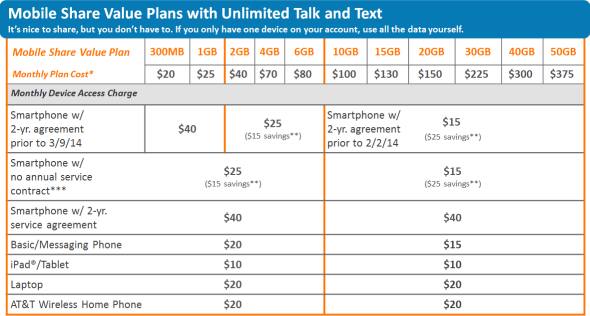
"Your margin is my opportunity" is probably my favorite Bezosism. Given that perspective and Apple's very cushy margins, I expected Amazon not to approach the market with an expensive phone packed with new features, but to approach the market from the bottom, with a good phone that is free or nearly free. The problem, of course, is that Google seems to have that segment wrapped up.
Instead of competing with the iPhone, this seems to more targeted at Android -- only priced uncompetitively.
The features themselves seem slightly gimmicky. I tend not to want to move my phone physically as a way to interact with apps. (Doing that figure "8" when my GPS goes out for some reason is incredibly awkward.) Searching via photos is awesome, but the only use case it seems well suited for is shopping. The built-in Genius Bar is cool, but it seems targeted toward smartphone noobs, which is oddly coupled with features targeted to smartphone pros.
If I'm reading the tea leaves correctly, this will probably be a novelty, like Windows Phone, for a while to come.